

Holier than thou
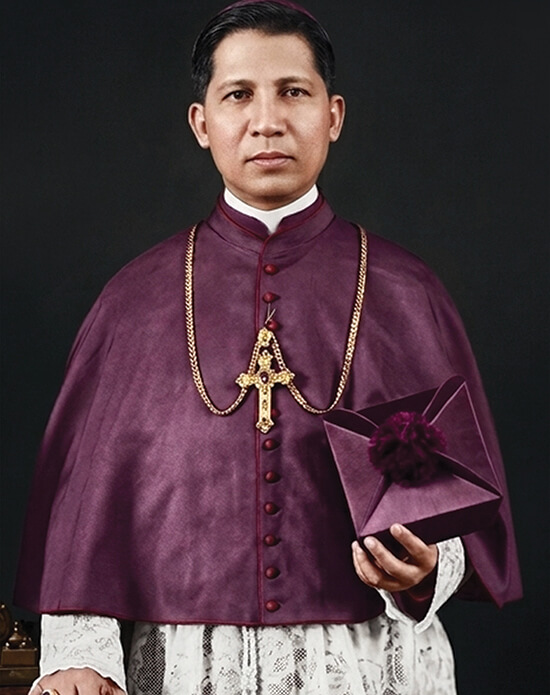
Amid today’s chaos and corruption, a glimpse of peace seems downright necessary. On Feb. 22, my phone was flooded with texts from my more devout friends that a certain Bishop Cesar Ma. Guerrero had been accepted by the Vatican as a “Servant of God.” It was the first step in a very long stairway to canonization.
All my friends (and even more of my frenemies) wanted to know if, by some accident of the universe, we were somehow related. When I replied that we were—he being the “Lolo Obispo” of the family, the older brother of my grandfather—I could feel a wave of dozens of eyeballs rolling upwards.
The Guerreros can be divided into two types of people: the scientists and the artists; the hardened newspapermen and the poets; and, yes, the pious and the provocateurs.
Still, the good bishop must have been a completely different creature and fallen into a separate category all his own. His father was Leon Ma. Guerrero, the pharmacist and botanist, the country’s first believer in the power of herbs. He extracted phosphorus from forest plants to make gunpowder when bullets were scarce, lacing them with poison to make them more lethal even if they just nicked the mark. He was also a social activist, concocting healing powders for the community and giving them away for free during the cholera outbreaks that frequently ravaged the city. This made him popular, and he rose to become a member of the Aguinaldo cabinet as secretary of Trade and Industry, as well as the rector of the first republic’s all-Filipino university.
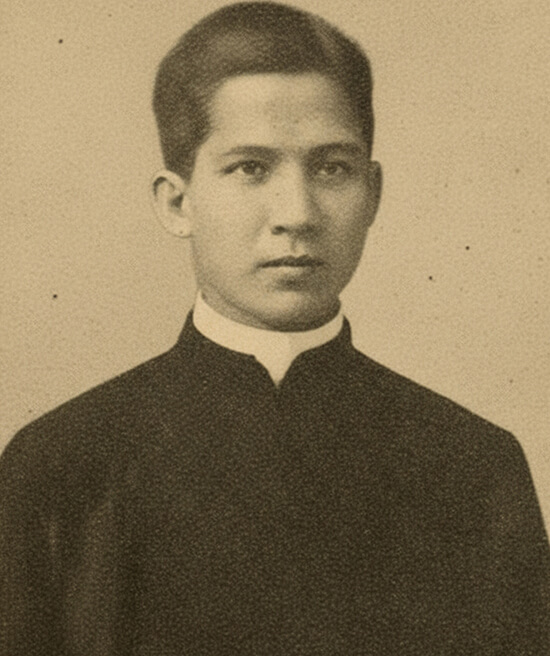
Leon Maria was a member of the Malolos Congress and would take his two sons—Cesar and my grandfather Alfredo—with him on the train from Tutuban to Malolos and later to Tarlac, the Republic’s first and last capitals. Perhaps those adventurous trips were enough to cure Cesar of any taste for revolution.
Cesar Maria would inherit his piety from his mother Aurora, a patron of the Ermita Church who would cut back on the family’s dinners (replacing expensive beef with dried fish) when the parish priest needed a new cassock. She would also routinely take scientific books in suspicious foreign languages from Leon Maria’s library to deliver to the friar for burning.
CONTINUE READING BELOW

From this clan of both the pious and the provocateurs, Bishop Cesar Ma. Guerrero — or Lolo Obispo — is on the long stairway to canonization.
When Cesar Maria announced he wanted to become a Jesuit, Leon Maria was thunderstruck. He belonged to that generation that venerated the Padres Gomes, Burgos, and Zamora, and so set up all kinds of obstacles on Cesar Maria’s road to subvert his allegiance to their foe. Cesar Maria would have to master philosophy first, then the law, at the University of Sto. Tomas, but each hurdle was met only with Cesar Maria’s obedience and patience. Finally, he was sent to Rome to the college St. Augustine founded to complete his studies in theology and canon law.
When he returned as a priest in 1915, he served in Binondo (where his father had established a botica) and at the Hospicio de San Jose, which sheltered Manila’s orphans. He even began missionary work in San Mateo, Rizal, but had to return home because of a wretched bout of malaria. He would next become the secretary to the Archbishop of Manila, Michael O’Dougherty.
In 1928, the Holy See noted that the populations of the Archdiocese of Manila and the Diocese of Nueva Segovia (which oversaw all of northern Luzon) had become too large and unwieldy, so much so that “the pastors were excessively separated from their flocks not only by distance but also by the difficulty of traveling the roads.”
In the aftermath of the Philippine Revolution, which, if you think about it, was just a few decades before, Pangasinan was still reeling from the departure of the friars. There were too few Filipino priests to serve the parishes, with some managing two at a time. The Aglipayan movement was also at its peak then—founded as it were by the Ilocano Gregorio Aglipay, a staunch pillar of the revolution—with several parishes almost taken over.
Clearly, Cesar Maria had his work cut out for him. He would thunder that “corruption in the flock mirrors clerical frailty—and he taught that priests adrift beget parishes unmoored,” to quote Archbishop Villegas. Wise words, indeed, in these troubled times.
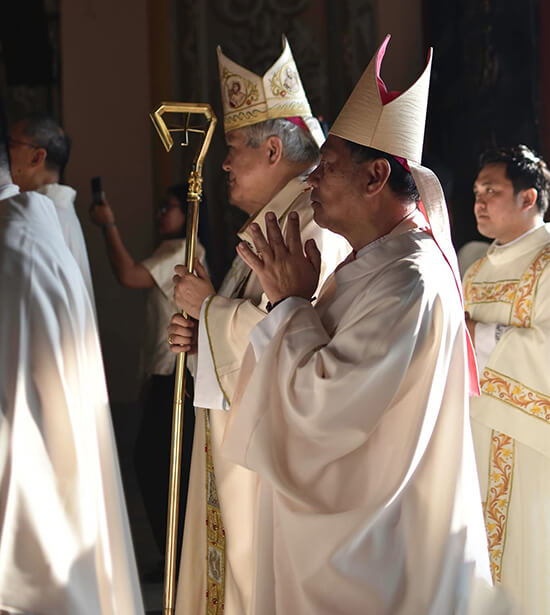
Cesar Maria then cleaned up the parishes and set about founding the Mary Help of Christian Seminary in Pangasinan, the first in the province, to train priests who could renew the Church from within.
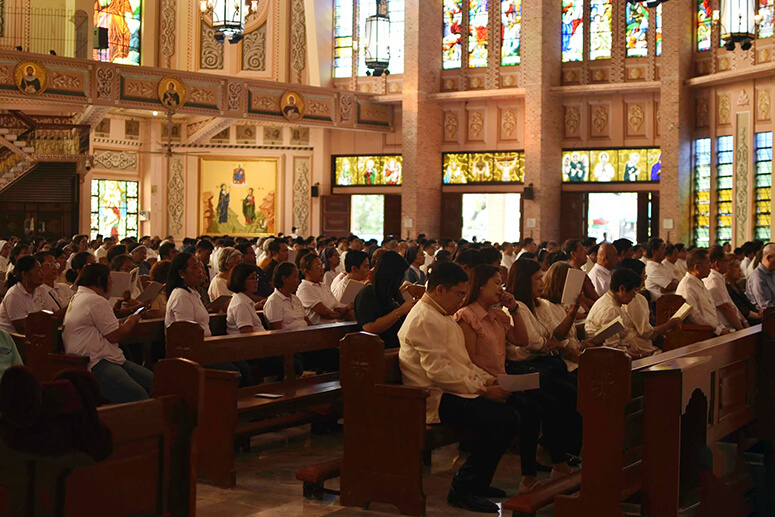
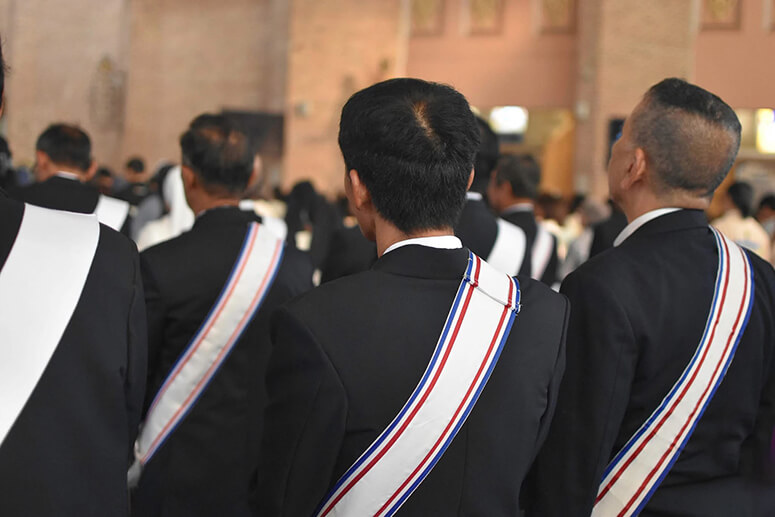
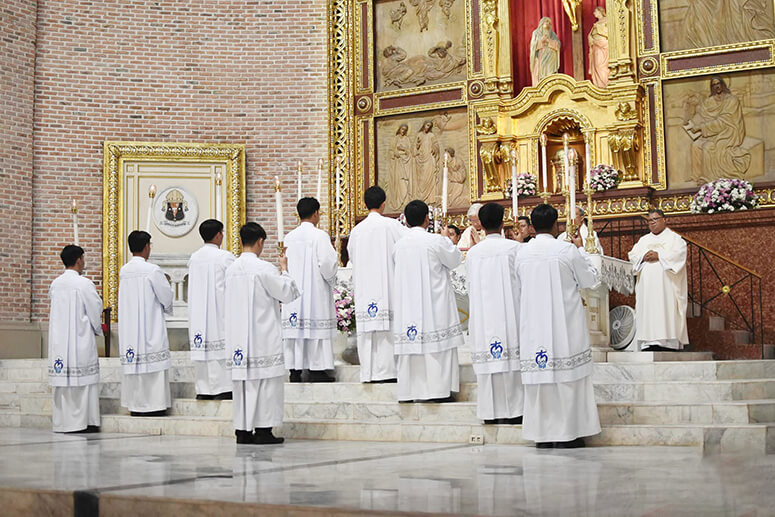
And so, suddenly, I have become a follower of the CBCP news site, learned new words such as “dicastery’”and trekked 280 kilometers to the cathedral of Dagupan to witness a moving, magnificent ceremony officially called “the opening of the cause” on behalf of Lolo Obispo Cesar Maria. The Cathedral of St. John the Evangelist was filled to the brim with the faithful and the fog of incense. Present were the Mayor of Dagupan, Belen Fernandez, and Auxiliary Bishop Fidelis Layog, as well as Robbie Tantingco and Dr. Lino Dizon, who had come from far and wide to attend as members of the Tribunal’s Historical Commission headed by Fr. Mervin Homage.
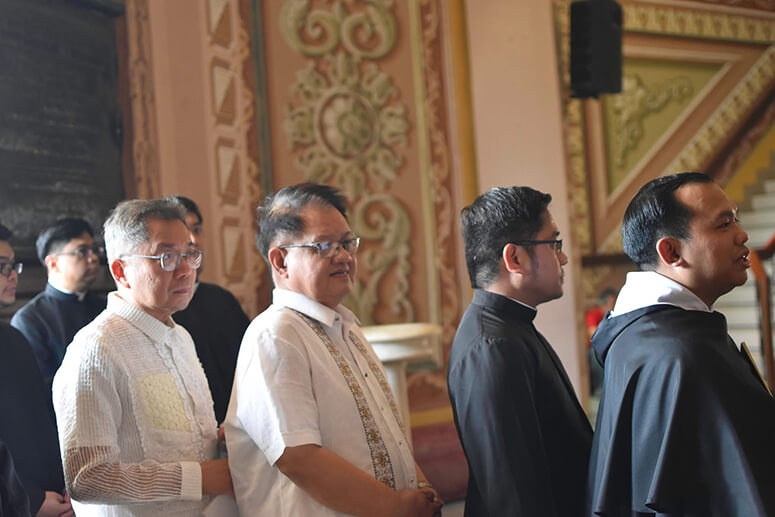
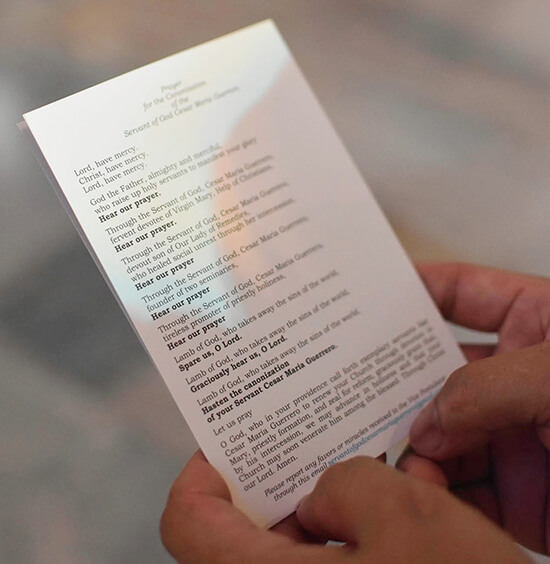
Cesar Maria was appointed the first bishop of Lingayen on Feb. 22, 1929, 97 years to the day that the news of his attainments broke on my feed, and the day I rang the present Archbishop of Lingayen-Dagupan, Soc Villegas, to introduce myself and quiz him about the announcement. He added one other serendipitous detail. He said that the petition was sent to the Vatican on Nov. 1, 2025, and just a few months later, the Holy See sent its “nihil obstat” dated Jan 26,. 2026. That day happens to be Lolo Obispo’s birthday. It’s that stuff that public historians (and okay, conspiracy theorists) live for.
Archbishop Villegas chose March 27 as the date, and I would also like to add that it falls on the death anniversary of Cesar Maria.
Cesar Maria would later be appointed auxiliary bishop of Manila in 1937 and acted as the de facto head of the Philippine church when Archbishop O’Doherty was ordered by the Japanese Imperial Army to the Sto. Tomas Internment Camp during World War II. As a result, Cesar Maria had to face the difficult task of bridging the enemy army’s wishes and the safety of both the Filipino population and its religious leaders.
In 1949, he was named the first bishop of San Fernando, Pampanga. Here, he established the “Cruzada de Caridad y Penitencia,” traveling the Virgen del los Remedios to each barrio in the province, the better to meet the threat of a communist insurgency by the name of “Hukbalahap” head-on. Cesar Maria would also establish the Mother of Good Counsel seminary and a Carmelite monastery in Angeles.
Despite the pomp and pageantry that surrounded his office, Cesar Maria preferred the simple robes of a Franciscan, under which he would wear a hair shirt.
This Easter Sunday, Archbishop Villegas asks that we “consecrate one struggle to Mary Help of Christians—social, familial, national. Dive into a spiritual book, letting study sanctify your mind. If called to formation or leadership, surrender to the fire of discernment. Parishes: launch Marian vigils and Holy Hours against the creep of corruption. Seminaries: forge saints unyielding as diamonds. As we open this canonization’s gate, let the Servant of God Cesar Maria Guerrero—sabio y santo—intercede. May his wisdom illumine our gaze, his holiness attune our wills to God’s alone.”

WATCH: LGBTQIA+ people with unlikely professions
June 28, 2026
WATCH: Save for retirement or enjoy life now? (Generations Ep. 21)
September 16, 2026
WATCH: Can you still trust someone who betrayed you? (Generations Ep. 22)
September 23, 2026