

My Nonno, the maestro who fenced with the canvas
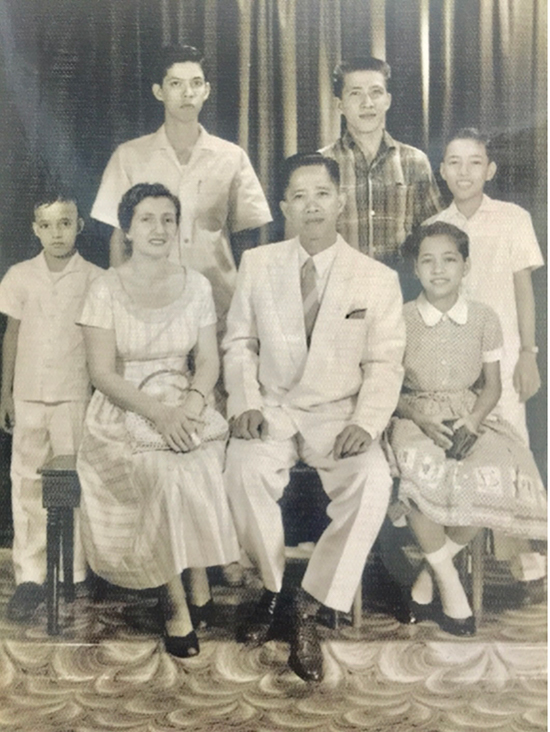
It must be in the genes. A Lorenzo is conservative at heart. It must be in the genetic memory of the family. But then again, my nonno (grandfather) was not Italian by blood—that would be me, the descendant of the signorina he married in Rome, from whom my Papa (Paolo), three uncles, and an aunt came.
Nonno’s earliest paintings—“The Nipa Hut Where I Was Born” (1924) and “My Grandmother” (1926)—already illustrate his attention to structure and form. Perhaps Rome merely refined something that was already there—spending his formative years training to become a master, as he walked the streets with his new wife and her family—hence works such as “Maternità” (1933), “Campo de’ Fiori” (1934), and “Preghiera” (1934), among many others he sold as a young artist in 1930s Italy.
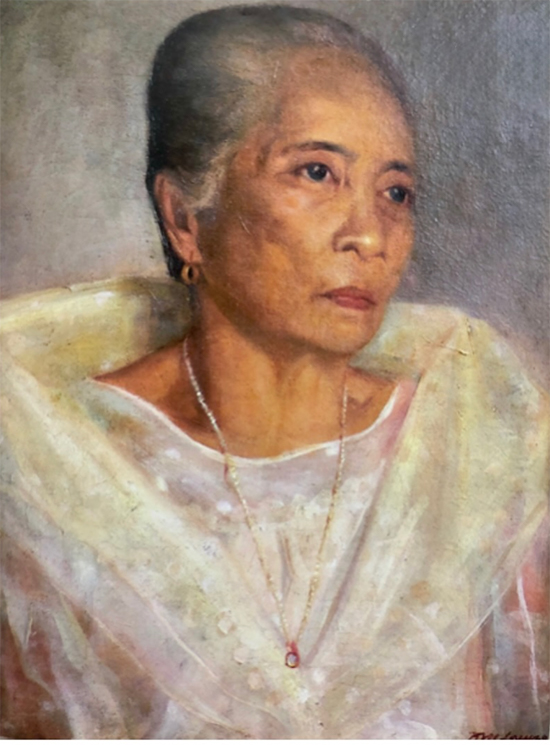
Notwithstanding, a Lorenzo is a disciplinarian—strict, principled, drawn to order—and Diosdado was as such as parent, professor and painter, in many ways like his father-in-law, Enrico Paolini in “Fascista” (1932)—a pure Romano: conservative and a disciplinarian, who allowed his eldest daughter (Lina) to marry a foreigner, who uprooted her and his first grandchild (Emilio) to a land unknown, months and oceans away.
Lorenzo, Filipinas
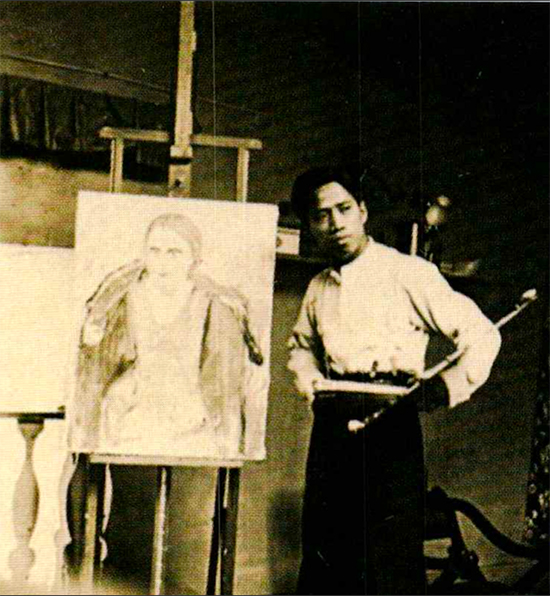
But long before Rome, the signs of that discipline had already appeared. Diosdado was one of seven children, considered the most intelligent. The Lorenzos were an agricultural landowning family in San Isidro, Nueva Ecija. But Diosdado was no farmer.
He was sent to the Colegio de San Juan de Letran in Intramuros, where he distinguished himself academically and artistically. Initially interested in music, he turned to painting—and soon began winning first prize in the school’s contests.
At the UP School of Fine Arts, his ability drew the confidence of his professors, including Fabian de la Rosa, who even purchased his works and later bequeathed his easel—a gesture of rare recognition. He was also trained by Guillermo Tolentino and Fernando Amorsolo. His peers described him as one who painted “as if he were fencing with the brush against the canvas.”
Lorenzo, Roma
CONTINUE READING BELOW

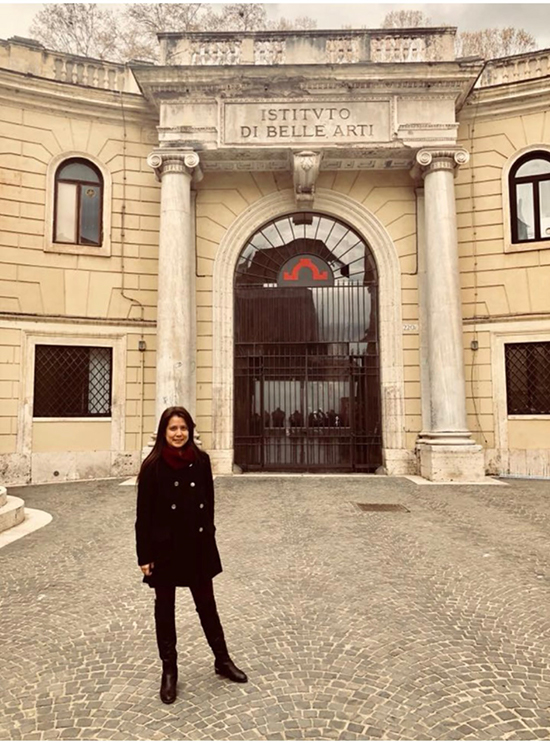
After graduating with honors in 1928, Nonno set sail for Europe. He arrived in Madrid after nearly two months at sea and studied at the Real Academia de Bellas Artes de San Fernando—the premier art academy in Spain that formed Juan Luna, Felix Hidalgo, Fabian de la Rosa, and Fernando Amorsolo—and the Círculo de Bellas Artes. This was a Europe in transition—where the question was no longer how to learn form, but how to preserve it. Madrid gave Nonno his academic grounding, but Rome, the center of classical tradition, was where artists went for maturation and recognition. He arrived in 1931 and studied at the Accademia di San Luca. After evaluation, he was immediately promoted to the advanced class and completed a five-year program in just one year. He trained under Umberto Coromaldi, the Accademia’s president and a significant figure in the art scene for figurative art.
He joined artistic circles, participated in exhibitions, such as the Associazione Internazionale Artistica, the Circolo di Cultura del Sindacato Laziale Fascista degli Artisti, and the Prima Mostra Internazionale d’Arte Coloniale, where he was awarded a Certificate of Merit.
But discipline did not make him austere. Nonna spoke about a presence he invoked—enjoying gatherings, drawing people in, and commanding attention. He carried a small map in his pocket. When asked where he came from, he would unfold it dramatically and point to a distant archipelago.
These were the years of Fascist Italy, described today as discriminatory. But for Nonno, it was the opposite—Rome recognized and respected him on the strength of his work, perhaps more readily than his own country.
He developed a close friendship with the Costamagna family, who treated him as a “second son.” That bond found expression in a pair of sculptural busts—“Kiss”—depicting himself and Enrico Costamagna, facing one another as if in perpetual conversation. In 2019, the Costmagnas donated them to the National Museum of the Philippines.
In 1934, Nonno held his first solo exhibition at Studio Jandolo. Italian newspapers described it as “one of the few interesting exhibits of the season,” praising his mastery of drawing and strength of color. Italian publications recognized in his paintings emotional sincerity, clarity, and human sensitivity—combining classical influence with personal originality. The works were sold across Italy.
In between all this, Nonno met his Signorina, Lina Paolini. They married in Rome and had their first child before returning to the Philippines in 1934. It would take 43 years—in 1976—before Maestro Lorenzo would return to what would be the pinnacle of his artistry. His major exhibition was at Galleria D’Arte Il Leone, opened by then Philippine Ambassador to Italy, Carlos Valdes, where Nonno received critical praise with comparisons made to French Impressionism and Italian Macchiaioli.
In 1935, Diosdado and Lina moved to Hong Kong. After a year in the Philippines, Nonno explored opportunities elsewhere, as the country was not yet ready for the modernist techniques he had developed in Europe. In Hong Kong, he quickly gained traction—establishing an art academy, mounting exhibitions, and attracting patrons, including the British colonial governor. He moved within artistic circles that included figures such as Oseo Acconci. In 1937, amid rising instability, they returned to the Philippines. Back home, Nonno continued to receive recognition. He taught in UP and UST, exhibited widely, and became one of the “13 Moderns,” occupying a unique position bridging tradition and modernism. He received numerous awards, culminating in the Republic Cultural Heritage Award in 1970.
Nonno Mio—Malinconico
I remember Nonno as a quiet, solitary man—often in his studio or among his plants. I rarely heard him speak. I never saw him laugh—except once. After he passed away in 1984, I spent time in my nonna’s home on Cadig Street. The house was filled with paintings—bright and vibrant —and yet there was a heaviness in them I could not understand.
One day, I found a box filled with old photographs, newspaper clippings, and a child’s drawings. There I saw a Nonno I had never known— alive, radiant, full of life.
It was only later that I began to understand. The loss of a son, Mario, after years of illness. The quiet tensions that usually plague the landed gentry—these left their mark, not in words, but in the paintings.
Maestro Lorenzo, Rome’s second son
In 2017, I visited the Van Gogh Museum in Amsterdam and sensed a similar weight beneath the color. But where Van Gogh dissolves form, Nonno holds it. His melancholy is carried by structure.
The newspaper clippings I found spoke of Rome’s love for her “second son”—following even his wife, her daughter, Lina, whom she honored (and knighted) across decades for her work in preserving Italian culture overseas.
Maestro Lorenzo’s paintings truly give testament to the praise given by the Italian press in the 1930s—emotional sincerity, naturalistic clarity and human sensitivity—for in those works you will see how the modernist techniques of impasto, colors and the brushwork begin to bury (not blur) the form he stood on and clung to as life after Rome was no longer that adventure that merely enticed him to animate form. We might say it was an adventure of a different sort—the struggle we all know that is life. And this was the Maestro Nonno I knew—Rome’s second son, the structural modernist who fenced with his canvas.

WATCH: How to experience Bangkok and Kanchanaburi in one trip
October 21, 2026
WATCH: Discovering Vietnam in three days
June 9, 2026