

When Carl Lorenz Cervantes looks inward, he sees everyone else
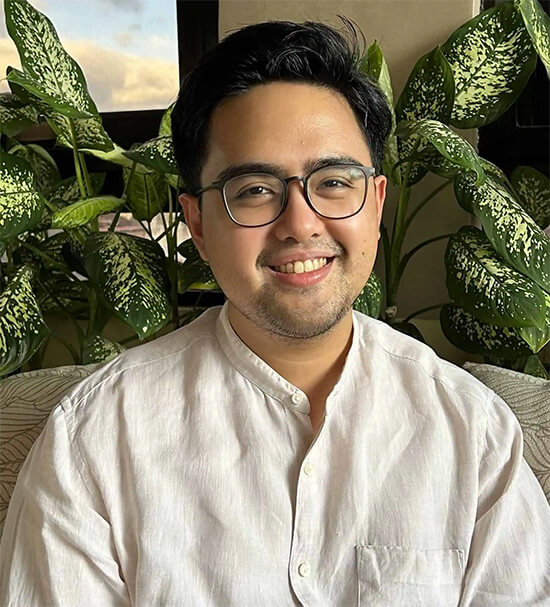
“As I look inward, I do not see more of myself,” writes the psychologist and researcher Carl Lorenz Cervantes. “Rather, I see more of everything else.” Known online as Sikodiwa, Cervantes shares his work as a psychospiritual researcher to uncover hidden meanings in things we may not look twice at—like how the words we use for love reflect precisely the ways we do it—and to contextualize things we may still be learning to navigate, like mental health.
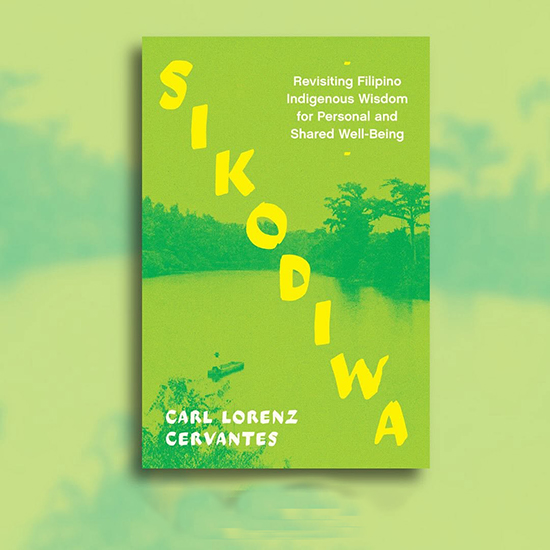
The statement above is in the introduction to his book Sikodiwa: Revisiting Filipino Indigenous Wisdom for Personal and Shared Well-Being, and is perhaps the crux of his research on Philippine folklore and folk psychology. The more we understand ourselves, the more we realize how much we have in common. It’s obvious, but also something we seem to keep forgetting, if only because the power-that-be thrives in our social fractures.
The book explores the Filipino values shaping our identities and relationships and looks to the timeless wisdom of Filipino psychology to better understand present tensions—and how we might move forward.
YOUNG STAR: Congratulations on Sikodiwa! How has the response been so far, both from Filipino and non-Filipino readers?
CONTINUE READING BELOW

CARL LORENZ CERVANTES: Even before the book, people have been telling me about that feeling of "Oo nga, ‘no?" that they get when they listen to my lectures. I would say that that's the gist of my work: it's like connecting the dots. We already know that the dots are there, but most of the time we ignore them or take them for granted. Only when we really sit down with these ideas, which we as Filipinos grew up with, do we start to recover their meaningfulness. For non-Filipinos, it gives them a lot of insight into their Filipino friends, but it also gives them a lot to think about in their own lives (by contrasting it to their own culture).
One of my favorite lines comes from the chapter on learning and unlearning. It goes: “There is a deeply fulfilling kind of pleasure that can be gained from knowing more, from seeing ordinary things in a new light, or even deconstructing and destroying intellectual idols and false gods.” Since you began your research on Filipino folk psychology, what’s one memorable moment from your own life where you saw an ordinary thing in a new light, and one moment where you destroyed a false god?
Like so many others, I grew up being told that Filipino values are “toxic.” But then I zoomed out and saw things in a wider lens, not just on the personal and relational level, but on the level of society and culture. Why would we “value” things that are bad for us? Maybe our society isn’t structured in a way that promotes collectivistic values. Maybe it’s more selfish, maybe it promotes personal ambition and personal comfort — and then it clicked. If society is more selfish, then collectivistic values won’t be useful. It’ll only drag you down if you keep having to think of others. That’s where the most intense inconsistency lies. So I went deeper into what the actual purpose of hiya, pakikisama, bahala na, or utang na loob might be—and how recovering their kapwa-oriented meaning might actually help us create a more caring society.
The psychologist and author of ‘Sikodiwa’ turns to Philippine folklore and folk psychology to better understand present tensions — and how we might move forward.
You also discussed how fantasies of a pre-colonial, “true” Filipino are precisely just fantasies, and that colonialism is undeniably part of our identity and history. In what ways can we acknowledge our colonial history without falling into the trap of letting our historical traumas define us?
We must take history as it is. But history isn’t destiny; it’s just a context for who you are. It helps you understand yourself. To understand the trends of culture, we can look at the personal. If something difficult happened to us, we might keep imagining “what could’ve been” if only it hadn’t happened. We would keep dreaming of the possibilities of who we could’ve become if only that difficulty hadn’t happened to us: “It’s so unfair!”
But, speaking now as a psychotherapist, part of moving on is recognizing two things: that it did happen, and who you can become will depend on how you deal with this reality. Acknowledge it, grieve it, demand accountability. While at the same time, let’s not get stuck. Why do we talk about “what could’ve been” as if it isn’t possible now? Why not work towards the future for a society that makes sense for us?
Right now, a lot of our young readers, fed up with the alienation caused by social media, are clamoring for community—but they don’t exactly know where to start (or what it may even mean). What can our values teach us about being in community, especially in a kaniya-kaniya culture seemingly designed against it?
Speaking for my fellow Filipinos, it’s easier for us because we have already been raised with these values. Unlike other cultures, we are used to living with big families. We are used to having different barkadas. They say Filipinos are the top users of social media—why? Because we want to keep connected to the people we love! How many group chats does the average Filipino netizen have? There is a way to blend modern life and traditional values. Social media is just one of many spaces where real people can connect with others. Maybe it would be good for us to remember how to act like a human on social media—magpakatao sa kapwa, even online. So what I’m saying is that technology isn’t bad. It really depends on how we use it, so let’s use it following our better values.
You also wrote about the importance of preserving Filipino knowledge work locally. Did publishing the book with a foreign press raise any reflections for you about preservation or access?
Publishing with North Atlantic Books is a blessing because they have a global reach, and their distribution is strong. I also really like their catalog of books because they have a strong advocacy for the kind of works they publish. Locally, I think we can improve our capacity to preserve books, especially to digitize important texts. There’s so much public domain literature in the Philippines that deserves to be commercially released. There’s so much work in the local social sciences that remains an “if you know, you know” thing, because you’ll have to know what you’re looking for in the library if you want to find it. But wherever you go, there really are “classic” books that will always be present, even locally, and these texts will never go out of print. I can only hope the same for the book I wrote.
A point that really stuck with me was that self-care is just varying forms of self-isolation. What might a more culturally resonant form of self-care for Filipinos look like?
Listening to friends, spending time with loved ones, being reliable—in a word, pakikiramdam. We are all carrying something in life (“may dinadala”), and we are all passing through our own journeys (“may pinagdaraanan”). The least we can do for each other is to become each other’s masasandalan. It’s a matter of catching each other—saluhan—rather than dropping, betraying, or giving up (that is, laglagan).
Sikodiwa: Revisiting Filipino Indigenous Wisdom for Personal and Shared Well-Being is now available at National Book Store and other major bookstores. Follow the author on Instagram and Substack at @sikodiwa.

WATCH: Discovering Vietnam in three days
June 9, 2026
WATCH: Is Gen Z too soft? (Generations Ep. 23)
September 30, 2026
WATCH: Can we talk about death and grief? (Generations Ep. 25)
October 14, 2026