

What to know about Utqiaġvik, Alaska, a city where the sun won't shine until January 2026
In the northernmost and southernmost parts of the world, there are long periods when the sun won't shine.
This phenomenon is called a polar night, and it refers to when the sun does not rise above the horizon for more than 24 hours, as per National Geographic.
Enter the city of Utqiaġvik (pronounced oot—kay-ahg—vik), an extreme location in Alaska, which receives 24-hour daylight from May to August and 24-hour darkness from November to January. It's once again the talk of the town, as it tasted sunlight for the last time on Nov. 18 and will be submerged in twilight skies until Jan. 22, 2026.
Here's what we know so far about the peculiar town.
Utqiaġvik's location
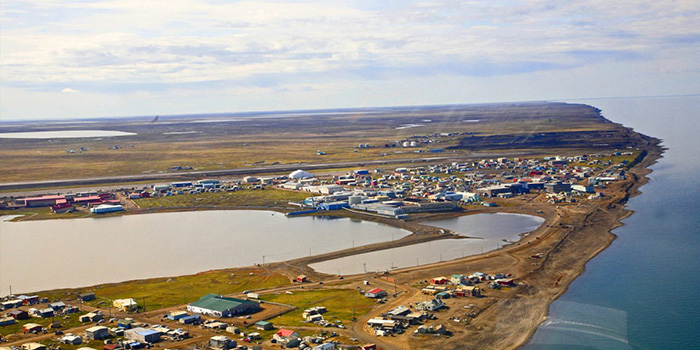
Home to the Iñupiaq community, the city is located on the Arctic Ocean and is at the northernmost part of America.
CONTINUE READING BELOW

It was formerly known as Barrow, but was reverted to Iñupiaq in 2016, which means “the place where we hunt snowy owls.”
The place is inaccessible by road, and one can only get there by plane through a flight from Anchorage and Fairbanks via Alaska Airlines or other regional carriers.
According to the Alaska tourism website, the city has a population of 4,927.
Weather and Daylight in Utqiaġvik

Located along the northern latitude, Utqiaġvik sees polar days and polar nights. In the summers, residents experience non-stop daylight from March to August, with temperatures reaching as high as 5.4 degrees Celsius.
In the winter, the city experiences long nights for up to 67 days, and temperatures often go below freezing point.
According to Fox Weather, the polar night phenomenon also plays a role in the formation of the Polar Vortex, an area of low pressure containing extremely cold air in the Earth's stratosphere.
Activities in Utqiaġvik
Apart from its interesting weather, Utqiaġvik is known for activities like polar bear watching and snowy owl photography, as well as events like the Nalukataq whaling festival in June after a successful whaling season.
In June, the Nalukataq whaling festival is held following the whaling season, where there is dancing, singing, food, and a blanket toss, which involves tossing an Iñupiaq hunter in the air for him to see the horizon. The natives believe the festivities are necessary to appease the spirits of dead whales for them to reincarnate into new whales next season.
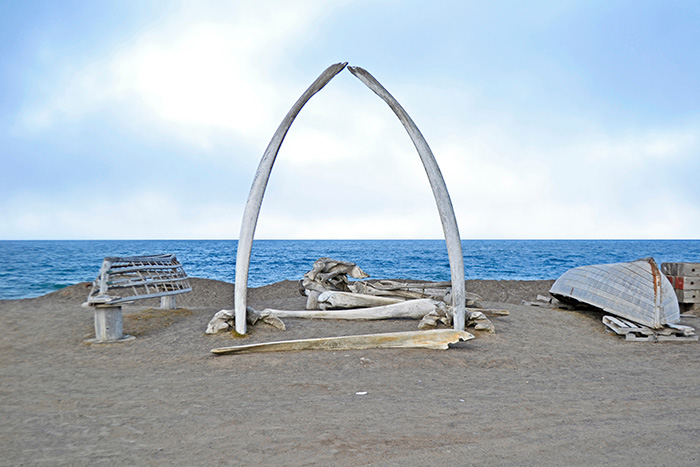
As one of the northernmost cities, Utqiaġvik's coastlines offer a magnificent view of the Arctic Ocean along with its "gateway," the Whale Bone Arch. This iconic display on the beach near The Cape Smythe Whaling and Trading Station is made out of a bowhead whale's jawbone. Surrounding it are traditional whaling boat frames.
In spring, one can journey alone or take a guided tour of the rich wildlife in the town. This includes migratory birds, bowhead and beluga whales, ringed and bearded seals, walrus, foxes, and caribou. In some months, polar bears can also be seen.

WATCH: Pixar Summer Fest adventure at Hong Kong Disneyland
August 10, 2026
WATCH: Is OPM still as good as it used to be? (Generations Ep. 20)
September 9, 2026