

WOTY, WOTY, naughty, naughty: Tell me your word before the year escapes
“Ragebait” is the Word of the Year (WOTY) at Oxford University Press. The term refers to online content engineered to provoke anger or strong emotion, the sort of outrage that drives clicks and comments. It reflects a growing awareness that the digital world now trades in irritation as if it were currency.
“Don’t come near my family or my country.” This alleged statement from Manny Pacquiao, unconfirmed yet persistent across Facebook, Instagram, and TikTok, fits the mold of ragebait. It sent me down a rabbit hole where every step felt slightly more ridiculous, all the way to a supposed White House slight involving press secretary Karoline Leavitt declaring the Philippines “a country that does not even exist on the map.” The rumor feels like it was designed to escalate in rings, each more operatic than the last.
‘Ragebait’ for Oxford, ‘parasocial’ for Cambridge, ‘vibe coding’ for Collins. And somewhere in the Philippines, a new word is forming.
Oxford’s WOTY highlights a term that shows a sudden spike in usage and mirrors the cultural weather of the moment. The word doesn’t have to be new. It simply needs to capture the shift in what people are thinking about, the shadows and preoccupations of a year tracked through digital conversations, news stories, and public suggestions.

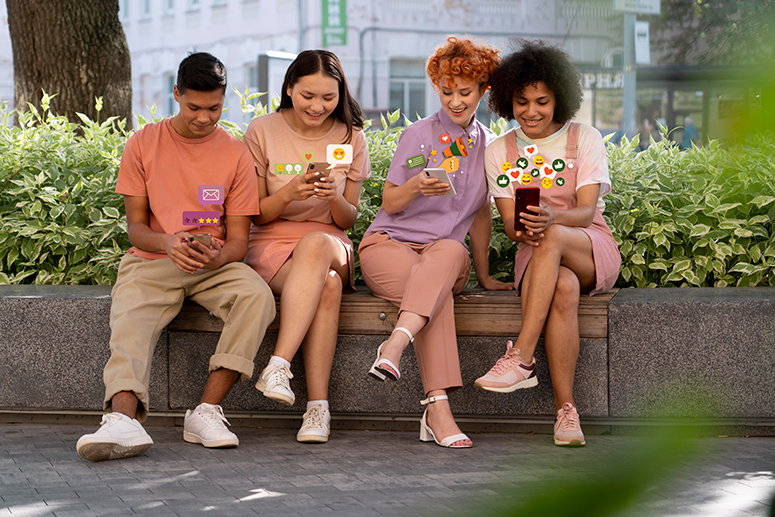
For the Cambridge Dictionary, the considerations are user data, the zeitgeist, and the state of language. Its WOTY for 2025 is “parasocial,” defined as the one-sided, imagined connection people form with media figures, whether celebrities, influencers, or fictional characters. Fans feel the familiarity of friendship while the person they’re following remains unaware of their existence. In the Philippines, this dynamic hardly feels pathological. It feels like a national pastime.
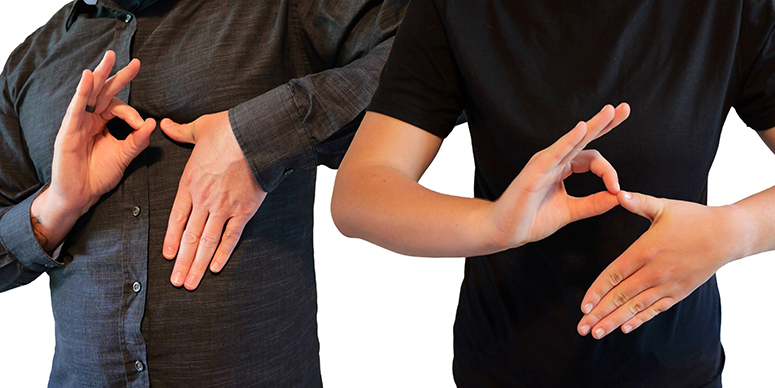
Dictionary.com chose a number instead of a word. Its WOTY is “67,” pronounced “six-seven,” never “sixty-seven.” Lexicographers say its influence on conversation, both online and in person, is significant enough to merit the title. Considered Gen Alpha slang, it expresses something like “so-so,” indecision folded into a shrug. It comes with a gesture, both palms up, hands rising and falling in a rhythm that suggests language has become as much movement as sound.
Collins selected “vibe coding,” a new approach in which users speak their intention in plain language and let AI convert that intention into executable code. I doubt I would ever use the term. Writers deal in instinct, not instruction. Coders seem to prefer the reverse. I’m more drawn to the other words on Collins’ shortlist, such as “aura farming,” the art of tending to a persona so polished it feels effortless, the curated ease that keeps the creator economy humming and followers believing it’s all natural. There is also “broligarchy,” a mash of “bro” and “oligarchy” meant for those tight circles of tech and venture capital men who move markets and tilt politics with a single group chat. And if you ask who the broligarchs are in Philippine politics, the answer depends on which table you’re sitting at, which meeting you’re not invited to, and whose handshake decides the week’s headlines. Every country has its cluster of men who run things together. We’re no exception.
CONTINUE READING BELOW

The Philippines has no single official dictionary, yet many of our words have crossed into global lexicons. Oxford’s most recent additions include “CR,” our shorthand for “comfort room,” meaning a toilet or lavatory, along with load, credit purchased for a prepaid mobile account, and “lumpia,” the Filipino spring roll. “Pinoy,” already in the dictionary as a noun, entered anew in March this year as an adjective used to describe anything belonging to or relating to the Philippines or the Filipinos. Even “terror,” the Filipino English term for a strict or demanding teacher, has made the list. Our vocabulary tends to travel well, carrying the texture of our daily life wherever it lands.
A new neologism surfaced in the last two weeks after an altercation between a couple identified in social media as Chinese and controversial lawyer Rowena Guanzon. The term “Guanzon,” now used as a verb, means to be publicly shamed over a perceived illness. “Tuyo ang lalamunan ko. Baka ako ma-Guanzon” (My throat is dry. I might be Guanzon-ed.) Some posts use “Buangzon,” a sharper portmanteau pairing the lawyer’s name with buang, meaning crazy or foolish. And then there is her line, “Hindi ka nga naka-Rolex, hindi ka nga naka-Gucci,” now spinning through viral memes. It joins that long gallery of Philippine cultural insults, from Cherie Gil’s “You’re nothing but a second-rate, trying hard copycat” to Anne Curtis’s “I can buy you, your friends, and this club.”
Words carry weight. And in 2025, after billions in stolen funds were exposed from infrastructure that existed only on paper, Filipinos armed themselves with language. We shouted in the streets and online. The air shook with “Nepo Babies,” “Fraud Control,” “Ghost Projects,” words sharpened into weapons we could hold without fear.
Meanwhile, elsewhere in rooms we’ll never enter, power hummed discreetly in its own rhythm. Sometimes the broligarchs don’t even know they’re broligarchs, which is exactly how they keep winning.

WATCH: Pixar Summer Fest adventure at Hong Kong Disneyland
August 10, 2026
WATCH: Is Philippine cinema still thriving? (Generations Ep. 19)
September 2, 2026
WATCH: Can you still trust someone who betrayed you? (Generations Ep. 22)
September 23, 2026