

German houses, Filipino voices
This month—which honors Philippine Independence on June 12 and the birth of Jose Rizal, the man who helped make it possible with his writings, on June 19—also marks the historic visit of the German president Frank-Walter Steinmeier to Manila.
It is a significant intersection of two countries that once joined to make our nation possible.
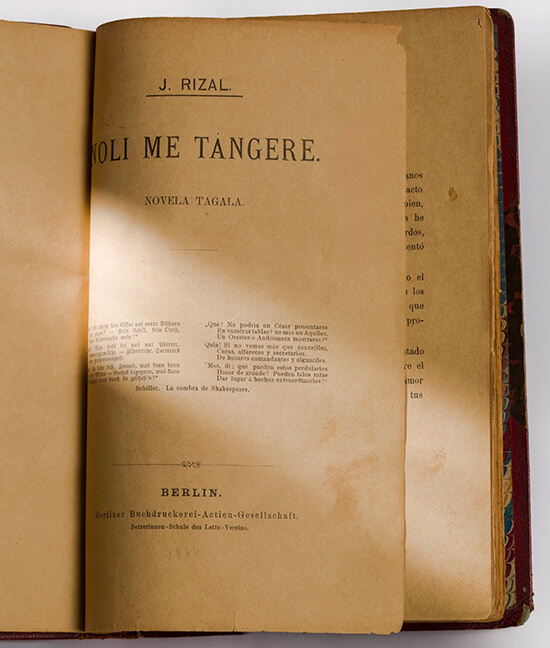
Jose Rizal’s Noli Me Tangere was the book nobody wanted—but everybody needed to read. Completed in the small town of Wilhelmsfeld and published in Germany’s intellectual capital, Berlin, it was also a small miracle that it had been printed at all.
The story of how the Noli came to be is as full of twists and turns as Rizal’s own manuscript. It begins not in 1886 or 1887—but a full decade earlier, when the landmark book by German ethnologist Fedor Jagor was translated into Spanish in 1875 and was read feverishly by the young Rizal. Reisen in den Philippinen (or Travels in the Philippines) would for the first time portray a land that had become impoverished by poor governance and a people who had lost their once-glorious past.
In one stroke, it removed the justification for Spain’s rule over the Philippines by revealing that the Filipinos had already possessed their own government, culture and proud traditions long before Magellan arrived. The Philippines and its people never needed saving.
Rizal would thus deliberately embark on a mission to find allies among the German scientific elite and learn more about their newly developing science of anthropology and the underlying philosophy of a common humanity it pioneered. These were the tools he needed to forge his argument for Filipino freedom.
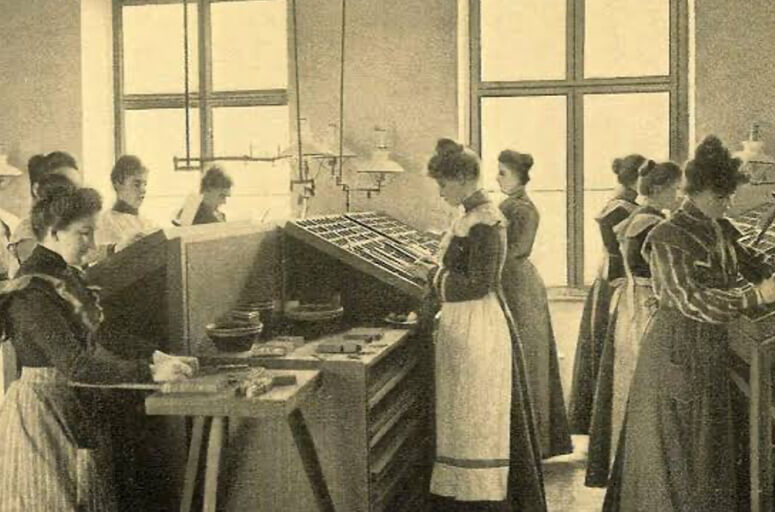

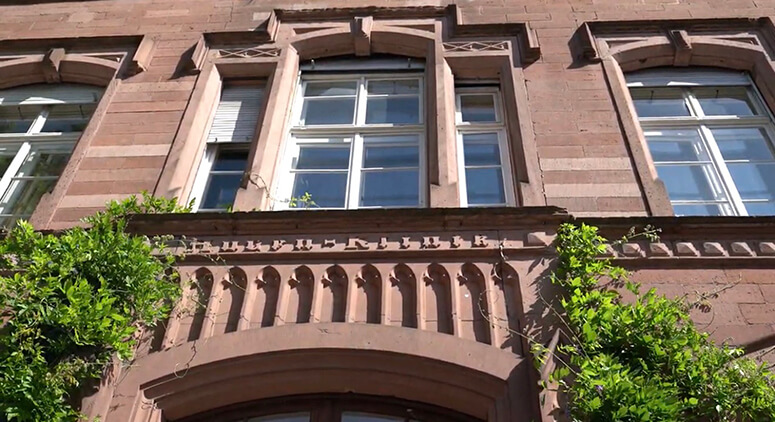
This purpose would take shape precisely when he was completing the Noli Me Tangere and his interactions with German thinkers would be plain in the book. All the clues are in the very first page of the Noli: Rizal would quote several verses of Schiller’s poem Shakespeare’s Ghost and challenge the reader to find their own heroism in the face of oppression. Through the connections Rizal would forge with Jagor himself, Rizal would find his way to the press of the Lette Verein, the avant-garde women’s technological institute that wound up printing the Noli. But there was to be more.
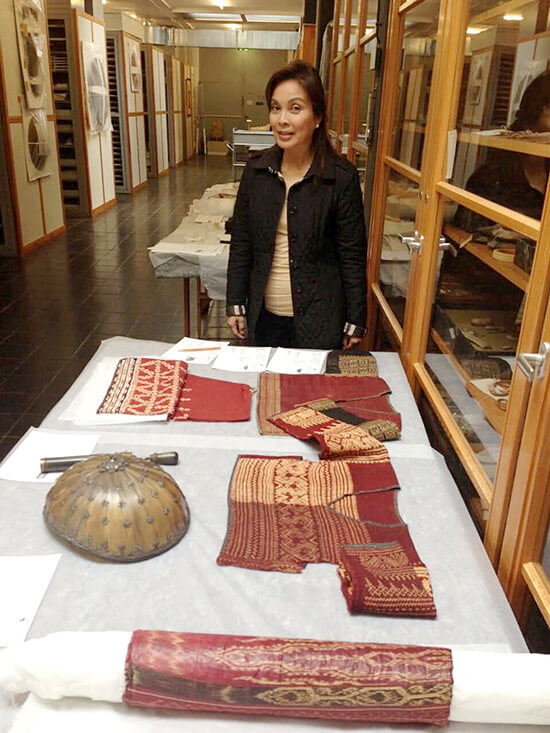
Fast-forward to 2013, when a woman senator seemingly unlocked Rizal’s little-known connection to the leaders of Germany’s scientific community in the 19th century. Sen. Loren Legarda would discover on a fateful trip to Berlin that its Ethnologisches Museum (Ethnological Museum) had in its possession 21 objects all donated by Jose Rizal to his friends in that gilded circle: Jagor, Rudolf Virchow and Adolf Bastian, who had founded the cutting-edge institution. It was part of Rizal’s quest to put the Philippines on equal standing with the Western world. Senator Legarda would begin a long journey in 2018 to propose the repatriation of the objects to the Philippines and, in the interim, to arrange the digital documentation of the collection for the exhibit, “Connecting and Collecting: Rizal’s Ethnographic Objects in Germany,” which bore fruit in 2025.
Yet Sen. Legarda understood that preserving history demands that it be reinterpreted and retold for each generation.
It was in this spirit that she initiated the documentary Finding Rizal in a Time of Barriers, an ambitious undertaking that retraced Rizal’s footsteps across Germany at a time when the world itself was grappling with uncertainty and unprecedented restrictions. More than a historical documentary, it became an act of cultural remembrance and rediscovery. Through conversations with scholars, visits to the places Rizal once inhabited, and reflections on the enduring relevance of his ideas, the film illuminates the intellectual world that shaped the national hero and reveals the deep ties between the Philippines and Germany that had, for too long, remained hidden at the margins of history.
The documentary invites Filipinos to encounter Rizal not as a distant monument, but as a young thinker moving through unfamiliar landscapes, seeking knowledge across borders, and building friendships that transcended nationality. In doing so, it echoed Sen. Legarda’s conviction that understanding our past is essential to imagining our future.
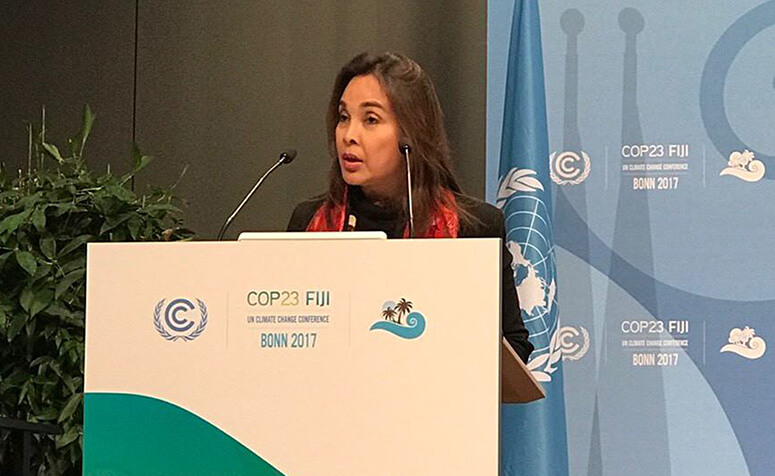
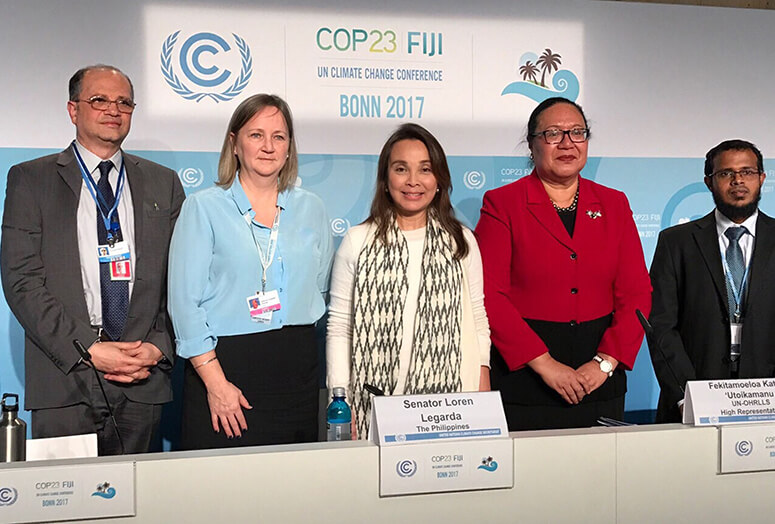
Sen. Legarda would go on to pioneer connections with Germany’s leading voices in science and technology, following in the footsteps of Rizal in his quest to enhance the Philippines’ future through the reason of The Enlightenment. In today’s world, that means confronting the dilemmas of the Third World and the environment. In November 2017, she served as head of the Philippine delegation to COP23, the 23rd Session of the Parties to the United Nations Framework Convention on Climate Change, in Bonn. As principal author of the Climate Change Act of 2009 and chair of the Senate committees on climate change, foreign relations, and finance, she advanced the country’s positions on climate justice and adaptation, and was named a National Adaptation Plan Champion during the conference. She urged advancing the Paris Agreement through the Talanoa Dialogue, action on loss and damage, and scaled-up finance through the Green Climate Fund and the Adaptation Fund.
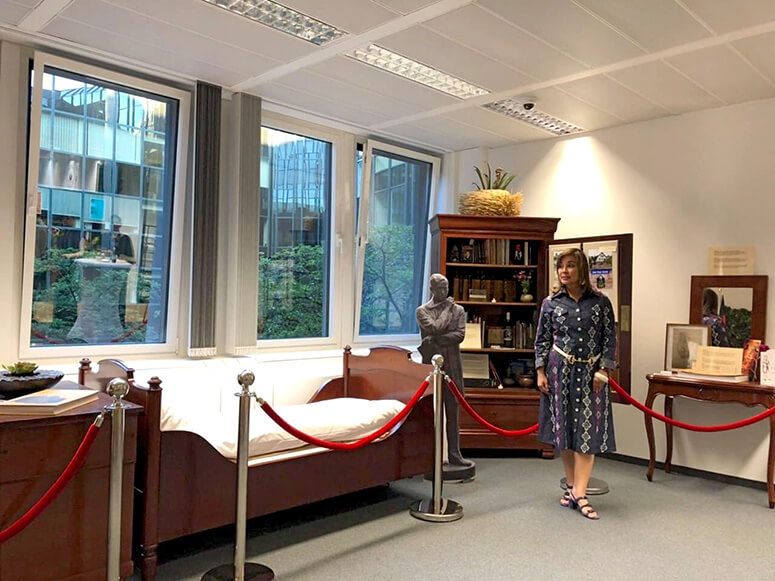
In 2018, Sen. Legarda once again led the Philippine delegation to the 48th Session of the Subsidiary Bodies of the United Nations Framework Convention on Climate Change (UNFCCC) in Bonn, Germany, where she delivered a keynote message during the 10th Anniversary of Germany’s International Climate Initiative (IKI) at the Gustav-Stresemann-Institut. She underscored IKI’s role as a vital partner of the Philippines in advancing climate action and biodiversity conservation, highlighting in particular its support for the Philippine Strategy on Climate Change Adaptation 2011–2028, which has helped strengthen the country’s capacity to address climate risks and build resilience for vulnerable communities.
In 2019, the Philippine Studies Program—which Legarda had launched in 2017 and extended to universities worldwide—reached German institutions, inspired by Rizal’s own example in research and scholarship. On Oct. 15 that year, an agreement establishing a Philippine studies program between the Philippine Consulate General in Frankfurt and Ruhr University Bochum was signed in Bochum, with Senator Legarda, the project’s principal sponsor, witnessing the signing by Consul General Evelyn Austria-Garcia and RUB Rector Prof. Axel Schölmerich. The agreement provided for a donation to support academic and research activities and create a hub for Philippine-related projects.
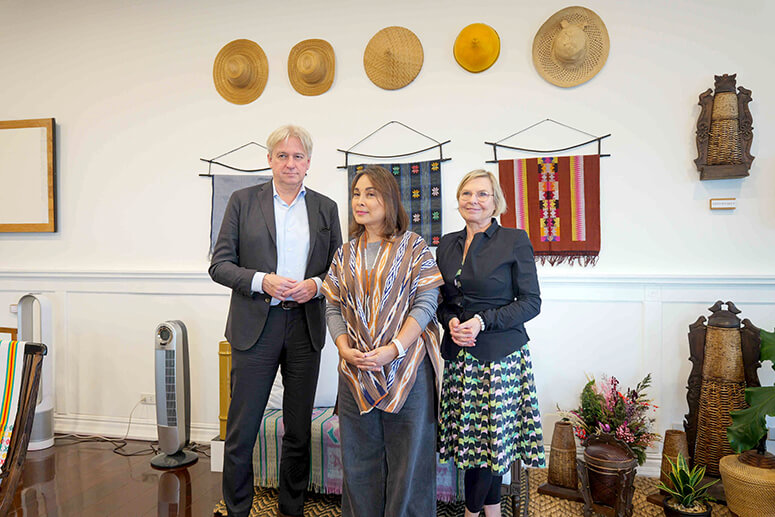
Aside from Ruhr University Bochum, Legarda also supported Philippine Studies initiatives at the University of Hamburg and Humboldt University in Berlin, further strengthening academic engagement with Philippine studies in Germany.
Legarda would embark on multi-pronged efforts through the decades—in support of independent studies on Philippine culture and history by German ethnologists, the funding of multiple trade shows in fields in which Filipinos excelled, including Automechanika (Frankfurt), Electronica (Munich), Ambiente (Frankfurt), Biofach (Nuremberg) and Anuga (Cologne), as well as the sponsorship of the traveling Filipino textile exhibition “Hibla” that went to Germany, and even providing additional assistance in reopening the Philippine consulate in Frankfurt.
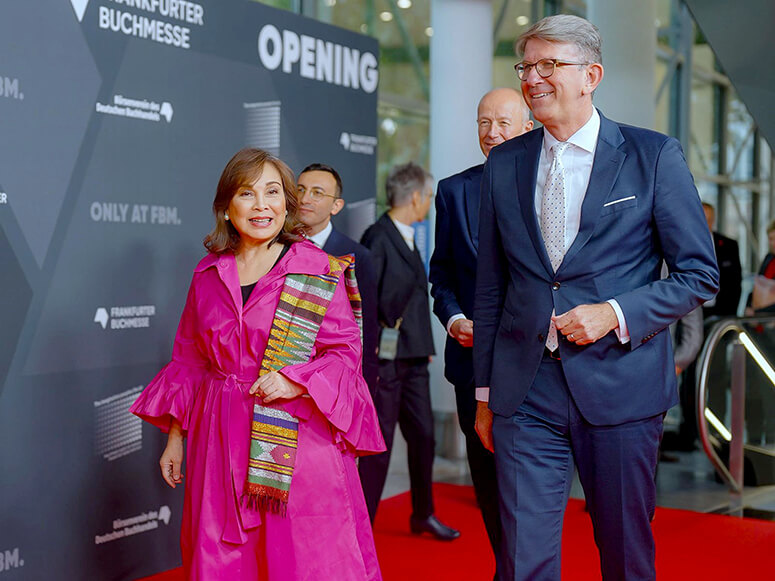
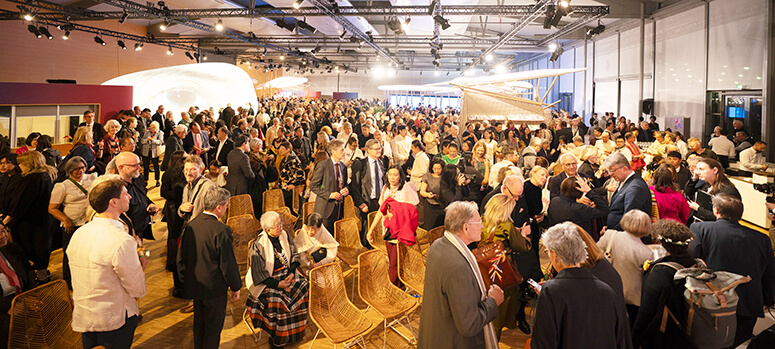
The crowning glory of her efforts to rekindle the German-Filipino intersection would be Rizal’s return to the country, which saw the birth of Noli Me Tangere. It would take the Senator a decade of careful cultivation since 2015 to support participation at the prestigious Frankfurt Book Fair year after year. Finally, the Philippines received the plum post of “Guest of Honor” at the world’s largest publishing platform, an achievement made possible by her persistence, vision and diligence. More than 400 Filipino writers, artists and publishers (in cooperation with the National Book Development Board) would descend on the city in 2025 thanks to her initiatives and buoyed by a theme from Rizal’s first novel—just an hour from where the Noli was completed.
Delivering the opening remarks on that landmark occasion, Senator Legarda began, “Imagine growing up being told that your national hero, the one who sparked the liberation of your people from more than three centuries of colonization, was not a warrior with a sword but a writer with a pen. Our hero was a medical doctor, a poet and novelist, by the name of Dr. José Rizal, who made imagination his sharpest weapon. His words carved hope where despair had reigned, dignity where oppression had prevailed. For that imagination, he was executed in 1896, condemned not for violence but for radical thought.”
She continued: “And if one book written by a Filipino on German soil awakened a nation thousands of miles away, imagine—just imagine— what we, together, can awaken today.”
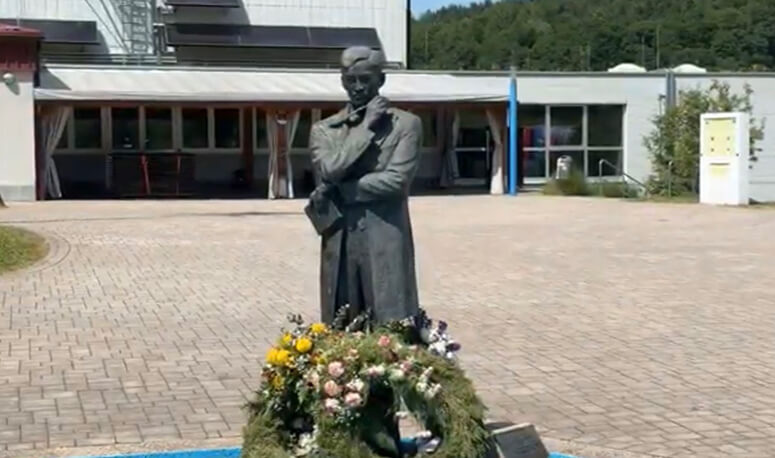
Her work continues unabated, with her support of the inauguration of the first “Camino Rizal” from Wilhelmsfeld to Heidelberg this weekend, on June 19 to 21, to mark the hero’s 165th birthday. The “Rizal Trail” retraces Jose Rizal’s footsteps as he trekked daily to and from his studies in Heidelberg through the Odenwald forest. It is a project of the Knights of Rizal Wilhelmsfeld-Heidelberg and is expected to be another touchstone in the long saga of German-Filipino friendship.
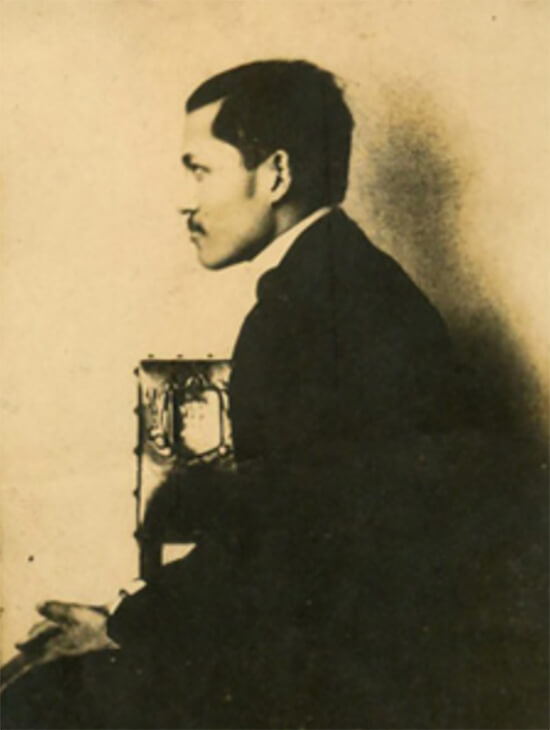
Quoting Jose Rizal, she ended by saying, “Our national hero wrote, ‘I will dedicate my last farewell to Germany. I owe Germany my best remembrances.’ And so, in honoring his legacy today, we continue what Rizal began—and his abiding affection and respect for the German nation.”
The tale of two houses
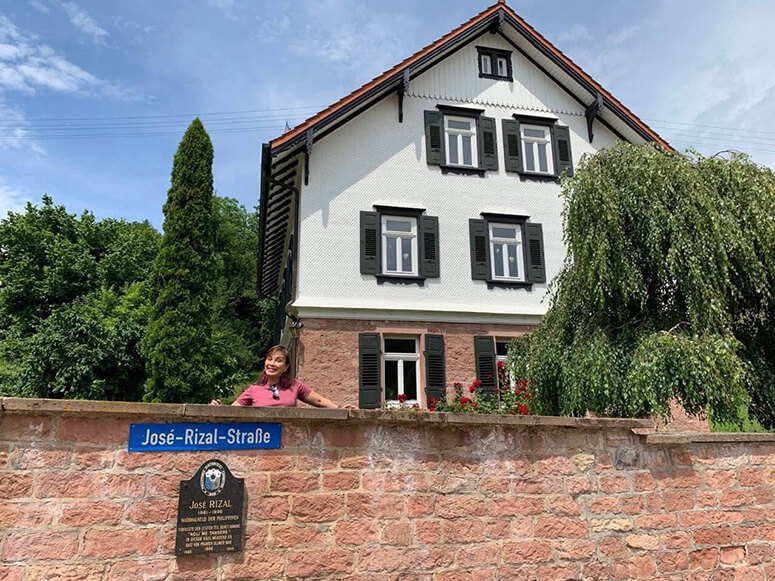
Two German houses—filled with Filipino voices—underline the intertwined past of Germany and the Philippines.
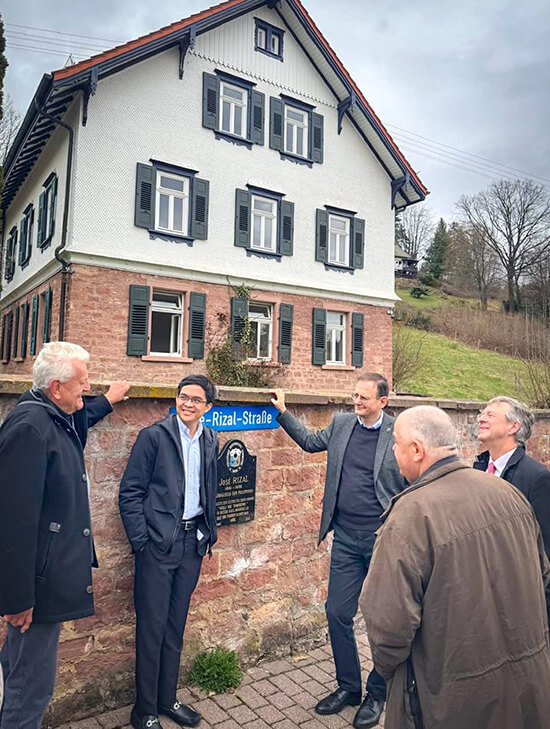
The first is the vicarage at the top of a quiet hill in Wilhelmsfeld, in the Baden-Württemberg region of southwestern Germany. Nestled in the Odenwald mountains, it is located about 10 kilometers northeast of Heidelberg, where Jose Rizal went to study at the AugenKlinik to save the deteriorating eyes of his mother.
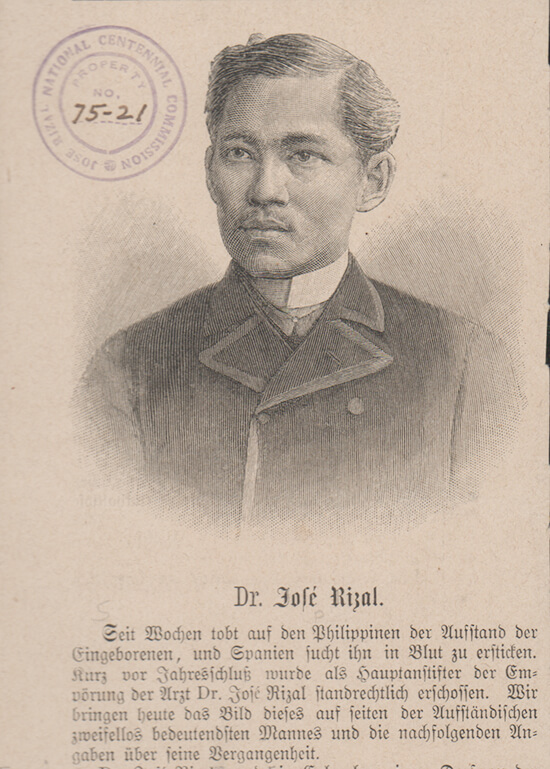
It was in this home with a sloping roof and half-timbered walls that Rizal would learn about the iconic German poet Friedrich Schiller from his host, Pastor Karl Ullmer, and write the last chapters of the novel Noli Me Tangere. Here, too, Ullmer would write the first news of Rizal’s execution in a German newspaper.
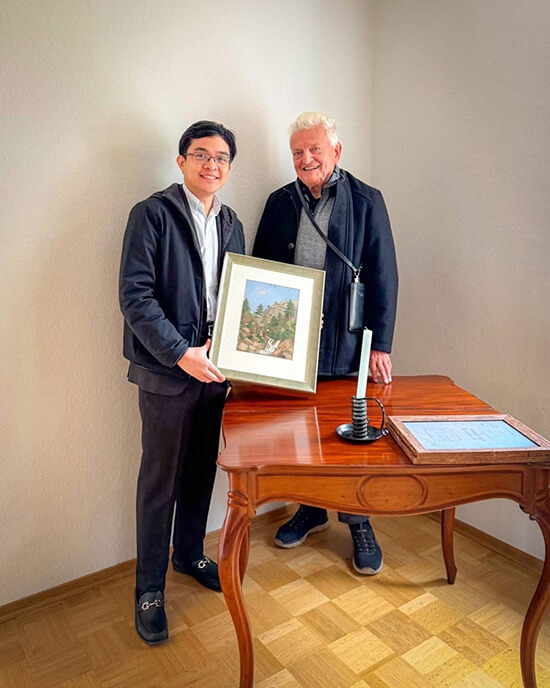
This sacred space would be acquired just this year by Congressman Leandro Leviste of the 1st District of Batangas, with the intention of making the “RizalHaus” a private museum in honor of Jose Rizal.
Serendipitously, it was Leviste’s mother, Legarda, who helped make possible the donation of the desk from the Ullmer house, on which the Noli was completed, to the Jose Rizal shrine at Fort Santiago years before in 2021.
Legarda, in fact, would be reared in a house built by the German ethnologist Otto Johns Scheerer, who was born in Hamburg and was just a few years older than Rizal. Scheerer would serve in the colonial government of Cagayan Valley, Batanes and Benguet. He would retire to Baguio for his health, and teach, as a professor, founding the department of linguistics at the University of the Philippines.
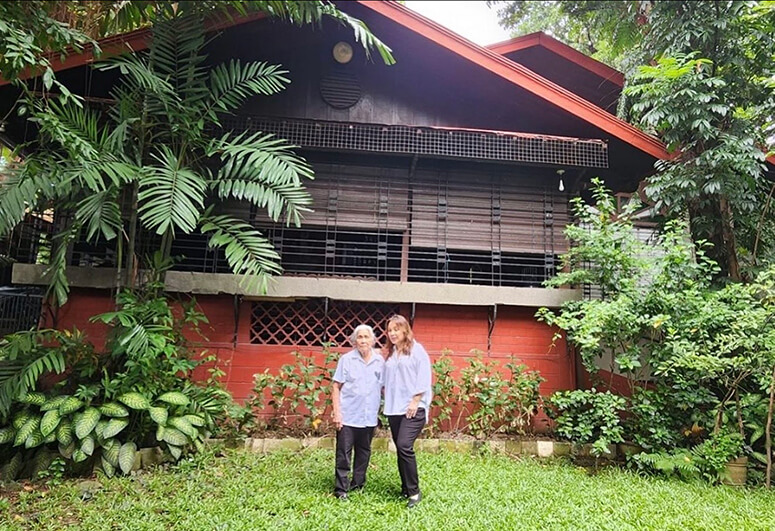
As if by design, his Malabon house would be acquired by Legarda’s grandfather, the legendary editor of the post-war Manila Times, Jose P. Bautista. He was married to Carmen Gella, whose father, Ariston, was a delegate of the historic Malolos Congress, representing the province of Antique.
That origin brings to a full circle the story of a family united by the shared history of two countries—and of its men of intellect and valor in both Germany and the Philippines.

WATCH: Is Philippine cinema still thriving? (Generations Ep. 19)
September 2, 2026
WATCH: Is OPM still as good as it used to be? (Generations Ep. 20)
September 9, 2026