

Where music finds its future
The Philippines’ greatest export has never been electronics, garments, or agricultural products.
It has always been music.
Filipino musicians perform in hotels across Asia, headline cruise ships around the world, teach in conservatories abroad, compose for Hollywood productions, and increasingly build careers from home studios that reach audiences far beyond the country’s shores.
For JB Music president and CEO Jerico Fernando, none of this is surprising.
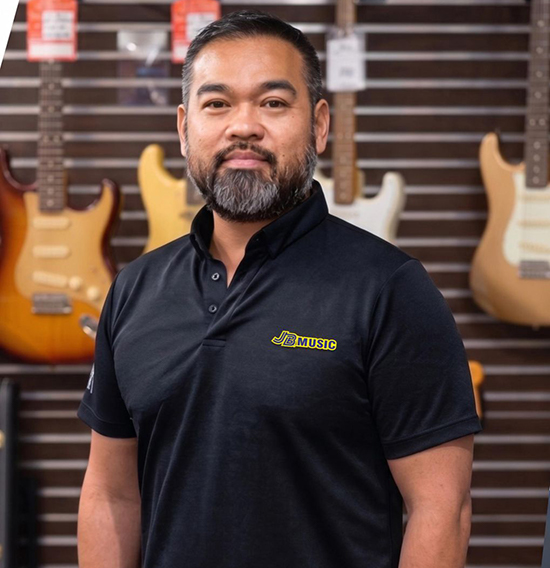
“The talent has always been there,” he says. “Even with the financial challenges Filipinos face, music has remained deeply rooted in who we are.”
“We are probably among the countries in Asia with the least government support for music education, but we’re still one of the biggest exporters of musicians.”
CONTINUE READING BELOW

What has sustained Filipino music, he believes, is not merely talent but an enduring passion that refuses to disappear.
“Even when music stops making money, people keep playing,” he says. “Even if they’re not earning much, they still perform gigs, they still busk, and they still make music.”
He continues, “It is never just about the money. It is really about the love of music.”
That conviction has quietly shaped how JB Music has approached its role in the industry; not simply as a retailer, but as an enabler of Filipino creativity.
Before the spotlight
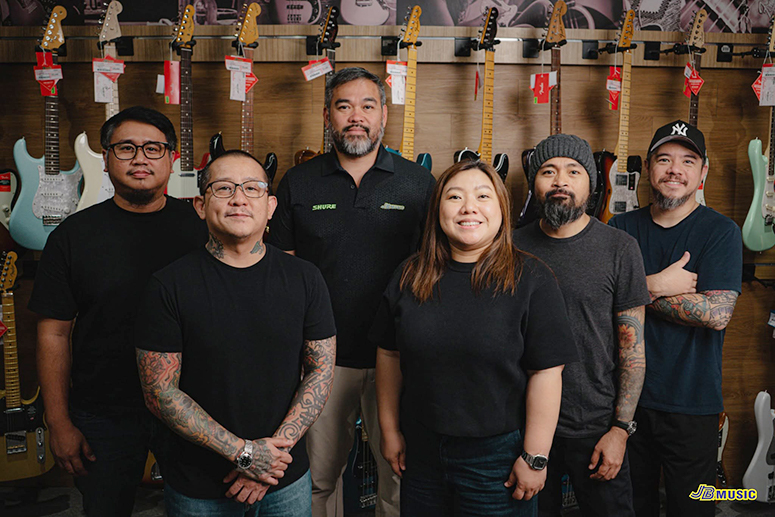
Fernando admits there was a time when he wasn’t certain he would even join the family business.
After college, he was living in Los Angeles, spending time in Malibu and Hollywood, and thinking about what he would do next. He was more interested in sports at the time and imagined that he might eventually run JB Sports.
Going home to the Philippines and stepping into the family business was not necessarily the future he had envisioned for himself.
Then he watched The Devil Wears Prada.
For more than five decades, JB Music has helped generations of Filipino musicians discover not only the right instruments, but the confidence, community and opportunities to turn passion into purpose — illuminating countless journeys long before the spotlight arrives.
One scene in particular stayed with him: in it, Miranda Priestly (Meryl Streep) explains to the young Andy Sachs (Anne Hathaway) how a seemingly ordinary choice (a particular shade of blue) can be traced through designers, fashion collections, retailers, and—eventually—the clothes worn by ordinary consumers.
What appears to be a small, insignificant detail is actually the result of a much larger ecosystem of people, businesses, and decisions.
For Fernando, the lesson went beyond fashion.
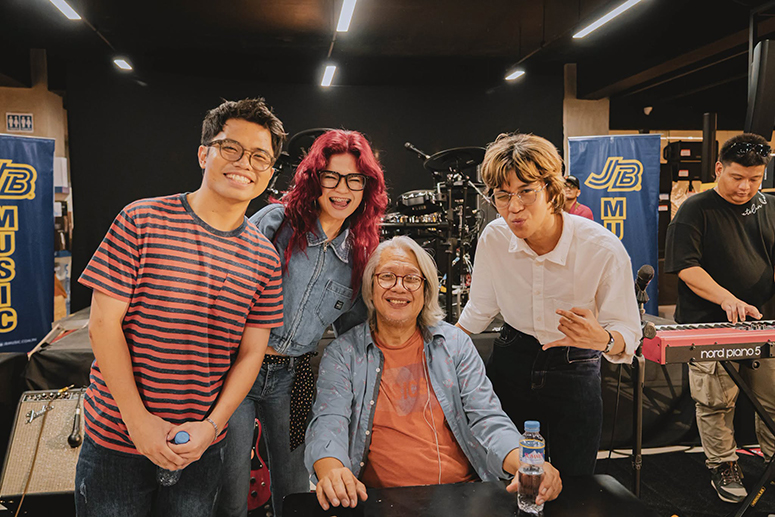
“I thought, ‘Our family is in the music business. We can actually make a difference,’” he recalls. “By giving musicians access to the instruments and equipment they need, we could help shape the future of music in the Philippines.”
It was a turning point.
He began to see JB Music not simply as a store that sold guitars, drums, and other instruments, but as a business that could influence what Filipino musicians were able to create. The products it chose to bring into the country, the technologies it introduced and the artists it supported could all have an impact that extended far beyond the transaction at the counter.
“I felt it was a calling,” Fernando says, half-joking that perhaps God really did make him watch The Devil Wears Prada for that reason.
When he eventually returned to the Philippines in the early 2000s, he did not begin by deciding what musicians should want. He began by asking them.
“We weren’t the industry leader yet,” he says. “So instead of assuming what musicians needed, I immersed myself in their community. I talked to artists, asked them what they needed, listened to their struggles, and tried to understand how JB Music could genuinely help.”
This instinct of listening first before responding would become central to how Fernando approached the business.
“We believe our role is to help musicians reach their goals because if we don’t do it, who will?” he says.
Believing before everyone else
Long before artists sign record deals or fill concert venues, they perform in school recitals, churches, cafés, and increasingly, on city sidewalks.
Fernando sees no distinction between these early stages and larger platforms.
“They are the future musicians of the Philippines,” he says of students participating in recitals. “We want them to stay inspired, keep learning, and continue making music.”
The same philosophy led JB Music to support Busking Community PH and the country’s growing community of street performers.
“There are so many talented people out there,” Fernando says. “Most of them simply need a stage, an audience, and proper equipment.”
Then he offers perhaps the simplest explanation for why the partnership happened: “Our support for buskers wasn’t part of some grand strategy. We simply saw people who needed help, and we decided to help.”
Communities that build musicians
Long before “community building” became corporate vocabulary, Fernando says musicians were already learning from one another.
“Communities are where people learn, grow, and support one another,” he says.
“Experienced musicians help beginners. Recording artists mentor aspiring artists. Our role is simply to support that process.”
That philosophy also explains why JB Music invested early in recording technology and education.
“When almost everyone told me musicians needed Pro Tools and MIDI controllers, we started bringing them in,” he recalls.
“But beyond providing equipment, training remains one of the most important things we offer musicians.”
Many of today’s independent artists recording from bedrooms and home studios are benefiting from technologies JB Music introduced—and taught—years before they became commonplace.
More than a store
In an era dominated by e-commerce, Fernando continues to believe physical spaces still matter.
“For musicians and athletes, every purchase is an investment,” he says. “They are very particular about what they need, and it is difficult to make that decision without seeing or trying the product first.”
His reasoning, however, extends beyond commerce.
“How can you build a community if you don’t have a place where people can gather?” he asks. “A safe space where they feel at home?”
This thinking explains why some JB Music branches include cafés, clinic spaces, and gathering spaces where musicians can stay, exchange ideas, and collaborate—even if those amenities are not major revenue generators.
“If people feel comfortable enough to stay, talk, learn, and connect with one another,” Fernando says, “then we’ve accomplished something much bigger than making a sale.”
Where music finds its future
Ask Fernando what success looks like, and he does not mention market share or expansion.
Instead, he talks about Filipino engineers working on Disney and Netflix productions, composers making names for themselves overseas, and musicians proving that creativity can become a sustainable career.
“I never want to see talented musicians give up on their passion simply because they can’t make a living from it,” he says.
He hopes JB Music will ultimately be remembered not for the instruments it sold, but for the confidence it gave people to pursue music.
“If, 20 years from now, someone looks back and says, ‘JB was part of my journey. They believed in me before anyone else did,’ then I think we’ve done our job.”
JB Music’s story reminds us that the future of Filipino music is not created by instruments alone. It is shaped by people who listen before they lead, who invest before success arrives, and who believe that every great performance begins long before the spotlight does.

WATCH: Do you still believe in marriage? (Generations Ep. 17)
August 19, 2026