Mario Cristiani and Lito & Kim Camacho: A friendship cultivated by art and generosity
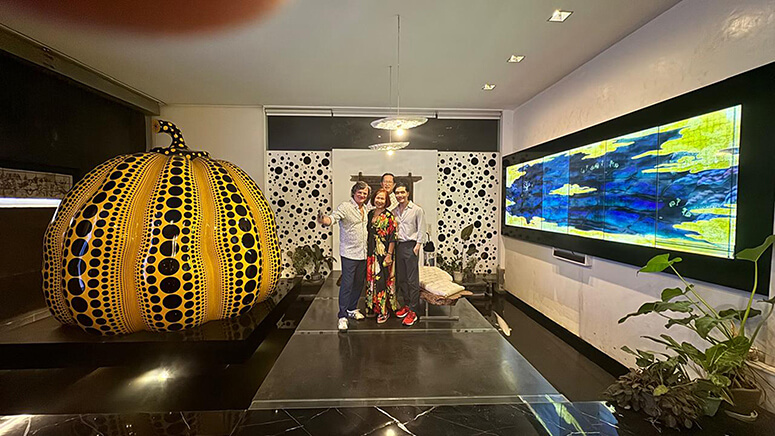
Lito and Kim Camacho’s homes in the Philippines and Singapore are wonderlands for art lovers, reflecting their appreciation for remarkable contemporary works collected from both local and international artists since 1981. The Camachos are considered among the most important collectors in the Asia-Pacific region, often contributing to major retrospectives of artists like Yayoi Kusama and Alfonso Ossorio in museums around the world.
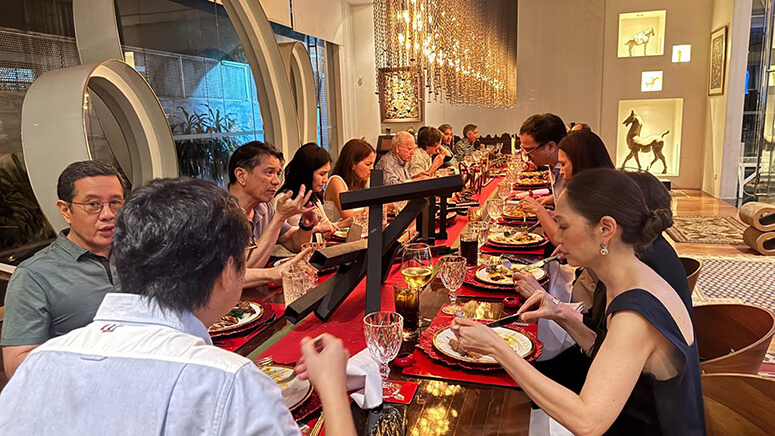
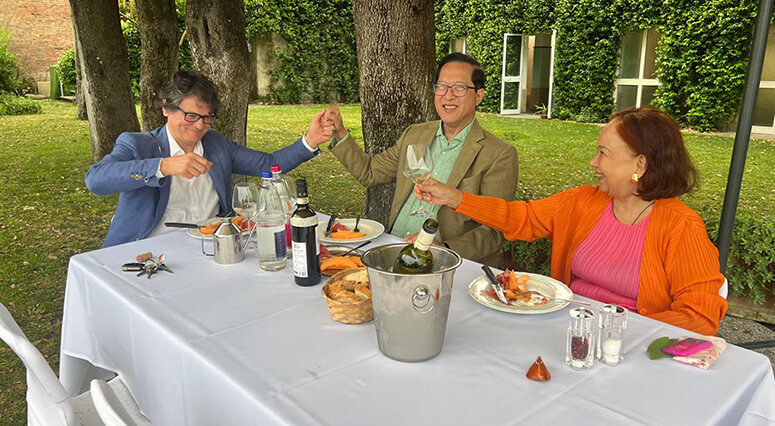
When the couple invited us to a special dinner for their friend Mario Cristiani, co-founder of Galleria Continua and president of Associazione Arte Continua, it was an occasion not to be missed—a wonderful encounter between the international gallerist and public art champion and the Philippine art community of artists, collectors, gallery owners, and art fair organizers.
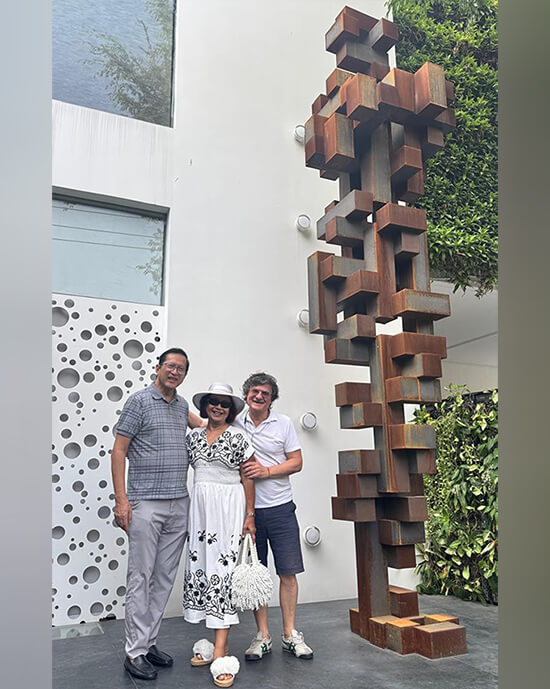
In an exclusive with The Philippine STAR, the Camachos and Mario share the story of how they met, the birth and growth of the gallery and non-profit organization, and their views and observations on the art scene.
THE PHILIPPINE STAR: When and how did you meet, and what stayed with you after that?
Kim Camacho: We met Mario at one of the editions of Art Stage Singapore about 14 years ago. We invited him—then still a stranger—to our family dinner. His chemistry with us and our family was immediate, and we have been very close friends since.
Lito Camacho: We greatly value his authenticity, compassion, hospitality, generosity, and thoughtfulness, as well as his deep convictions about art and its influence on life. We admire how philanthropic he is and how he uses art to help communities.
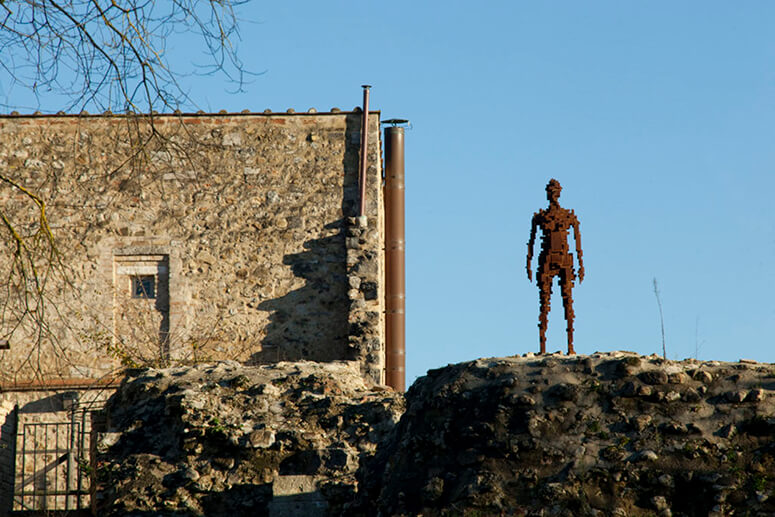
Mario Cristiani: I was putting on an exhibition for Antony Gormley after spending so much energy convincing my partners—and Antony himself —that we had to do a show in Singapore. The only problem? I didn’t sell a single piece. At the airport, dragging a massive, heavy suitcase and feeling as deflated as the wheels on my bag, I passed by a restaurant where Kim spotted me and insisted I join their table with Lito and the kids. I barely knew them, but they took me in like a weary “art pilgrim” returning home after a long, unsuccessful trip away from his own family.
I ended up flying home with a smile on my face despite the fair being a disaster. When I got back, I called Kim to thank her and tell her how much that moment meant to me. That’s when she told me that Lito was actually fighting for his life at the time. Suddenly, she was the one going through a difficult period.
Now, I’m a man of faith—I’m Catholic, even if I work in the world of contemporary art—so I told her, “Look, I’m going to pray for Lito. I hope he recovers, because to me, you are like family.” I started calling her every day to check on Lito until he got better, and our friendship just kept growing.
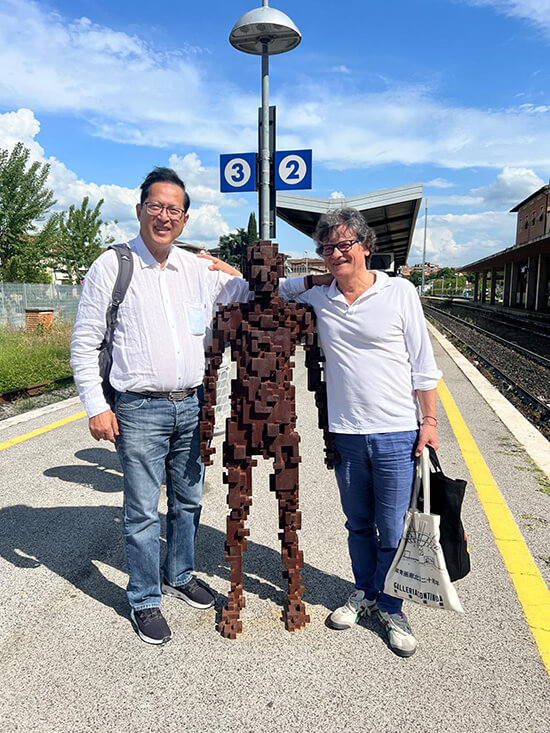
They later visited me in Lugano, where I’ve lived with my family for the last 10 years. Last year, I made them a deal: “If you come see the artworks I’ve donated through AAC in the towns where I grew up—Poggibonsi, Colle, and San Gimignano—then I’ll come to the Philippines to spend time with you, just as you’ve invited me to do so many times.” So here I am.
How has knowing Mario influenced the way you look at contemporary art?
Lito: He has inspired us to share our art collection with museums so that more people can see it.
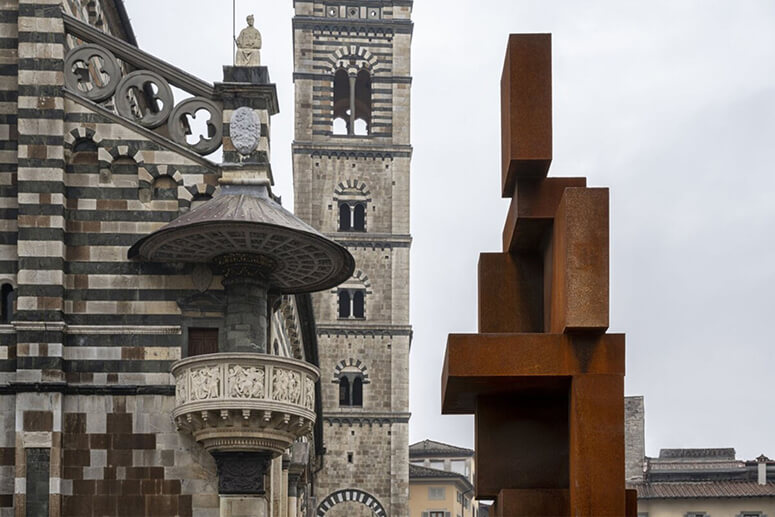
Kim: It has also made us value the role art can play in public spaces.
What connects your worldview with that of Lito and Kim?
Mario: It’s a deeply rooted love for art. Each of us has our own perspective. I’m a gallerist, but I don’t let it define me. I simply do my job well so I can offer something of value beyond myself. I have a genuine affection for them because they are such generous people. Generosity is the most important quality a person can have. We exist in this world because the world is generous to humanity, even if we are not always as generous in return.
What do you think is Mario’s most important contribution to contemporary art today?
Lito: Having galleries in Beijing, Paris and its outskirts, Rome, São Paulo, Havana, and San Gimignano—and participating in over 30 international art fairs—allows Mario and Galleria Continua to present important Western artists to audiences in Asia and South America. At the same time, he introduces and promotes artists from regions like Asia and Cuba to European and American collectors.
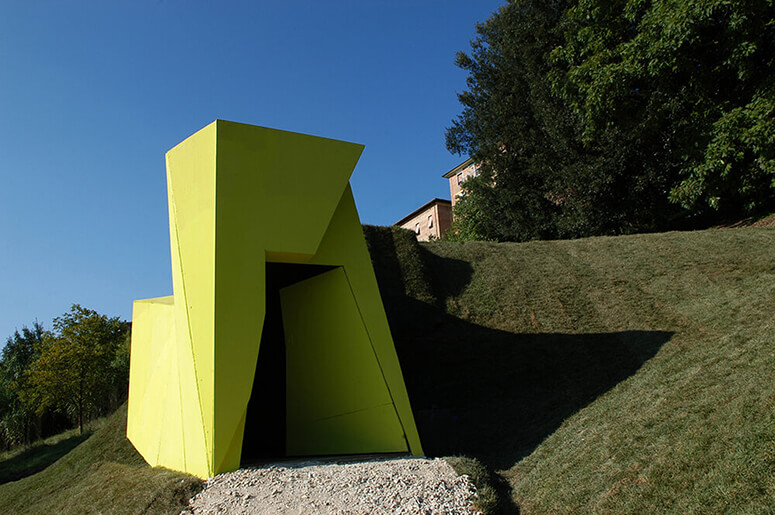
Kim: Mario’s most significant contribution is his non-profit work promoting public art in low-profile towns in Italy. These projects provide public access to some of the world’s most important contemporary artists while revitalizing and generating tourism in these communities.
Galleria Continua began in San Gimignano, far from art capitals. What motivated that decision, and how did it shape your identity?
Mario: Galleria Continua and AAC were founded in 1990 by Maurizio Rigillo, Lorenzo Fiaschi, and myself to carry forward the rich artistic heritage of San Gimignano by bringing in leading contemporary artists. During the Renaissance, artists invited to the city were among the most important from Florence, which was then a cultural capital of Europe—and remains so today.
The names “Continua” and “Arte Continua” were chosen to bridge the excellence of the past with the creativity of the present. The artists of the past became legends, and we wanted to invite contemporary artists from around the world to “dialogue” with that history in a living city.
Which AAC project do you think made a tangible difference in the local community?
Mario: “Arte all’Arte” (1996–2005) changed everything. It brought artists and curators to engage with the Tuscan landscape and led to collaborations with artists like Antony Gormley, Michelangelo Pistoletto, Anish Kapoor, Pascale Marthine Tayou, and Daniel Buren. It was a huge win for the local community, fostering pride and a sense of belonging through contemporary art, and it was equally important for the growth of Galleria Continua.
Do you see potential for deeper engagement between Galleria Continua/AAC and the Philippines?
Lito: We hope their work in the non-profit space can inspire and guide our local art community—including collectors, galleries, and local governments—to collaborate in promoting public art by both local and international contemporary artists.
Kim: With greater engagement from local institutions and collectors, Mario and his gallery might also be encouraged to participate in our art fairs and include Filipino artists in their roster.
What qualities should you look for in artists and their works?
Mario: Work that can engage in dialogue across cultures. No matter where someone is, they remain an individual. I want to support artists who can poetically tap into that essence of individuality. Don’t focus on the “brand.” If you love a piece and can acquire it, do so—but don’t be misled by branding. Art should help you understand what your life is really about. The more self-aware you are, the less easily you can be manipulated. Protect your freedom and choose for yourself.
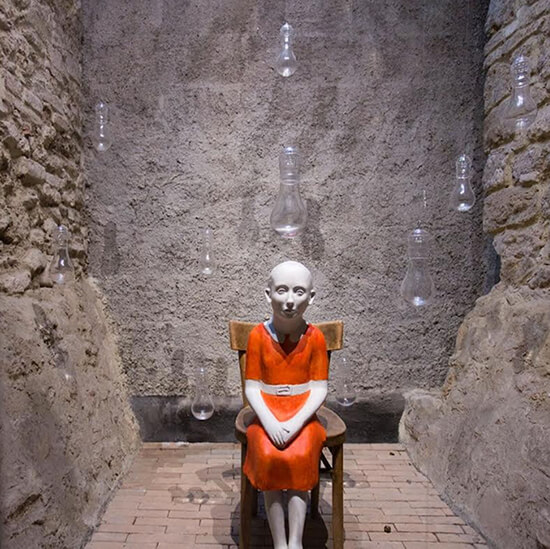
What does continuity mean to you today, especially in a rapidly shifting global art landscape?
Mario: It means seeking out those who possess poetry—in the deepest sense. An artist belongs to the global art community if they can touch something universal, regardless of origin. That’s why AAC works with curators who have no commercial agenda. Our choices are based on “poetic power,” not economic power.
At the same time, my experience in the commercial art world allows me to recognize whether an artist is offering a genuine gift to a city or simply using it for publicity. Generosity is fundamental. If I don’t see that quality, I won’t pursue a public project with them.
What makes a truly memorable exhibition for you?
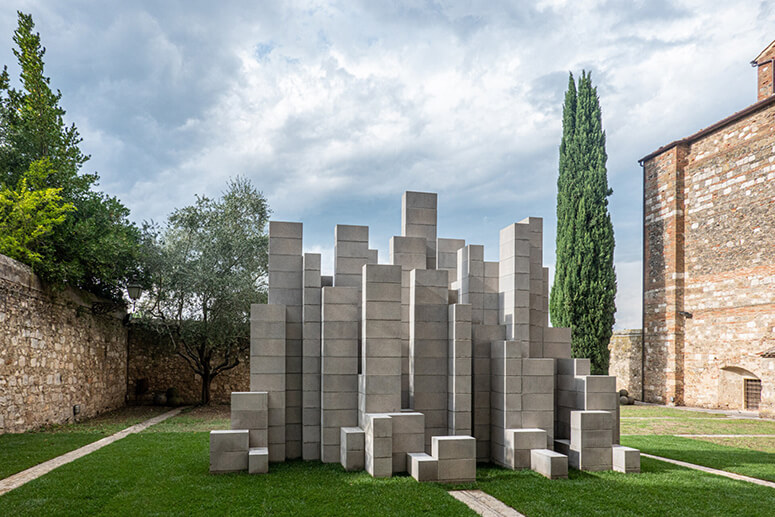
Mario: When artists like Antony Gormley, Mimmo Paladino, Kiki Smith, Jannis Kounellis, Ilya Kabakov, Sol LeWitt and Alberto Garutti chose to gift their works to cities—those are the moments that stay with me.
Placing art in public spaces where anyone can experience it freely creates a space of true freedom. It becomes a place of sharing, rooted in choice and pleasure. Artists distill the desire to live into their works, nurturing life itself. A public artwork is like a tree—fragile yet vital— connecting us to nature and to one another. Great art breathes life into the mind, helping us understand why we are here and how we can leave something meaningful for future generations.