

Mapper’s Delight: Kitty Go maps out a whole new world
Over two decades since her books created waves and whispers in Manila society, Kitty Go is back with a new printed collection—of rare maps!
From April 23 to 26 at Vetted in Makati, 15 rare maps from her private collection will comprise “Mapper’s Delight,” a rare map collection that turns history into living décor.
A former magazine editor, Kitty began collecting maps over two decades ago with a single decorative piece.
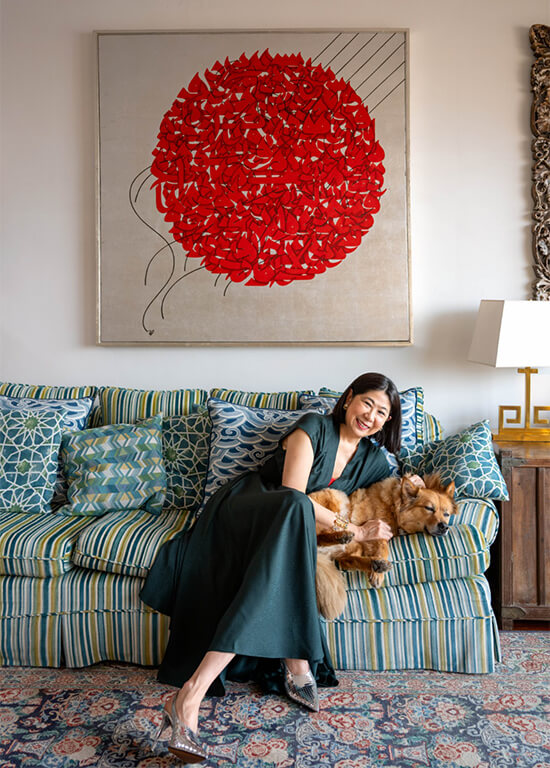
“I started with one rare map for decorative reasons because maps are generally easy to appreciate and flexible home accessories,” says Kitty, who left Manila over two decades ago to be a “trailing spouse.”
“When my marriage ended, I decided to stay in Hong Kong. I continued in media, writing for the Financial Times, The Wall Street Journal, the South China Morning Post and some local glossies. I mostly covered fashion but the art scene was getting started. Chinese buyers were starting to pay a lot for art so I paid attention to those stories,” she said in an interview with the South China Morning Post.
She didn’t—and doesn’t—miss Manila society, she tells me, “because I hear everything from my friends anyway.” She flies in yearly for the Gokongwei family reunions.
Islands, Ink & Imagination

That curiosity sparked by her first map soon evolved into a “deeply considered” archive of Philippine cartography—one that now reads as both history lesson and design inspiration. Think: intricate engravings, soft washes of color, and compositions that feel as contemporary as they are centuries old.
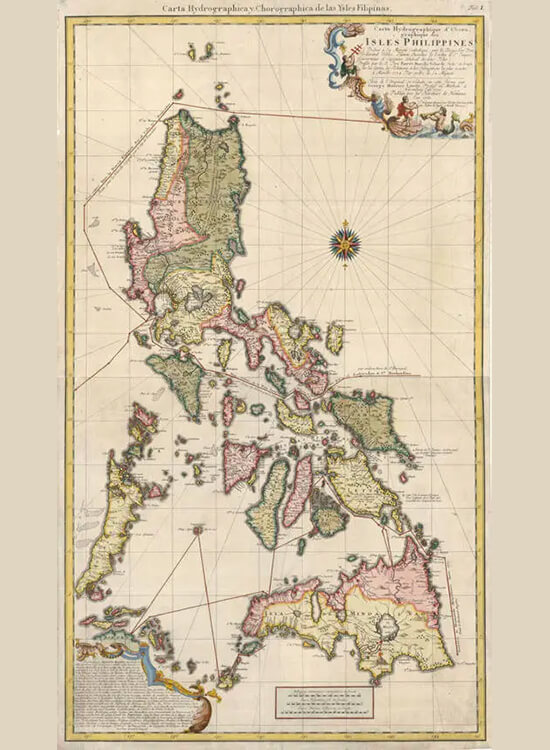
Two versions of Pedro Murillo Velarde’s landmark map Carta Hydrographica y Chorographica de las Yslas Filipinas are presented at the show, including a 1760 Homann Heirs version, and Jacques-Nicholas Bellin’s scaled down version from 1752.
At the heart of the exhibit is the collection’s Homman Heirs version of Carta Hydrographica y Chorographica de las Yslas Filipinas. Considered as the most important map in Philippine history, it captures the archipelago in remarkable detail—equal parts scientific record and artistic feat. News of this has gotten many champions of the Philippines’ stand on the West Philippine Sea excited and eager to see the collection.
I asked Kitty why a Homman Heirs version of the map is especially valuable.
“Maps in the 1700-1800 were a joint effort of printers and cartographers. Homman (and his heirs) were German printers who engraved and hand-printed using Pedro Murillo Velarde’s cartography. Homman and his heirs made their name as publishers and geographers to a Holy Roman emperor so desirability of maps from this house is high,” Kitty points out.
Also on show is an early cartographic sample, a 1598 Insulae Philippinae by Petrus Kaerius, affectionately known as the “tagilid” map for its sideways orientation.
For Kitty, maps are great entryways for starting collectors, having both historical and decorative values that make for great conversations, too.
“The draw of these works lies in their visual rhythm, how the island groupings convey a certain kind of movement between water and the islands and spaces in between. That layered geography becomes almost abstract up close, with coastlines and currents forming patterns that feel unexpectedly modern.”
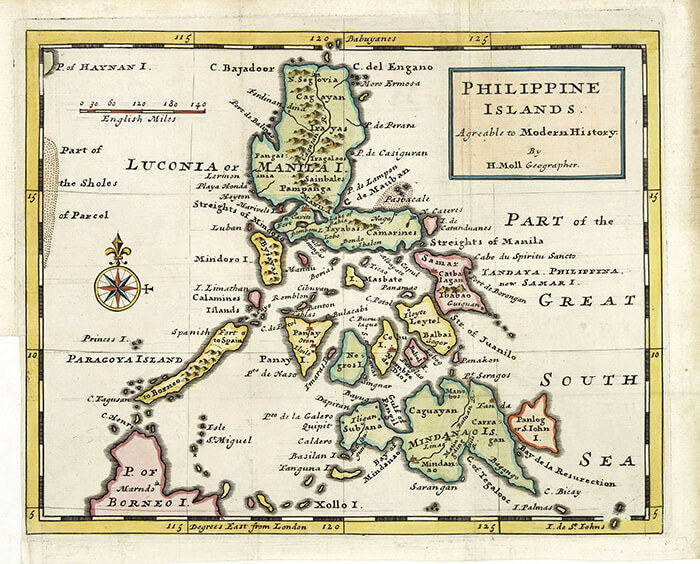
“The collection spans the 1500s to the 1800s, with standout pieces including Alain Manesson Mallet’s vivid 1683 rendering of Manila, George Anson’s chart of the Manila Galleon route, and works by Jacques-Nicolas Bellin—some featuring charming inaccuracies like the mythical island of ‘San Juan,’” adds Jonathan Matti of Vetted.
Previously displayed in Kitty’s homes in London and Hong Kong, the maps are as much about atmosphere as they are about history. They lend warmth, texture, and a sense of story to any space.
“You don’t need to know maps to love them,” Kitty says. “They’re just beautiful to live with.”
Perhaps maps remind us of where we stand in this vast world—amid oceans and islands, peaks and depths that blanket it—and how, somehow, we still find our place within it, even if we are but a speck on the map.
“Mapper’s Delight’ opens on Thursday, April 23, from 5 p.m. to 8 p.m., and on April 24 and 26 from 11 a.m. to 7 p.m. at Vetted, Unit 126 Mile Long Building, Amorsolo corner V. Rufino, Makati.
There will also be a talk on April 25 at 4 p.m., by cartography expert Dr. Marco Caboara. Titled “The Legacy of the Society of Jesus on the Cartography of China and the Philippines,” the talk will explore the Jesuit influence on regional mapping. The talk is open to the public with a limited seating of 40. For inquiries, contact 0917-5262339.

WATCH: Do you still believe in marriage? (Generations Ep. 17)
August 19, 2026