

From fall detection cameras to answering FAQs: How this hospital in Singapore is adopting AI, AR tech
There's no denying that AI is being adopted in the healthcare industry. Earlier in January, a world-first trial revealed that AI helps doctors spot more cases of breast cancer when reading scans. It's also being used to predict possible low blood sugar events during the night for diabetics.
One of Singapore's top hospitals, Mount Elizabeth Hospital (MEH), is also making use of the technological advancement—plus augmented reality and robotics—to improve patient care.
MEH recently underwent a S$350 million (P16.9 billion) transformation called Project Renaissance, in which it upgraded its wards and expanded its integrated radiology complex. Also part of this renovation is the adoption of advanced technology to improve diagnostics and enable less invasive treatments. Here's how AI, AR, and more tech are being used in the Singaporean hospital.
@philstarlife Mount Elizabeth Hospital in Singapore recently got refurbished to expand its healthcare ecosystem. Check out the new spaces and services Filipinos can experience when they visit this hospital. #mountelizabethhospital #singapore ♬ original sound - philstarlife
AI cameras to detect fall risk
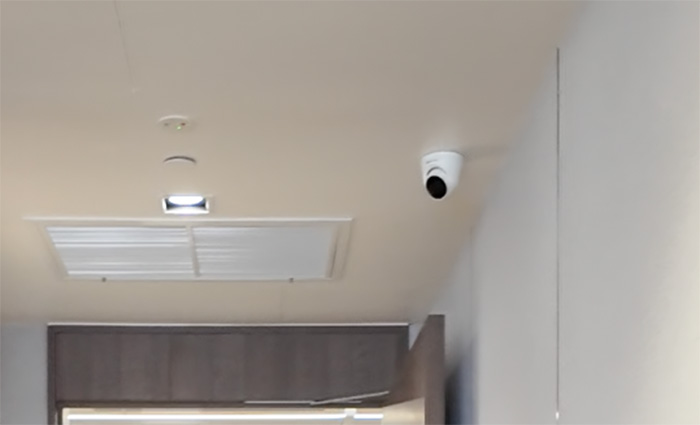
Each room in Mount Elizabeth Hospital in Orchard is equipped with AI cameras to detect whether a patient has fallen.

"It's generative AI. Basically, it recognizes your body movement. Let's say you get out of bed and you fall, the camera will capture the movement and the body position, and an alarm will go out to the nurse's station outside," MEH CEO Yong Yih Ming said during a tour of the hospital attended by PhilSTAR L!fe.
He shared that this fall prevention system was born out of patients needing privacy amid nurses always checking in their rooms.
To guarantee privacy, patients have the choice to opt in or out of having the camera activated. Yong also said that what's seen through the camera isn't raw footage like a CCTV, but a silhouette or a mosaic version. "You can't even tell the body parts properly. It's just a moving mosaic," he said.
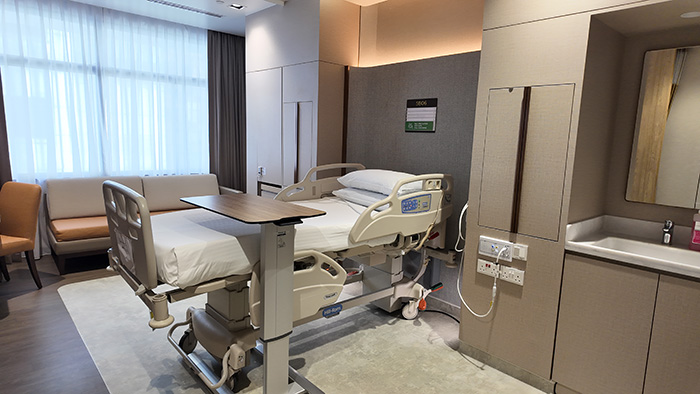
"This is important because it makes healthcare more efficient for the patient," adding that the software also reduces nursing manpower.
AR for FAQs
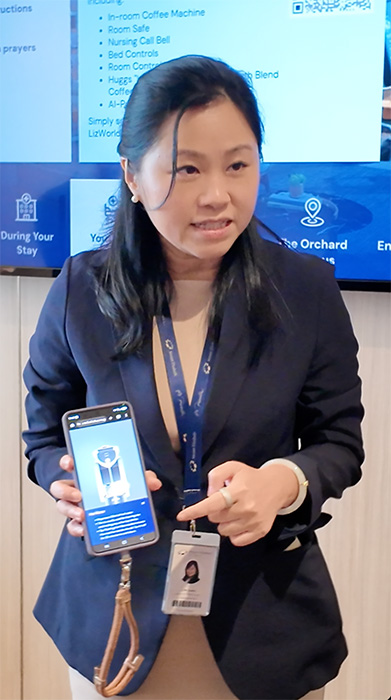
To help patients and their families navigate the amenities in the hospital rooms, MEH introduced the LizWorld WebApp.
With this, they can simply scan the QR code, open the app, and learn how to use things around the room, like the controls for the bed, the in-room coffee machine, the in-room safe, the nursing call bell, the thermostat, and more. This also means that the patient and their families won't need to keep calling the nurse for frequently asked questions about the appliances.
"We introduced this feature because 50% of the time, the questions are not asked by the patient; they are asked by the family members," Yong said. "We also want to reduce the unnecessary work of the nurses."
AI image analysis and detection
One of the new features in MEH's endoscopy center is the use of robots (a clean and dirty one) to deliver and handle medical equipment like scopes.
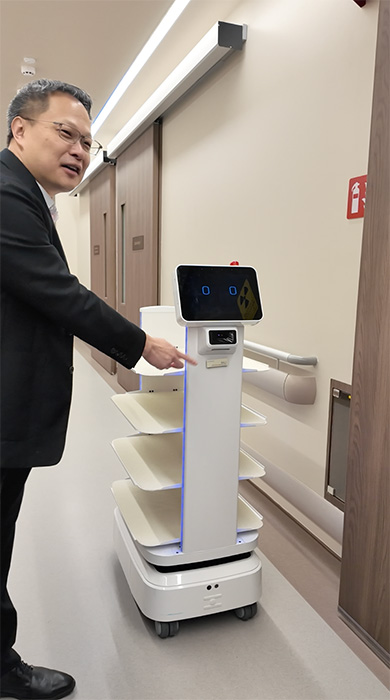
The hospital also uses ENAD, an AI-powered upper and lower endoscopy image analysis software that can detect lesions in real-time procedures.
A similar system is used in the radiology department to help radiologists identify what they may not be able to see during a scan.
"Sometimes, the human eye, no matter how good the resolution of an image is, you may miss that very, very small thing," Yong said. "This is why AI can help."
"We like to say that AI is a co-pilot of a doctor. That means they are not replacing the doctor. They basically help make the doctor's work more complete, in case sometimes human error can happen," he added.
Apart from the adoption of advanced technologies, Project Renaissance also saw the addition of 56 single bed rooms, upgrade of 18 wards, and the new automated pharmacy, which can pack up to 1,500 medication sachets per hour.
Filipinos at MEH
MEH shared that based on its 2025 data, 30% of its patients are foreign, with the Philippines making up 9%.
Most Pinoys go to the hospital for general surgery, and gastroenterology and medical oncology concerns.
The hospital offers medical specialties spanning from infectious disease, internal medicine, oncology, neurology, neurosurgery, ophthalmology, pathology, psychiatry, urology, respiratory medicine, and more.

WATCH: Is OPM still as good as it used to be? (Generations Ep. 20)
September 9, 2026