Seeking the divine in The Kundiman
Arthur Espiritu’s first-ever, all-kundiman concert at Mira Nila had Manila’s culturati in full attendance, all anticipating how the internationally acclaimed tenor who performs in the cathedrals of opera like the Teatro alla Scala and the Metropolitan Opera will interpret the Philippines’ traditional love songs. Everyone was wondering, how will he balance the usual heroic projection that he is used to with the delicacy and tenderness characteristic of the national art song?
Espiritu’s one-nigh-only performance, Mga Awit ng Pag-ibig at Kundiman, together with soprano Stefanie Quintin and pianist Najib Ismail, traced the kundiman from its patriotic roots to its transition into zarzuela, love songs and modern art songs, a selection from the recording of a 13-track archive project with the National Commission of Culture and the Arts in collaboration with the Manila Chamber Orchestra Foundation.
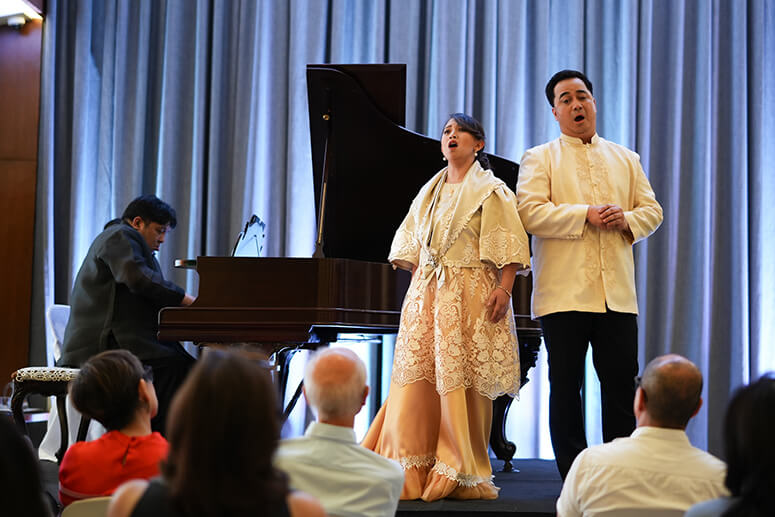
Born in Morong, Rizal and raised in nearby Tanay before immigrating to the US when he was 14, Espiritu always tries to connect to his roots, visiting the Philippines for operas at the CCP and concerts at different venues. He has also been wanting to do a recording so when Ismail and the producer impresario Joseph Uy suggested doing kundimans, everything fell into place. To launch the album, Mira Nila was the natural choice since it’s a 1929 heritage house museum and library with an Old-World elegance that reflects the emotional and cultural world of the kundiman.
When asked by Espiritu, Petty Benitez-Johannot of the Benitez-Tirona Mira Nila Foundation welcomed the idea as a way to remember their father, Ambassador Tomas Conrado Benitez, who loved the kundiman and would sing with a pianist on the 1904 Steinway that has been restored recently and was used for the concert.
It was also a perfect fit with their ongoing program of cultural activities like the previous Cinema Paradiso Al Fresco that combined a film showing with live music, not to mention that all proceeds benefit the foundation’s conservation program which restores at-risk artworks and now prioritizes structural repairs following severe flooding in 2025. Ultimately, the concert is a double act of heritage preservation—both for Filipino music and a preserved Filipino heritage space.
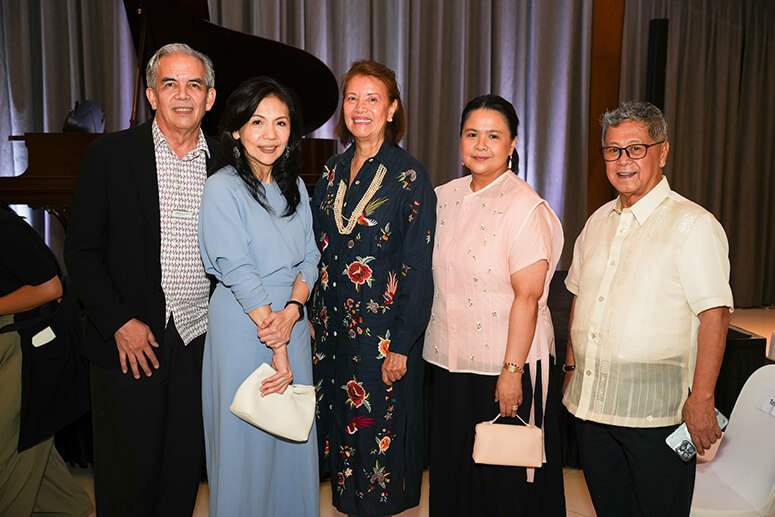
Upon arrival, we walked through the gardens and made it to the grand ancestral house where we had a pre-concert dinner by Chef Roberto Boggio at Al Bacchio which was temporarily situated there while the actual restaurant was being completed next door. It was quite a luxury, dining amidst all that history and art.
The gentility was a fitting prelude to the concert which featured treasured pieces from the country’s esteemed composers. But while these were heritage songs to be preserved, the performers treated them not as nostalgic museum music but as living dramatic art to be given their own individual stamps of artistry and emotional relevance which resonated with the audience that gave many rounds of rousing applause.
Whereas some interpret these songs with an emphasis on sweetness and vocal prettiness, Espiritu brought broader dramatic architecture, treating them almost like operatic scenes by shaping narrative tension and emotional progression. He had the perfect partner in Ismail who shaped phrasing and timing, allowing the music’s melancholy, patriotism and romanticism to unfold naturally.
In Madaling Araw (1949) by Francisco Santiago, Espiritu brought vocal warmth and emotional immediacy while Ismail was able to coordinate the vocal line with the piano texture in conveying the passionate love for a woman as a veiled expression of longing for freedom and patriotism. The tenor was just as intense with Leopoldo Silos’ Dahil Sa Isang Bulaklak (1967) but had a more intimate delivery to evoke the delicacy of the flower in the stirring melody which Ismail tended with the right atmosphere to bring it to the climax in a profusion of blooms.
The plaintive Anak Dalita, another Santiago piece from 1917, is usually a solo but was perfect as a duet with the contrast of vocal colors: Espiritu’s radiant sound and commanding sweep of ardor and urgency versus Quintin’s lyrically nuanced tenderness in a dialogue of longing answered by reassurance in a story about the “child of sorrow,” a poetic exploration of poverty and unrequited love aligned with the kundiman tradition of symbolizing love for the motherland. Jocelynang Baliwag, popular in the 1890s, also connected to the roots of kundiman as coded expressions of nationalism.
Another surprise for the evening was National Artist Nicanor Abelardo’s Mutya ng Pasig, (1926) traditionally sung by a woman since it’s written from the perspective of a mythical river goddess lamenting her lost love and kingdom but with Espiritu’s vocal range, he created his own version which was deeply moving, haunting and mysterious.
Lagi Kitang Naaalala, a 1973 love song by Leopoldo Silos with lyrics by Levi Celerio who has written more than 4,000 songs, was easily relatable, sounding personal and conversational rather than purely operatic.
Kundiman ng Luha (1924) by Nicanor Abelardo was so touching the way Espiritu conveyed the heartbreak and longing with lyrical sophistication and aching dignity while Ismail brought out the harmonic richness and subtle inner voices.
But Kundiman ng Langit (2002) may have been the closest to Espiritu’s heart, even calling out the composer, Augusto Espino, who was in the audience and noting how “it must have taken the presence of the divine” to write that piece; and the way the tenor rendered it with lyrical warmth and dramatic expansion, the experience was truly transcendent.
The divine was definitely present in the concert and ultimately, the performance of the artists made us proud of the wealth of our musical heritage, reanimating it for us today as romantic, nationalistic and living expressions of Filipino identity.