

Eternal Rome
It isn’t just the grandeur of Rome’s monuments (whether colossal or man-sized), the charm of its cobblestone streets and lamplit piazzas, the high of its spiritual destinations and the therapy of its shopping options—that leave an enduring imprint on the traveler, seasoned or not.
It’s how Rome’s monuments have defied time and nature, men’s whims and follies. The flavors of the gelato (which now include “Dubai Chocolate”) may have changed over time but the form and silhouette of Rome’s millennia-old landmarks have endured.
I was in Rome as the brittle structures of the Philippines were being heartbreakingly ravaged by calamities (natural and man-made), as investigations uncovered a seemingly bottomless pit of cobras involved in the construction of lifesaving flood-control structures. Ironically, Roman aqueducts continue to stun for their engineering and endurance.
Indeed, the Eternal City is eternal.
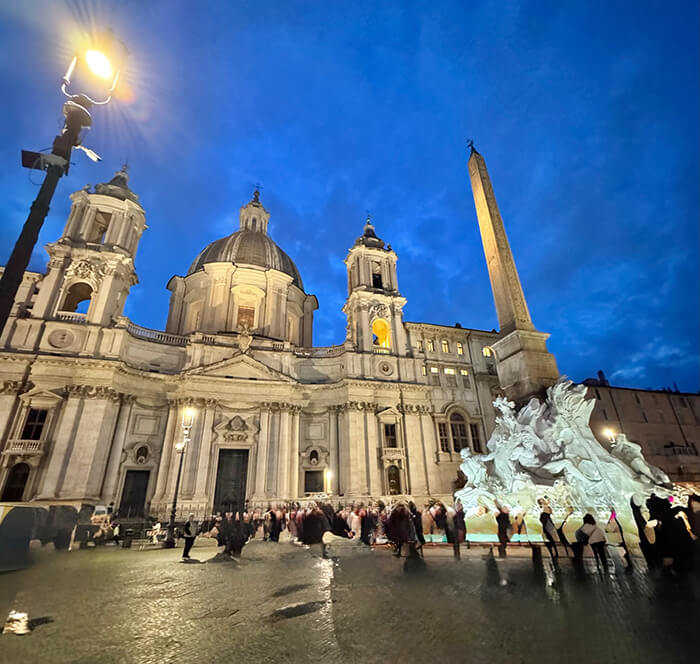
Wander & wonder
Those thoughts unraveled like a ball of yarn on my mind as my jaw dropped again before the Pantheon (built in 126 AD), the best-preserved ancient building in Rome. Its concrete dome is still the world’s largest unreinforced dome. I stood in wonder again before virtually all sides of the Colosseum (build 80 AD). Though partially ruined by earthquakes and stone-robbers, much of the structure remains intact and iconic— inside and out. Near the Colosseum is the Trajan’s Column (113 AD), which also remains almost completely intact. And the list goes on and on.
The cobblestone streets that are as rare as chunky rubies in Escolta and Intramuros, carpet most of old Rome. They are so ubiquitous you kind of forget you’re time-travelling as you step on them.
CONTINUE READING BELOW

And the asphalt streets in many places in the Philippines? One of my former editors described them as “melting in the rain.”
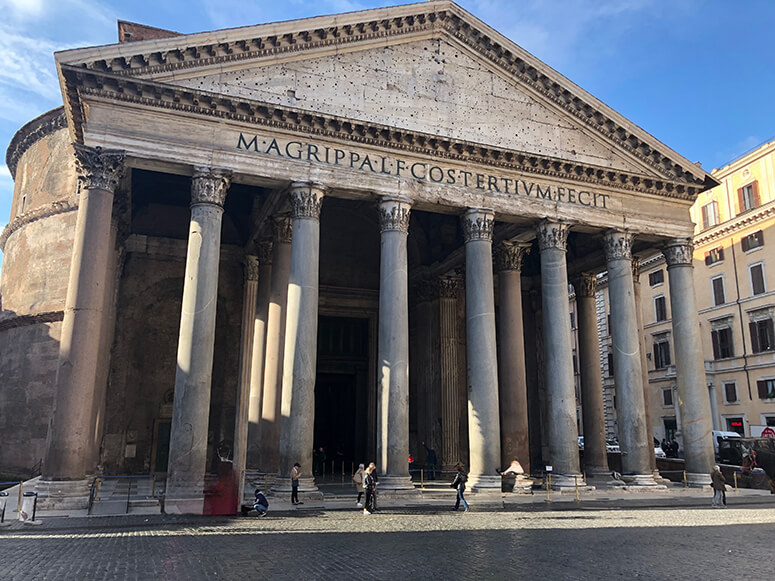
Rome wasn’t built in a day—look, it is still standing now. And the revenues Italy gets from those who ogle their monuments and sail in their clean seas give its people ample social services. According to the World Travel and Tourism Council, the Italian travel and tourism sector contributed 215 billion euros (the equivalent of P14.65 trillion) in 2023, or 10.5 percent of its GDP!
Many later-era structures also contribute to Rome’s timelessness. There’s the St. Peter’s Basilica, the largest church in the world by interior area, whose dome was designed by Michelangelo and whose Bernini columns seemingly guard the altar. To Catholic pilgrims, the basilica is a sacred site as it is traditionally believed to house the tomb of St. Peter, one of Jesus’ apostles and the first pope.
There’s also the Santa Maria Maggiore, which broke ground in the fifth century and was completed in the 18th century. It is the largest Marian church in Rome and is where Pope Francis is buried. Like St. Peter’s, it has one of Rome’s Holy Doors (the other two being in St. John Lateran’s and St. Paul’s Outside the Walls.)
This being a Jubilee Year, Rome is inundated with pilgrims from near and far, so best to visit the Holy Doors on weekdays. Another tip: A quality dinner in Rome in a good restaurant for a group of five, with one round of drinks (Prosecco for me!), costs about P10,000. Value for money if you ask me.
Wows & vows
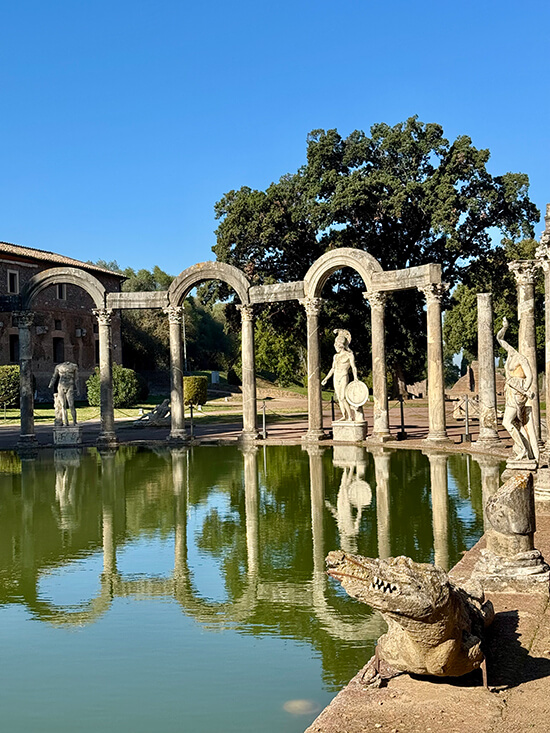
Another first for me was visiting Villa Adrian or Hadrian’s Villa in Tivoli, just 30 to 45 minutes outside Rome. A UNESCO World Heritage Site, it’s a romantic estate that comprises the ruins and archaeological remains of a large villa complex built around 120 AD by Roman emperor Hadrian.
The square-kilometer complex (you can comb it at your own pace with a moderately difficult walking tour and a map, which I did!) contains over 30 monumental and scenic buildings arranged in a series of artificial esplanades and surrounded by gardens and fountains.
A 2,000-year-old Roman villa the size of a football field is still standing—and stunning! Wow!
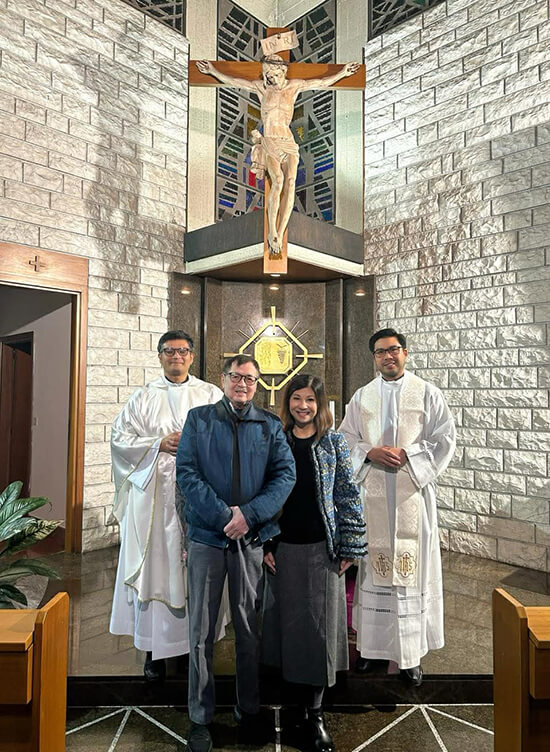
Another first, truly the highlight of our trip—was when Ed and I renewed our vows after 40 years of marriage before diocesan priests Fr. Arvie and Fr. Peter in a quaint chapel at the Mater Mundi, Via Lorenzo Rocci. (It was our first time in the convent and we learned from the Filipino nun at the front desk that it is also a hostel frequented by American and German pilgrims, with airconditioned rooms and breakfast included. Filipinos should try it!)
My sister Mary Mae, who was my Maid of Honor during our wedding at the Paco Park, and Valerie, who was one of my Bridesmaids, were present at our renewal of vows. Our son Chino and his wife Gi-Anne were not able to join us. There were just six of us humans in the Mass but I felt God, Mama Mary and all our departed loved ones (especially our infant daughter Joanna) were there with us, too.
Love, like Rome, is eternal.

WATCH: Save for retirement or enjoy life now? (Generations Ep. 21)
September 16, 2026