

Are visual arts just an afterthought for CCP?
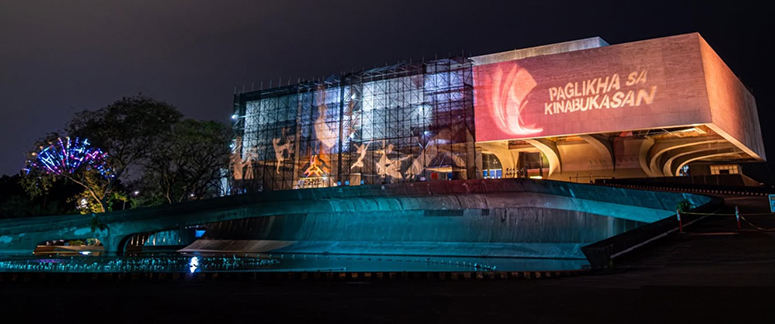
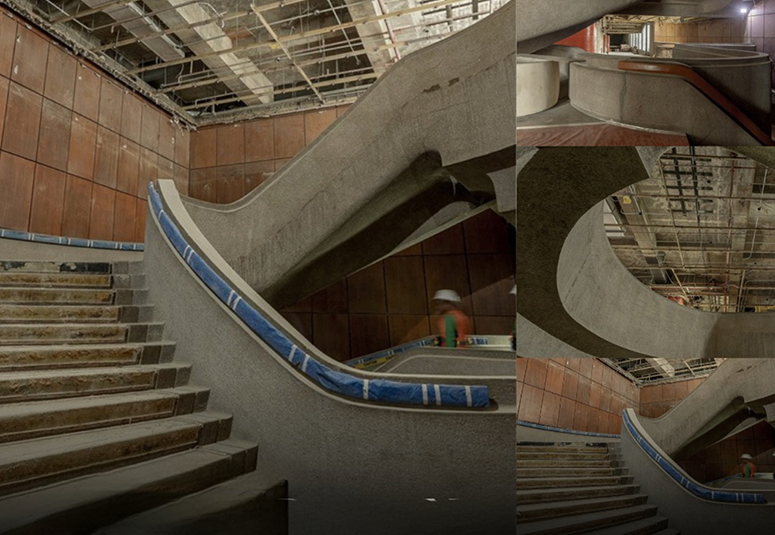
As the Cultural Center of the Philippines prepares to reopen its Main Building (Tanghalang Pambansa) in stages this year and heads past the 55-year mark, it seems like a good moment to do some soul-searching.
To that end, earlier this week CCP trustees and chair members held a roundtable talk with artists, gallerists, museum directors, collectors, curators and the media at the lobby of Tanghalang Ignacio B. Gimenez Theater in Pasay. The day’s main questions: What are the building blocks for the CCP’s future? And are its visual arts programs still relevant?
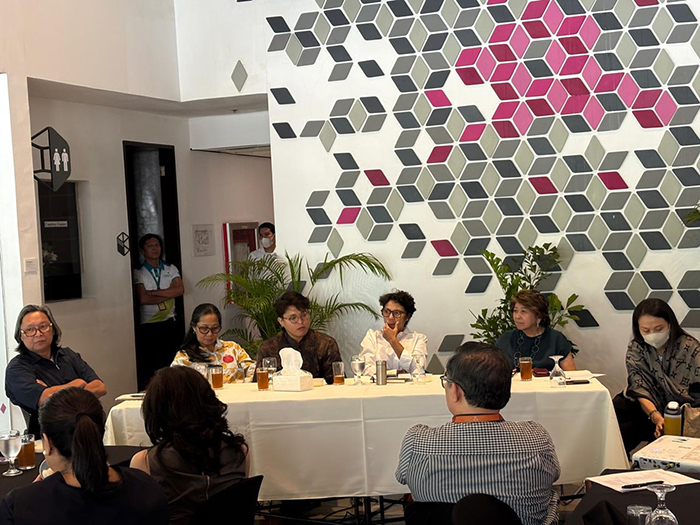
Not exactly a “for or against” forum, the roundtable allowed visual art practitioners and professionals here and abroad to reflect on the CCP’s “sustainability” over the next 50 years, and how its visual arts programs “can continue to contribute to national development.”
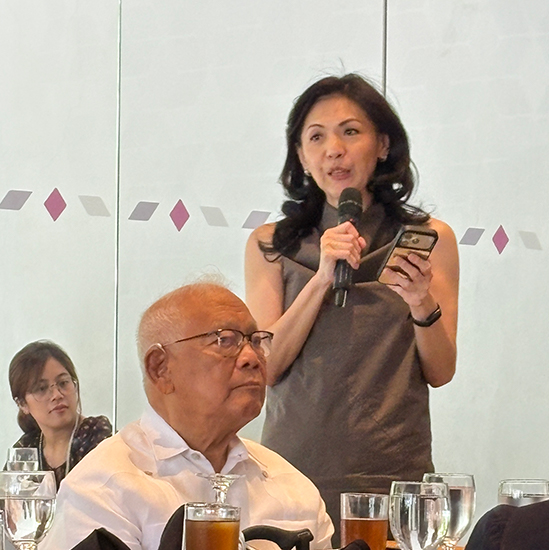
Some trustees seem to consider CCP primarily as a venue for performance, with visual arts an afterthought; others, like CCP president Kaye Tinga and chairman Jaime Laya in opening remarks, pointed to its vast, underutilized collection, the popularity of its Thirteen Artists Awards, and Cinemalaya. Generationally, there was a refrain to reach out more to younger audiences through social media.
We heard from artists Alfredo and Isabel Aquilizan; art historian and critic Carlos Quijon Jr.; Silverlens Gallery founder and director Isa Lorenzo; Metropolitan Museum of Manila president Tina Colayco; Benilde Center for Campus Exhibitions director and Art Fair Philippines co-founder Dindin Araneta; art collector Sheila Ramos; and remotely, National Gallery Singapore curator Clarissa Chikiamco and Spain-based arts management educator Ana Maria Ortega.
CONTINUE READING BELOW

Describing the function of the CCP can be a matter of perspective. With such a diverse group, the largely upbeat and constructive talk did at times remind me of the parable of the blind men describing an elephant: each holding onto a different part of the beast, trying to identify it. (But in a good way, of course.)
The art “family collective” led by the Aquilizans (now including their five children) has long fostered a more nomadic, DIY view of the Filipino artist—free to explore the world and learn from its models. But, according to Alfredo, it could serve the country better if foreign artists came here to show their work. Even in Havana, where they were invited to stage an exhibition, they saw art flourish amid poverty. That’s because Cuba stages biennales.
“Every two years, they get to see contemporary artists from around the globe, and look at the level of what artists can produce—that’s the best education they can get so they don’t have to send their artists overseas to study,” he notes. “So why don’t you just get all the best artists to come here and get our young children to see them?”
The Met’s Colayco agreed. “The CCP can lead in holding a biennale, and different institutions can participate.” This would take “casting a wider net” for the kind of partnerships, sponsorships and relationships that would really help in bringing such a world-stage event to life.
For Quijon, who holds a curatorial (and, not incidentally, Filipino) role at New York’s MoMA, it’s about providing a strong curatorial framework for young artists. That includes building more academic expertise within institutions like CCP. He called on the CCP to “sharpen its focus” and “clarify the stakes of the institution, especially for visual art.”
Chikiamco, Zooming in from Singapore’s National Gallery, called for stronger attention to non-traditional acquisitions for the CCP, such as installations and video. This would involve greater emphasis (and funding) to involve artists in the installation process, and more emphasis on conserving such “ephemeral” works going forward.
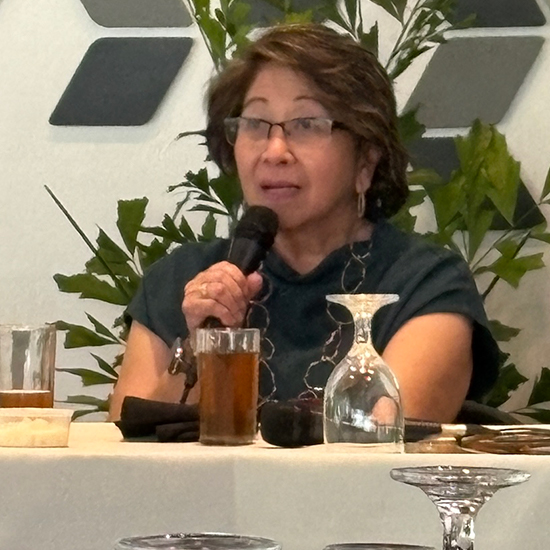
While all panelists took a moment to reflect on their “fondest memories” of visiting the CCP, they didn’t come just for nostalgia. For Lorenzo, who set up Silverlens as a Filipino home base in what is arguably the art capital of the world, NYC, her first wish is “that the CCP becomes the gold standard for exhibition making, not just in the Philippines, but in the region.” In other words: Go big, or go home.
“I don’t think the CCP can afford to be insular,” she said. “I think the CCP should be more outward-looking. So if that means being more active on social media, having more voices that speak to many generations, whether it’s through TikTok or Instagram or whatever social media, I think there should be a big investment in that broadcasting—who the CCP is, what the CCP does, what the CCP has—out into the world. Because the only way you’re going to get an audience is if they come here, or you go to them.”
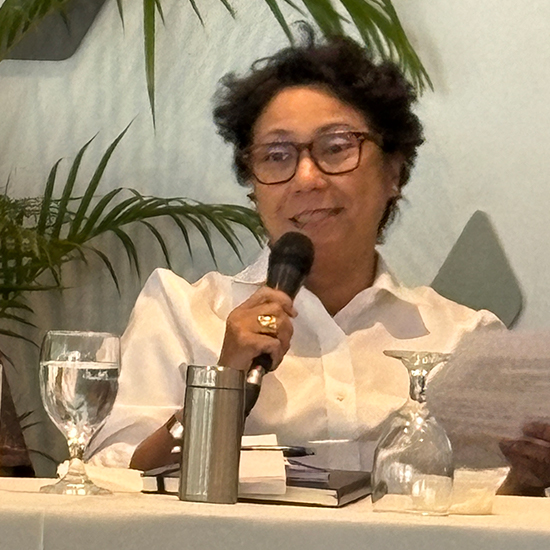
Insularity is an issue I often encounter, speaking to gallerists and artists here. With a relatively supportive coterie of local collectors and buyers, not all Filipino artists think about (or can afford) flying the coop, expanding their horizons abroad.
“The market is very strong here,” notes Lorenzo. “This is a jewel that we celebrate as galleries. So why will the artist go abroad at the risk of not selling anything? And you know he or she will lose out on sales or whatever sale is waiting for them here.”
Yet for Quijon, “We need to cultivate our talents in such a way that they see themselves in that international space.” For Araneta, there is no “one size fits all” approach. “I just see it as developmental—different artists need different things, and they have different capacities at different points in their careers.”
Lorenzo persisted: “Why can’t the Philippines have our version of this gold standard? Because when an artist sees an artist at Silverlens, or any artist having a show at that caliber, and then that artist looks like them, then that will give them an idea that, wait a minute, that can be me, 20, 30, 40 years from now.”
From the DIY approach of the Aquilizans to the “bring it to the world” philosophy of Silverlens, there’s a huge space in between. But all seemed to invoke the same message: there’s no need for the CCP to reinvent the wheel, just update, upgrade, focus, and “maximize” its considerable assets.
Philippine arts roundtable: Five takeaways
CCP vice president Dennis Marisigan handily wrapped up the five “takeaways” he and staff assembled during the roundtable:
- Build on what is already there. The CCP collection (acquisitions, exhibition, documentation, promotion) and CCP facilities (exhibit spaces, materials) are already strong, as is the popular Thirteen Artists Awards (strengthen support, continue relationships with awardees).
- Continue exhibitions and retrospectives in CCP and other venues. Many suggested “touring” the art collection to boost regional interest and showcase the CCP.
- Expand access to the CCP collection, including educational activities for audience and patrons through various means. Improve partnerships and collaborations.
- Collaborate more with other galleries and international organizations, thereby improving relationships with stakeholders. (The call for a “Philippine biennale” was frequent.)
- Provide institutional support not only to artists but also to researchers and curators. This means building up the academic level to support and represent the best of Filipino art, not only for the world stage, but when—hopefully—more and more artists and patrons view the Philippines as an art hub destination.

WATCH: LGBTQIA+ people with unlikely professions
June 28, 2026