

A pan-Asian collection that straddles three empires
Everybody knows Singapore has amazing art and culture museums, such as the National Gallery and the Singapore Art Museum at Tanjong Pagar Distripark. Two places you may not have explored yet are the Asian Civilisations Museum, which is now showing “Crosscurrents: Masterpieces of Mughal, Safavid, and Ottoman Art from the Musée du Louvre” until Jan. 24, 2027, and Peranakan Museum, with its ongoing exhibit “Peacock Power: Beauty and Symbolism Across Cultures” until Aug. 30, 2026. (We’ll cover the latter in the next article.)
The ACM exhibit is a thrilling discovery of Asian art and cultural treasures, filtered through the lens of Singapore, which is known for its cross-cultural, cosmopolitan makeup. While the exhibit was sourced from royal collections straddling the great empires of nomadic, Turkish-speaking groups in the 16th to 18th centuries in areas now known as Uzbekistan, Iran and Turkey, the ACM didn’t simply absorb these cultural treasures: they’ve developed their own curated narrative, winding the story through the Singapore museum’s own permanent collection.
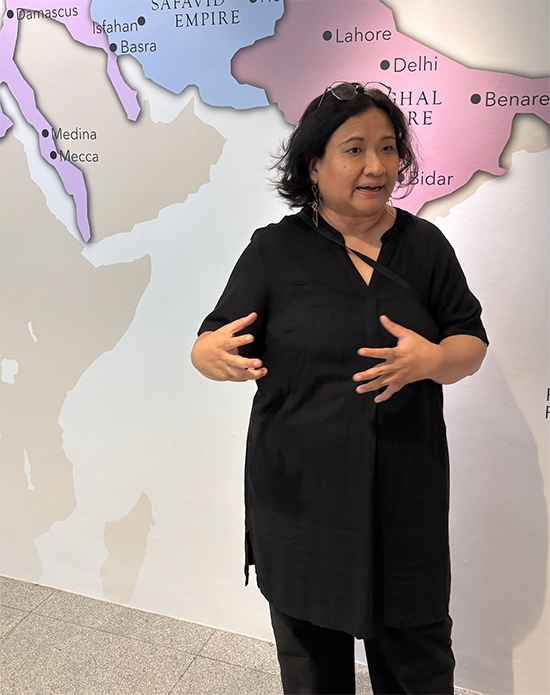
Principal curator Noorashikin Zulkifli led us through rooms of multi-layered pieces that could only have emerged through a combination of maritime trade, religious faith and beliefs, materials and design, and Peranakan art and culture.
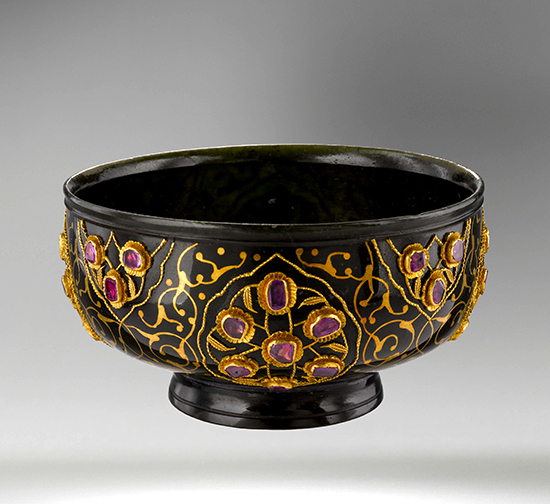
Trade was certainly the driving force. Without the mass appetite for beautiful, luxurious baubles—such as the exquisite jade cup inlaid with rubies and decorated with gold wire by Ottoman artisans that ended up in Louis XIV’s Versailles collection before residing at the Louvre—such masterpieces wouldn’t exist. This modest-sized object met us upon entering the exhibit, and it demonstrates how Asian influences had already become a European fixation by the mid-16th century.
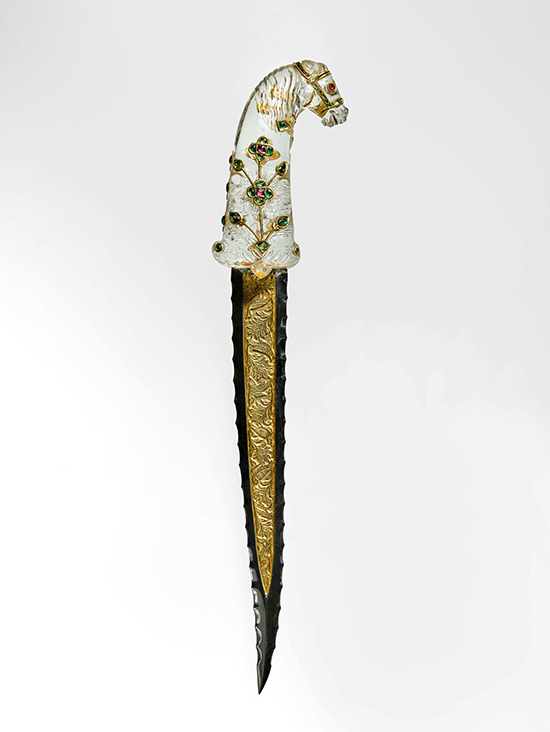
Indeed, even household items—albeit richly decorated—became the prized possessions of households and of the Mughal Indian empire by the 1500s. A ceremonial fly whisk (swatter) rests in a glass case, lit up by bountiful peacock feathers and encrusted with rubies and nephrite jade, gems that had traveled from Khotan, China to Kashmir to Lahore, before the finished product was eventually bequeathed to the Louvre by de Rothschild in 1922.
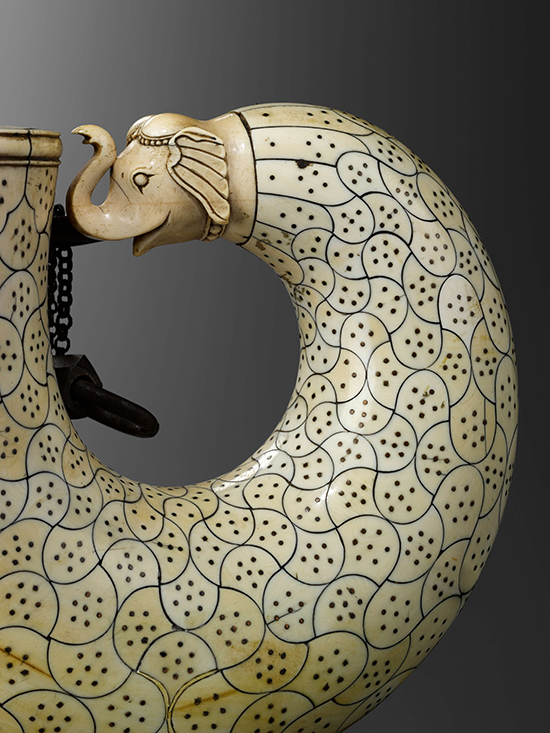
What comes through clearly in “Crosscurrents” is that the flourishing of aesthetic styles in the three empires relied as much on trade, royal tastes, and artisanal skills as it did any planned artistic development. Our guide frequently pointed out the “cross-hybridization” of works that borrowed freely from China, India, Turkish, Islamic, and Hindu motifs in arriving at a style that, while not uniform, displays many of the same decorative and stylistic overlays.
CONTINUE READING BELOW

Design textiles were traded for spices between India and Europe, and the influx of these lavish prints and motifs into the European marketplace would lead to bans on imports, as it was hurting local tradesmen. In the migration of trade, materials became layered, “hybridized” as they passed through the hands of local Southeast Asian artisans.
Port cities were the common link: without maritime congress, these items would not have had such influence, not only on royal tastes, but eventually filtering down to common fashion. As Zulkifli put it: “Globalization is not new.”
What emerged from these port cities were entirely new categories of aesthetic and cultural taste.
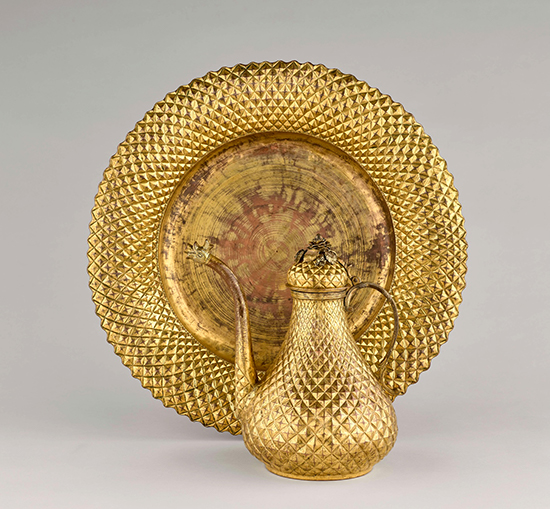
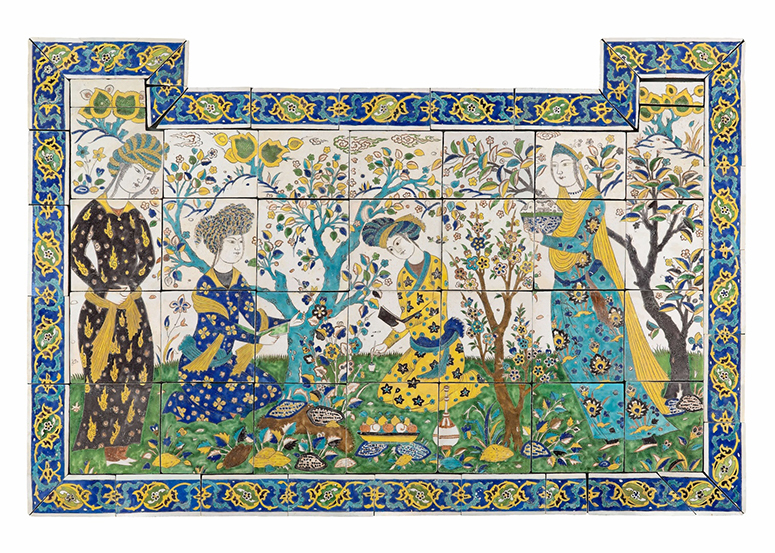
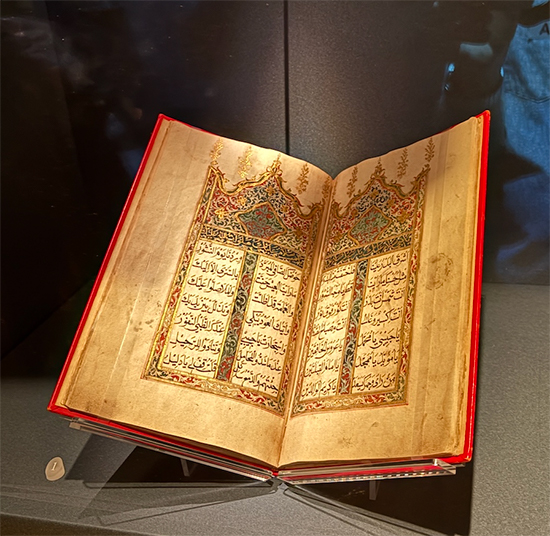
At the Islamic Art Gallery on Level 2, courtly life and artistic production in Mughal India and Safavid Iran developed as trade expanded. Key pieces include a mother-of-pearl ewer (pitcher) and basin that is minutely detailed and layered, destined for royal courts and elite patrons throughout Asia and Europe; one wall displays an epic tiled panel from Safavid Iran showing a poetry contest that went on for days as scribes recorded the free-flowing verse. Another case contains a gilded, hand-written copy of the Quran, which were becoming essential items in court life.
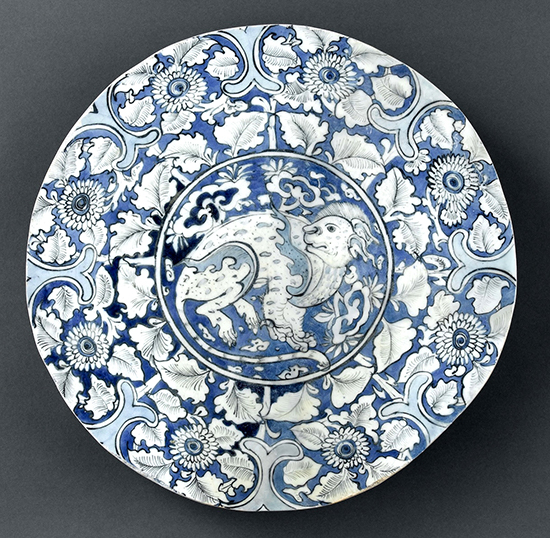
New materials became the latest craze. As maritime trade between China and Iran flourished under Shah ‘Abbas I, Chinese blue-and-white porcelain became highly prized, influencing local ceramic production and decorative styles. A porcelain dish from the 1600s borrowed from the Louvre collection is decorated at the center with a Safavid interpretation of the qilin—a mythical creature from Chinese tradition. Another crossbred form developed, as Iranian potters started adapting these foreign motifs into their own visual language, combining Chinese imagery with Safavid aesthetics to create distinctive new designs.
These Louvre masterpieces weave an interesting dialogue with other permanent features of ACM. Leave one floor of Mughal wonders, and see how it intersects with a display of gold-wearing Toraja Women; or explore a room filled with ceramics that made their way across these Asian trade routes; or discover the connections between Buddhism, Islam, Hindu and Christian objects in a section devoted to Faith and Beliefs.
Clement Onn, director of ACM and Peranakan Museum, notes how timely the exhibition is: “By placing these works in conversation with objects from ACM’s own collection, the exhibition highlights the artistic and cultural connections that have linked Southeast Asia with the wider Islamic world over many centuries. It also brings Southeast Asia more clearly into view within this larger story, showing the region’s important place in the trade, diplomatic, and cultural networks that connected Asia across vast distances.”
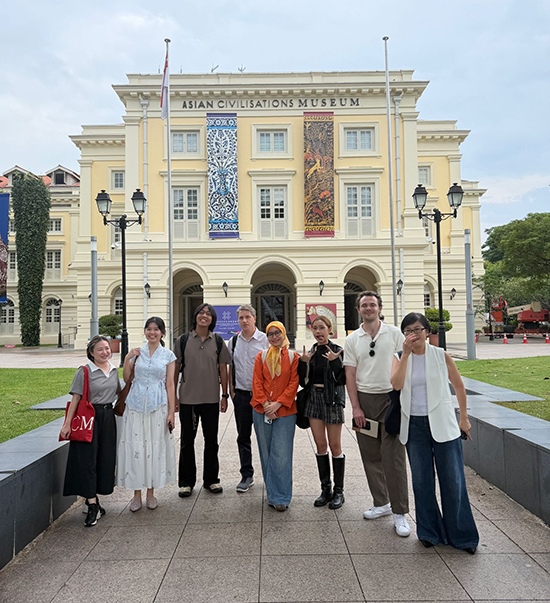
In a sense, the Louvre component never overshadows ACM’s permanent collections; rather, it feels integrated with them, and the added curation helps deepen understanding of the many layers working together to create these unique art forms.
With 100 masterpieces from the Louvre’s Islamic art collection alongside 30 works from ACM, “Crosscurrents” shows how trade, migration and artistic exchange carved out a cosmopolitan world stretching from Istanbul and Isfahan to Delhi and Southeast Asia.
The qin gets a solo moment
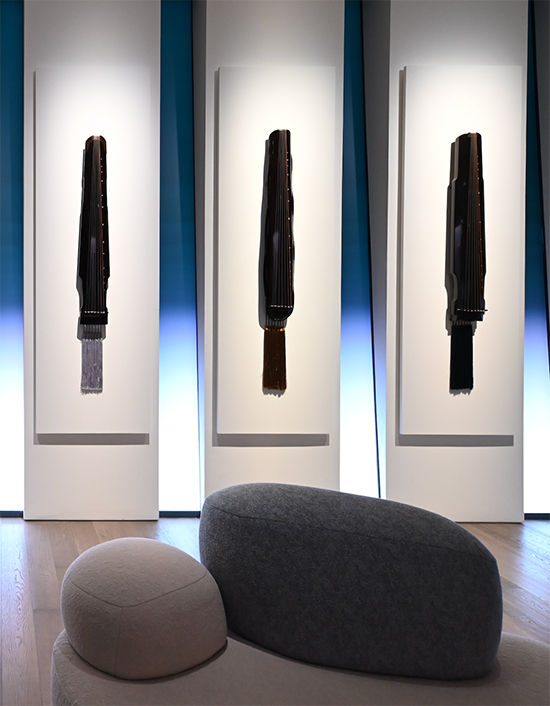
Step into another room at ACM: you’ll be soothed by the sparse, twanging tones of the qin, a centuries-old Chinese stringed instrument that’s the subject of “Elegant Sounds: Music, Craft and the Literati,” a special interactive exhibit curated by qin master Dr. Kee Chee Koon with help from master craftsman Ning Qunhui. Over 100 collected items—rare and custom-made instruments—are on display, and there’s much to absorb about qin culture: how the instrument was prized by the scholars and writers of the Han dynasty (206 BC-AD 220), popularly depicted in art and literature for its introspective qualities, and later popularized as the Chinese zither. Besides the beautifully crafted instruments on display, there’s lots to interact with, including the gentle, specially recorded qin soundtrack that occupies the space as you tour the exhibit; a qin-making tutorial; videos of modern players in concert; and a display that allows you to practice the notes on the fretless wooden neck of a model instrument. (And, yes: I immediately reached for some Jaco Pastorius-type fretless licks, which may or may not have been meditative.)

WATCH: LGBTQIA+ people with unlikely professions
June 28, 2026
WATCH: Can you still trust someone who betrayed you? (Generations Ep. 22)
September 23, 2026
WATCH: Is Gen Z too soft? (Generations Ep. 23)
September 30, 2026