

Dilaw breathes Baguio breeze in 'Rarara'
Pick up the physical CD of Dilaw's first album, “Rarara,” and you’re greeted with an overhead shot of Baguio's zigzagging, sloping roads. Meanwhile, in the closing track Amistad, they sing, “Kahit ako man ay malayo, ang simoy ng Baguio, malamig pa rin sa alaala ko.” These are the bookending images that paint what “Rarara” is: a love letter to the City of Pines, which Dilaw calls home.
The album is filled with such nods; with 10 tracks, “Rarara” is dubbed a road trip album. The lyric videos on YouTube see the band touring Baguio’s Kennon Road, Harrison Road, Burnham Park, and the eponymous Amistad Road, along with locales like an ukay-ukay store and a billiards hall, à la travelogue. The lyric booklet inside the album also reflects this. However, to call “Rarara” a mere nostalgia drive for Dilaw would be selling it short. In fact, the album is proof of the band’s growth, both musically and personally.
To call ‘Rarara’ a mere nostalgia drive for Dilaw would be selling it short. In fact, the album is proof of the band’s growth, both musically and personally.
Leonard “Dilaw” Obero and Vie Dela Rosa started as a songwriting duo in 2021. The following year, they expanded as a six-piece named after Obero’s moniker. Joining them are bassist and backup vocalist Wayne Dela Rosa, lead guitarist Leon Karlos Altomonte, keyboardist and synthesist En Altomonte, and drummer Tóbi Samson.
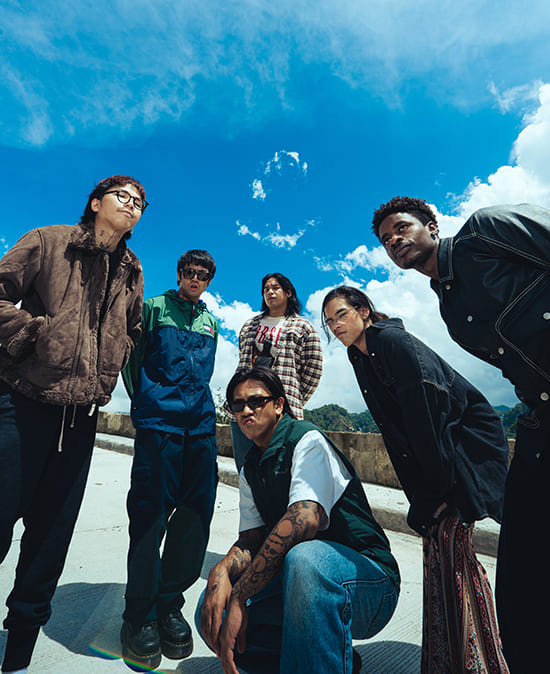
If their 2022 EP, “Sansinukob,” was Dilaw during its formative years, “Rarara” allows the band to firmly stand on its feet. “Nung ‘Sansinukob,’ medyo nangangapa pa siguro kami, pero alam namin kung ano ang gusto namin,” Vie told Young STAR during a press conference at the album’s CD launch. “Mas naging vocal kami sa kung ano ang gusto namin ngayong ‘Rarara.’ Mas cohesive (at) nagkaroon ng singular theme.”
The album opens with All In and Seyp as they urge listeners to surrender all and follow the band on their adventure. Lamyerda is reminiscent of the Eraserheads’ classic hangout tune Alapaap. Black N’ White marks Dilaw’s first foray into R&B, showcasing a refreshing, silky sound to accompany the band’s signature playful songwriting. The fifth track, ! (pronounced as Tandang Padamdam), continues the album’s running theme of making the most out of moments on the road.

In its back half, the album takes a more introspective turn. It’s like an outing with friends: the first few hours are the exciting and energetic part that soon becomes tender as you bond closer together. Ikaw at Ako Ay and Flying Kiss are mellow pleas inspired by Vie and Obero’s past failed relationships. They bare themselves the most in these two songs, bringing the rawest emotion in an otherwise laidback album. Being sober for about three years, the duo wrote H.O.Y. (Hang Over You) to simulate how it feels to drunkenly pine for someone without actually breaking their sobriety. These three songs work both as an admission of vulnerability and a testament to overcoming.

CONTINUE READING BELOW

The penultimate track, Rarara, is a whiplash back to the mood of the album’s first half to get us ready for the climax—which brings us back to Amistad. It is named after a street in Baguio where the band used to hang out and where they share fond memories. Amistad feels like a parting hug, as if the band is thanking us for accompanying them on the journey we just traversed together. But rather than being a sad song, it has a tone of bittersweet assurance: that memories stay and places are just waiting to be returned to.
In a better place in their careers and personal lives, the band sees the album as an opportunity to look back on their roots with grateful hearts. They recorded the songs in Baguio. “May spirit talaga d’on na masarap mag-record. Hindi lang about sa magagandang gamit, siguro ‘yung lamig, pero hindi, may aircon naman dito,” Vie pondered with a smile.
The members of Dilaw do not posture themselves as prophets delivering Baguio down to the country’s center. Instead, they’re just happy to contribute a small slice of its culture to everyone. Dilaw is only one part of a bustling Baguio scene: Dilaw’s contemporary Cup of Joe, also from Baguio, dominated the charts for a better part of last year and shows no signs of stopping, while the Cozy Cove quickly gained recognition as a potent venue and series of events showcasing OPM both fresh and tenured.
The CD release provides Dilaw with a tangible artifact of their efforts and passions. “Life’s work namin ito na nahahawakan. (Ito) ‘yung pinangarap namin nung bata (kami) na papasok ka ng record store (at) may sarili kang CD do’n. Gan’on ‘yung feeling. Kaya hindi kami maka-get over,” said Vie.
“There’s always a bit of nostalgia there for some of us who really grew up listening to music in physical formats. But on top of that, it just helps to build a stronger connection to the art,” Leon professed. “Because you’re not just looking at it on the screen and scrolling through whatever the algorithm is feeding you. This is something you’re actively seeking out, a piece of art you actively want to engage with.”
***
The “Rarara” CD by Dilaw is available at Backspacer Records. Follow the band at @dilaw.band.

WATCH: Can we talk about death and grief? (Generations Ep. 25)
October 14, 2026
WATCH: Do you still believe in marriage? (Generations Ep. 17)
August 19, 2026