

When light becomes precious memory
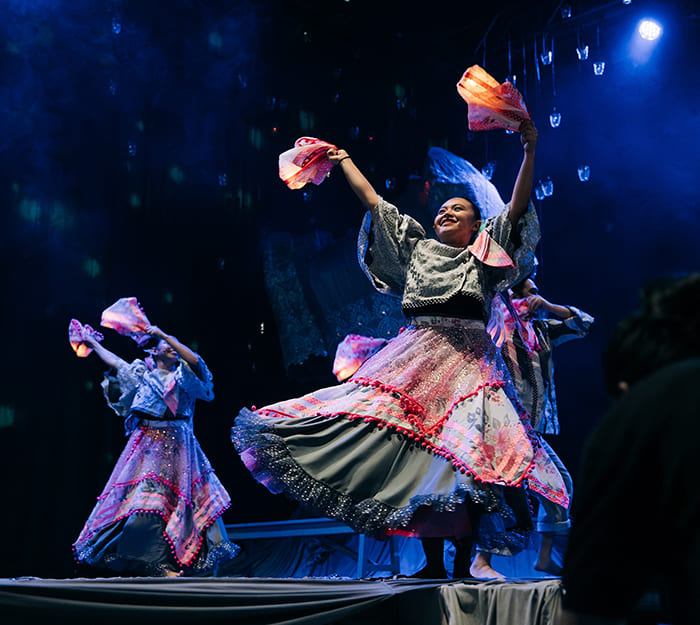
The Pandanggo sa Ilaw is one of our most graceful dances and also one of the most difficult, requiring skill and care to keep the flames in little tinghoy lamps alive, one on each hand and the third on top of the head, while keeping them from dropping to the floor as the dancer sways to the lively three-quarter waltz-like rhythm played by a rondalla.
It isn’t something you would associate with one of the most gruesome tragedies in our history—when the 1981 Manila Film Center construction collapse caused by dangerously rushed, round-the-clock building for the pet project of First Lady Imelda Marcos in time for an international film festival resulted in plunging dozens of workers into wet, quick-drying cement. But Tanghalang Pilipino’s Sayaw ng mga Ilaw, a play by Juan Ekis based on the children’s short story by Cheeno Marlo Sayuno with music by Krina Cayabyab, uses the dance of lights as centerpiece set during the time of the accident which occurred 10 months after martial law was lifted, but there were still media blackouts and accounts of the abuse of human rights.
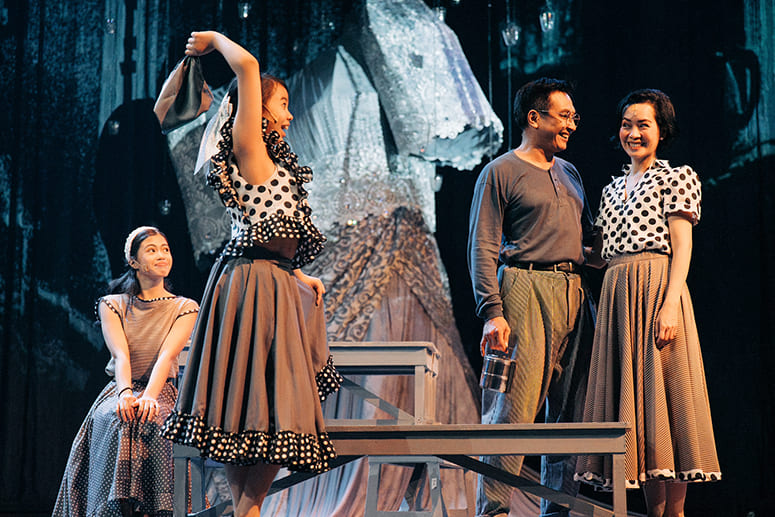
In our recent history, a new form of darkness hovers above us with historical revisionism, fake news, a culture of corruption, entitlement and impunity—making this play very timely. While it is a profound reflection on our socio-political milieu, it has an emotional immediacy experienced through the eyes of a young girl, Laya (Wincess Jem Yana, alternating with Annika Co), her older sister, Kala (Ynna Rafa) and her mother Nanay Lucia (Shiela Valderrama) when their Tatay Ondeng (Noel Rayos), a construction worker at the Manila Film Center, never returns after the accident.
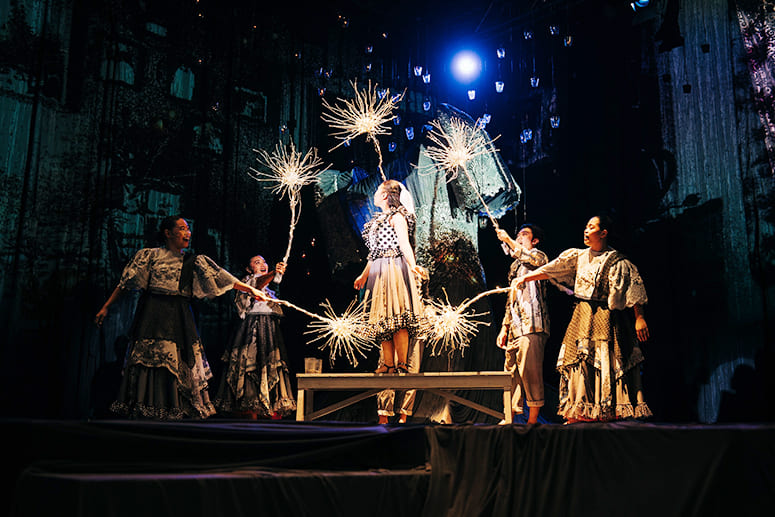
What makes the production accessible for all ages is the sensitive storytelling of Ekis, beautifully told through an elegantly expressive staging by director Jonathan Tadioan where performers move through and around the audience. The set design by Marco Viaña positions a giant, looming terno with intricate embroidery on the bodice and a flowing gray skirt that extends to carpet the flooring. It’s a judicious design choice that plays a significant role from beginning to end: The perfect backdrop to the dance that opens the play, an icon that speaks of the wealth of our culture, arts and crafts. At the same time, it is associated with the former First Lady who always wore the national dress and was known as the “Iron Butterfly,” a stand-in for her edifice complex—an ominous symbol of the tragedy to come.

Light itself is a recurring motif that keeps changing in meaning as it suffuses every dramatic moment which lighting designer D Cortezano, together with video projection designer Justin Santiago, enhances as situations shift and emotions swell and ebb. You can see why Laya is fascinated with the Pandanggo as she tries to learn it from Kala because the mise-en-scene is absolutely mesmerizing, with spots of lights dancing in the background together with the lamps of the dancers, mimicking fireflies at dusk. Projections of lace add to the grace and coconut tree silhouettes establish a tropical paradise, a primeval Eden in their home where their parents provide love and protection.
When Tatay leaves the house for the last time on that fateful day, the sisters—in an ironic gesture unbeknownst to them—do a variation of the dance called the Oasioas, where dancers wrap the lamps in cloth and whirl them around as flashing lights to guide fishermen returning home.
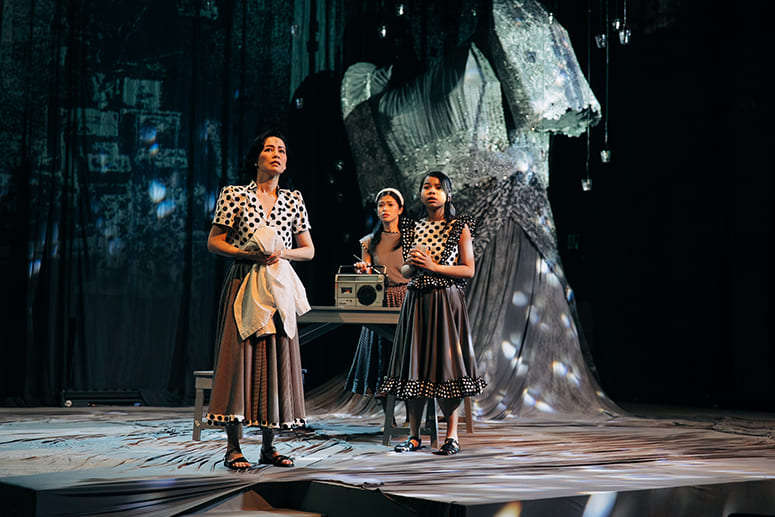
The political awareness of Kala burns even brighter after the accident, an escalation dramatized through the exhilarating choreography of Al Bernard Garcia in a Sayaw sa Bangko where the benches cleverly transform into a barricade for her activist friends. Rafa skillfully navigates her character’s enlightenment from the halcyon days as a caring sister to one who has been changed by events, a stark contrast to Earvin Estioco’s affable but extremely cautious Tony.
Yana has the requisite curiosity and fascination in the beginning and the emotional confusion later, but shows a certain resolve in the end when she dances the pandanggo in a new way that carries the memory of recent events. The tragic Tatang figure is given flesh and blood by Rayos through a stability and warmth that grounds the family which Nanay has to hold together when he’s gone, a role that Valderrama essays perfectly, showing grief most poignantly while staying strong in some of the play’s most heartfelt singing. Cayabyab’s music has a contemporary folk sensibility with a hint of nostalgia that fits right in with this memory play of family intimacy through its theatrical lyricism.
As Laya masters the dance of light, she moves from innocence to understanding. Employing artistic expression as a way of surviving grief, she derives strength from her family as she carries the memory of her father and the lessons of history. It’s a fragile light that she carries, just as precious as our history which we have to value through remembrance and pass on to the next generation so that we never forget as a nation.

WATCH: LGBTQIA+ people with unlikely professions
June 28, 2026
WATCH: Is Philippine cinema still thriving? (Generations Ep. 19)
September 2, 2026