

How monks connect with the real world
When I was the vocation director of Transfiguration Abbey, I used to ask applicants during interviews about the reaction of their parents when they told them about their desire to enter the monastery. Many would say that their parents were not so happy with the intentions of their sons. Most parents feared that they would hardly see them again. And why Transfiguration Monastery in faraway Mindanao?
In this modern day and age, monks are able to communicate with people outside their abbey.
This led me to realize that most people still have that old impression that monastic life is strictly isolated and detached, as during the pre-Vatican II era. But, indeed, many things have changed since then. Many still describe our monastic life as “isolated and detached from the real world.” Because we do not have any apostolates outside of the monastery, people think we are not able to connect with the outside world.
However, in this modern day and age, our monastery has also adjusted significantly. We monks are now able to make an annual family visit of two weeks. This helps ensure that we maintain good relationships at home.
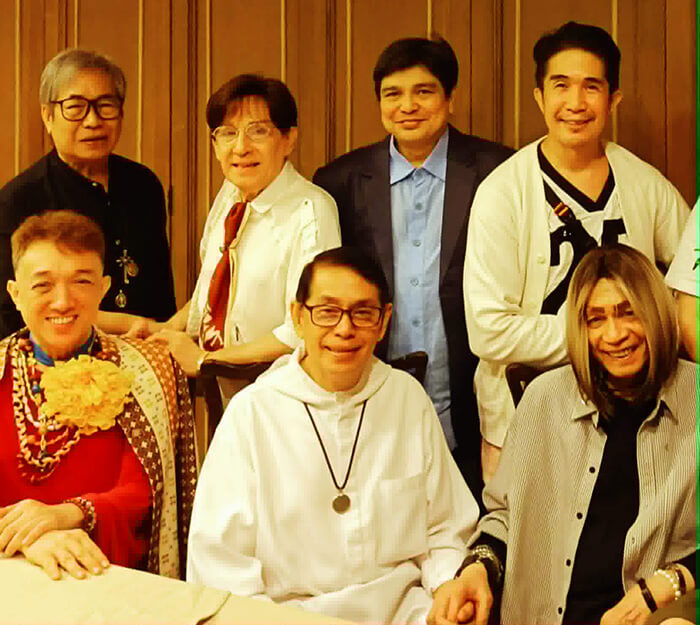
We believe that a monk who is happy at home will also have the capacity to build good relationships within the monastic community.
Of course, everybody knows that the Benedictine motto is “Ora et Labora (Prayer and Work).” Our life is pervaded with prayer. And like most contemplative communities—the Carmelites, Trappists, and Poor Clares—we pray the Liturgy of the Hours seven times a day, starting at 3:40 a.m. with Matins, the quintessential prayer of the monk.
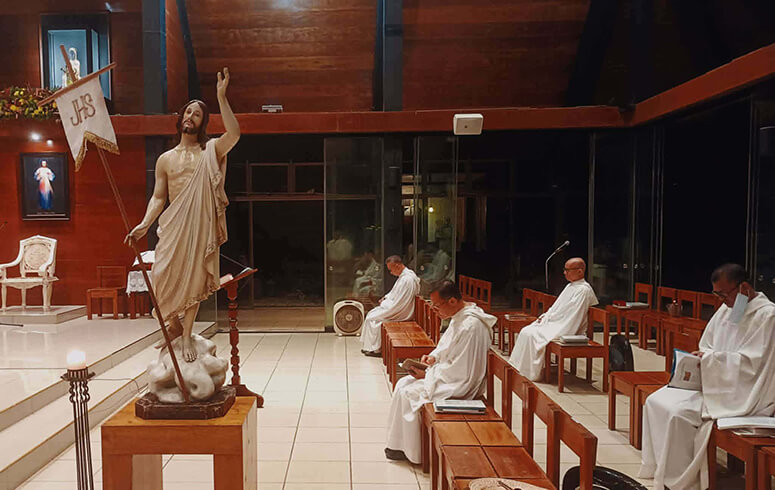
While most of the rest of the world is still sleeping, the monks rise at 3:15 a.m. to pray for the whole world. The day ends with Compline at 7 p.m., with an Examen—looking back on the day past, to see if it was well spent, to ask forgiveness for any faults committed, and to give thanks for another day.
CONTINUE READING BELOW

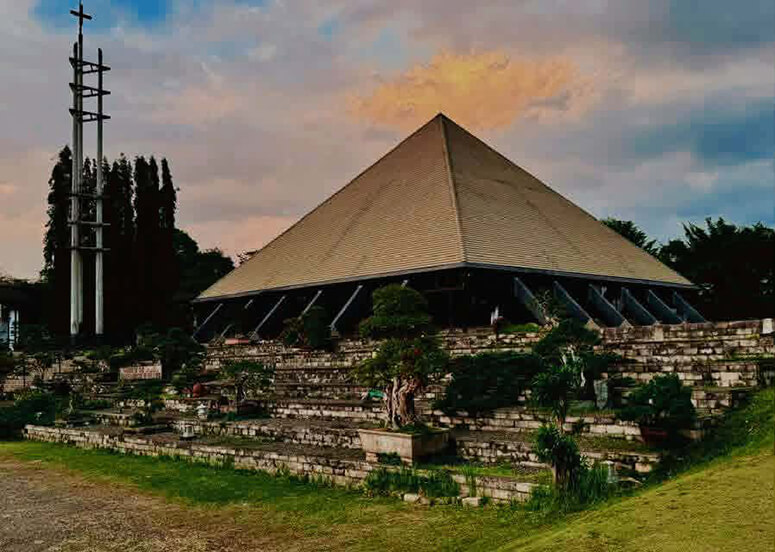
Anyone who visits Transfiguration Abbey is always amazed at the beauty of God’s creation, with our National Artist for Architecture Leandro Locsin’s Church of the Transfiguration, majestically nestled on top of an elevated part of the 100-hectare property. And the silence—a very expensive commodity in the outside world. The Abbey offers an atmosphere of silence that is perfect for prayer, meditation, or even just a simple reflection on one’s life.
So people wonder how monks ever get connected to the real world. Are monks not allowed to communicate with guests? Are they always silent? Silence at Transfiguration Abbey is very important. Early on, during our Formation years—which take at least seven years—we learn that the purpose of silence is to be able to listen to God. So if we are to cultivate a life lived in the presence of God, we have to be silent.
However, the doctrine and practice of silence in the Rule of St. Benedict does not legislate absolute silence. It is imposed only in certain circumstances. Otherwise, we are free to speak and communicate. Silence is maintained in the church premises, along the corridors of the enclosure (especially during siesta time), during community meals when a reading from a spiritual book is done, and from the time after Compline until the first prayer of the day, Matins at 3:40 a.m. This period is called the Grand Silence. That is why the first chant at Matins is “O Lord, open my lips,” signifying that our lips were closed the whole night.
Then, of course, there is Hermit Day every first and third Monday of each month. This is considered a day of retreat in complete silence. So when can we speak and communicate with people—or, shall we say, when and where can we be in contact with the real world?

First, there is the GuestHouse. The Rule of St. Benedict legislates for the reception and accommodation of guests since the 6th century. Although only the abbot, GuestMaster, the Cellarer, or any monk assigned to give spiritual direction are ordinarily allowed to speak with guests, it is especially during spiritual direction that the monk becomes deeply in touch with the problems and difficulties of the human situation in the real world.
I have been fortunate to be assigned to give retreats, and it is during the private colloquium that people are able to share their life situations.
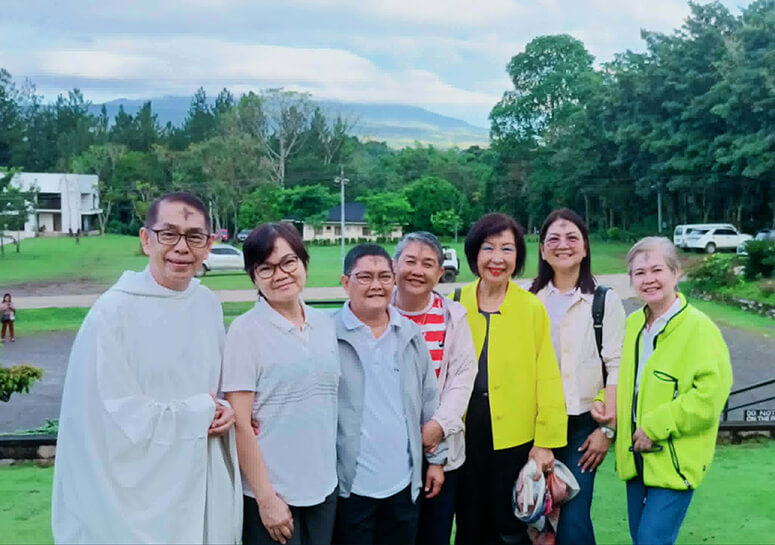
Then we also have our lay workers with us, totaling almost 70, distributed across different departments: the coffee factory, the coffee and cacao farms, GuestHouse, Giftshop, Abbey Cafe, Museum, etc. A senior monk is assigned to supervise each department, and he can only expect the best work from them if he remains in touch with their day-to-day situations. The monk sees to it that the workers not only do their jobs well, but also listens and helps them when they encounter difficulties.
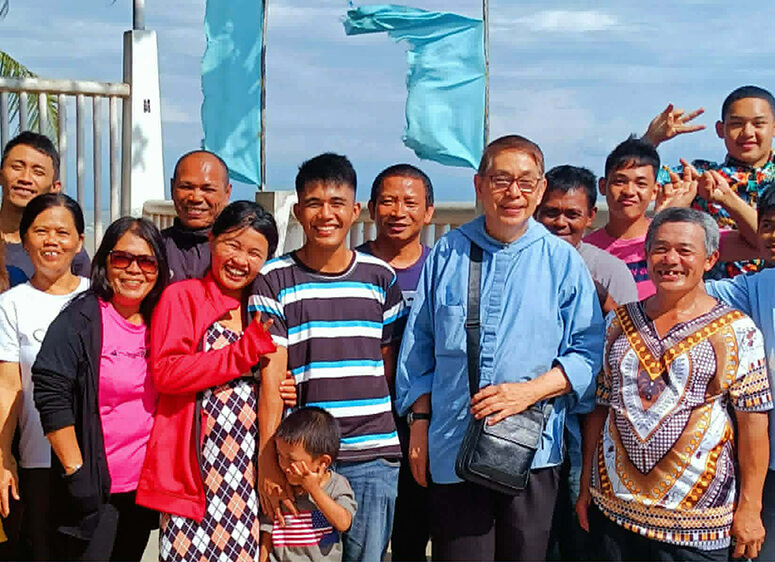
Once a year, each department has an outing—the monk with the workers and one family member. How wonderful it is to see the workers and their children enjoying a day at the beach, for example. How truly satisfying it is to see that our workers can also enjoy light moments with the monks.
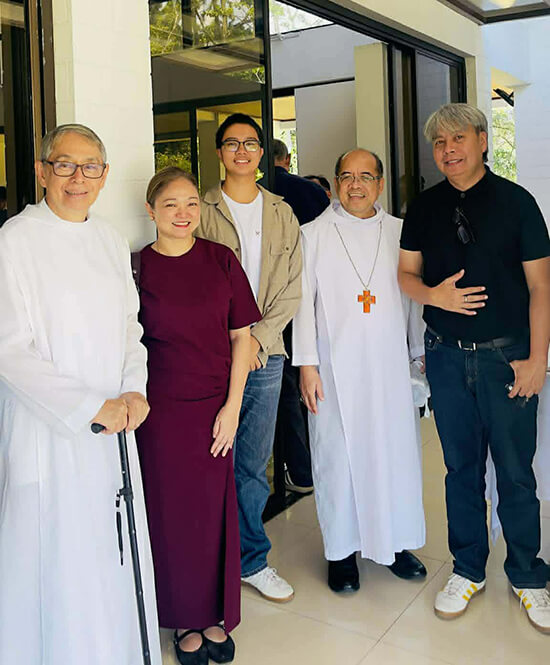
During the many years of monastic Formation before Solemn Profession, the monk learns to live in the desert, so to speak. He learns to be silent, to listen to God, and to build a strong interior discipline, which prepares him to go outside for important errands, assignments, and meetings. As one writer puts it, from the desert to the marketplace, the monk goes strongly prepared.
After Solemn Profession, a monk is usually assigned a more important role in the administration of the Abbey. He is also given the opportunity to engage in work that makes use of his gifts and talents. During my novitiate, I was surprised to find out in our study of the Rule of St. Benedict that Chapter 57 is about the artisans of the monastery. A monk is allowed to practice his craft as long as he remains humble, and if ever his work is sold, he understands that its purpose is to give glory to God, who gave him the gift or talent to create it.
In my case, it is the inculturation of Liturgical Vestments that has been the purpose of my labora. In creating the very first Filipino Vestment Collection for the Philippine Centennial of Independence in 1989, my research brought me to 20 weaving centers across the country, from the Ifugao in the north to the Yakan in the south. There, I was able not only to study the remarkable handwoven textiles of various indigenous groups, but also to learn about their lives, the challenges they face, and their dreams for their children’s future.
Many years later, when government offices would ask me how I was able to gain the support of these indigenous groups—who are usually not so open to strangers—I realized that it was because I first tried to know them, to listen to their stories, their difficulties, and their aspirations. For it is only when we learn to listen to one another that we become comfortable enough. Then, and only then, can real relationships and cooperation happen.
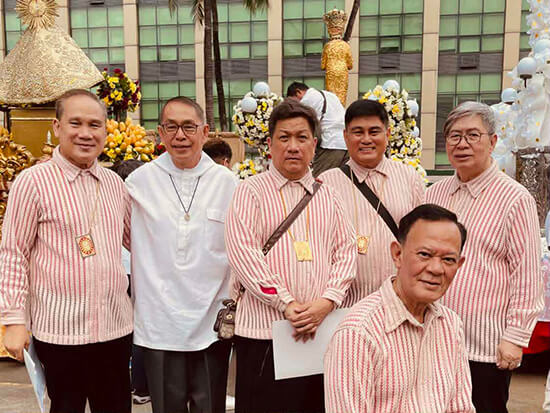
As a cultural advocate, I have also been allowed to engage with Habi, the Philippine Textile Council. This has led to Habi’s highly successful and impressive project, the Eloisa Hizon Gomez Abaca Competition, which started five years ago and was named in honor of my mother, who was very supportive of my research on indigenous textiles.
To help develop, promote, and preserve abaca—the genuine Filipino indigenous textile—we began by getting to know the people involved in the weaving industry. We entered their world—the real world—in order to connect. Only then can we truly work together for the benefit of all, always for the good of all and the glory of God.

But what has been most meaningful for me in my 36 years in the monastery is my assignment as director of the Benedictine Oblates of our Abbey. On and off, I have held this role for almost 17 years—nearly half of my life at Transfiguration Abbey in Malaybalay.
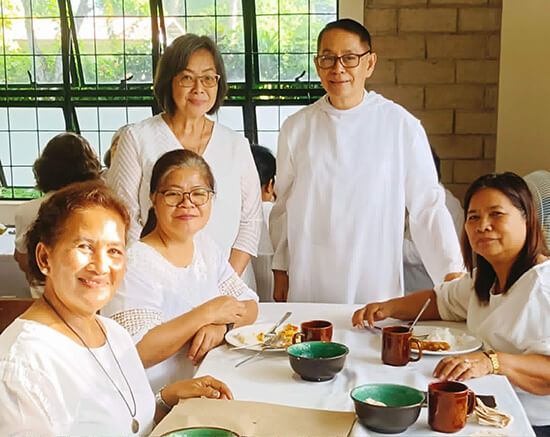
Oblates are lay people who attach themselves to a particular monastery and promise to live out Benedictine spirituality in their daily lives. They also undergo years of formation before making their Oblation. Oblates come from all walks of life—rich and poor, highly educated and less so, young and old. One can only imagine the variety of stories they carry.
To me, they truly represent what many call “the real world.” And how we communicate with them keeps us deeply aware of how the world is today.
We monks may not have as much contact with the world as most active congregations do. But we have a real and deep connection to the real world—one that many might not expect. And we are grateful for being given, as Benedictine monks, the chance to serve the Lord with joy.

WATCH: How to experience Bangkok and Kanchanaburi in one trip
October 21, 2026
WATCH: Is Gen Z too soft? (Generations Ep. 23)
September 30, 2026