

Why God must wait a bit longer for the Sagrada Familia
A century ago, an old man was hit by a tram on a busy street in Barcelona. He had no ID, his clothes were ragged, and his pockets held only a few dried nuts. Regarded as a penniless beggar, local drivers refused to take him to a hospital. He died days later in a crowded charity ward, completely anonymous.
The irony, of course, is that this man was Antoni Gaudí. He is the genius architect of Barcelona’s most famous landmark, also known as "God’s architect."
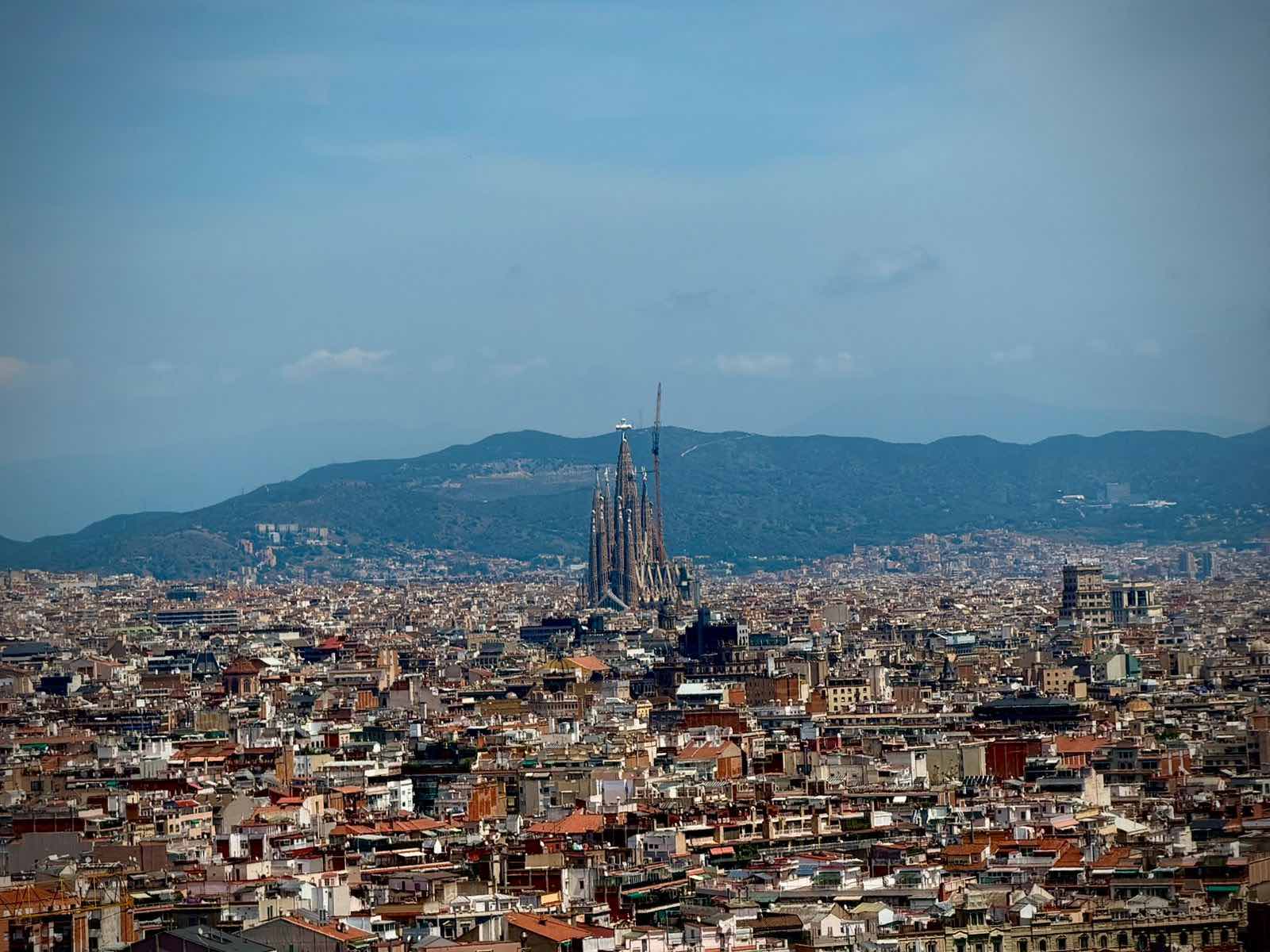
When he died on June 10, 1926, only a single tower of his grand church was finished. For decades, the city promised the entire basilica would be completed in 2026 to honor the centennial of his death.
But as I walked through the monument this week, the reality on the ground revealed a different story. Full completion has now slipped to the 2030s. It proves Gaudí’s famous quip remains true: His client, God, "is not in a hurry.”
The Pope's visit
Returning here for my sixth visit in 11 years, the skyline is transformed. The central cranes that choked the silhouette for decades have vanished. In February, crews hoisted the final panel onto the towering 172.5-meter Tower of Jesus Christ, officially making the Sagrada Família the tallest church on Earth.

Yet, for a traveler arriving this week, the experience felt more like navigating a high-stakes event and not a quiet sanctuary. The city was bracing for the papal mass, and the surrounding neighborhood had transformed into a marketing, high-security corporate fortress.
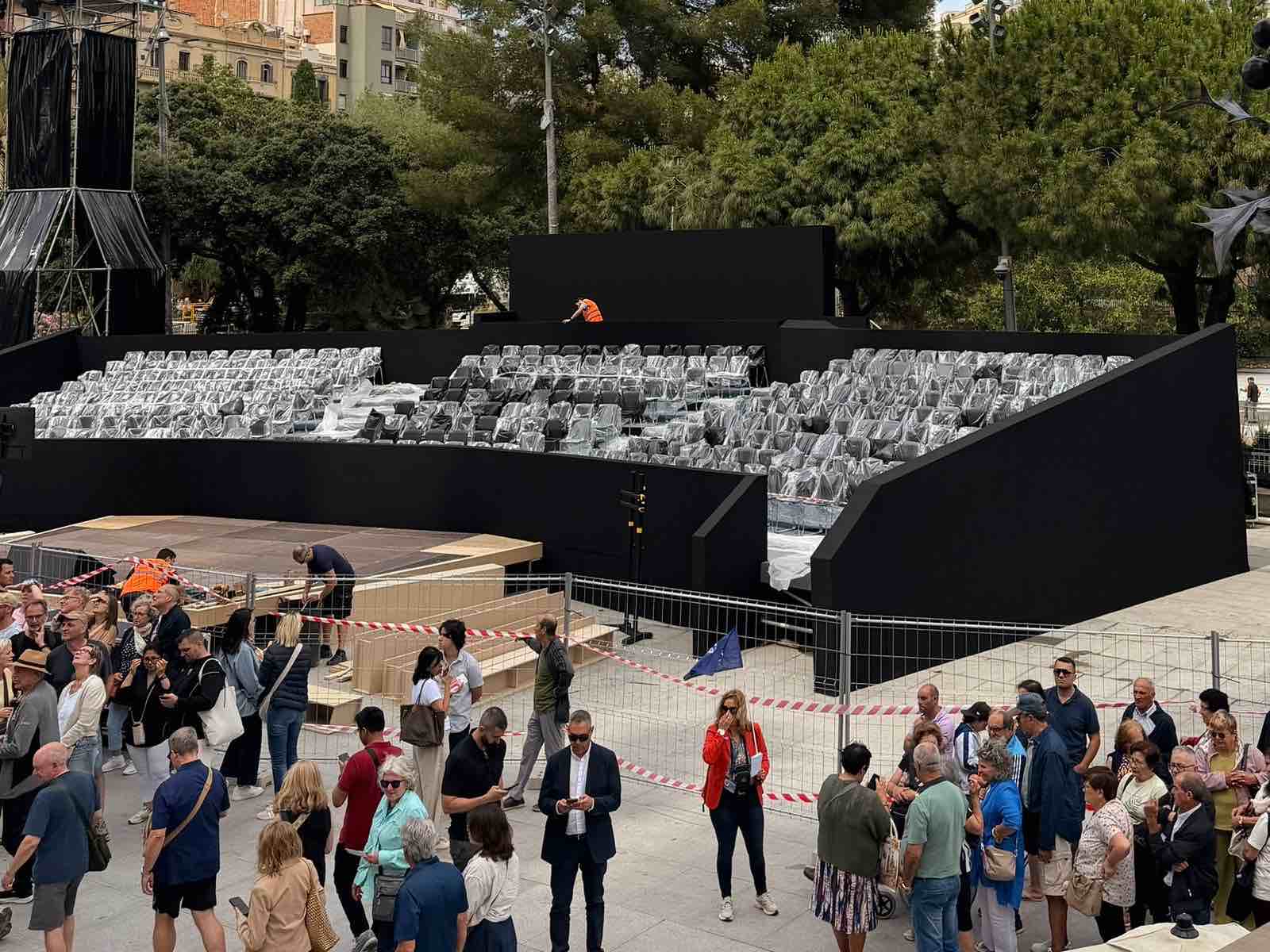
Over dinner, my relatives in Barcelona sat huddled around a smartphone. As locals, they were trying to map out a strategy to navigate the impending gridlock and strict security lockdowns just to catch a glimpse of the Pontiff. Hotels were completely booked, and property owners along the papal route were aggressively capitalizing on the frenzy—offering apartment balconies to wealthy onlookers for a staggering €350 a day.
The scale of this commercial spectacle hit me the moment I approached the building. The public squares were entirely taken over. Temporary chairs were lined up in a block like an outdoor rock concert. Media networks were constructing towering outdoor stages, running thick cables across the pavement.
Sea of crowds, battleground
For the modern traveler seeking quiet prayer, this hyper-commercial setup can feel strangely hollow. There are no dark wooden corners or ancient statues polished smooth by centuries of devotion. Instead, dense crowds move like a slow river, raising smartphones to snap photos of the kaleidoscopic ceiling.
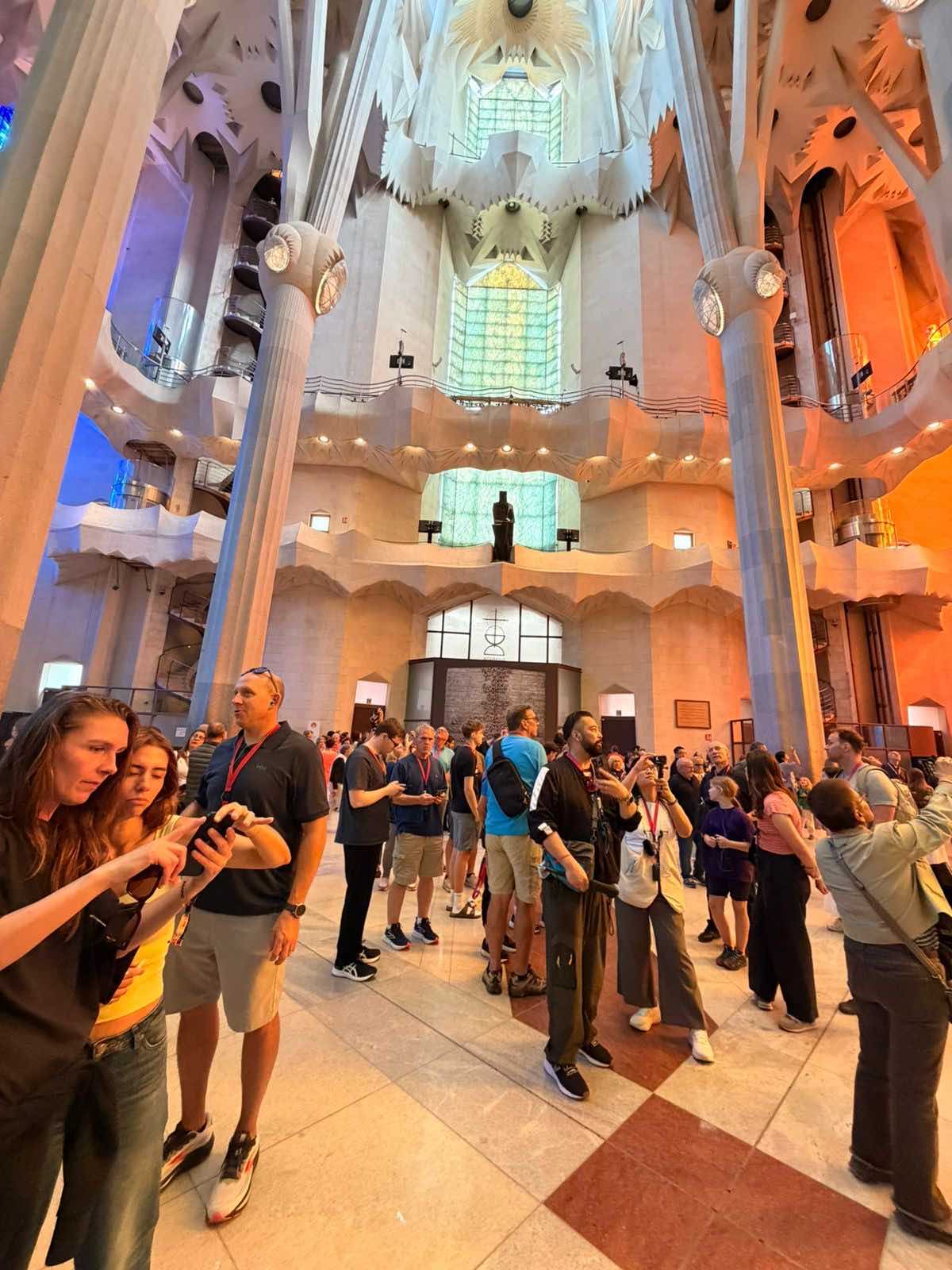
While the central towers are structurally finished, the grand main entrance, the Glory Façade, remains a battleground. To build the monumental 60-meter-wide staircase that Gaudí envisioned, the church must demolish an entire block of existing apartments on Carrer de Mallorca. This urban expansion would displace roughly 3,000 local residents and destroy dozens of neighborhood businesses.
For decades, the residents living in the shadow of the basilica assumed the project would never finish, treating the grand plaza as an impossible myth. Now, with the main structure fully erected, that myth has become an existential threat. The neighborhood association is locked in a bitter housing war with the church board, fighting the demolition permits in court, leaving industrial scaffolding clinging stubbornly to the southern exterior.
Yet, there is a brilliant historical irony here. A century ago, Gaudí himself pioneered this exact marketing strategy. He intentionally built the highly decorative Nativity Façade first, ignoring normal building logic, purely as a visual billboard to capture the public's imagination and secure steady donations.
Today, the foundation is running the master's original playbook on a massive scale. The cathedral welcomes millions of tourists annually, generating over a hundred million euros from ticket sales alone. By leveraging the immense hype of the 2026 centennial and the Papal visit, they keep the financial engine running at peak performance, even as the final completion date drifts toward 2034.
The irony of Sagrada Familia
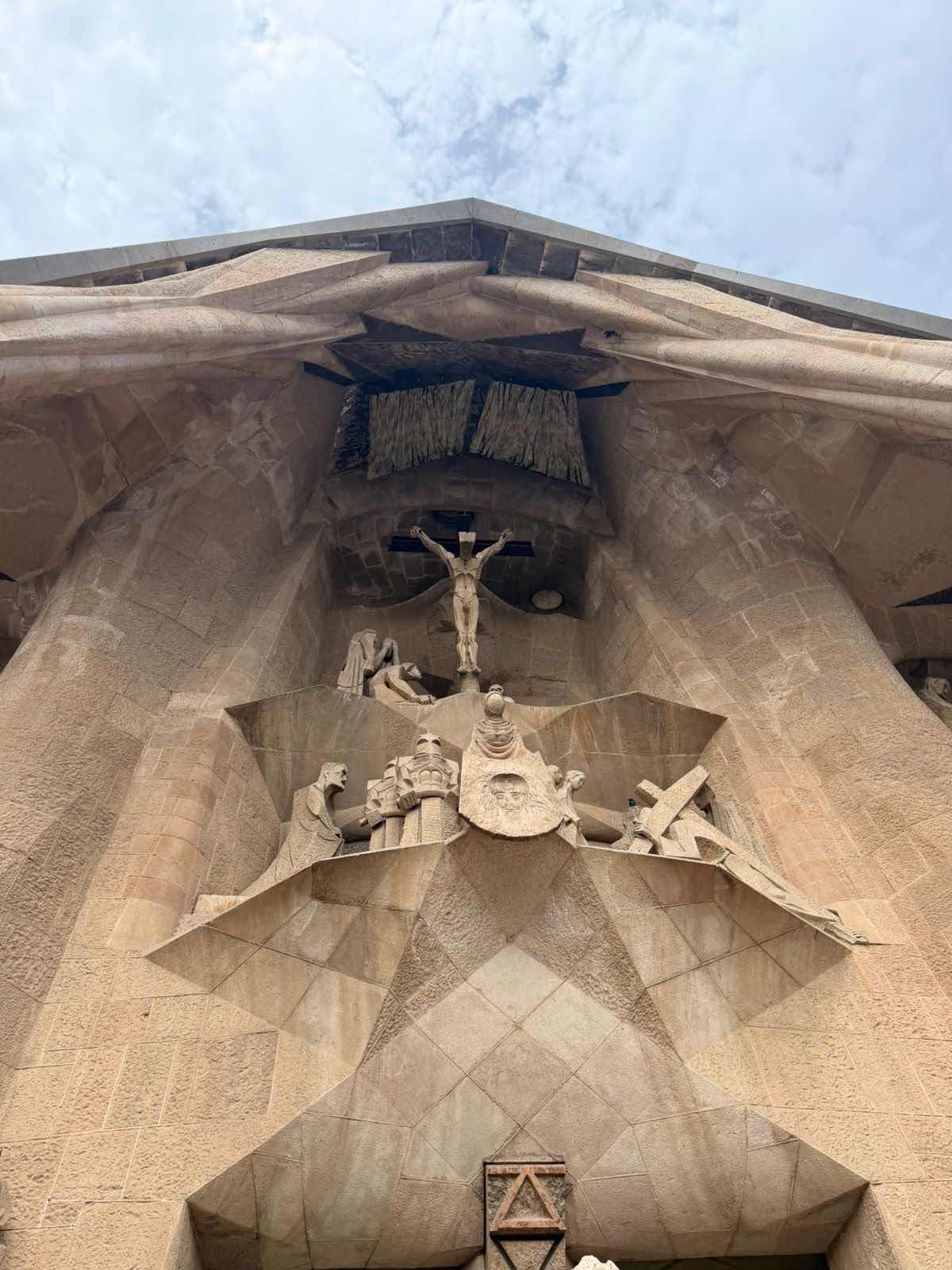
Hidden in plain sight on the harsh Passion Façade, a stone portrait of Gaudí watches the crowds. He stands next to a scene where Jesus Christ is about to be crucified. Rushing, photo-snapping tourists unknowingly ignore him today, just as bystanders did when he lay dying a century ago.
As I stood near the nave, the massive pipe organ suddenly filled the air. Its music cut through the chatter of the tour groups and the hum of television crews.
On June 11, the stadium seats finally got filled. The media stages went live. Pope Leo XIV blessed the tallest church on Earth. It was a historic, flawless television spectacle. Yet, my relatives were mapping out detour routes to navigate the city lockdowns.
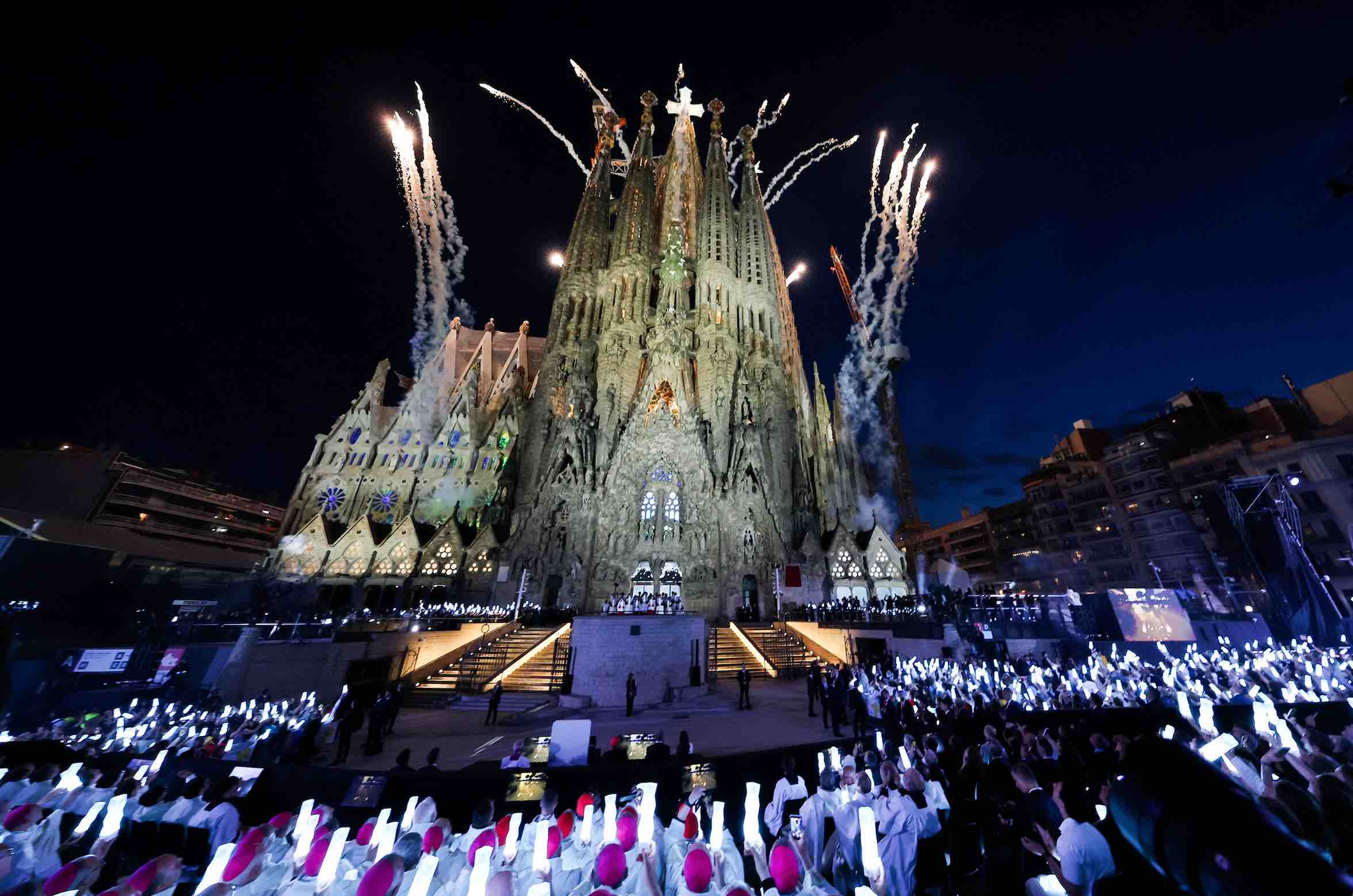
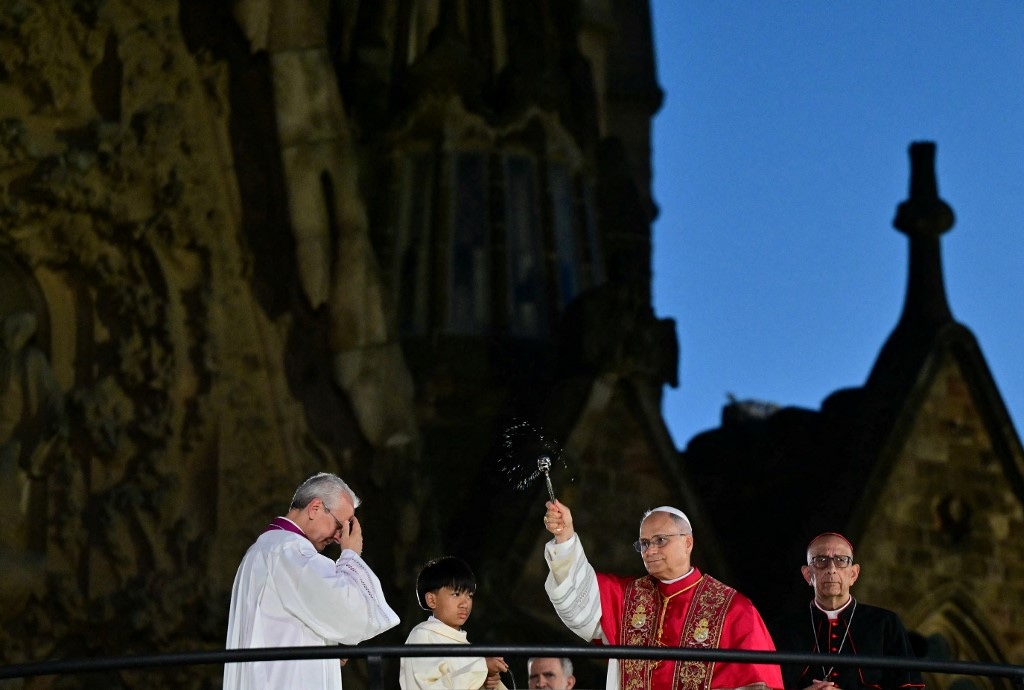
This reveals the irony of the Sagrada Família. In its race to finish, it built a magnificent corporate marvel. However, the intimacy of quiet devotion has been pushed entirely to the neighborhood side streets.
The exterior scaffolding remains trapped in municipal politics. The basilica will continue to operate as a beautiful construction site. The Client upstairs has all the time in the world.

WATCH: Is OPM still as good as it used to be? (Generations Ep. 20)
September 9, 2026
WATCH: Discovering Vietnam in three days
June 9, 2026