

Best foot forward in Frankfurt
On Monday next week, several hundred Filipino writers, publishers, artists, journalists and other workers in the book trade will be flying off to Germany for the Frankfurter Buchmesse, better known as the Frankfurt Book Fair, running this year until Oct. 19.
It will probably be the largest cultural mission ever sent out by the country to an international event—the equivalent of an Olympic delegation— and for good reason. This year, the Philippines is the FBM’s Guest of Honor, an annual distinction designed to draw attention to that particular country’s literature and culture, chiefly through its books.
As GOH, the Philippines will have its own pavilion of curated exhibits highlighting our literary history and production, as well as the diversity of our works from historical novels and crime fiction to children’s stories and comic books.
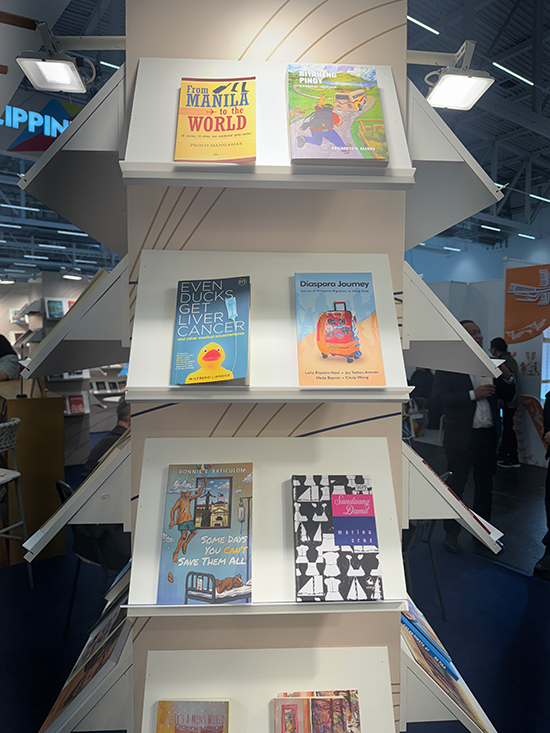
Going back over 500 years, the Frankfurt Book Fair is the world’s largest gathering of publishers, authors, and booksellers, drawing thousands of attendees from all over the world to what is essentially a marketplace for publishing and translation rights. For countries like the Philippines, far away from the global publishing centers in New York and London, it is a matchless opportunity to showcase the best of one’s work.
Looming largely over our GOH presence will be the work and legacy of Jose Rizal, whose deep personal ties to Germany—where he studied ophthalmology and completed Noli Me Tangere—continue to inform our relationship with that country. Indeed, our GOH slogan—“The imagination peoples the air”—is drawn from Rizal’s Fili, turning Sisa’s frantic search for her missing sons into a metaphor for the power of words to create moving realities.
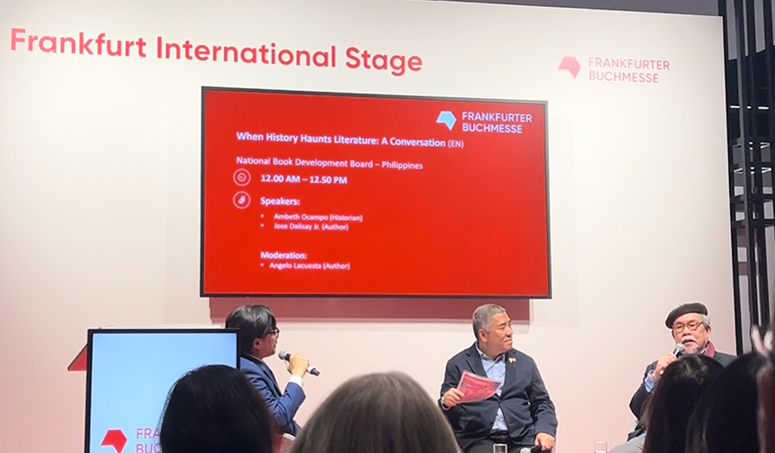
There are hundreds of events on the Philippines’ official FBM schedule, both onsite and off-site. They range from panel discussions on “Our National Literature: Filipino Spirit and Imagination” with Merlie Alunan and Kristian Cordero, “Women’s Fiction from the Global South” with Cecilia Manguerra Brainard, Jessica Zafra, and Ayu Utami, and “Dismantling Imperial Narratives” with Filomeno Aguilar Jr., Lisandro Claudio, and Patricia May Jurilla to performances by National Artist for Music Ramon Santos and the Philippine Madrigal Singers, a demonstration of Baybayin by Howie Severino, and a book launch of the German editions of the Noli and Fili with historian Ambeth Ocampo.

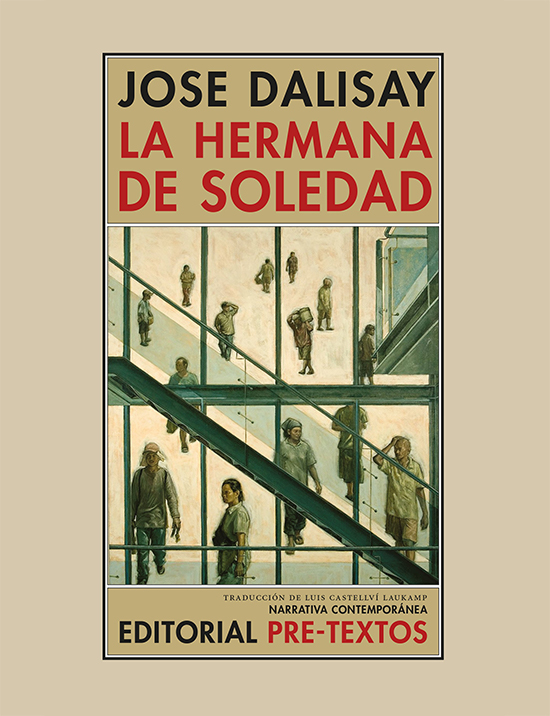
I have eight events on my personal calendar, ranging from the launch of the Spanish edition of my novel Soledad’s Sister to readings at the Union International Club and Bad Bergleburg, so it’s going to be a hectic time for this septuagenarian. This will be my third and likely my last sortie into the FBM, and I know how punishing those long walks down the hangar-sized halls can get.
Practically all aspects of Philippine art and culture will be on display in Frankfurt, going well beyond books and literature into theater, film, music, dance, food, and fashion. In short, we will be putting our best foot forward on this global stage, although there will be no papering-over of our political and social fractures and crises. (Journalists Maria Ressa and Patricia Evangelista will be there to make sure of that.)
As with any large-scale national enterprise, our GOH effort has not been without controversy. A campaign by cultural activists to boycott the FBM—premised on Germany’s and the book fair’s perceived support for Israel in its genocidal war on Gaza—took off earlier this year and gained some traction, leading to the withdrawal of some authors from the delegation. There was spirited and largely respectful debate over this issue, but it was clear to both sides from the outset that a complete disengagement from the FBM—for which we had planned for many years running—was not going to happen. (I argued, like many others, for our critical participation, minding Gaza as one of the foremost issues facing humanity today. Not incidentally, on the Philippine program is a panel on “Writing Through the Wounds: Filipino and Palestinian Literatures in Relational Solidarity” with Nikki Carsi Cruz, Dorian Merina, Tarik Hamdan, Atef Abu Saif and Genevieve Asenjo, among other initiatives in support of Palestinian freedom.)
Another criticism raised was the cost of our GOH participation—an effort bannered and sustained by Sen. Loren Legarda, the chief and most consistent supporter of the arts and culture in the Senate. Why not just pour all that money, some have said, into publishing and printing more books for Filipinos? There’s no argument that Philippine education needs more support (the trillion-peso infrastructure scam tells us the money was always there) but the targeted exposure that the GOH opportunity provides comes once in a lifetime, and Sen. Legarda wasn’t about to let it pass.
As she noted in recent remarks, “When I first envisioned the Philippines as the Guest of Honor at the Frankfurter Buchmesse, some felt that it was far too ambitious, that we were too diverse and too complex for the world's largest book fair to embrace. But I believed then, as I believe now, that our diversity is our greatest advantage, a gift and never a hurdle.
“The Philippines is more than an archipelago of 7,641 islands. It is a vast constellation of ideas and innovation, of ingenuity and distinct cultures and traditions joined together by the tides of hope and resilience. The 135 languages identified and described by the Komisyon sa Wikang Filipino turn into the voices and stories of Filipinos resonating around the world, reaching across cultures, transcending borders, challenging assumptions, and expanding the boundaries of human empathy.”
Let those voices and stories fill the air in Frankfurt, and spread around the planet.

WATCH: Pixar Summer Fest adventure at Hong Kong Disneyland
August 10, 2026