

Beauty queen Vida Doria has found her universe
At an age when many women begin to slow down, spend endless days just watching the sunset or enjoying time with grandchildren, Vida Doria is charting new creative territory.
The designer who spent decades transforming fabric into wearable art has discovered a second canvas—one that continues to offer fresh opportunities for expression, reinvention, and impact. And if her growing body of work is any indication, Vida’s most prolific artistic years may still be ahead of her.
For most Filipino fashionistas in the 1980s, Vida was synonymous with fashion. For more than five decades, the former Binibining Pilipinas Universe winner dressed generations of women in elegant gowns, timeless separates, and colorful creations that became hallmarks of her signature style.
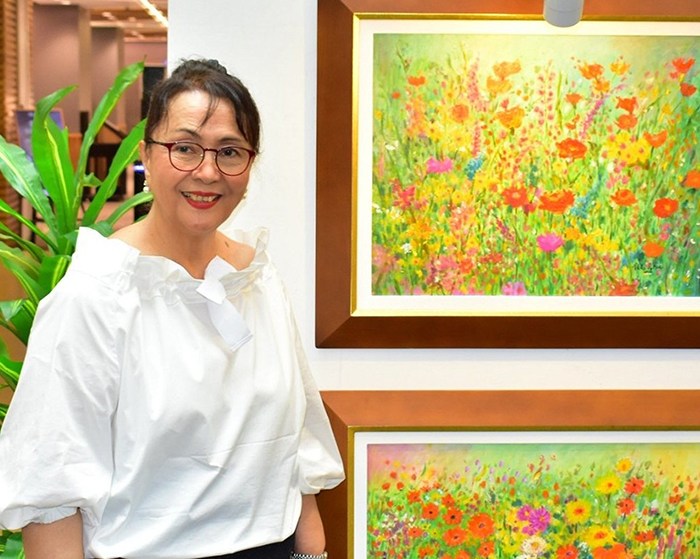
Today, however, she is building a different kind of legacy—one painted in oils and brushstrokes.
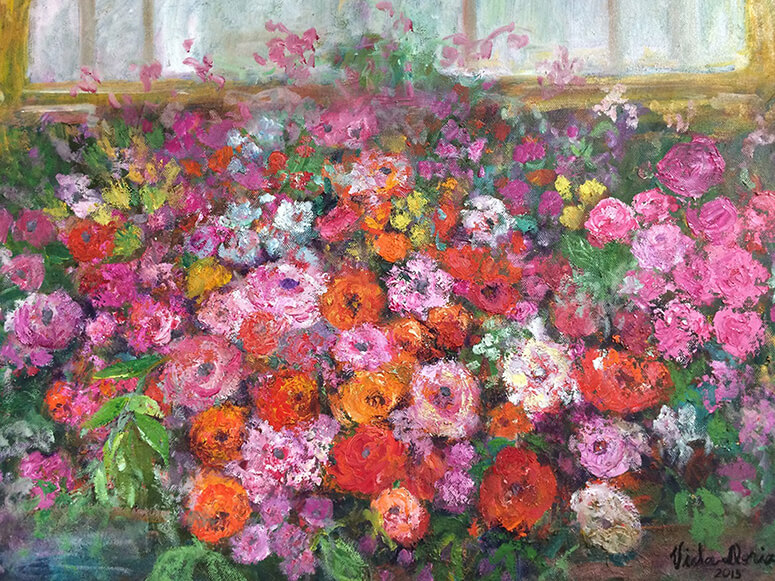
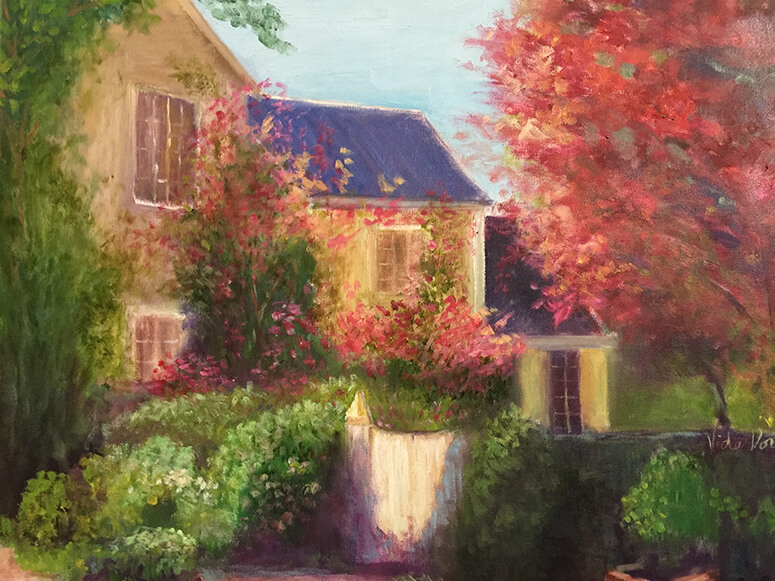
Over the past 21 years, the designer, entrepreneur, wife, mother, and grandmother has quietly created a body of work that now exceeds a hundred paintings. Filled with vibrant florals, sweeping landscapes, and expressive interpretations of nature, her artworks have found devoted collectors and opened an entirely new chapter in her creative life.
Far from slowing down, Vida appears to be experiencing a creative resurgence. “I have so many things I still want to paint,” she says. “I don’t think I would be able to paint them all even if I had forever.”
CONTINUE READING BELOW

That sense of possibility recently found expression in “Tapestry of Woven Dreams,” a group exhibition featuring members of Katha Art at The Podium. Yet for Vida, the exhibit represents something bigger than displaying paintings—it marks another milestone in a journey that continues to evolve more than two decades after she first picked up a paintbrush.
Her growing collection includes more than a hundred works, with several pieces forming what she calls her “Artist Collection”—paintings she has chosen to keep because of their deeply personal significance.
But the size of her portfolio is not simply a matter of quantity. “For an artist, having a large body of work can mean professionalism and a serious pursuit of art,” she says.
Her studio is always ready for the next idea, with canvases mounted and paints within easy reach—a reflection of an artist who is focused not on past accomplishments but on what she can still create.
Among her aspirations is publishing a book tentatively titled “Art & Life,” a collection that would pair her paintings with personal stories and reflections gathered through the years. She also hopes to bring together the two creative worlds that have defined her life.
“I would like to create paintings inspired by my fashion designs,” she says.
What began as a way to process grief eventually became a source of joy, fulfillment, and purpose.
Unlike her current landscapes and florals, these future works would incorporate figures and faces, blending couture and fine art in a way that reflects her lifelong artistic journey.
Ironically, this artistic chapter emerged during one of the most difficult periods of her life. In 2005, Vida lost both her brother and her mother within a matter of months. Searching for an emotional outlet, she joined a “Paint to Heal” workshop at Santa Maria della Strada Parish in Quezon City.
Her first painting, a floral piece titled “My Mom’s Bouquet,” remains one of her most treasured works. What began as a way to process grief eventually became a source of joy, fulfillment, and purpose.
While her paintings have long been influenced by the romantic Impressionism of Claude Monet, Vida has recently found inspiration in Vincent van Gogh’s dynamic energy and fearless use of color. Beyond her signature flowers and pastoral scenes, she has begun exploring waterscapes and interpretations of the ocean, continuing to expand her artistic repertoire. Yet regardless of the subject, one element remains constant: “When you see my paintings, there is emotion.”
It is perhaps this emotional honesty that resonates most with collectors. They are not simply purchasing landscapes or flowers; they are acquiring works shaped by experience, faith, resilience, and generosity.
For Vida, painting serves not only as personal expression but also as a vehicle for helping others. Proceeds from her artworks have helped fund medical treatments and assistance for relatives, friends, and even individuals she has never met personally. She currently supports ANCOP (Answering the Cry of the Poor), one of the beneficiaries of her recent exhibit.
More than two decades after discovering painting, Vida continues to approach each blank canvas with curiosity and purpose. With new artistic goals, a growing body of work, and an enduring desire to give back, she has found a second wind that shows no signs of slowing down.

WATCH: Is Gen Z too soft? (Generations Ep. 23)
September 30, 2026
WATCH: How to experience Bangkok and Kanchanaburi in one trip
October 21, 2026
WATCH: Discovering Vietnam in three days
June 9, 2026
WATCH: Pixar Summer Fest adventure at Hong Kong Disneyland
August 10, 2026