Ex-PBA coach Alex Compton's book about raising young athletes wins an NYC Big Book Award
Former basketball player and PBA coach Alex Compton's book Guiding Your Child's Athletic Journey, written with ex-Philippine Basketball League player and coach Kevin Dalafu, has won an NYC Big Book Award in the Parenting & Family category.
The book, which is part of Dr. Wallace Panlilio's Wisest Learners series, was born out of the lack of materials on parenting children in sports. Compton told PhilSTAR L!fe that he has seen the extremes—from "the most amazing parenting" to "the absolute worst" in youth sports.
"We wanted to share stories from our lives. We thought we could make something that would really help parents, kids, and just families in general."
Being both coaches, Compton, a self-described data nerd, said that they made sure that the book is backed with data and evidence, while being a light read. The book took nearly two years to complete, involving research, juggling multiple different roles, and going back to zero because he wasn’t satisfied.
He decided to take a break from the court to fully focus on the book.
“It's too important. So when we [focused], we started seeing better results and we were happier with what we were writing,” he shared.
Rethinking parenting in youth sports
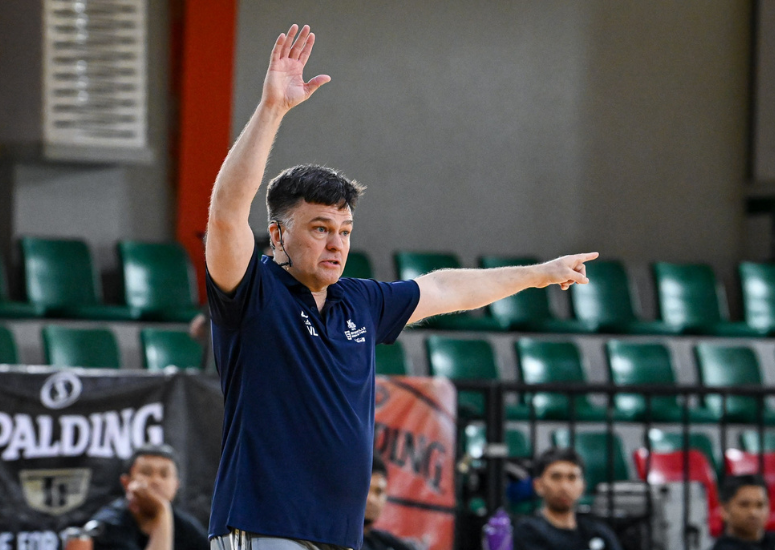
In the book, the coaches talked about authoritative parenting, which involves setting clear rules and firm boundaries, but “with lots of love.”
Compton, who holds a degree in human development and family studies, noted that parents should be wary of extremes such as being too strict or overly gentle, stressing that children need both clear limits and emotional support.
“They can't be smashing glasses against the wall, that's not okay. They need to have a consequence. Most of us (parents) recognize that, but sometimes our boundaries cannot be too firm, or sometimes our love cannot be present or tangible enough for the kids, and you want to have both,” he explained.
“If you have both, you have those firm boundaries, and you have a lot of love and warmth and encouragement,” he said, adding that studies showed that this kind of parenting produces the healthiest kids.
As a coach-dad with sports-inclined children, Compton told L!fe that he learned a lot while writing. He and Dalafu would even sometimes compare what research says about sports parenting to their own experience.
“It was so informative for us as dads to go, 'Man, we thought we were doing pretty good, and we may have actually been doing mediocre.' And you don't want to do mediocre in such an important relationship,” he added.
For his part, the former Alaska Aces coach struggled with balancing his dreams for his kids with understanding where they are developmentally at the moment.
“So if they're eight or nine, they're not going to be the responsible 22-year-old I want. And I need to understand [that] I need to help get them there,” he shared. "It was funny that I caught myself having standards that were too high for their age."
Compton, who is a dad to two boys aged 13, 11, and a girl aged 9, stressed that while his kids love sports, he made sure not to be hard on them.
“I am going to be the last person to ever put pressure on them,” he said. “I love watching them play sports, I want them to get the character stuff out of it, to get the joy out of it, to develop the skills to be healthy, but I don't have aspirations for them other than those things,” he explained.
Stage parents, while helpful for their support and focus for their child’s athletic journey, may be problematic when boundaries are not considered. According to Compton, parents often overlook the importance of respecting authority. The kids need to learn from their own coaches, too.
“Obviously, I got to coach at a pretty high level for a long time, but it's not my job to coach [my kids]. My job is to teach them,” he said. “If he (coach) asks you to do something, do it. Unless it's a violation of your morals, do it.”
“I think sometimes as parents, it's so hard for us because we know what we want for our kids. We know how we want to raise them,” he added.
Instead, he focuses on support, like asking questions, ensuring they’re having fun, and letting them know he enjoys watching them play.
On dealing with setbacks, competitiveness

In youth sports, one of the challenging parts is helping a child deal with setbacks. Compton says it's important to let the child express what they feel.
“If you can parent authoritatively, meaning there's a lot of warmth, but there's also boundaries. You want to operate from that as you approach the setback,” he said.
He added that, alongside acknowledging their disappointment, parents must re-angle it and give them a long-term perspective about the setback.“The big part is to help the kids…We really need to help our kids fall in love with the process, and that means not the result, not just the right now."
He furthered that if kids get to enjoy the process, it would help lessen the blow when they fall short.
“They still hurt, but they hurt in a way that I know this too shall pass,” he added.
For the coach who brought the Alaska Aces to the finals five times, keeping the joy in the youth sports is imperative.
“If we sacrifice joy for competitiveness, they're not going to want to play. If there's no inherent drive, there's no reason for them to want to play. Why in the world would we expect them to be successful? We're asking them essentially to be miserable because we want them to be highly competitive,” he told L!fe.
“That's going to lend itself to developing some really unhealthy kids, and we don't want to do that,” he added.
He reiterated that parents should understand their child’s developmental state and align expectations to their age.
“If the kid is really one of those highly competitive kids, great. But even then, I would say, make sure he's having fun,” he said. “You can do both, but don't sacrifice the joy of the game because you are hyper-competitive as a parent and want to see them competitive and winning all the time.”
He believes that when parents push competitiveness too early, it can lead to a child quitting the sport.
“Sometimes it's really our own ego that gets in the way, and we want the kids to be competitive because we want to be able to brag about our kids and our family name," he said.
"We don't understand that actually hurts them and us in the long run,” Compton said.
Wisest Learners: Guiding Your Child's Athletic Journey is available in eBook, audiobook, and paperback formats via this link. You can also grab a copy in select Fully Booked branches.