

Dressed in 70 years of love
Quite routinely, we relegate the business of international relations to an isolated universe of diplomatic dinners, ministerial handshakes, and bilateral agreements signed under the heavy glare of television cameras. Yet true kinship between nations is rarely felt in the signing of a document. It is found instead in the way one culture begins to decipher the visual language of another, how a designer from Manila can look at a textile from Kyoto and recognize a kindred instinct.
The galleries of the Metropolitan Museum of Manila offer a rare sanctuary from the political noise of the world. Here, the grand narrative of statehood drops away, replaced by the singular stories of 60 garments. This showcase, “Threads of Dreams,” marks seven decades of diplomatic ties between the Philippines and Japan, transforming an official milestone into an intimate evening of shared confidences.
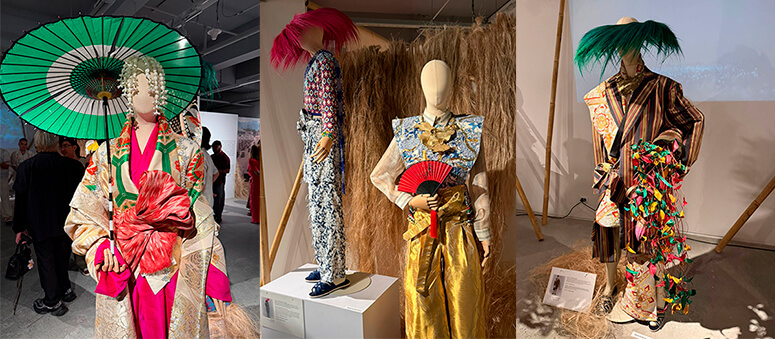
Born from a casual dinner conversation between Bench founder Ben Chan and Japanese Ambassador Kazuya Endo, the collection treats clothing as an envelope of stitched histories, illustrating how two distinct societies can look past historical friction and fashion a shared future. There is a raw vulnerability to these pieces, an admission that our narrative as two nations has known deep tragedy, but that our shared story does not have to end there.
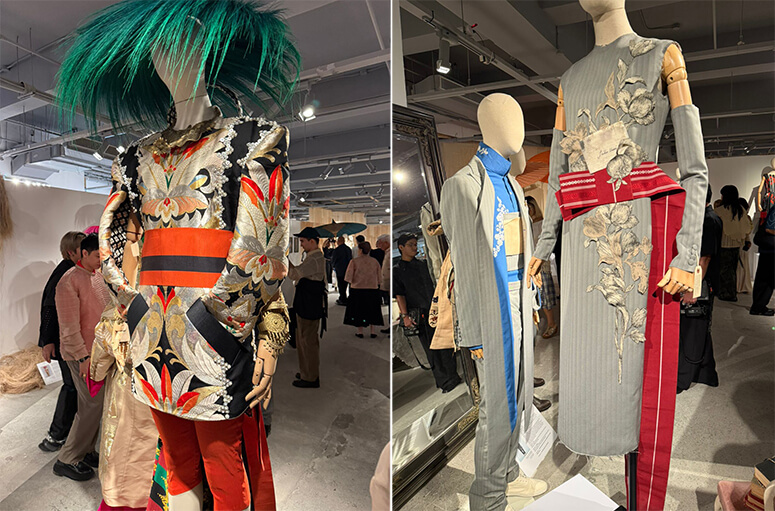
This aesthetic bridge rests on a vast, deeply intertwined human landscape. The Philippines is home to a significant Japanese diaspora, with over 15,000 Japanese nationals living within our borders. More profoundly, hundreds of thousands of Japanese-Filipino descendants, the Nikkeijin, form a living ancestral bridge across generations, heavily concentrated in hubs like Davao, Baguio, and Metro Manila. Our design minds are not merely borrowing a silhouette or copying a foreign motif. They are confronting a century of intense movement and historical friction, processing a heritage that belongs as much to our streets as it does to theirs.
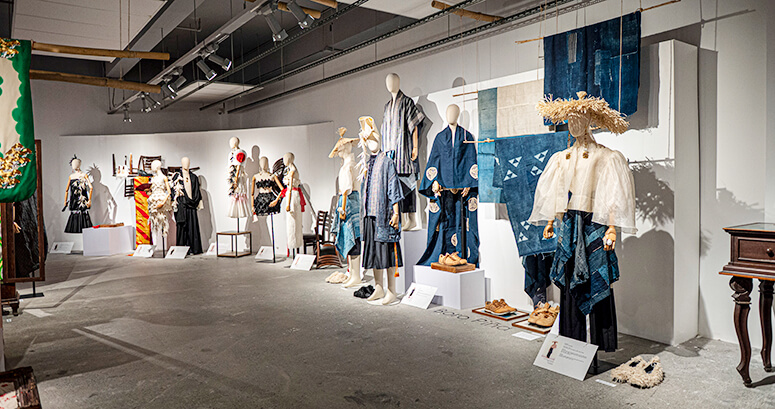
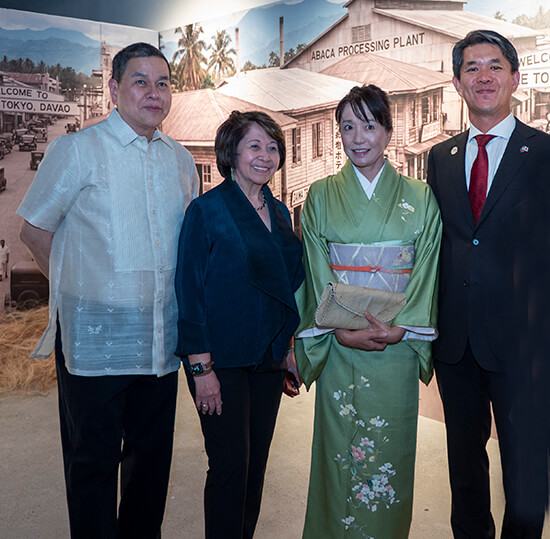
The memory of the south is tangible, invoking pre-war Mintal, the frontier once affectionately dubbed Davaokuo, where over 12,000 Japanese immigrants worked alongside local tribes in the abaca plantations. Jaggy Glarino translates this raw, historical proximity into a striking visual harmony, marrying the rigorous, geometric architecture of traditional Japanese kimono fabrics with the intricate, soulful spirit of indigenous T’boli elements. Heavy obi brocades fold into native handwoven textiles, showing how two completely different communities, when placed on the same soil, can create an entirely vanguard aesthetic out of the ground they both tilled.
CONTINUE READING BELOW

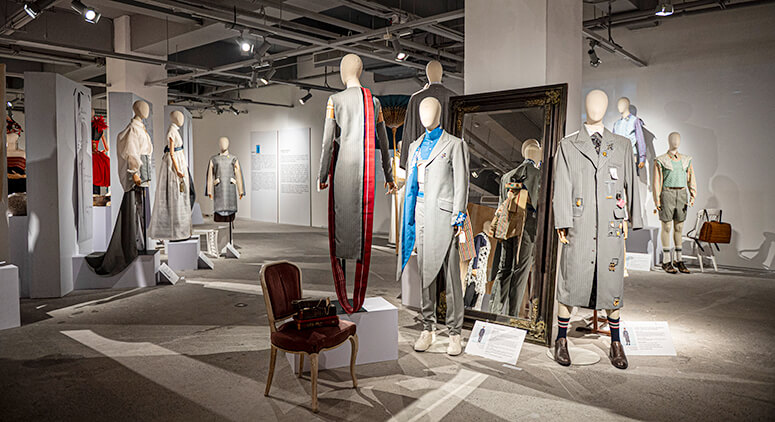
The narrative shifts from the soil into the artistic imagination of our classical history. Joey Samson orchestrates a romantic conversation between two iconic female figures from our collective past, invoking Una Bulaqueña, the Filipina immortalized by Juan Luna, and O Sei San, the high-born samurai daughter, Seiko Usui, who became the companion and muse of Jose Rizal during his brief residence in Yokohama. This is the late 19th century reimagined, an era when Tokyo and Yokohama became intellectual refuges for Filipino nationalists seeking Asian solidarity. Joey breaks down the rigid structures of historical costume, integrating traditional Japanese umbrellas into sharp, Westernized jackets, while reinterpreting the delicate framework of the baro with a disciplined Asian restraint. It is a beautiful haunting that lets desire and identity whisper across centuries and oceans.
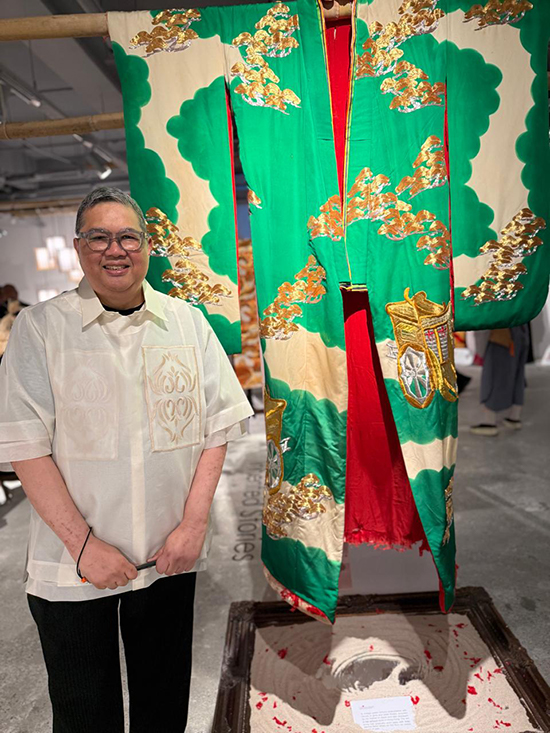
Finally, the exhibition settles into the intimacy of the home, transforming historical memory into a domestic inheritance passed down between mother and child. Here hovers a generational ghost, that of the thousands of Japanese laborers who arrived at the turn of the 20th century to cut the grueling Benguet Road through the unforgiving cliffs of Kennon. Many stayed, built families, and laid the foundations of the Nikkeijin community in the highlands.
Rhett Eala explores this shared lineage through a more intimate lens, filtered through the artistic eye of his mother, Baby Valencia. As a frequent visitor to Japan who was deeply moved by a month-long stay in Osaka in 1970, she amassed a collection of objects, textiles, and memorabilia that filled both her antique shop in Hong Kong and their home in Manila, shaping her son’s early visual environment. Rhett translates these layers of memory into fluid, avant-garde silhouettes that celebrate minimalist grace and structural freedom, allowing the clean lines of the kimono to melt into the transparent, delicate textures of a jusi baro. Traditional calado embroidery appears alongside deep indigo dyes, and the structured hakama pants of Japanese archers are transformed into fluid, sculptural tulip shapes that feel like memories captured in fabric, permanent and filled with a gentle dignity.
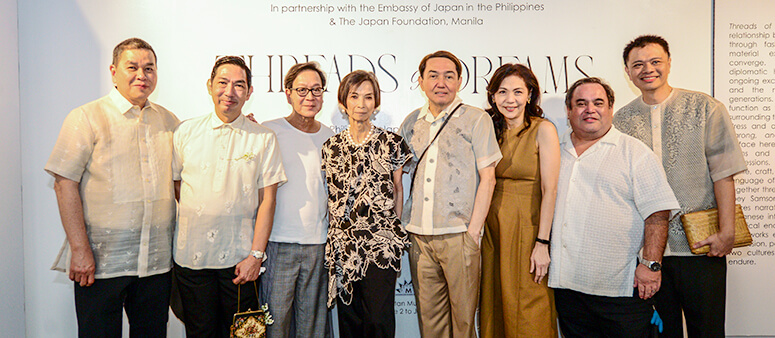
The decision to elevate this collection from the commercial runway of Bench Fashion Week during its spring-summer 2026 run into this museum space forces the viewer to slow down. It demands that we study the seams, that we realize these garments are historical documents in their own right.
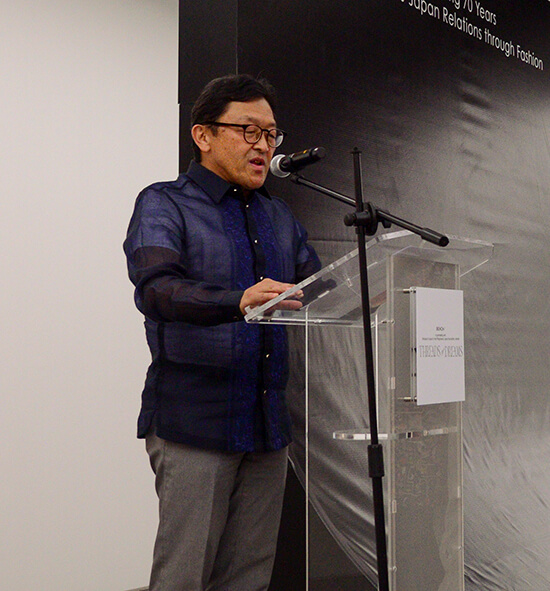
This spirit of mutual appreciation was present from the very beginning of the project. Ambassador Endo has spoken of his deep affection for the barong Tagalog, which he now wears proudly to official functions, while his wife, Akiko, has become an ardent admirer of Filipiniana textiles. At the initial presentation during Bench Fashion Week, Madame Endo wore a silk terno adorned with intricate Japanese embroidery, a literal manifestation of the partnership the project sought to honor. These personal choices reveal how deeply our cultures have become intertwined, an energy that now fills the museum until July 26.
A shared future does not require us to forget our painful history, nor does it ask us to erase our individual heritage. Instead, it invites us to bring our individual strengths and distinct textures to the loom. In the hands of designers like Jaggy, Joey, and Rhett, those threads become a garment that celebrates our shared humanity.
