

Theatrical (and political) drama at the 2026 Oscars
Safe is out, and drama is in—both in dressing and in speeches—at the 98th Academy Awards, affectionately known as the Oscars.
Host Conan O’Brien warned early on, “Tonight, things could get political, so there’s an alternate Oscars hosted by Kid Rock at the Dave & Buster’s down the street.” He started by mocking Timothée Chalamet’s dismissal of ballet and opera, followed by a swipe at Trump: “We’re at the Small Penis Theater—let’s see him put his name in front of that.”
Acceptance speeches were no less pointed. The winning team behind the Best Documentary addressed ICE killings in the US, and presenter Javier Bardem, who wore his heart on his lapel with a “No a la Guerra” pin, said at the podium, “No to war and free Palestine.”
None of this comes as a surprise, since the two top-winning films, One Battle After Another and Sinners, have highly politicized themes, focusing on authoritarianism and historical injustice.
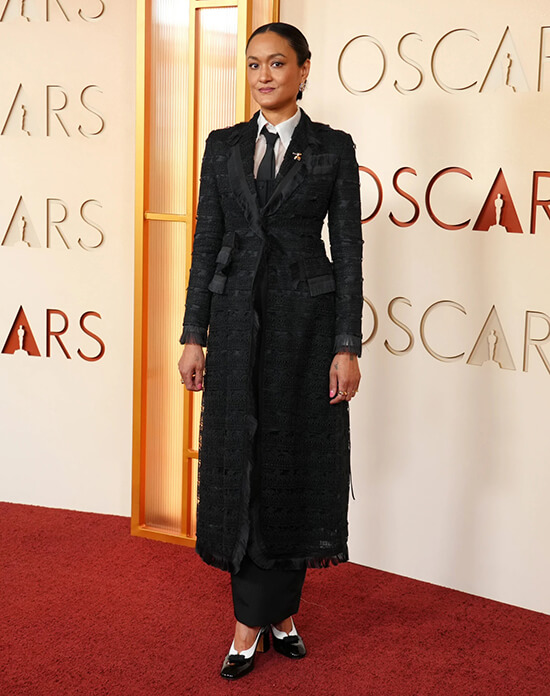

Sinners’ success is particularly significant for the Philippines, with the historic victory of Autumn Durald Arkapaw, who is not only the first Filipino but also the first woman to win Best Cinematography in the Oscars’ almost 100-year history. Her speech was made even more poignant by her crediting all the women in the theater and asking them to stand up in solidarity. She wore a long skirt suit and tie by Thom Browne, a designer whom she says “exudes confidence and strength,” mirroring her own approach to her work. It was made more personal with a sentimental accessory: a photo of her grandfather, Guillermo Pagan Bautista, which she carried as a good-luck ritual.
If Arkapaw’s look brought to mind the 1930s tuxedo of the badass Marlene Dietrich, others channeled the Hollywood glamour of 1940s and 1950s screen sirens like Rita Hayworth and Marilyn Monroe, with their cinched waists and body-skimming gowns.
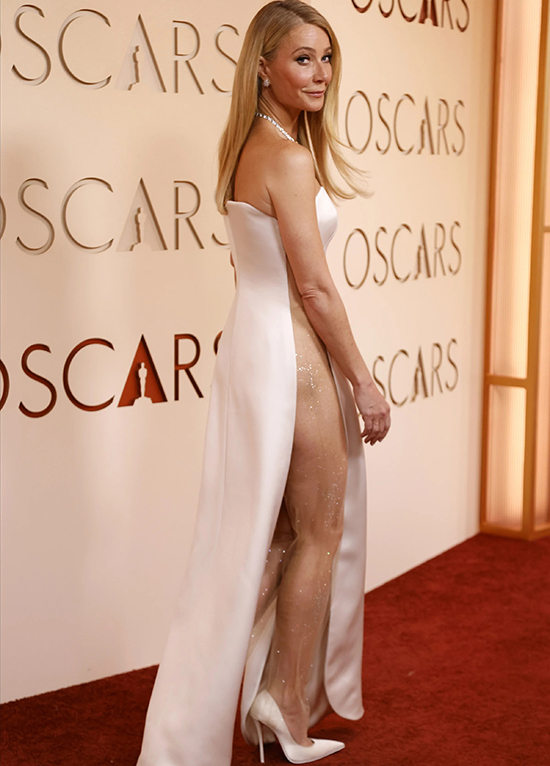
Gwyneth Paltrow’s gown belied its racy nature: a Giorgio Armani Privé column that looked safe up front, but a quarter turn revealed a full slit all the way up to the top of her strapless neckline—on both sides.
A fun peg was the 1988 cartoon icon Jessica Rabbit, the glamour puss from Who Framed Roger Rabbit, with her tight red gown, dramatic curves, and sultry styling. The reference blends pop culture with Hollywood sensuality, so it’s not pure nostalgia but a playful 2026 version. Some may have gone too far, however, looking more caricatured than sensual.
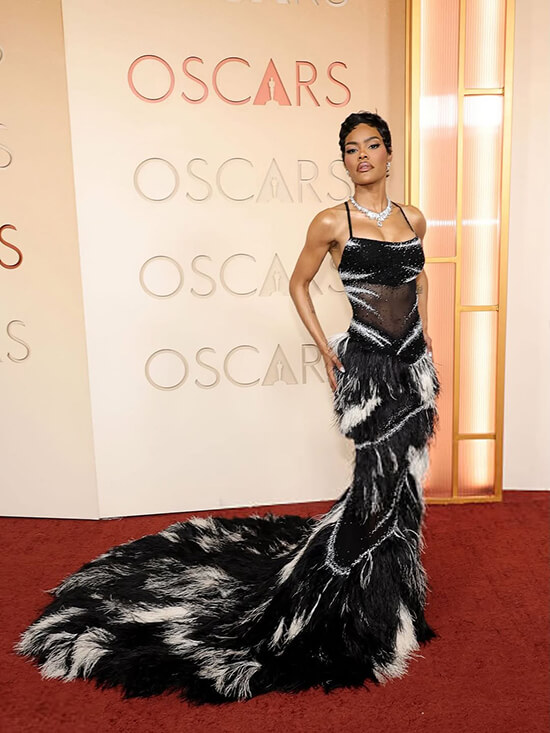
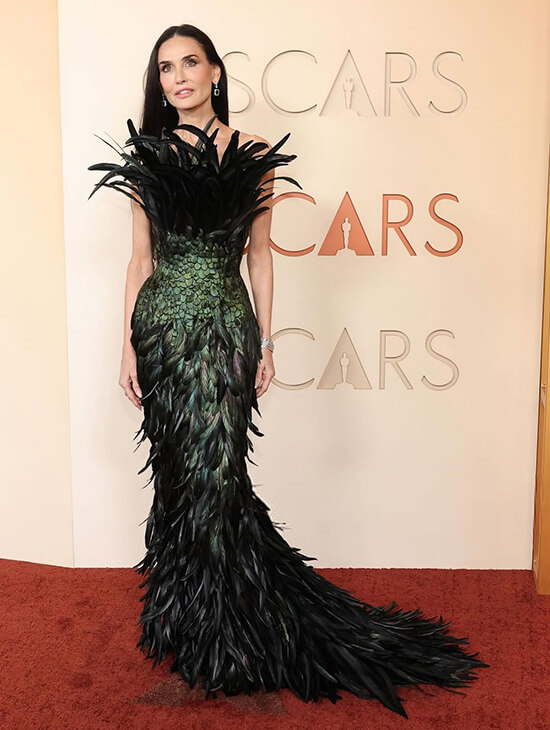
The ’80s inspiration is also significant because of the theatrical shapes and bold embellishments of the era’s couture from the likes of Christian Lacroix, Thierry Mugler, and Yves Saint Laurent. This was reimagined on the red carpet with dramatic proportions, exaggerated shoulders and hips, sculptural tailoring, feathered textures, beading, and embroidery. Again, some overdid it, with too much going on at the same time.
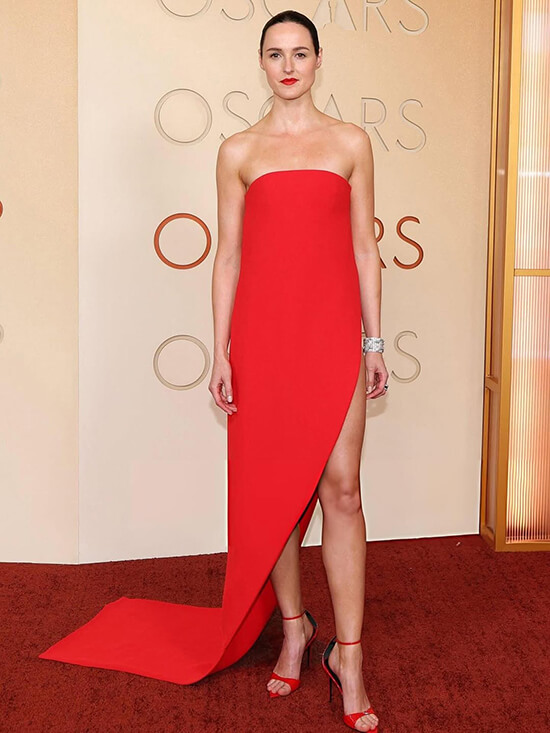
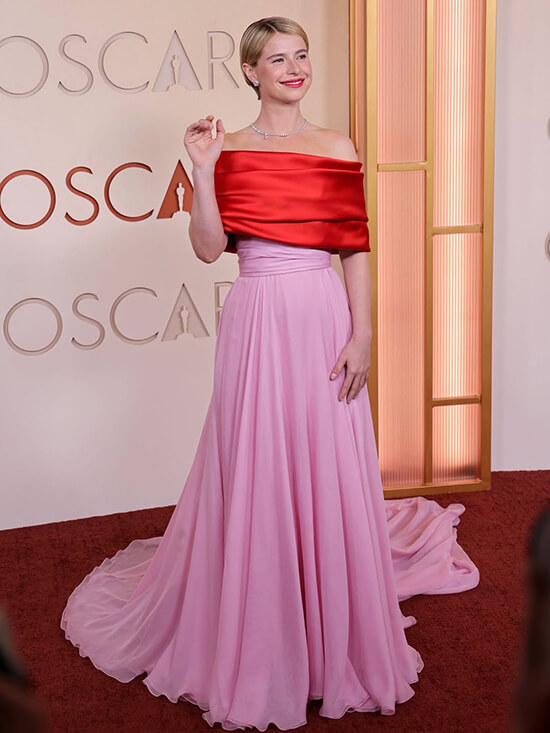
Colors were prominent, from reds and jewel tones to fresh spring pastels like Nicole Kidman’s pink feathered Chanel couture with a peplum, and Chase Infiniti’s lavender Louis Vuitton with a tiered ruffle train that also displayed another key trend of the night: big volume—just like Elle Fanning’s Givenchy skirt.
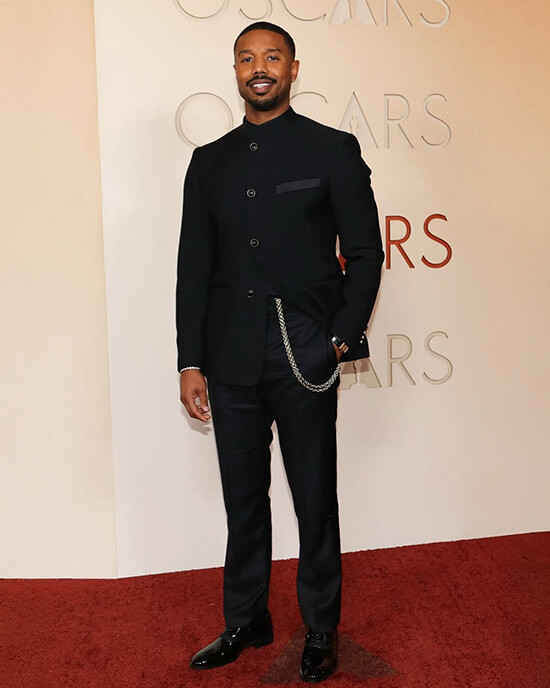
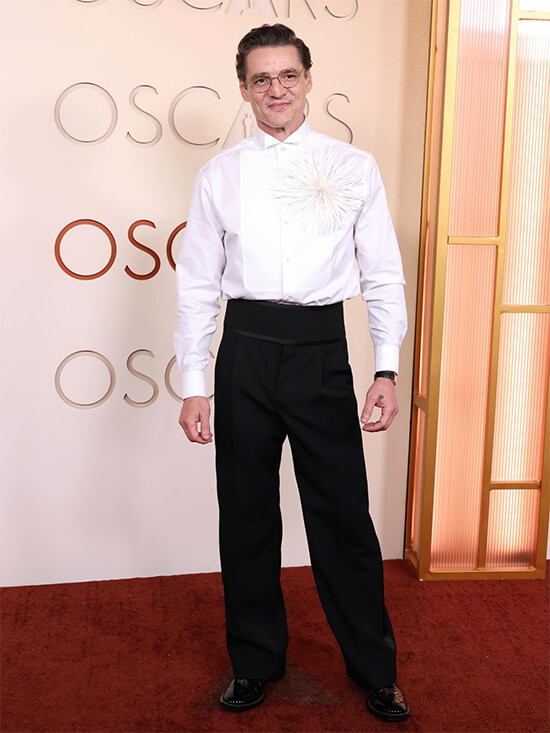
Men were equally theatrical, going for colored tuxedos, long coats, and lots of brooches and jewelry. Pedro Pascal ditched the jacket and his signature facial hair and wore a Chanel floral brooch.
The red carpet has effectively been transformed into a couture runway. Dresses from current collections no longer seem to cut it. Designers now create unique pieces specifically for stars to make a statement. Working with stylists in conjunction with jewelers like Cartier, Bulgari, and Tiffany & Co., they create a narrative where each appearance becomes a carefully constructed fashion story. This has resulted in some exciting, forward-looking fashion that has heralded a new era of glamour on the red carpet.
But then again, as with all experiments in the laboratory of couture, just as there are hits, there are also misses. And just as on stage at the 98th Academy Awards, the red carpet had its share of winners and losers.
