

Remembering the ‘Studio 54 of Manila’
I was a disco kid—what we used to call “laman ng disco.” My friends and I were always the first to hit the dance floor at Faces, Isis, and Stargazer, and the last to leave, usually ending the night with breakfast at The Peninsula or Rufus, the legendary tapsilog place.
Some of my most memorable college nights were spent at Coco Banana, the legendary and highly influential Manila nightclub created by the flamboyant fashion designer Ernest Santiago (Santiago de Manila), affectionately known by his regulars as "Mother Taray." Widely remembered as the epicenter of Manila's gay, bohemian, and underground disco scene, Coco Banana opened on Philippine Independence Day, June 12, 1977, and was operational until the early ’90s.
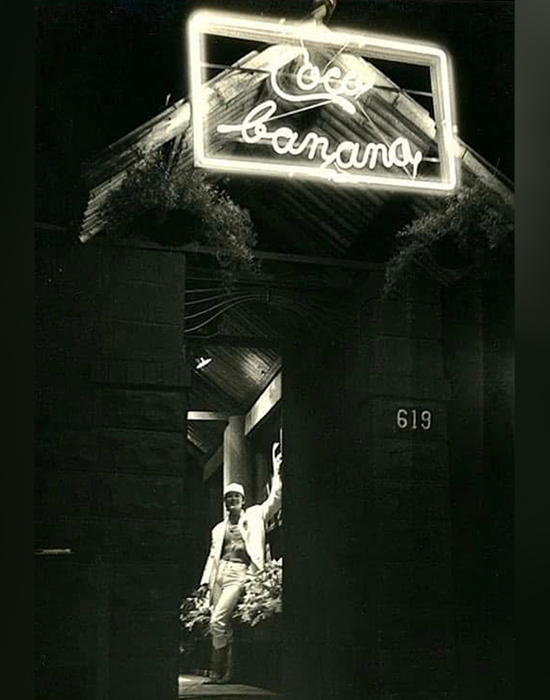
I still remember dancing with my friends to Lanca Perfume, which I first heard there, amid the colorful interiors of what felt like an elegant home. Its sala, sitting room, lanai, and dining room were all opened up into one glamorous dance space, cozily lit and well-air-conditioned—a place where everyone dressed in the latest fashion and danced to their heart’s content to the latest and hottest tracks of that era.
Benny Soliven remembers Coco Banana from an even earlier era. He attended its opening in the 1970s while he was still in Ateneo High School, invited by Tita Ethel Soliven Timbol. “It was the happening place,” he recalls. “The music was incredible, like Studio 54 in New York.”
For Michelle Dayrit-Soliven, a night of Friday at Coco Banana night was like attending a fashion show, getting updated with the latest and most outrageous fashion, people watching in a beautifully decorated and repurposed home while dancing to the latest disco vinyl flown in direct from the US.
At a time when many members of the LGBT community still lived quietly and cautiously, Coco Banana became a rare sanctuary where they could truly be themselves. “This was where they could freely come out and express themselves,” Benny says. “It was really a gay venue. Everyone on the dancefloor was stylishly dressed, spontaneous and ecstatic, and moved as though no one was watching. The women loved going there because of the lively gay crowd, while the men happily followed along to meet the girls.” With very few gay-friendly establishments in Manila back then, Coco Banana became more than just a disco.
CONTINUE READING BELOW

Often referred to during that era as the "Studio 54 of Manila,” Coco Banana wasn’t just a nightclub. Led by Ernest, it became a cultural movement and was a bohemian sanctuary where the rigid lines of social boundaries disappeared; high-society socialites twirled with male escorts, while artists and A-list celebrities commingled freely with politicians. The club also hosted legendary fashion events and costume balls that were more theatrical spectacles than typical runway shows. Ernest, a couturier himself, manned the doors and enforced strict dress codes for themed nights, turning guests into main attractions of the shows. If certain guests’ outfits didn’t align with the night’s vibe, they would be politely but firmly turned away under the pretense that the club was at full capacity or booked for a private party.
As the night stretched into the wee hours of the morning and the dance floor began to thin, a whole new cast of characters would sweep into Coco Banana in a sudden stir of excitement. The community’s transgender women all dressed to the nines in glamorous outfits, each seemingly determined to outshine the next with sky-high lashes, plunging glittery sequined necklines, and unapologetic pomp.
Whether they had just finished work or were simply looking to keep the night alive hardly mattered. Their arrival invariably breathed new life into the club, giving the die-hard revelers—and there was never a shortage of them—a second wind. Among the most memorable was the legendary Celia, the club’s resident drag queen whose larger-than-life presence perfectly embodied Coco Banana’s bohemian spirit and otherworldly self-expression. In historical retrospectives of the club, she is often remembered as part of an iconic trio of resident performers alongside Marissa and Annabelle.
I recently found out that our Miladay creative consultant Mike Mina at that time was also a Coco B habitue alongside some of his PSID classmates. He fondly recalls that after spending Friday mornings in the classroom brainstorming on designs with their professors, they would dance the night away right beside those same professors in Coco B. Mike and his crew would refuse to leave the dance floor until the very last song faded out. Happily exhausted and with intoxication fading away, they would stroll barefoot out of the club with their shoes in hand, making their way to the nearby Café Adriatico in Remedios Circle for a well-deserved recovery breakfast before heading home.
Another Coco Banana fixture who took Gina Garcia, sister of Hotdog’s Rene Garcia and the inspiration behind Annie Batungbakal’s character in the song Annie Batungbakal, and Chick-chick Mejia-Bruton under his wing was the artist Maning Obregon. It was only later that we learned he had been a Vogue illustrator in New York and a regular at the iconic Studio 54. He would often marvel “New York was never like this!” as we danced to his favorite song, Harmony, along with the disco classics of the late ’70s and early ’80s. Maning eventually returned to New York.
These memories, like so many friendships forged on Coco Banana’s dance floor, remain inseparable from that extraordinary time in Manila nightlife.
* * *
Bongga Ka ‘Day: The Annie Batungbakal Musical featuring the music of Hotdog starts Sept. 18 at the Newport Performing Arts Theater. Produced by Newport World Resorts with The Philippine STAR and Viva Entertainment. Line Produced by PETA Plus and directed by Chris Millado.

WATCH: Is Gen Z too soft? (Generations Ep. 23)
September 30, 2026
WATCH: Do you still believe in marriage? (Generations Ep. 17)
August 19, 2026