

Is Anna Wintour really The Devil Who Wears Prada?
When The Devil Wears Prada was being written for the screen, the scriptwriter Laine Brosh McKenna faced many challenges because people in the fashion world would not talk to her for fear of reprisals from Anna Wintour, Vogue’s editor who was the inspiration for the 2003 novel and 2006 film which now has a sequel breaking box-office records. One source who read her draft, however, said “The people in this movie are too nice. No one in that world is too nice. They don’t have to be and they don’t have time to be.” McKenna thereafter revised it “to make everyone busier and meaner.”
Ergo, Miranda Priestley, as played by Meryl Streep, came into being—as the icy, demanding and ruthless editor-in-chief. Contrary to reports, Anna was “sort of bemused and not bothered at all” when the novel upon which the film is based was published, according to Vogue managing editor Laurie Jones. It was considered a work of fiction although when Anna first heard that Lauren Weisberger, her former assistant, was writing the novel, she said, in true Miranda fashion, “I cannot remember who that girl is.”
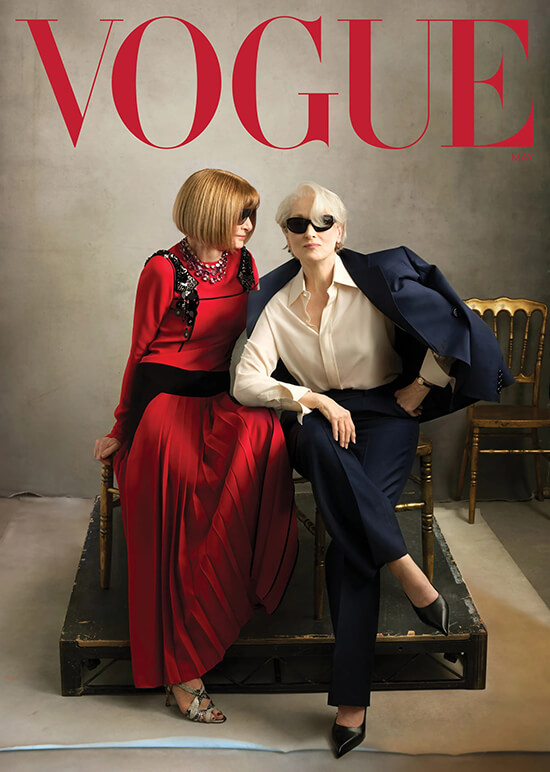
Anna nevertheless gave her support, wearing Prada to the premiere in jest and finding the film witty and fun. She thought the portrayal of her character was fair and she commended it for highlighting the industry.
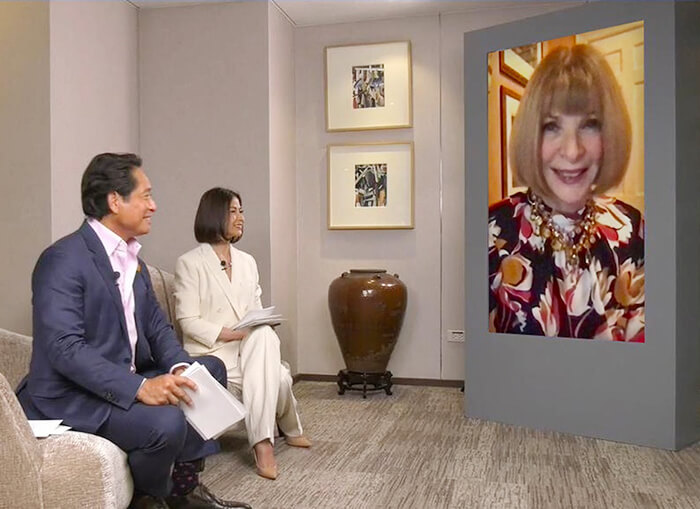
For Rissa Trillo, the legendary editor proved contrary to the public persona. “She was warm, present, and genuinely engaging to everyone,” related Rissa, who co-moderated with Atty. Mike Toledo the Annual Corporate Government Enhancement Session (ACGES), “Agile Leadership: A Conversation with Anna Wintour,” attended by leaders from various companies chaired by business leader Manuel V. Pangilinan. The virtual discussion highlighted the global fashion icon’s experience on leading amid crisis and change to develop new mindsets. Although Anna’s team informed them that she would be wearing her trademark sunglasses, “after Mike and I had a pre-program chat with her, she eventually removed them, and was warm and charming. She even took the time to email just to thank me for moderating, said it was lovely meeting me and hopes to visit the Philippines one day. It was such a thoughtful gesture, and one that reflected a high level of professionalism and graciousness.”
CONTINUE READING BELOW

Anna’s rise to become one of the most powerful and enduring influencers of fashion had its beginnings early when she always wanted to do things her own way. Born in London to newspaper editor Charles Wintour and the philanthropist Eleanor Baker, she dropped out of a fancy finishing school and gave her father advice on how to make his broadsheet more appealing to the youth. Known as “Chilly Charlie,” he inspired her to become a tough editor. “People respond well to people who are sure of what they want,” she said once.
She rose up the ladder at publications between London and New York, landing as editor of Harper’s Bazaar in 1976. She already sported the signature bob which she adopted since age 14 and displayed her own sense of style, even bringing her own choice of desk and chair to the office. When she became editor of British Vogue in 1986, she wanted it “pacy, sharp and sexy. I’m not interested in the super-rich or infinitely leisured. I want our readers to be energetic, executive women with money of their own and a wide range of interests.”
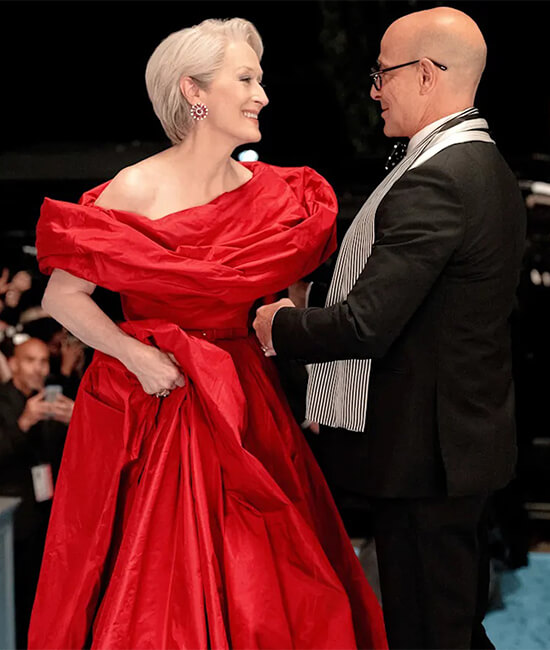
Her critiques and lack of patience soon earned her the nicknames “Nuclear Wintour” and “Wintour of Our Discontent,” which she actually relished, saying “I’m the hit man. I love coming in and changing magazines.” When she took over Home and Garden, in fact, she decimated nearly $2 million worth of already-paid-for articles and photos that didn’t pass her standards. Despite the grumblings, the Condé Nast bosses stayed right behind her, doling out a salary of $200,000 plus allowances for clothes and arranging Concorde flights so she could be together with her husband, David Shaffer, whom she married in 1984 and had two children with.
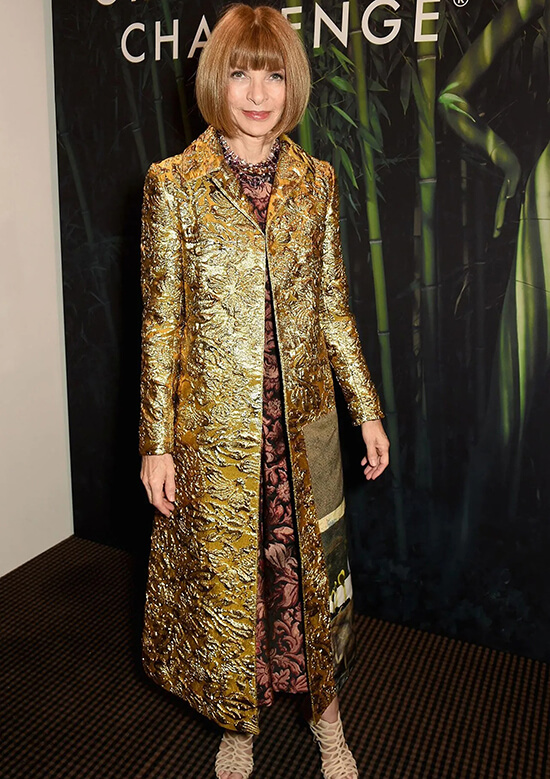
Her most definitive makeover was in 1988 at Vogue where she remained as editor-in-chief until 2025 when she was elevated to Global Editorial Director and Condé Nast Global Chief Content Officer. Leading since its inception in 1892, the company’s signature publication was losing ground to the upstart Elle and needed revitalization which Anna accomplished by forging new ground: calling an end to the supermodel era by showcasing celebrities instead and being the first to mix high and low—featuring a Christian Lacroix couture jacket with Guess jeans on the cover — shifting the focus to a more playful, youthful and relatable, “real girl” vibe.
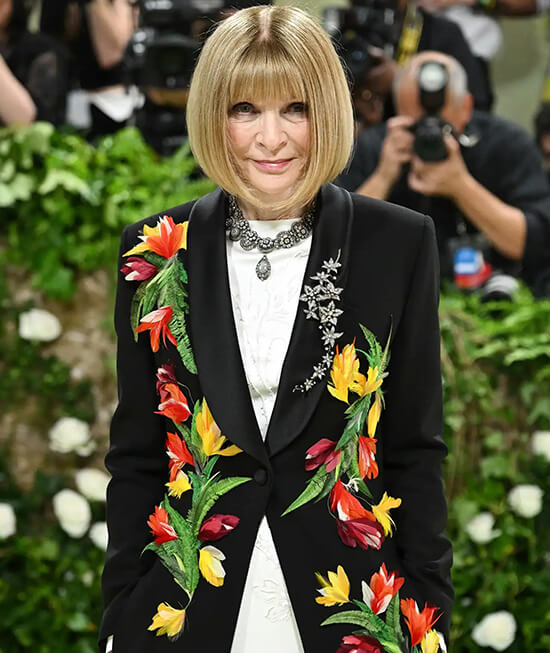
She was seen as the ultimate authority, not just as an editor but as a “cultural architect” bridging fashion with Hollywood, politics and technology. Her influence was used for philanthropic causes as well—the annual Met Gala for the benefit of the Costume Institute is the most prestigious, star-studded fashion fundraising event since 1995. She has been recognized for all her contributions: as Officer of the Order of the British Empire in 2008, Dame Commander in 2017 and The Presidential Medal of Freedom from President Biden in 2025.
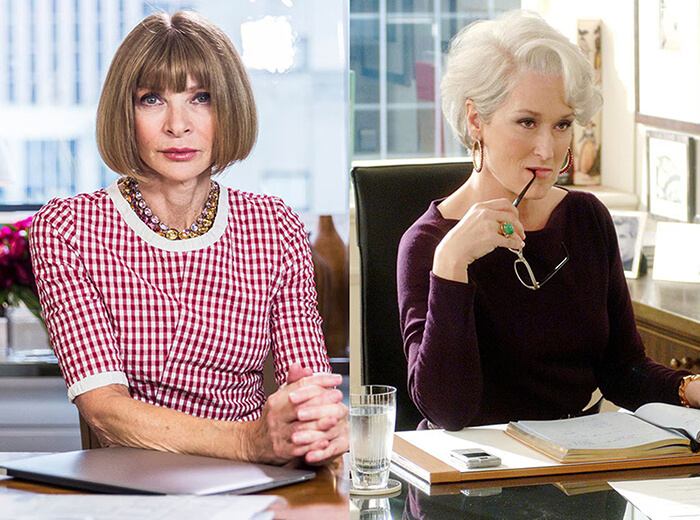
Her stature no doubt has made her the stuff of lore which is why countless articles and biographies have been written, and two films liken her to the devil herself. She concedes that “If one comes across sometimes as being cold or brusque, it’s simply because I’m striving for the best.”
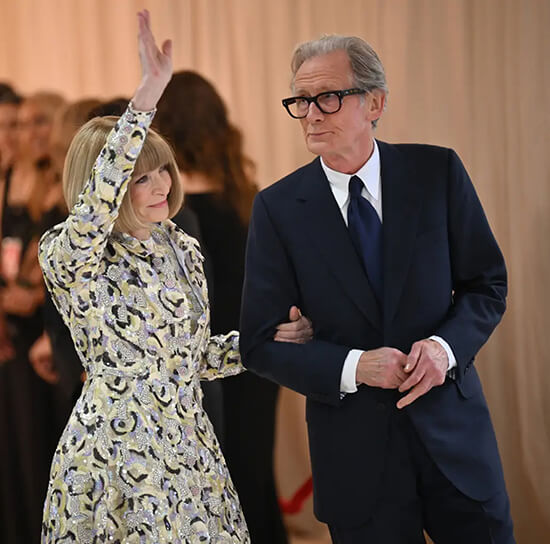
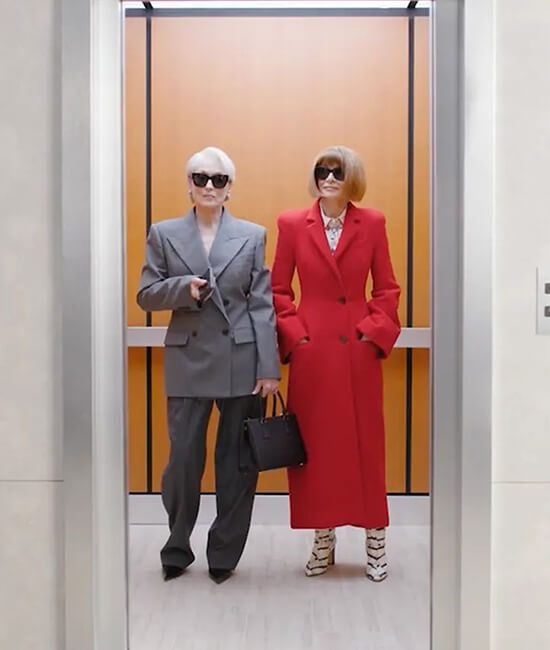
As for Prada, it’s a favorite but she has also been a Chanel girl since she was an expectant mother wearing Karl Lagerfeld’s micro minis to today’s midis by Matthieu Blazy, and of course the squoval sunglasses so that she can “be seen and not be seen.” She has a curated, classic look of tailored pieces by designers she supports like JW Anderson of Dior. She loves colorful prints and would have black ensembles on the runway custom made in florals, which, contrary to what Hillary Clinton professed as being too feminine when she declined to do cover, is actually Anna’s language of power, matching them with chunky necklaces. Her coats are equally vibrant or textured, and she doesn’t dump it on the assistant’s table like in the film but “hands it politely,” says her successor, Chloe Malle. The footwear of choice is Manolo Blahnik in nude, kitten heel slingbacks or boots. She is hardly seen carrying a handbag but when she does, it’s a clutch from Fendi or Chanel that goes with the outfit which at big occasions is haute couture. Obviously, these looks have been the inspirations for the films, but as Meryl Streep has said in interviews, she did not directly copy Anna but instead drew on various influences to create a sleek, authoritative character and aesthetic reflecting high-fashion power. After all, there’s only one Anna Wintour and she can never be replicated.

WATCH: Is Philippine cinema still thriving? (Generations Ep. 19)
September 2, 2026