

The secretive Margiela reveals his private world
Even when he was still designing for the house that he founded in 1988, Martin Margiela was already called the Invisible Man because he was hardly photographed, refused to grant interviews, and never came out to bow after a show. It’s totally unheard of in this age of self-promotion on socials, and even then, it was already an anomaly in an industry where the image and accessibility of a designer were paramount.
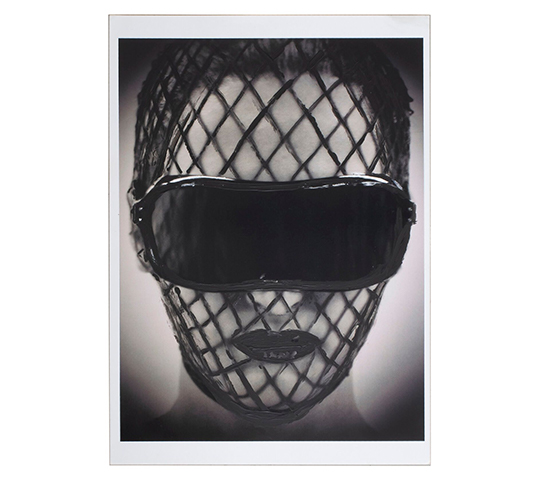
But invisibility cemented his philosophy that his designs, as inscrutable as they may be, should speak for themselves and that the work shown is the product of a collaborative team and not his alone. His erasure of himself could also be seen in the veiling of models’ faces so that emphasis is placed on the clothes, not the personalities.
Even the idea of branding was anathema to him, with his garment labels consisting of mere numbers printed on a white rectangle attached with four white stitches. His name never appeared on his collections nor outside his shop, and before the acquisition by Diesel in 2002, his maison was not even listed in the phone directory. Diesel’s marketing-driven culture, in fact, was the antithesis of Margiela’s universe, where fans had to make an effort to find his clothes.
No matter how he tried to be discreet, however, his innovative work developed a following, and he is widely considered one of the most revolutionary designers of all time, fundamentally challenging the conventions of luxury, tailoring and consumerism through several foundational shifts: Deconstructivism, or the inside-out approach to garments of exposing seams, raw edges and underlying structures; the upcycling of vintage garments and other cast-offs into high-end fashion, long before sustainability became a buzzword; the oversized, relaxed silhouette that laid the groundwork for today’s genderless styles; and unconventional show spaces like abandoned subway stations that democratized the audience instead of traditional, exclusive runways. His impact was seen on designers like Alexander McQueen, Marc Jacobs and Azzedine Alaïa, who called him “the last individual vision” for his independence from the commercialized fashion system.
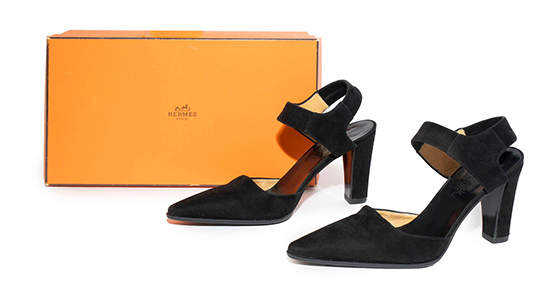

His avant-garde aesthetic was just what the conservative and classic French house of Hermès needed to shake things up, making him creative director of women’s wear in 1997. Incorporating his deconstructivist twist, Margiela created a timeless wardrobe inspired by 1920s sports and leisure. He stepped down in 2003 to refocus on his own label, but because of the fast-paced pressures of modern fashion, he decided to leave his eponymous house in 2009. He has since concentrated on fine art as a medium of expression, debuting an exhibit in 2021 that included spheres covered in human hair, large-scale paintings of dust particles, and symbolic blank spaces “in flux, unfinished and in permanent movement.”
He said in a statement in 2022—when he was given a Belgian Fashion Award but, of course, did not show up to receive it—that he “regretted the overdose of information carried by social media, destroying the ‘thrill of wait’ and cancelling every effect of surprise, so fundamental for me.”

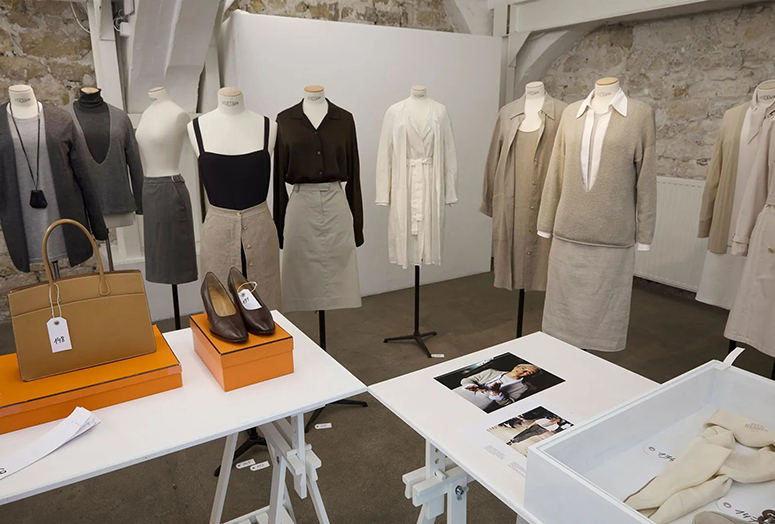
Margiela shocked the world yet again recently with the news of an unprecedented, historic auction of his personal archive of 195 lots, virtual fashion relics that spanned his career from 1984 to 2008. It was uncharacteristic of him to give a glimpse of his inner world, but he said he “wanted to make several collectors and institutions happy,” while ensuring that his work would be preserved and studied in various contexts, potentially inspiring both museum exhibitions and private collections. “It’s a creative act, a manifestation of his concept, his philosophy,” says auctioneer Salome Pirson. “While he lets the public in to discover this world and touch his objects, own his personal coat, at the same time he is the one who is most conspicuously absent.”
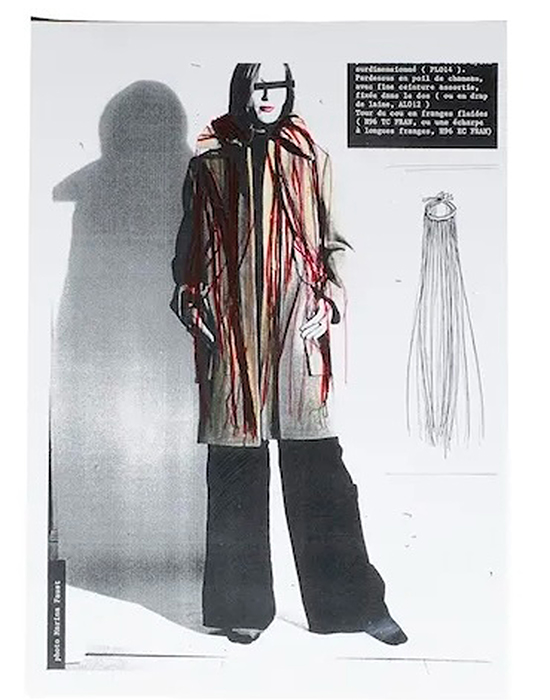
Organized in Paris by Maurice Auction in collaboration with London’s Kerry Taylor Auctions, it’s the first time a living creator has directly collaborated with an auction house to offer his archive. It’s also very Margiela, almost like a performance, as he engages the entire world in choosing to open his archive this way as only he can. In his ego-less fashion, an auction is also very democratic so that anyone can bid and take home even a tiny object or curio from his incredible legacy.
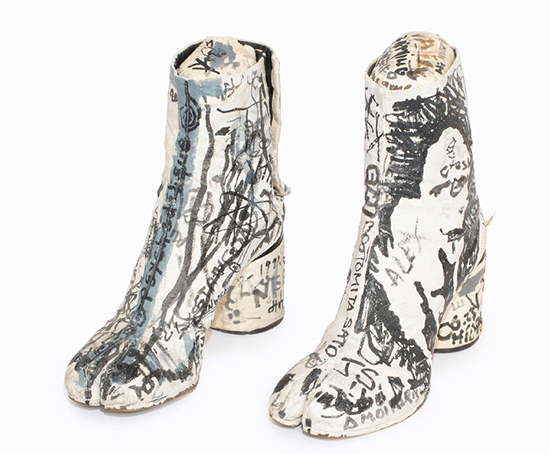
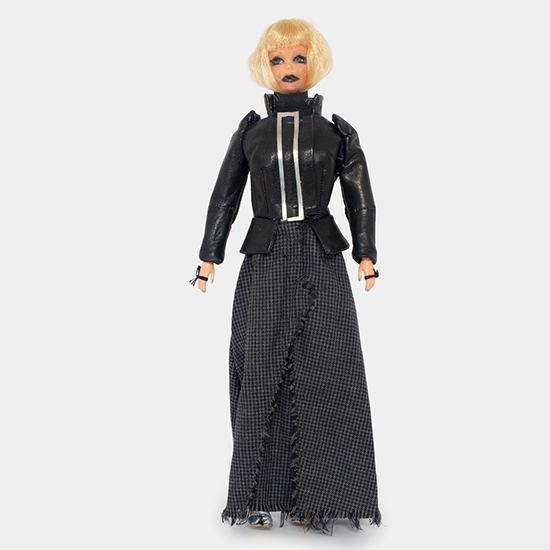
As expected, the major items attracted the high-profile collectors and museums, with buyers from Japan, South Korea and China heavily represented. A pair of graffiti-print Tabi boots from 1991—customized by visitors to an exhibition and only one of three pairs in the world—sold for €364,000, setting a world record. A top made from grey cotton socks after the FW1991-92 collection went for €117,000.

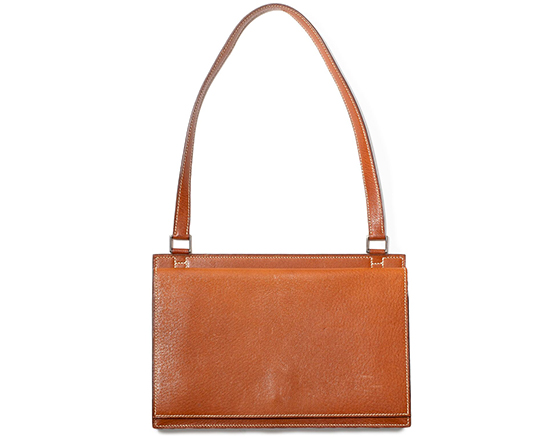
A very personal and intimate section featured the wardrobe of Margiela’s mother, whom he gifted with pieces from his Hermès years, offering a revealing portrait of his creative vision as well as his private life. The Initials bag from 2002 and two coats were highlights that broke records as well.
The lack of wearability was not an issue. Jean-Denis Franoux of Regarderobes took home sketches and a sundial ring necklace, saying, “Each piece is a treasure so it will go in a glass box.” Since a portion of the proceeds will go to AIDS foundations, a most meaningful piece is the purple velvet badge from the FW1999 collection printed with AIDS hotlines.
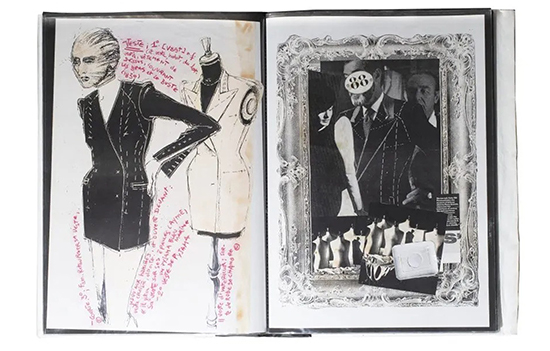
Pages from Margiela’s first portfolio, late 1980s which he said he made “to visualize the fashion I would like to create and establish the mood of my fashion house”
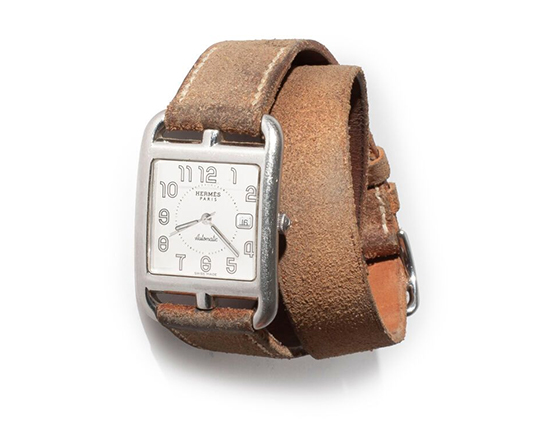
Hermès Cape Cod watch, AW1998- 1999
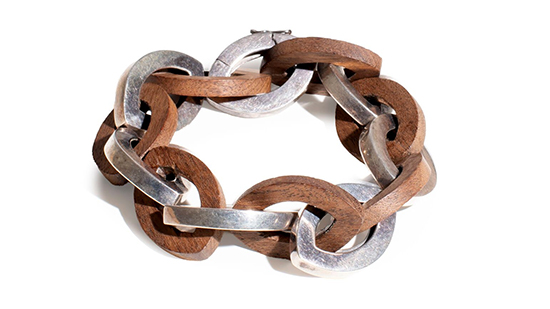
Silver and coconut wood bracelet of Margiela’s mother, Léa Bouchet
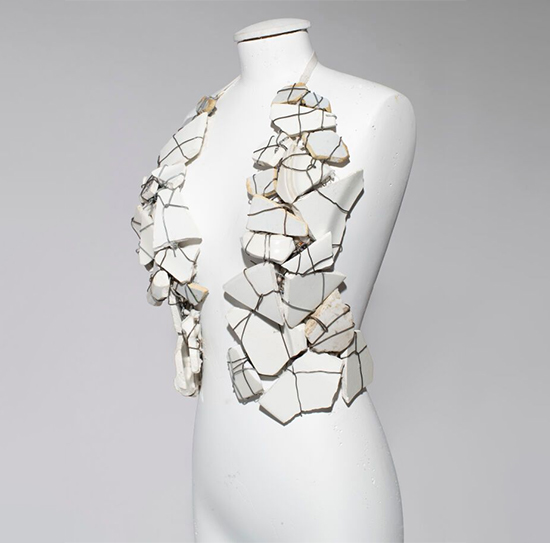
Miniature of smashed porcelain plate waistcoat after the El Globo collection, AW1989-1990
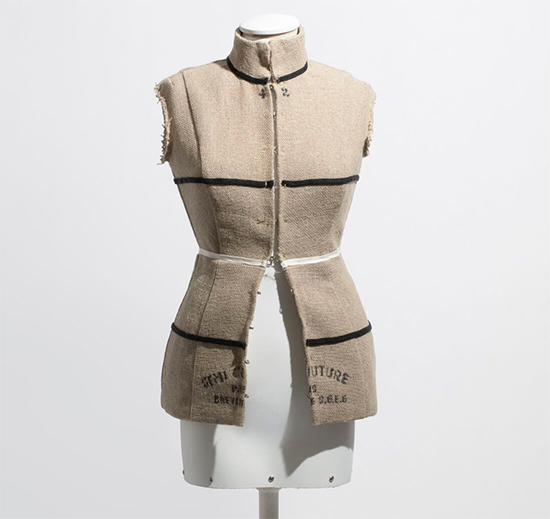
Miniature of a bodice after the Stockman collection, SS1997
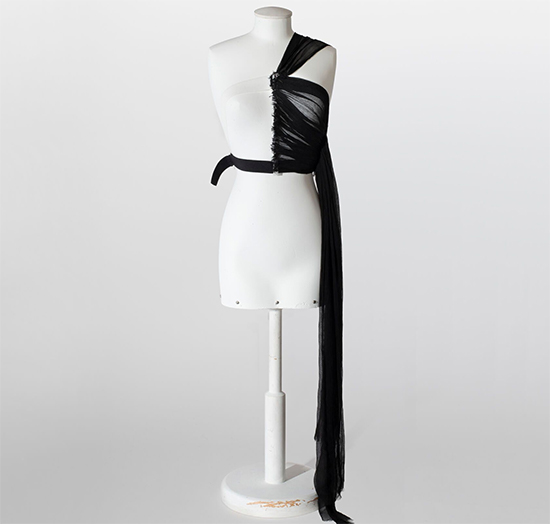
Miniature of a study of a drape after the Stockman collection, SS1997
Pages from Margiela’s first portfolio, late 1980s which he said he made “to visualize the fashion I would like to create and establish the mood of my fashion house”
Hermès Cape Cod watch, AW1998- 1999
Silver and coconut wood bracelet of Margiela’s mother, Léa Bouchet
Miniature of smashed porcelain plate waistcoat after the El Globo collection, AW1989-1990
Miniature of a bodice after the Stockman collection, SS1997
Miniature of a study of a drape after the Stockman collection, SS1997
CLOSE
But even for those who did not buy anything, going to the pre-auction exhibit preview, some of them every day to spend hours there, was more than enough even without his appearance. “All the young people are asking, ‘What does he look like, how does he feel, is he all right?’” according to Pirson, who answers them, “I’m not going to answer because this is not the purpose but I can confirm that he’s a genius because he’s looking for perfection and perfection means a lot of work.”

WATCH: Is Philippine cinema still thriving? (Generations Ep. 19)
September 2, 2026
WATCH: Pixar Summer Fest adventure at Hong Kong Disneyland
August 10, 2026