

The hyper-exaggeration of femininity and masculinity
The onslaught of comfort dressing brought us easy, oversized looks that have been around for some time, in tune with the ideals of body positivity and genderless dressing—making the female and male figures disappear underneath all that fabric, rendering both gender and body type irrelevant. Even plus-size models became a must on every runway. But as we start going out more often to dinners, parties and events, these looks are beginning to feel tired and sloppy. The return to the gym and the advancement of GLP-1 weight-loss drugs have also made the ideal body more achievable.
Designers, of course, have responded accordingly with a new body consciousness in which the female and male bodies are distinct—ushering in a new mood of “commanding space,” a return to the drama of the 1980s power silhouette with sculptural volume, and a hyper-exaggeration of the ideal into super versions of ourselves, as women's hourglass figures are pushed to the max with corsets and padding, and men's shoulders and chests are broadened with canvassing while their waists are suppressed for a pronounced V shape. Even without padding, the “muscle fit” that hugs the gym-toned body has emerged for FW2026-2027 menswear.
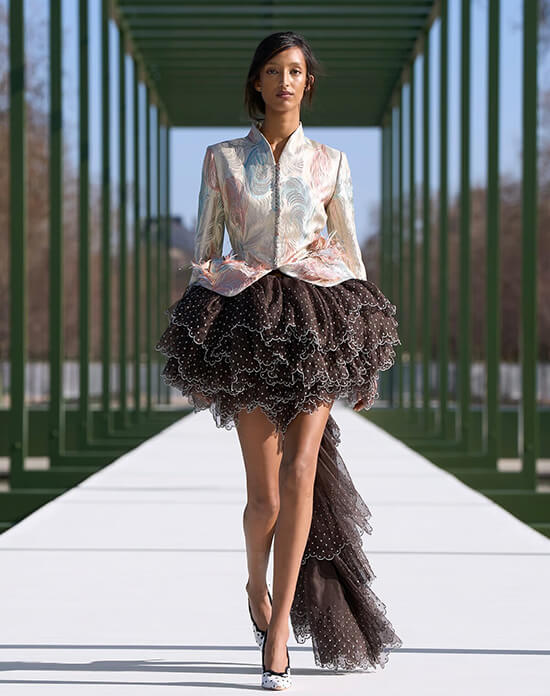
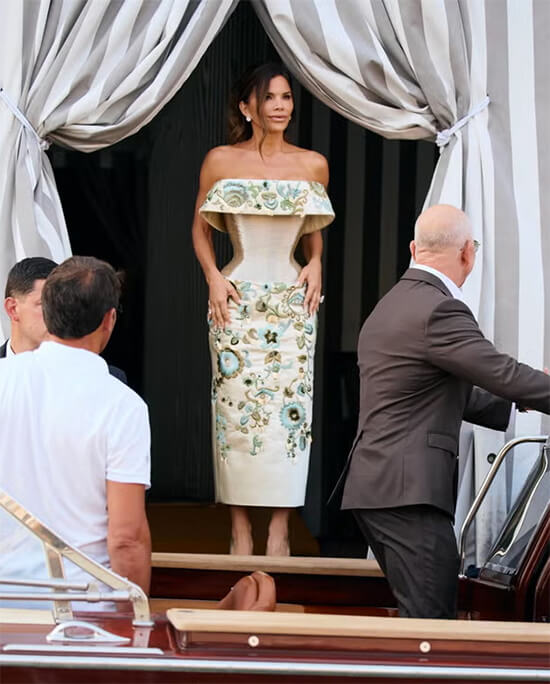
It's a new age of reconstruction that had its beginnings at Dior last season, where Jonathan Anderson's debut featured humongous panniers merrily bouncing away. One of his pieces, with a huge bustle, was worn by Alba Rohrwacker at the Venice Film Festival. Julia Fox's frock by Marc Jacobs exaggerated all the body parts with puffs to startling effect at the amfAR Gala in London. Lauren Sánchez Bezos is hardly ever seen without a corset, which gets tighter with every appearance, and Lizzo, who was proud of her curvy figure as a "thicc" life proponent, now shows off her slimmer figure, also in corsets. At Gaultier, Duran Lantink gave men the most pronounced V shape in a leather leotard with scooped-out hips that emphasized the crotch the way codpieces did in the 16th century.
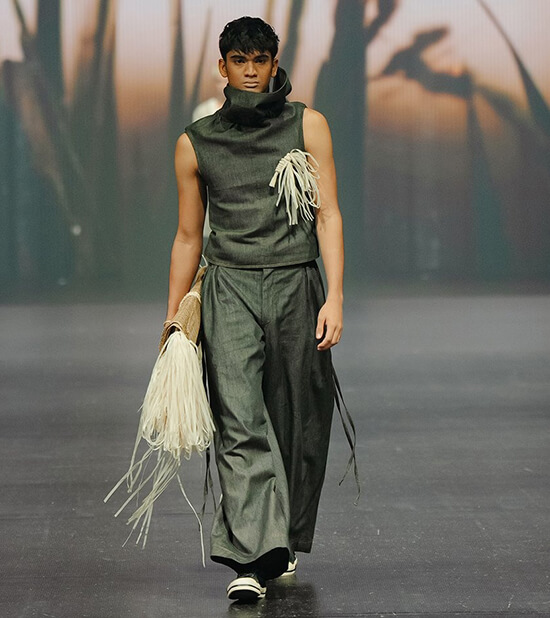
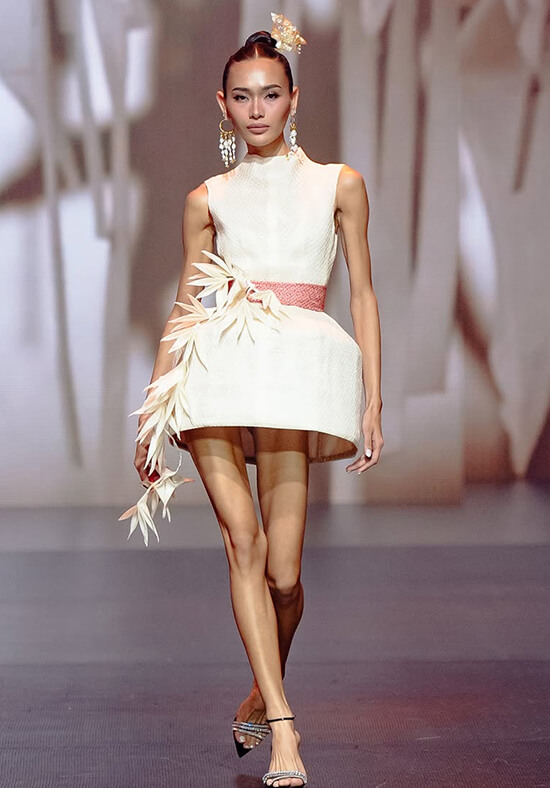
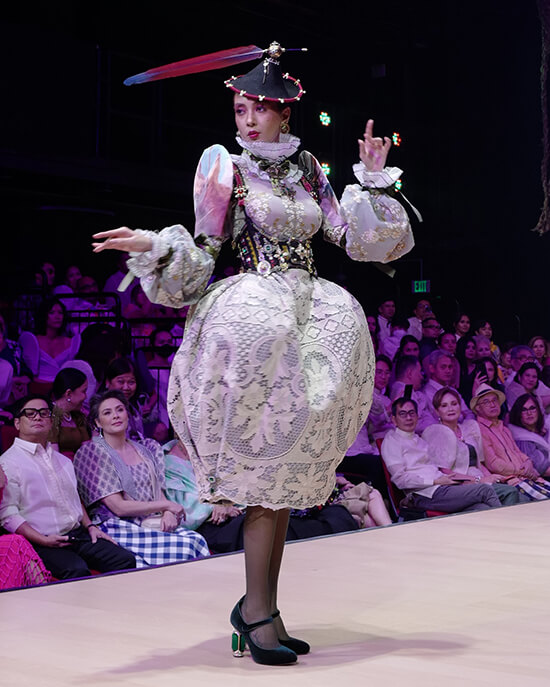
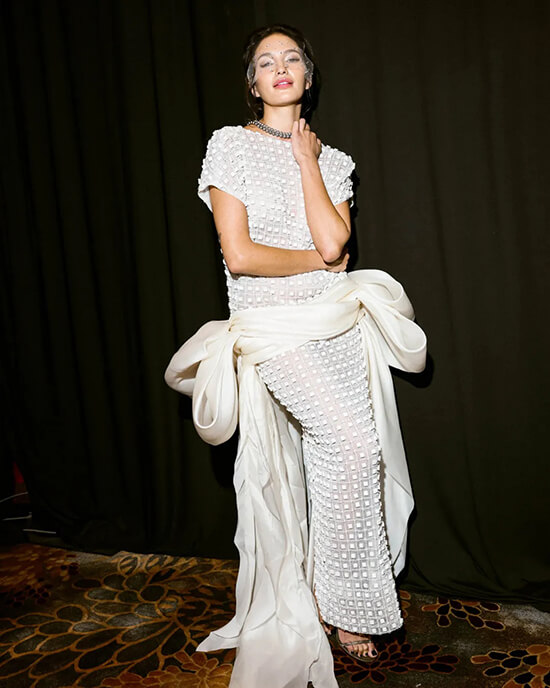
At Manila's Bench Fashion Week, Rhett Eala extended the hips with circular peplums and panniers that looked like Oriental lampshades. Dennis Lustico, on the other hand, created hip extensions with large bows for Sarah Lahbati's gown at the MEGA Ball.
CONTINUE READING BELOW

Even with your existing wardrobe, you can give nature a boost through Skims' undergarments with padding on the hips and bottom and bras with built-in visible nipples. It's all part of the "wearing the body" trend that's popular on the Lyst search engine.
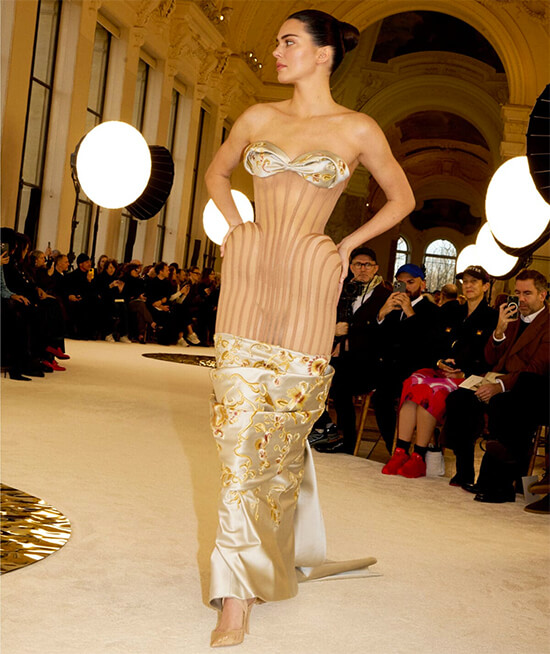
In light of all this, Daniel Roseberry at Schiaparelli recalled a Balenciaga quote: "A woman has no need to be perfect or even beautiful to wear my dresses. The dress will do all that for her." Roseberry has been a go-to designer for corsetry, including the one Bezos wore at this year's Met Gala. He already wanted to go "corset-free" for his new collection but noticed that clients are still clamoring for that look, concluding that "fashion is just mirroring back this rabid desire."
Valerie Steele of the Fashion Institute of Technology explains that "the body is never, ever natural since it has always been fashioned, built up through bodybuilding or broken down through diet." Vanessa Friedman of The New York Times observes that "the body used to involve a lot of work and pain, but now it can be easily achieved with an injection and a dress." She also notes that this is being driven by cultural phenomena such as "the swing to conservatism and its valorization of the classically feminine body." The same can be said of the decline of genderless dressing. Victoria Pitts-Taylor of Wesleyan University has the same theory: that right-wing gender politics has paralleled the shrinking of waists and the embrace of the hourglass. "The perfect body is now defined as slim but curvy in a very conventional way, and we have dresses to render this idealized body," says Steele. Susie Orbach, a British psychoanalyst, says that "It's not bound feet, but it's the cultural equivalent."
The designer Dilara Fintikoglu opines that "although corsets were created by men to restrict women, immobilize them, and make them look pretty, I wanted to give them a new meaning and break that cycle." Her clients actually feel that her corseted pieces make them feel "powerful."
Roseberry posits that since we now live in a mediated reality where everything can be manipulated, "why not assume that you can do the same with your body by reshaping, remaking, and reinventing it at will? Especially because people often feel pressured to catch up with that fantasy that you projected."
With Ozempic and Mounjaro, people think it's sustainable physically, but Orbach feels we are not certain that it will be sustainable emotionally: "Constantly 'putting on' a body will create greater dissonance between the physical and psychological self. Dissatisfaction with our physical state is causing psychological discomfort."
One only needs to see where the "lookmaxxing" trend has gone, with fanatics adopting bone-smashing and other procedures that are very dangerous and symptomatic of deep mental disturbances.
But like all trends, this hyper-exaggeration will eventually run its course, and less restrictive clothes will become desirable again. Roseberry himself said he is already "chasing a different fantasy—something that's more free, where movement is more of a priority."

WATCH: LGBTQIA+ people with unlikely professions
June 28, 2026