

Bench Fashion Week: Filipino-Japanese threads of poetry
To celebrate something as important as the 70th anniversary of Philippine-Japanese diplomatic relations, Ben Chan, founder of Bench, considered what was most essential: friendship and dialogue. A lunch at the home of Japanese Ambassador to the Philippines Endo Kazuya and his family, together with the Chan family, was most memorable not because of what they talked about but the solidarity that he experienced, “how we spoke to each other—with warmth, with openness, with a sense of affinity for both cultures.”
This shared appreciation gave birth to “Threads of Dreams,” a fashion show on the second day of Bench Fashion Week SS2026 at One Ayala, featuring three Filipino designers—Rhett Eala, Jaggy Glarino and Joey Samson—who created collections weaving the creativity, heritage, and crafts of the Philippines in dialogue with Japan which has been a rich source of inspiration for style.
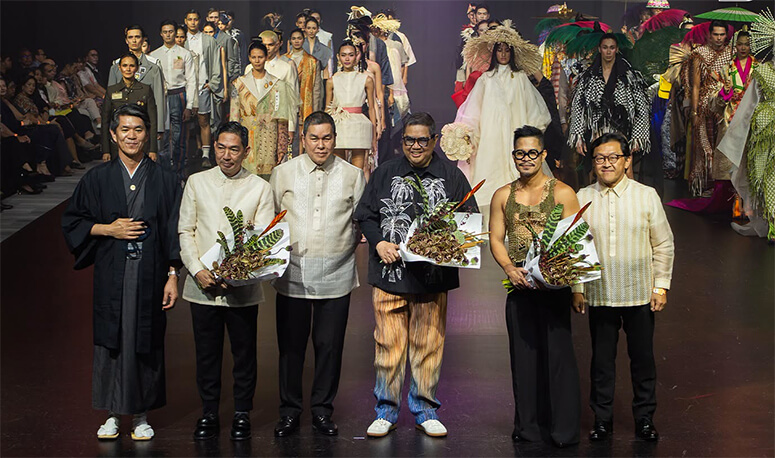
The feeling is mutual, as the ambassador shared in his opening remarks: “I have grown fond of the traditional Filipino attire, the Barong Tagalog, and wear it proudly. My wife, Akiko, has likewise been captivated by the elegance of Filipiniana designs and the exquisite craftsmanship of Filipino textiles.”
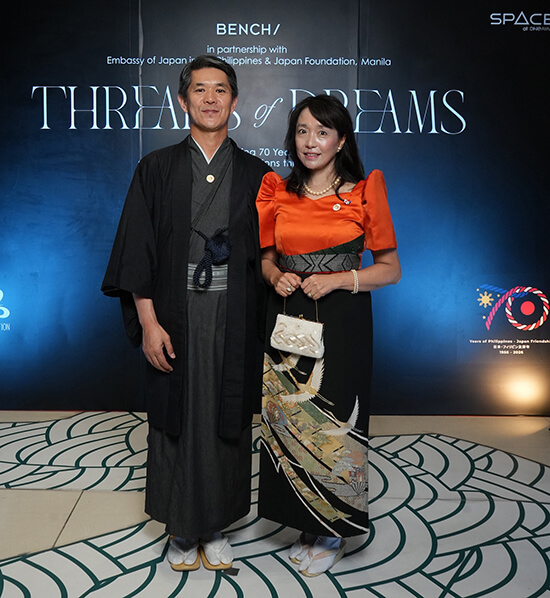
She was wearing a lovely orange and black silk terno with Japanese embroidery that evening. The ambassador, on the other hand, wore a Japanese kimono that he said was mixed with denim, which was also cross-cultural like his wife’s attire. Ben himself noted how “cultural exchange does more than bring us together—it allows us to see one another more clearly. Not as distant counterparts but as participants in a shared story. It gives form to respect and deep connection.” This couldn’t have been more evident than in the collections presented that evening.
Rhett Eala’s inherited stories
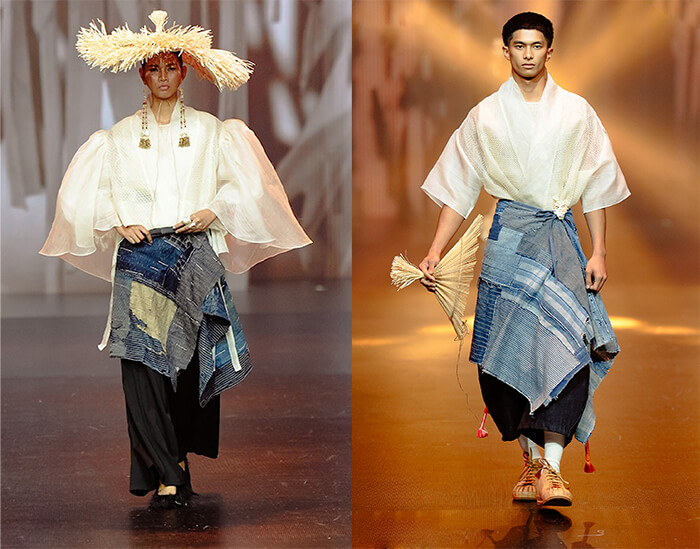
Rhett Eala’s fascination with Japan started in childhood, thanks to his mother, Roceli “Baby” Valencia, who had a profound affection for the country, which she visited often, collecting objets d’art, textiles, and memorabilia that filled her antique shop in Hong Kong and their home in Manila. One of her most indelible memories is a month-long stay in Osaka in 1970 when the city hosted the World Expo, deepening her appreciation of the country’s craft and culture. This influenced Rhett immensely, shaping his visual world through her stories, photographs, and treasured pieces.
CONTINUE READING BELOW

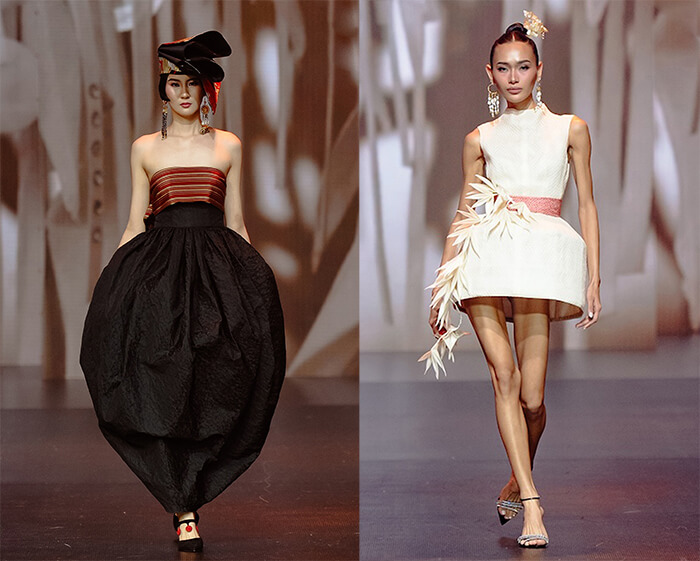
The elegant minimalism and refined aesthetics of Japan would stay with him as he developed his own style, and can certainly be gleaned in this collection with clean lines and carefully considered ornamentation that spell luxury but are still approachable, hallmarks that have attracted a steady clientele for more than three decades.
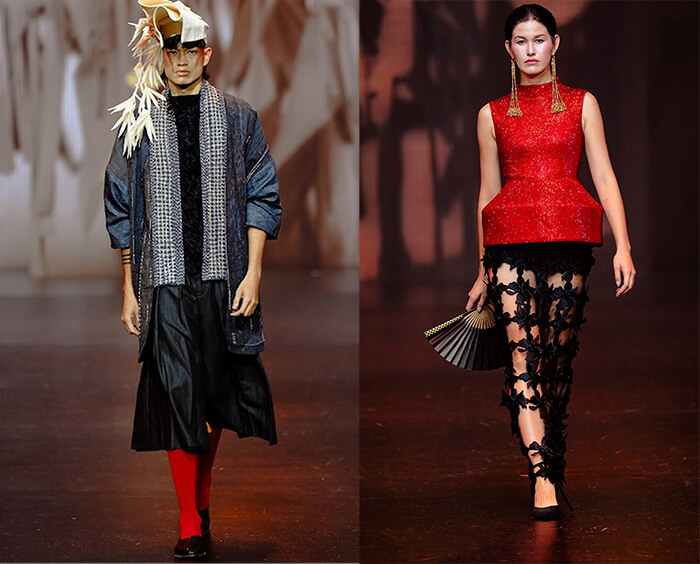
A bell shape that is reminiscent of Japanese ceremonial hats is turned into peplumed tops and skirts, which are coquettish but still have a classic elegance and modern sensibility. The art of origami is replicated in fabric as adornment, together with bamboo leaf embellishment as a recurring motif. Rhett plays around with the kimono, melding it with the baro with oversized sleeves in jusi embroidered with calado, matched with tapis in indigo weaves, which also appear as men’s kimono tops. The hakama pants of Japanese archers are reworked into tulip and other shapes that form sculptural silhouettes. Asymmetric hats in obi and textured shoes with loops and fringes provide a counterpoint.
Jaggy Glarino’s IMIN
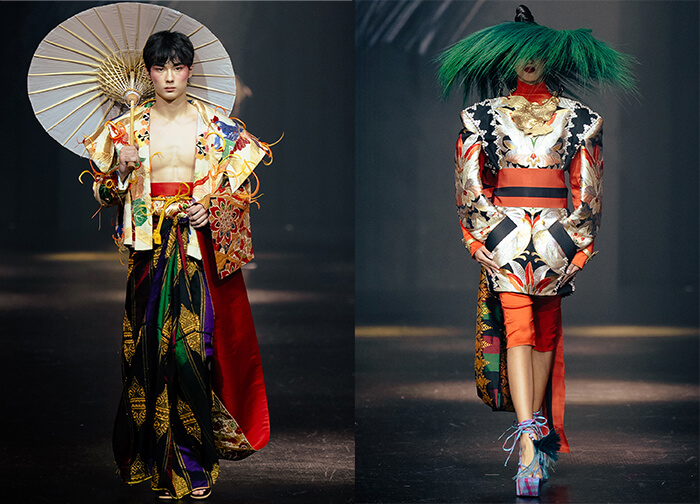
Identity and cultural relevance are hallmarks of Jaggy Glarino’s designs that feature crafts from his native Mindanao. For this show, he had to dig deep to find that there was a “Little Tokyo” in Mintal, Davao, in the early 20th century when Japanese immigrants settled to help build the abaca industry while establishing schools, businesses, and close-knit communities that became the largest of its kind in the country. He discovered the unique cultural exchange that transpired when he visited the IMIN (immigrant in Japanese) Museum, inspiring a collection that reflects heritage, migration, and memory.
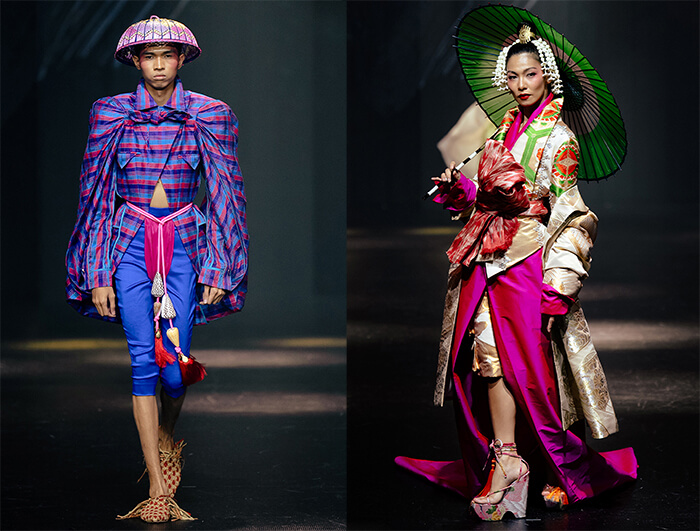
Just like in his last show for Bench Fashion Week, Jaggy delivers show stoppers with his vibrant sense of color, adventurous mix of patterns and accessorizing, not to mention his gender-fluid designs worn by an inclusive and diverse selection of models who are emulated by his clients and fans at the lobby, all digital savvy, wearing outfits that stop guests in their tracks.
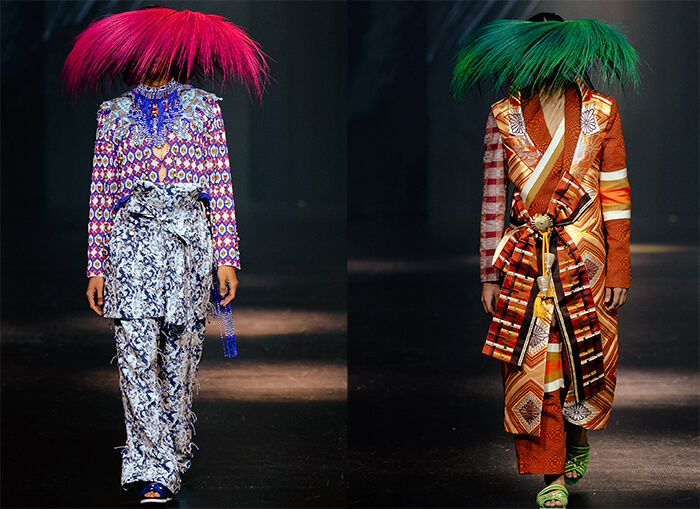
His merry mix of fabrics includes Japanese obi brocade, plaid silk taffeta, and indigenous weaves cut in sculptural shapes inspired by samurai armor as well as Gaddang tapit ceremonial capes from Cagayan Valley. These are paired with sarongs, skirts, and athleisure shorts, layered under fundoshi loincloths and accented by obi sashes that turn into trains.
His signature wit and resourcefulness seen in dyed walis and food warmers from Divisoria turned into high-fashion hats never fail to bring a smile. But there are also painstakingly crafted bespoke pieces to marvel at: T’boli beaded jackets and jewelry like a brass leaves and tilapia necklace, shell and bell cord belts, and silk taffeta wedges with tassels.
Joey Samson’s imagined dialogues: Una Bulaqueña and O Sei San
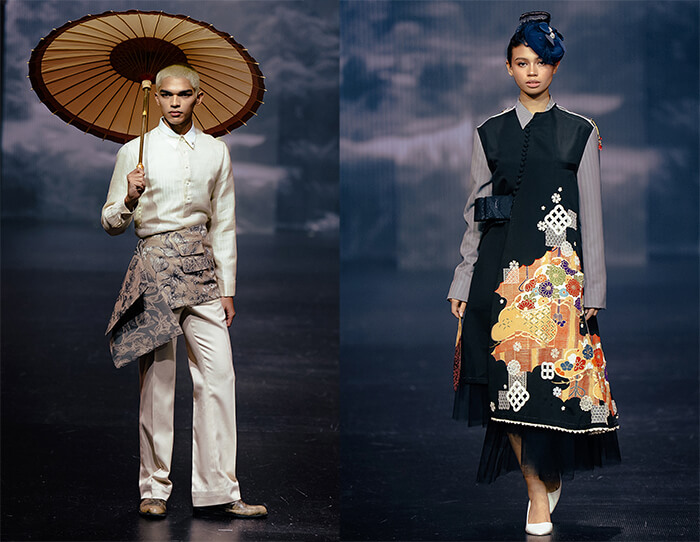
Joey Samson’s collection was so sublime and so moving that guests, including these authors, were moved to tears. There is always a quiet elegance about his work, an intellectual as well as technical rigor in some of the most imaginatively conceptualized designs that photos cannot quite capture. You really have to see them to appreciate the cut, the silhouette, and the details that just astonish one after the other.
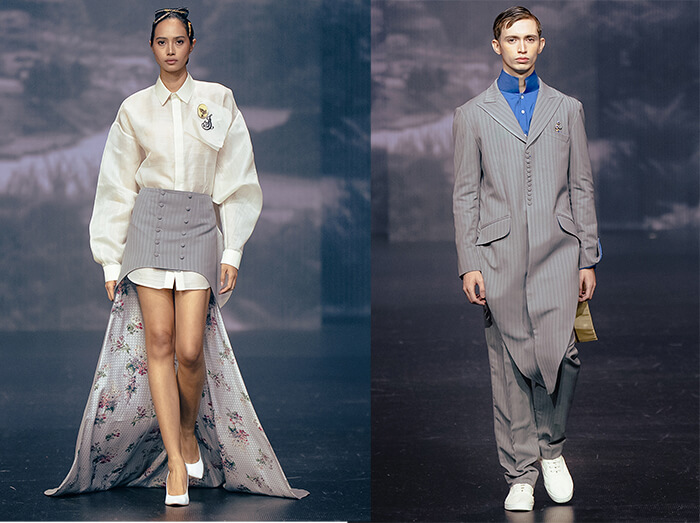
His creative process runs deep, and never more so than in this imagined dialogue between Juan Luna’s 1895 portrait of Emiliana Yriarte Trinidad and the subject of Jose Rizal’s admiration, the Japanese lady O Sei San, whom he met in Yokohama in 1888. Emiliana wears a traje de mestiza but with a nonchalance that’s so very Joey, the way he does impeccable tailoring of classics but always with a surprising twist.
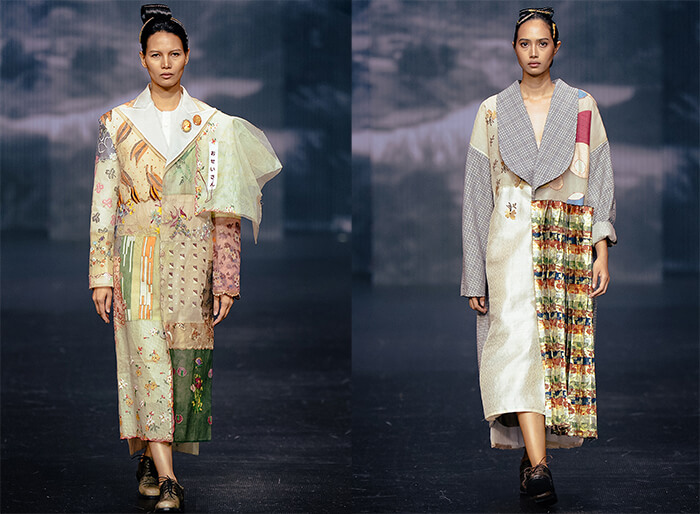
His version of fluidity merges the masculine and the feminine in ingenious ways. A Victorian tailcoat is worn in reverse, but that’s not all — a quarter turn reveals that an obi sash is hidden and is knotted into a bow at the back for unabashed peacocking. A model in a sheath dress with hands in her pockets up front takes them out to show that the cuffs have been left behind as pocket embellishments. Men’s samurai shouldered tops upon closer inspection are appliqued with the daintiest lace like panuelos. A striped red square accent on a grey dress turns out to be a long circling loop, adding flourish to the back. With Joey, things are never what they seem, and just like with the stories of Emiliana and O Sei San, the plot always thickens.

WATCH: Is OPM still as good as it used to be? (Generations Ep. 20)
September 9, 2026
WATCH: Do you still believe in marriage? (Generations Ep. 17)
August 19, 2026
WATCH: Is Gen Z too soft? (Generations Ep. 23)
September 30, 2026