

Hermès honors Véronique Nichanian at Tokyo’s ‘Bridge of Light’
On a stretch of elevated concrete once built for cars, 37 years of discipline, mastery, and craft took their final bow.
Last Feb. 18, Hermès did not stage a show in this city. It staged a thank-you.
They called it “Bridge of Light,” a poetic nod to the elevated stretch of concrete known as the Tokyo Expressway or KK Line—the privately built 1960s toll road looping around Ginza, recently closed to traffic and destined to become a pedestrian sky park. Infrastructure in transition. A road becoming a garden. A runway becoming a memory.
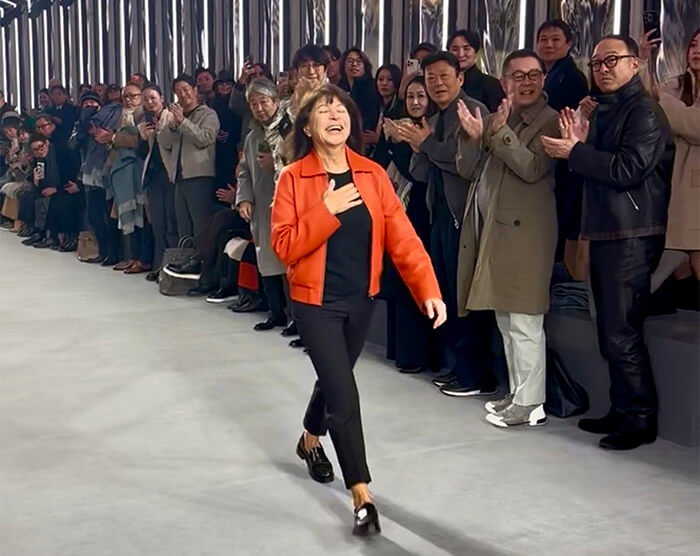
And at the center of it all: Véronique Nichanian, presenting her final menswear collection after 37 years shaping the Hermès man.
Yes, it was a goodbye. Yes, there were tears. And yes, there was a big, sustained standing ovation that felt less obligatory and more familial.

On the Tokyo Expressway, the restaging of the fall/winter 2026 menswear collection closed a 37-year chapter with a tearful standing ovation.
Around 400 guests gathered, largely local—Tokyo’s cultural ecosystem rather than the usual international fashion caravan. I spotted Tadashi Yanai, the famously discreet founder of Uniqlo, seated without ceremony. Giants recognizing giants, no press release required.
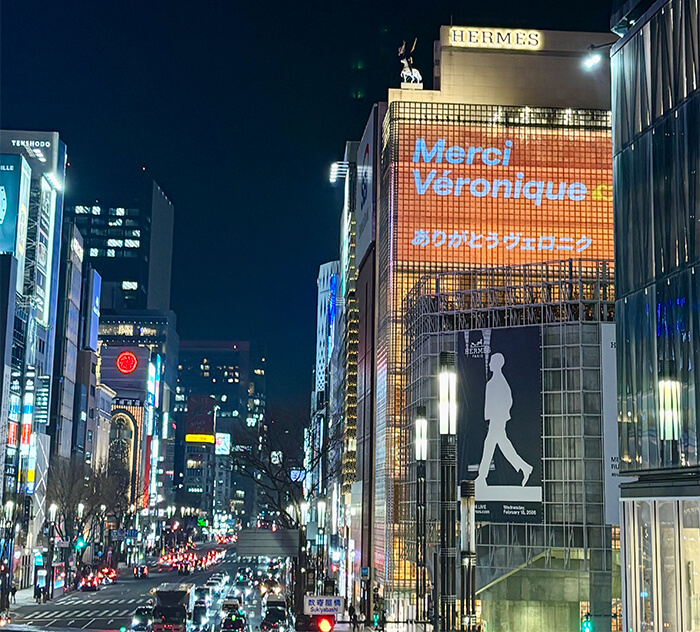
From the expressway venue, the luminous façade of Maison Hermès Ginza glimmered in the distance. On its electronic billboard: “Merci Véronique.”
If you needed a thesis statement for the evening, there it was.
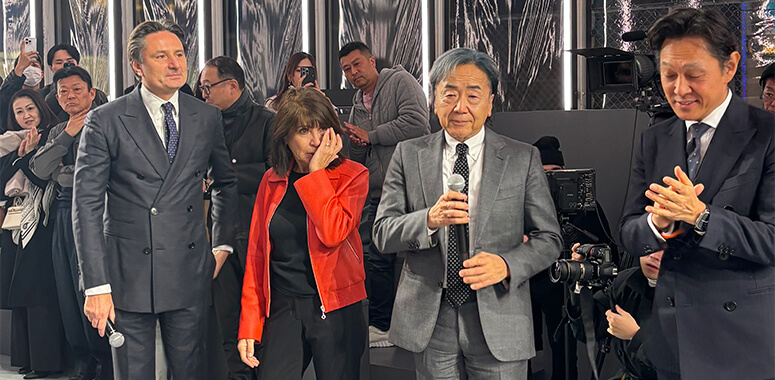
Hermès CEO Axel Dumas addressed the audience with a steadiness that carried subtext.
“This is Véronique’s last collection, but don’t worry, she’s part of the family so she’s staying with us…”
The room understood. At Hermès, “family” is not a euphemism for farewell. It is a framework for continuity. Read: She isn’t disappearing. She is transitioning—very likely into a consulting role—remaining a quiet compass behind the scenes.
He continued: “Japan is very important to her, to me, to the family… This isn’t nostalgia. This is gratitude—to Véronique, to Japan, to all of you…”
And that distinction defined the night. Nostalgia looks backward. Gratitude stands still and absorbs.
It was there that the room unraveled.
The applause that followed was not fashion applause. It was gratitude made audible. Even Hermès Japan’s chairman, Masao Ariga, visibly moved, was seen wiping away tears as the ovation swelled—a rare public crack in corporate composure. When a house built on restraint allows emotion to surface, you know the moment is real.
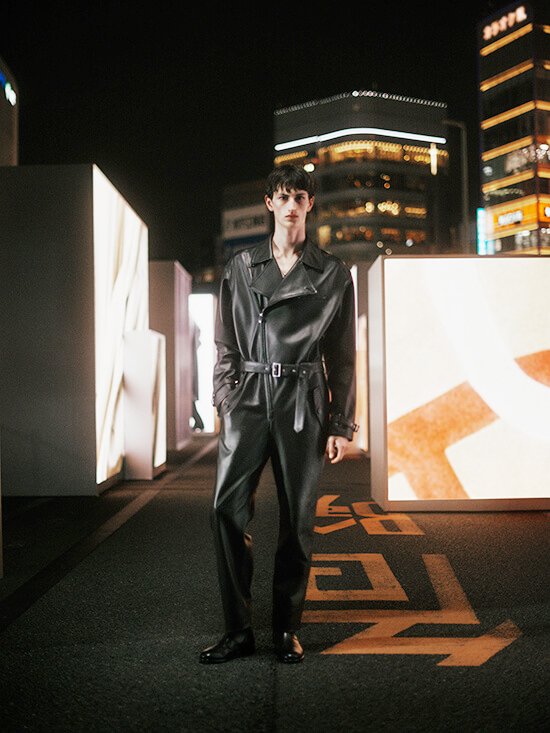
The Tokyo show was a restaging of the fall/winter 2026 menswear collection first presented in Paris in January, expanding on the theme Les hommes qui marchent—men who move.
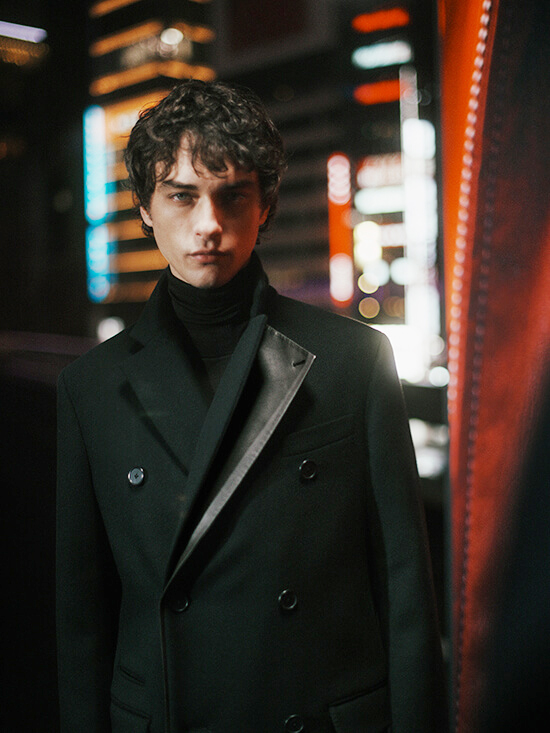
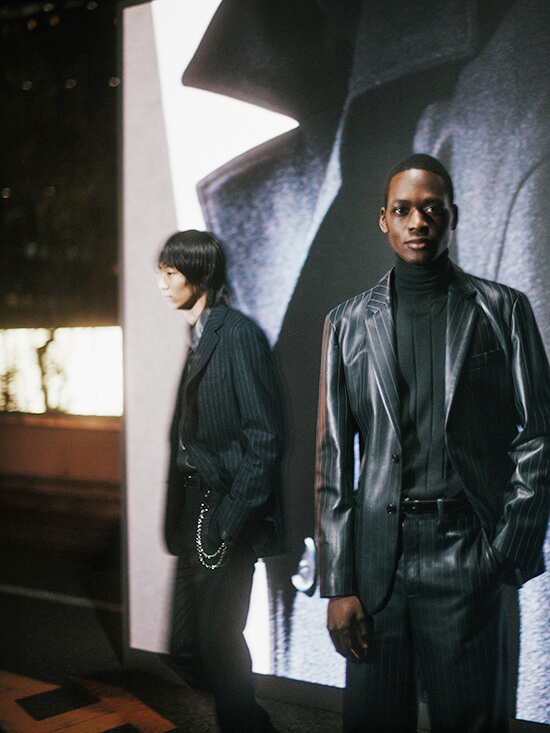
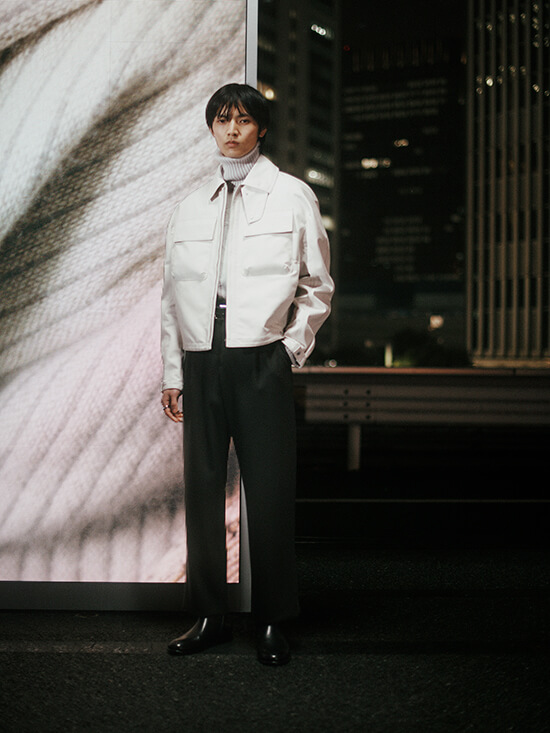
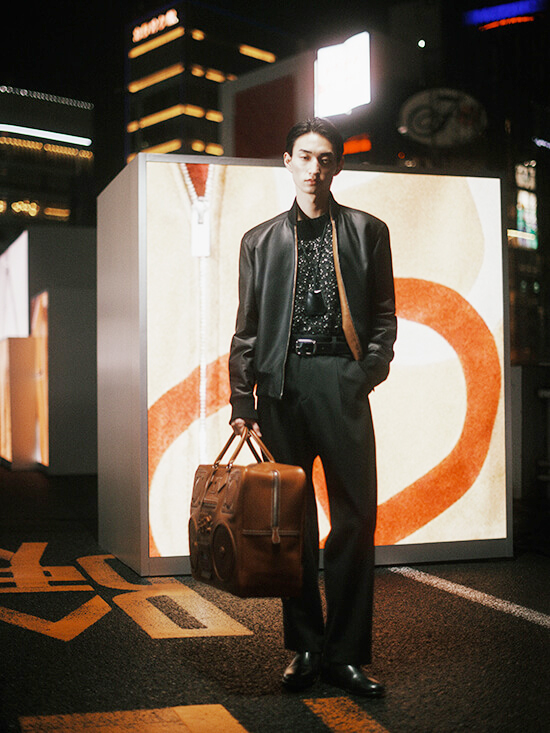
A palette steeped in winter—peat, burnt gray, and midnight blue—set the rhythm. Cashmere and full-grain lambskin offered warmth without weight. Suits appeared in subtle leather striping with double lapels, reshaping classic tailoring into something gently contemporary. Reversible travel coats nodded to motion. Deer grain was oriented inside out. A sudden flash of bright lining reminded you that restraint need not be dull. Ah, and a jaw-dropping crocodile coat!
Nichanian’s vocabulary has always been about evolution rather than reinvention. The Hermès man moves beyond seasons, beyond years.
In Tokyo, that idea was embodied by 11 local personalities walking the runway—among them actor Show Kasamatsu, architect Sousuke Fujimoto, pianist Hayato Sumino, and three-star Michelin chef Kei Kobayashi (who later fed the crowd). They were not models, but men with lived narratives. The Hermès wardrobe as biography.
If the clothes were composed, the emotion arrived via screen.
Video montages flickered across the venue—archival footage of Nichanian taking her bows at the end of every runway show for 37 years. Season after season. Year after year. The same quiet step forward. The same modest wave. The same refusal of theatrics.
Time, compressed into minutes.
The night before, the new Hermès Japan president Shigeru Takagaki had hosted the welcome dinner—a gesture that felt ceremonial in its timing. One era closing, another gently stepping forward. Continuity, the Hermès way.
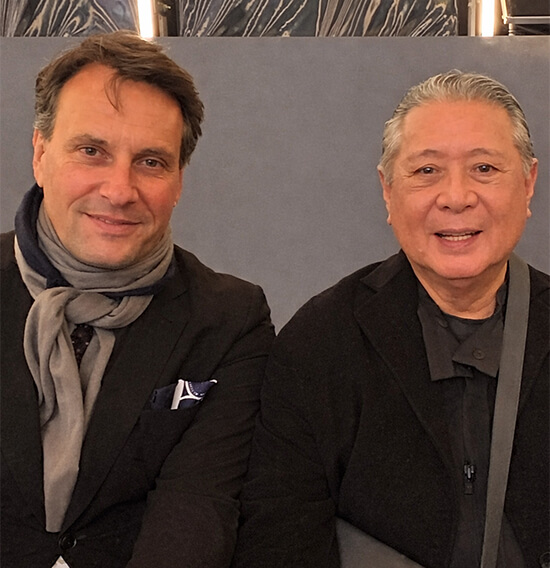
At our table, Nichanian’s husband Patrick Bonnet spoke warmly—not for effect, simply in conversation—about his connection to the Philippines. A close friend, married to a Filipina, first brought him there years ago. He spoke of having visited the country under different leaderships; of Sagada, of Boracay before electricity reached parts of it, of diving in Palawan, and of Angeles City.
Not as exotic anecdote. As memory.
It reminded me that Nichanian’s relationship with Asia has never felt transactional. It feels lived. Layered. Personal. The kind of connection that accumulates quietly over time.
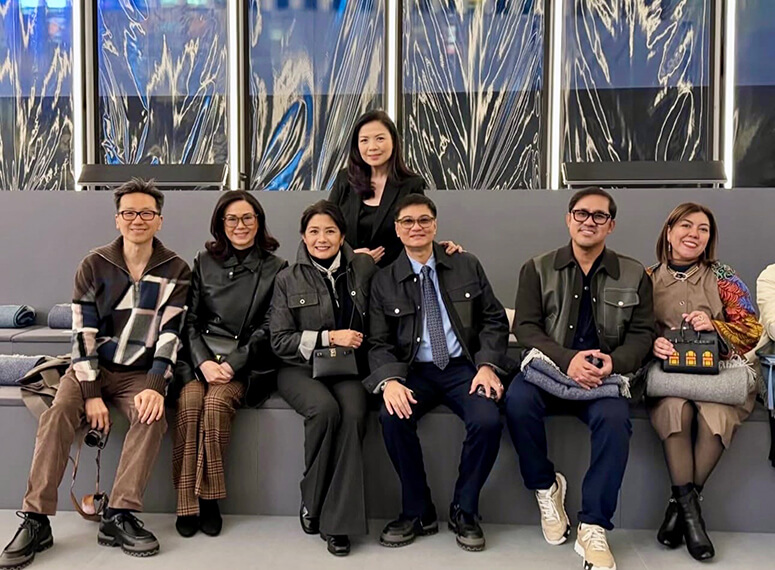
After the runway, the expressway pulsed with music. Geese brought New York’s raw energy; Yojiro Noda of RADWIMPS lent cinematic resonance. DJs Kenji Takimi and ABIU carried the night forward. It felt less like an ending than a cultural handshake between Paris and Tokyo.
But the image that lingers is simpler.
A woman who never designed loudly. A house that understands continuity. A highway about to become a garden.
“Bridge of Light” was not about spectacle. It was about passage.
Concrete became runway. Runway became memory. Memory became gratitude.
And as the applause swelled beneath the Tokyo sky, Hermès did not close a chapter. It elevated it.

WATCH: Discovering Vietnam in three days
June 9, 2026