Inside Manila’s most caring fertility clinic
You do not walk into this fertility clinic and feel like you are about to receive bad news.
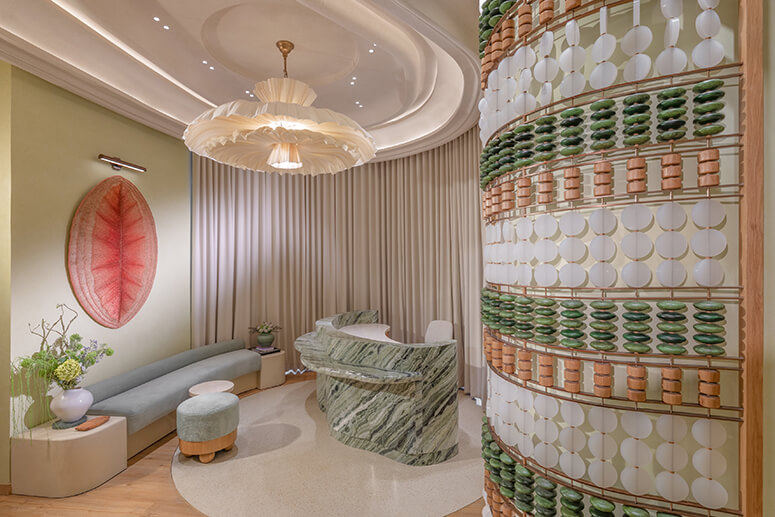
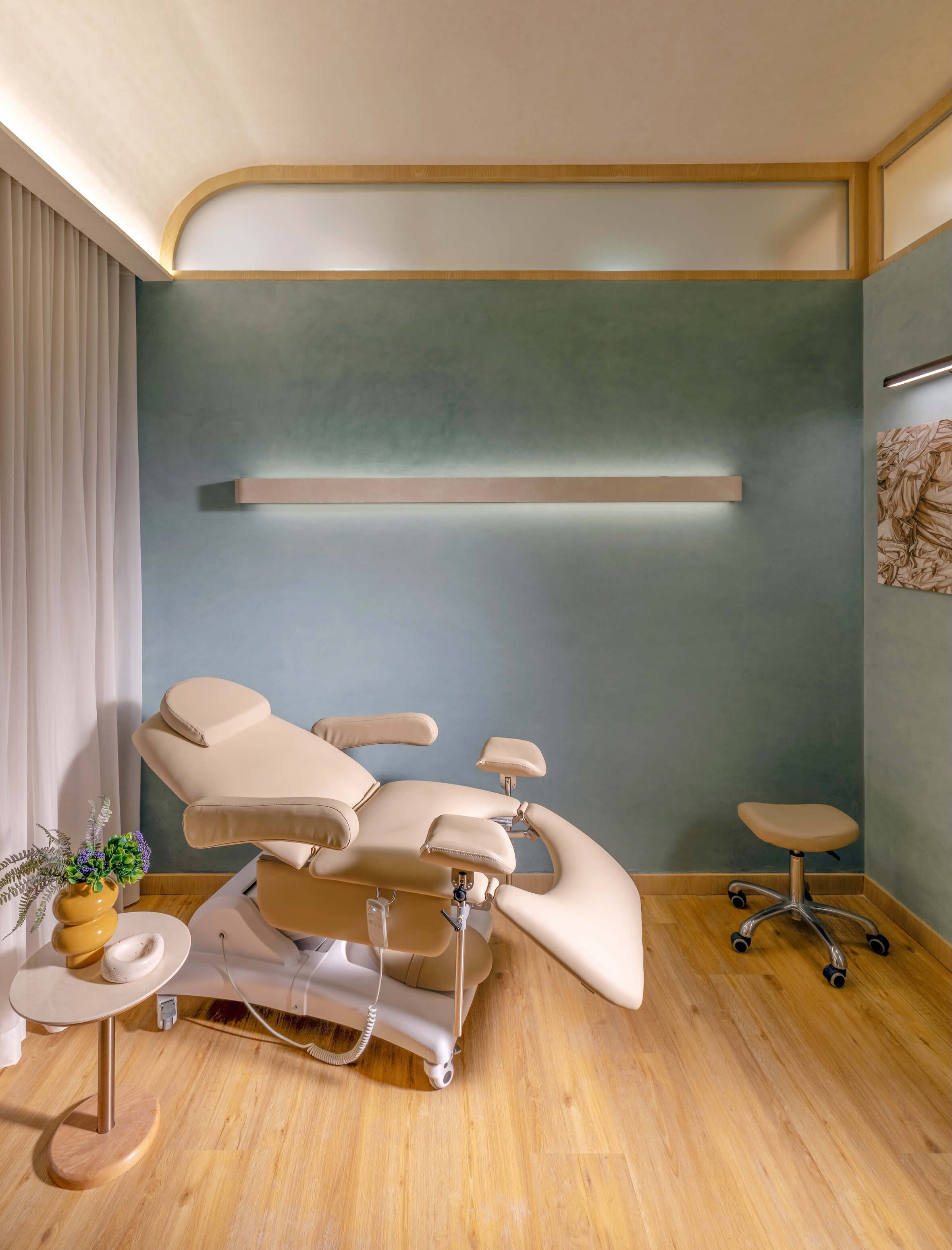
There are no fluorescent lights, no antiseptic chill, no line of plastic chairs filled with couples staring at the floor. GenPrime Manila is something closer to a spa than a clinic: soft lighting, warm finishes, a sense of calm.
“Most people who enter a fertility clinic… they’re nervous, they might be vulnerable. They have some anxiety,” says Margaret Wang, CEO of Raya Fertility, the parent company behind GenPrime. “We wanted to give an experience where you can feel comfortable, knowing that in this place, we will take care of you.”
As the Philippines faces a fertility shift, GenPrime Manila is redesigning care around transparency, empathy, and the moments no one prepares you for.
Wang froze her eggs in New York four years ago. “That journey, for me, was really impactful in how I think about how we want to create space here for our patients to go through the journey as well,” she says. Her story—the injections at home, the word-of-mouth survival tips from friends, even the small indignities that never appear in clinic brochures—now shapes how this space works.
The Philippines faces a fertility shift
The Manila clinic, located in Parqal, Pasay City, opens as the country undergoes a demographic change. The Philippine Statistics Authority reports that the country’s fertility rate has fallen to 1.9 children per woman—below the replacement level. For a nation long defined by large families, that is a turning point.
Yet fertility care infrastructure has barely caught up. There are fewer than 50 fertility clinics nationwide, most in Metro Manila. Entire provinces have none. Historically, those who could afford treatment often went abroad to Singapore, Thailand, and the United States, while others simply did not go at all.
Wang saw this gap firsthand years before opening GenPrime. At the time, she says, the entire country was doing only several thousand IVF retrieval cycles a year—numbers that single clinics in Thailand sometimes surpass.
“Historically, fertility was not seen as an issue here,” she explains. “But now millennials and Gen Z, they’re waiting longer to have children. Cost of living has increased. And there are a number of social and demographic factors that have increased demand.”
End-to-end care under one roof
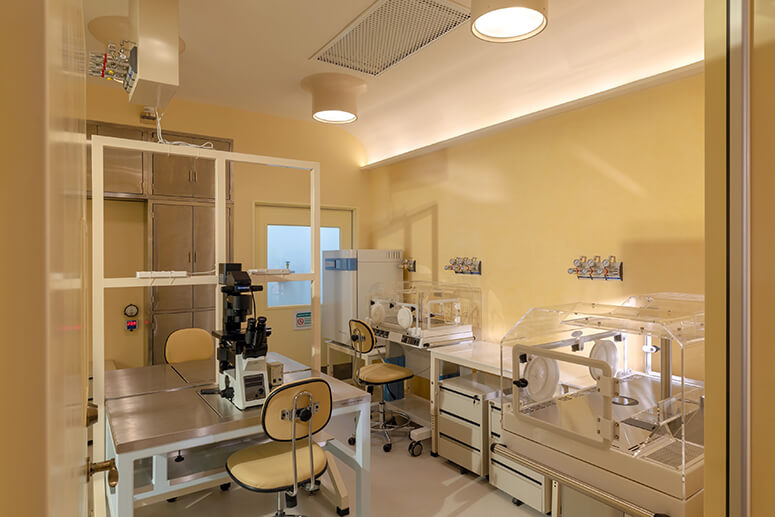
“This really is the start of the patient journey, but this is an end-to-end clinic,” Wang says. Consult rooms, blood diagnostics, sperm assessment, operating theater, the andrology lab, the embryology lab, the recovery room, and cryostorage are all within one floor. No referrals across town, no ferrying samples between facilities.
Even the building choice is deliberate. It is in a mixed-use development near the airport, with discreet entry points and private lifts. It’s right next to The Aivee Clinic and an escalator away from The Matcha Tokyo. For patients navigating stigma or simply exhaustion, privacy is part of care.

A world-class network
GenPrime offers fertility preservation, reproductive diagnostics, IVF, and genetic testing—guided by international standards and tailored to each patient’s needs. For pathways not permitted locally, such as surrogacy, they guide patients on legally supported options abroad. Because they’re under Raya Fertility, they give patients access to fertility care while connecting them to the trusted practices used across its network in Singapore, Bangkok, Kuala Lumpur, and Los Angeles.
Behind these efforts is a global advisory group whose members have helped shape reproductive medicine around the world. This includes Cynthia Hudson, an embryologist known for advancing clinical strategy and laboratory design; Dr. Holly Mehr, a double board-certified reproductive endocrinologist celebrated for her expertise in minimally invasive surgery; and Professor Milton Leong, a pioneer who founded Hong Kong’s first IVF center and introduced IVF across Asia.
Tech meets embryology
One of the key technologies they use is Rhea Labs’ Embryonics, where AI is used to support embryo assessment and help guide diagnostic decisions. GenPrime draws on decades of expertise from Genea Fertility in Australia. Select tools include the Geri time-lapse incubator, taking away the need to remove them repeatedly for monitoring, exposing them to temperature and environmental shifts, and the Grow by Genea app, which gives patients a rare window into embryo development—bringing transparency to a stage that is often hidden from view.
And because fertility is as emotional as it is medical, GenPrime integrates Tilly, a wellness platform offering guided reflections, stress-support tools, and emotional tracking to help patients feel anchored throughout their journey.
“Technology makes the outcomes better,” Wang observes.
Training the next generation
GenPrime also attempts to reverse the Filipino “brain drain” of fertility specialists by building a laboratory environment comparable to Singapore or Bangkok, but rooted in Manila.
“We see this clinic as being a platform to develop the next generation of talent as well,” Wang says.
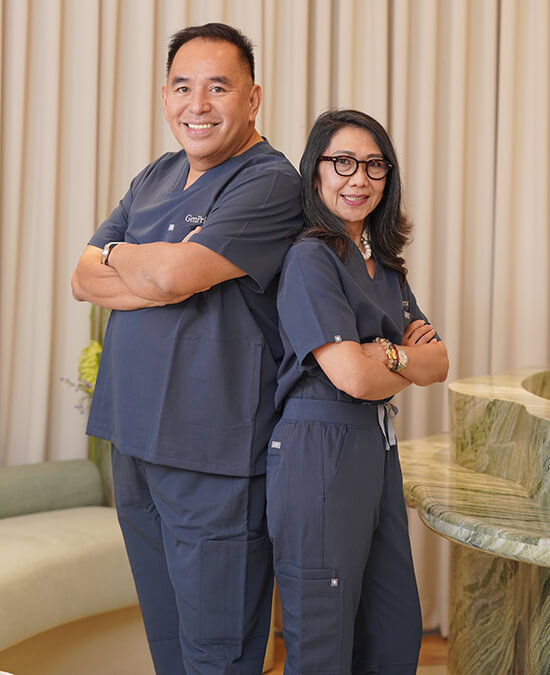
Medical director Dr. Anthony Marc Ancheta has nearly two decades of experience caring for individuals and couples navigating fertility. He trained at the University of the Philippines–Philippine General Hospital and further specialized at the National University Hospital in Singapore.
Beside him is Dr. Marinella Abat, a reproductive endocrinology expert with over 20 years of experience and a former president of the Philippine Society of Reproductive Medicine. Her work in clinical governance has shaped how fertility care is delivered nationwide.
They lead a team of embryologists and nurses trained in respected institutions such as Victory ART Laboratory, The Medical City, and the National University Hospital Singapore, forming a group that pairs international training with an unmistakably Filipino sense of care.
‘You feel held’
Fertility is often described in strictly medical terms, but GenPrime treats it as an emotional and deeply personal experience, shaped not only by biology, but inevitably by financial stress and uncertainty.
Wang is candid about the economics behind fertility care. “You may see a lower price somewhere else, but then things get added on in ways that you don’t necessarily expect,” she says. This is why their technologies are embedded into the standard of care rather than billed as incremental upgrades as part of a broader effort to remove the hidden frictions that often derail patients mid-journey. “Our packages are meant to include everything.”
Fertility treatment is invasive, expensive, emotionally volatile, and—in the Philippines—still kept secret. GenPrime Manila does not pretend to solve all of that. But it does insist on changing the first impression: Not cold. Not rushed. Not invisible.
“You feel held,” Wang says. And in a country reckoning with delayed motherhood, smaller families, and rising reproductive anxiety, that may be the most radical intervention of all.
* * *
GenPrime Fertility is located at Unit 217 Parqal Building 8, Diosdado Macapagal Ave., Aseana City, Bgy. Tambo, ParañaqueCity 1701.