

LOOK: The Philippines' first e-ferry has arrived. Here’s what Pasig River commuters need to know
Looking for a cleaner, greener, and more scenic way to commute around the metro? The country’s first locally developed battery-electric passenger ferry will soon be fully integrated into the MMDA’s existing Pasig River Ferry System.
The Department of Science and Technology and UP Diliman launched M/B Dalaray, an electric ferry or e-ferry designed to serve routes along Manila, Makati, Mandaluyong, Pasig, and Taguig starting in November.
PhilSTAR L!fe got to hop on board the e-ferry for a quick demo cruise from Plaza Mexico in Intramuros, Manila. Here’s everything commuters need to know about the new vessel soon joining the city’s sole river-based transport system.
Locally-designed and developed
M/B Dalaray gets its name from a Tagalog word that refers to the “flow of current.” The e-ferry was developed by the Electrical and Electronics Engineering Institute of UP Diliman, led by Dr. Lew Andrew R. Tria, as part of their push for sustainable transport in the city.
Built with the conditions of the Pasig River in mind, it took environmental factors such as shallow river depth in some areas, low bridge heights, and the presence of water hyacinths that can get tangled in propeller systems into consideration.
DOST Secretary Renato Solidum Jr. said that the e-ferry ensures passenger comfort, energy efficiency, and ease of maintenance, while being a product of Filipino ingenuity and collaboration.

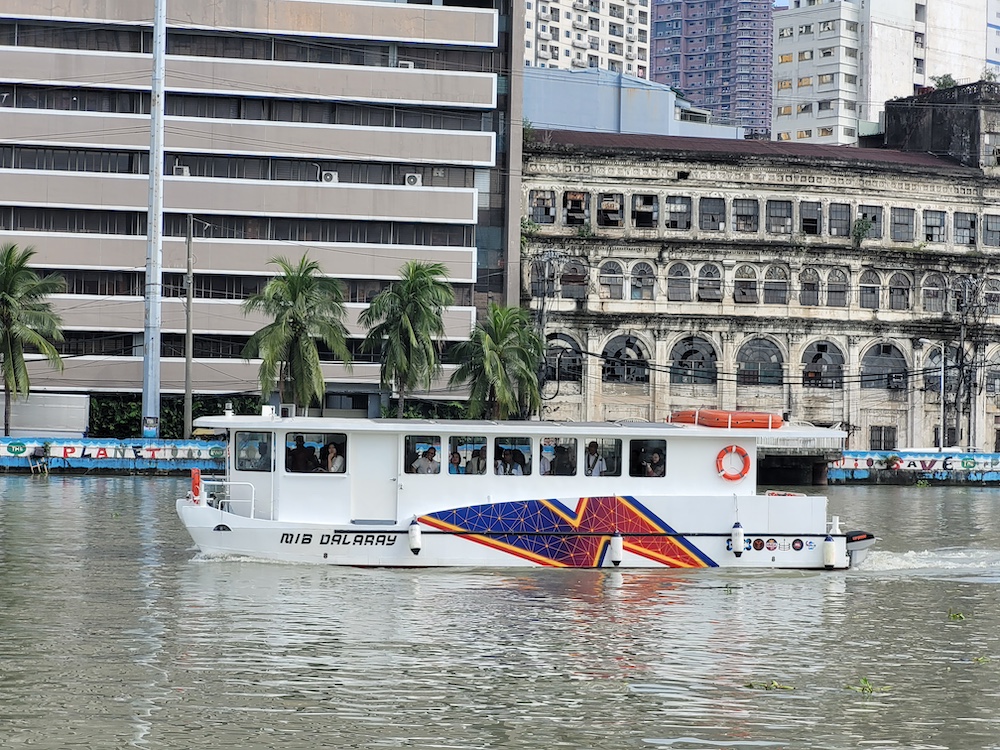
“It was built by Filipino engineers and innovators, proving that we can design and deliver technologies that serve both people and the planet,” Solidum said in his keynote speech before the ceremonial ribbon cutting and maiden voyage.
The e-ferry will be integrated into the existing Pasig River Ferry Service, the free river-based commuter service run by the Metro Manila Development Authority.
“The reason we conceptualized this project was due to the revival of the ferry system right before the pandemic,” explained Tria, Director of the EEE Institute, who serves as the Project Leader of the E-Ferry Project.
While the e-ferry is a working prototype, Dr. Tria assured the public that the vessel has passed all the standards and safety checks and has been fully registered to ensure that it’s set to sail and can accept passengers come November.
E-ferry specifications
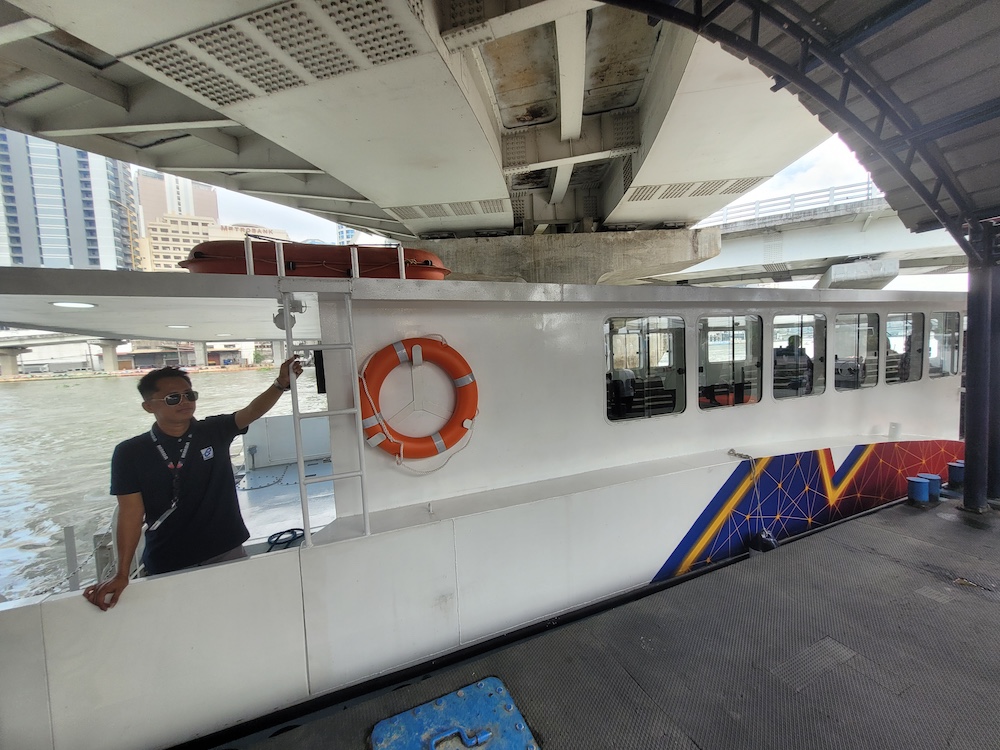
The catamaran passenger ferry was designed as an alternative to the diesel engine fleet currently operated by MMDA. Aside from being powered by two 50 kW electric outboard motors (100 kW total), the e-ferry is also equipped with a hybrid solar inverter system with solar panels mounted on the roof.
When fully charged, the e-ferry has a range of 45 km, good for 2 to 3 hours voyage time before it needs to be recharged. There are currently three charging stations set up along the Pasig River, located in Guadalupe, Escolta, and Napindan.
According to DOST, end-to-end trips from Guadalupe to Escolta take about 45 minutes, and the e-ferry is capable of doing one round trip before it needs to be topped up (not necessarily fully charged) to run again. Charging time takes roughly 2 to 3 hours.
Cleaner and greener rides
Based on our experience previously riding the diesel-powered ferry from Guadalupe to Escolta, the new e-ferry offers a more stable and efficient ride. In case you easily get dizzy on boats, the Catamaran design, rather than a Monohull, allows the vessel to glide smoothly on the water with minimal rocking motions. The e-ferry is quieter, with zero direct emissions compared to the noisier diesel engines, providing a more serene ride.
M/B Dalaray feels spacious and airy because of its wider dimensions compared to the narrower current ferries. It can transport 40 passengers and 3 crew members at a time.
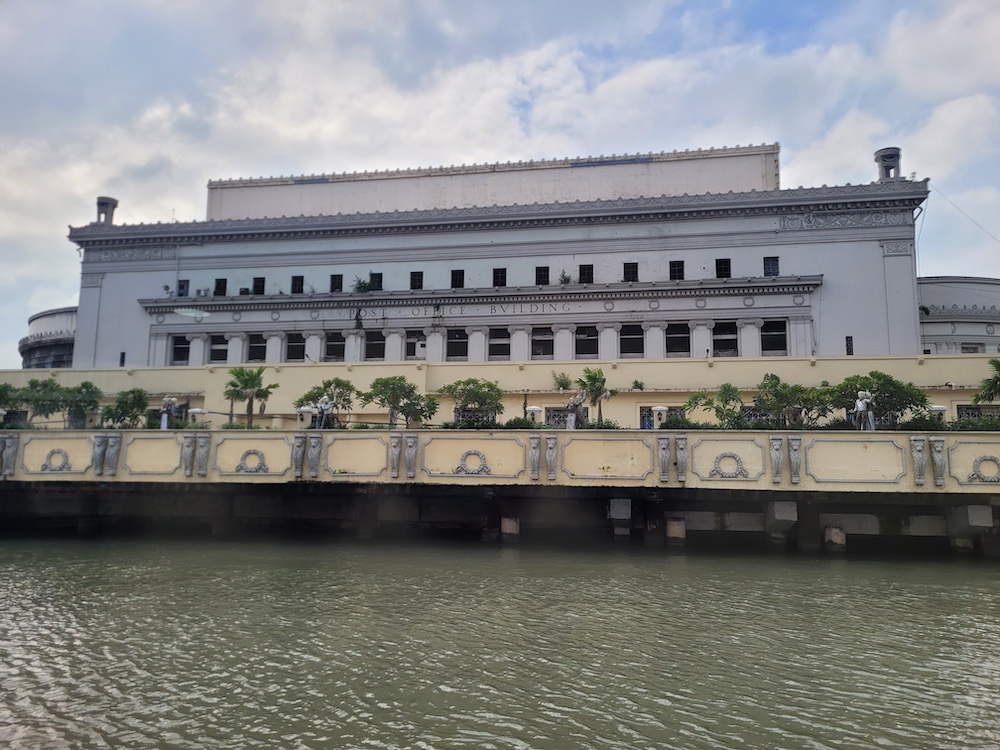
The seats inside the watercraft are arranged in four rows facing the wide side windows, giving passengers access to scenic water views. When traversing the Pasig River from Guadalupe to Escolta, you can enjoy a slow journey and glimpse of local life, with landmarks like riverside murals, Malacanang Palace, heritage buildings, Manila Central Post Office, the Pasig River Esplanade, and Jones Bridge from a different perspective, rather than traffic-choked streets or from train lines.
The seat layout, which has two wide aisles in between the rows of seats instead of seats facing front, is flexible to allow cargo (up to 5 tons of loaded weight) if there are no passengers on board.
Each passenger seat is equipped with a life vest underneath and a safety card pocket with the river route map, safety procedures on board and fast facts about the e-ferry.
Unlike the current open-air ferries, the e-ferry is fully enclosed and air-conditioned to address the city’s tropical climate.
Traffic reduction and tourism potential
According to Tria, the research team developing the e-ferry studied similar river systems—such as the Chao Phraya in Bangkok and the Han River in Seoul—to understand how other countries use their waterways for tourism in addition to transport.
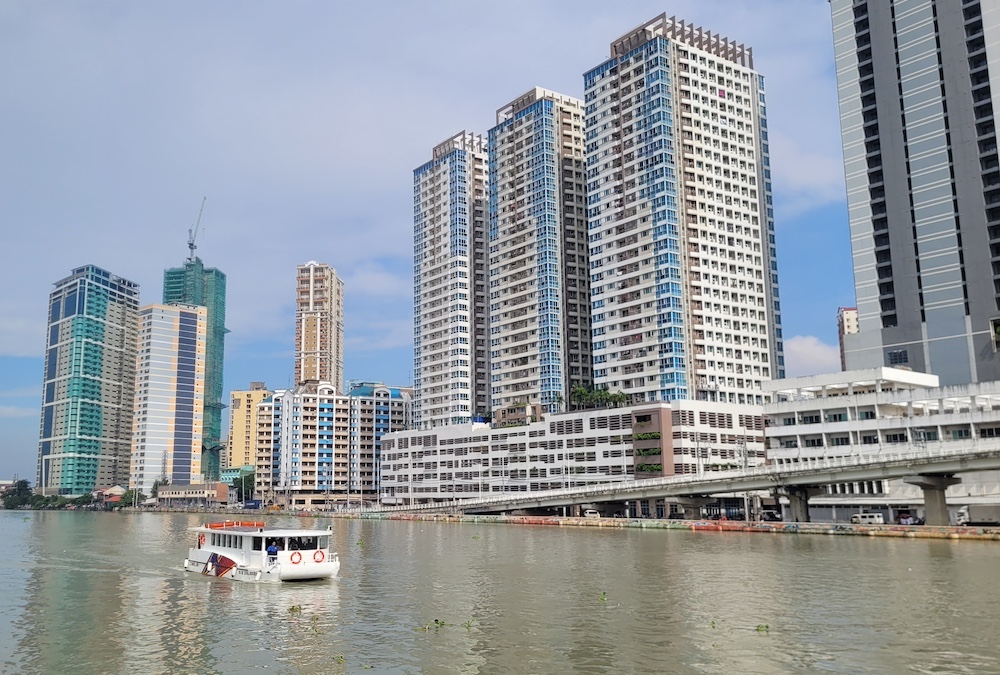
The team decided to adapt the ferry for the Pasig River, since it’s a vital lifeline that connects five major cities: Pasig, Makati, Mandaluyong, Taguig, and Manila. Many schools, business districts, tourist spots, and overlooked heritage sites along the riverbanks could benefit from an improved transport system.
Similar e-ferries could potentially connect Marikina, as well as several towns around Laguna Lake, covering Rizal and Laguna in the east, in the future.
The Pasig River Ferry Service, which has 11 other diesel-powered boats, continues to operate with free fares for all passengers in 2025.
Check out the ferry trip schedules below.
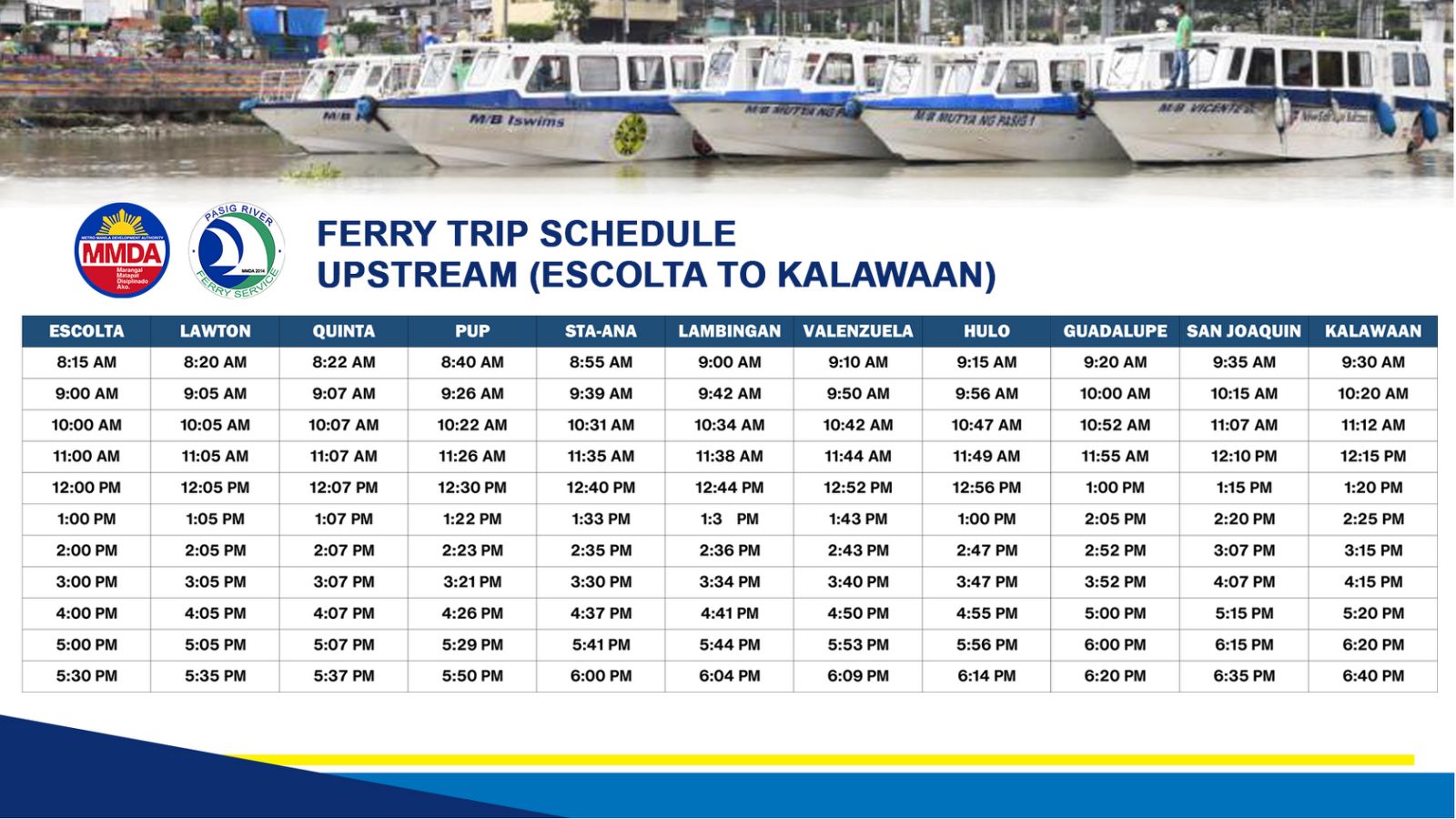
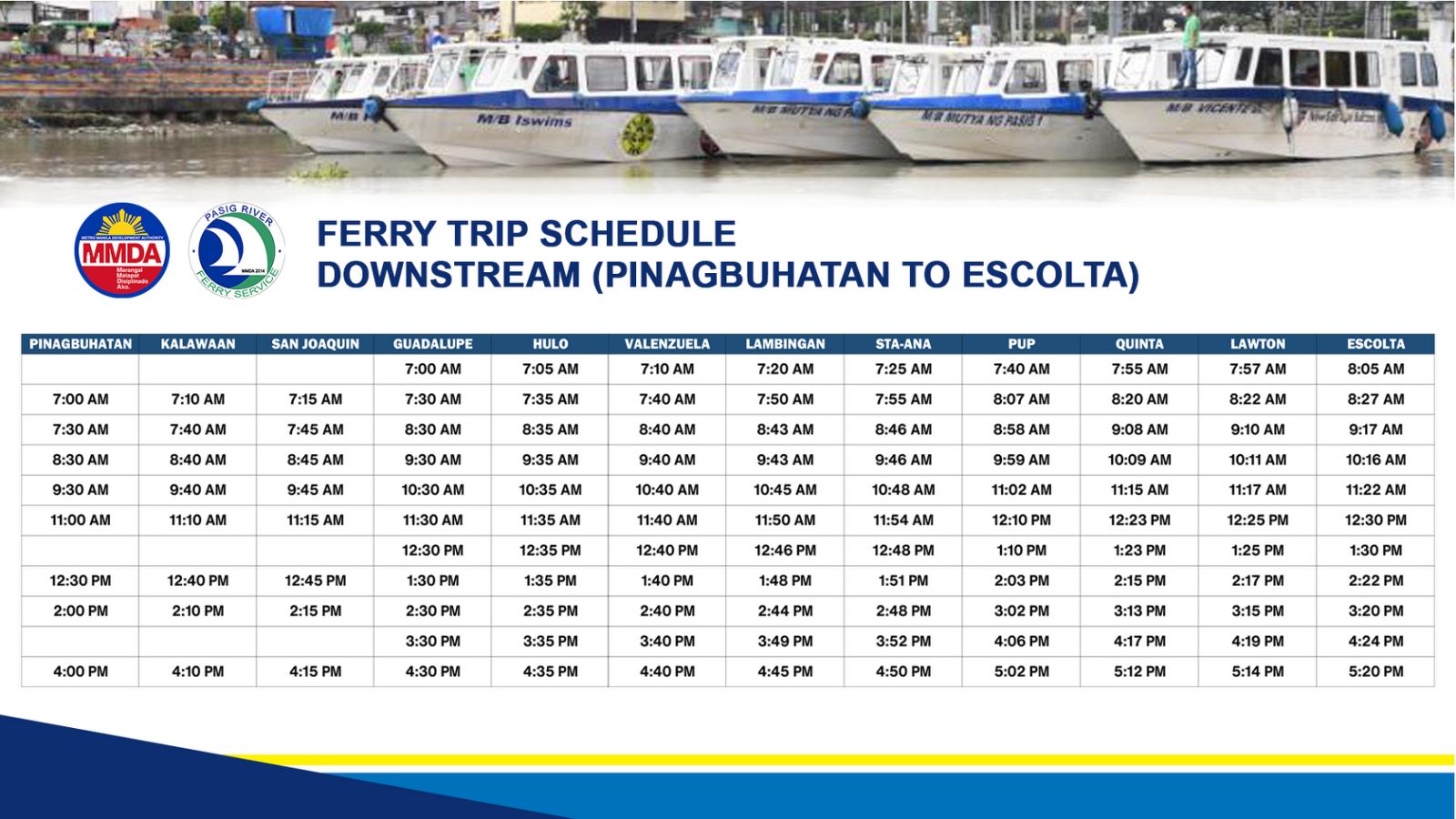
For updates on M/B Dalaray, visit the e-ferry’s Facebook page.
