

Full tank: The new math of getting around
There is a particular kind of silence that settles over Metro Manila when fuel prices go up. It’s not the absence of noise—jeepneys still groan, motorcycles still weave like determined insects, and the ubiquitous SUV still insists on its birthright to take up space. No, it’s a different silence. A mental recalibration. A collective pause where everyone, from the office worker in Makati to the tricycle driver in Quezon City, quietly does the math.
How much now? And what has to give?
Because somewhere far away—names of places we used to skim past in world news now said with reluctant familiarity—wars are being fought, pipelines threatened, shipping routes tightened. Oil, that invisible puppeteer of modern life, has become even more temperamental. And here we are, thousands of kilometers away, adjusting our grocery lists and commute routes as if we had a say in any of it.
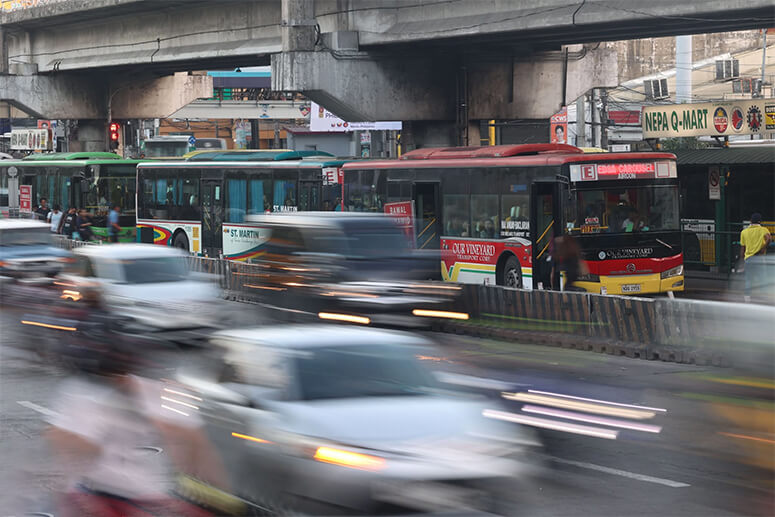
That’s the thing about global crises. They arrive locally, uninvited, and immediately make themselves at home.
In the Philippines, oil doesn’t just power vehicles; it quietly dictates the rhythm of everyday life. When prices surge, everything else follows with obedient enthusiasm: transport fares, delivery fees, even the price of the proverbial galunggong if you trace it far enough back to fuel-dependent supply chains. Inflation, we call it in polite conversation. But on the ground, it feels more like erosion—a slow wearing down of what your money used to be able to do.
CONTINUE READING BELOW

Fuel prices do what decades of planning could not: occasionally empty EDSA—and force Filipinos to rethink how they move, spend, and live.
And yet, if there is one national trait that surfaces reliably in moments like these, it is adaptability bordering on artistry.
Take Jen R., a senior executive at a multinational, married to a corporate lawyer, with two kids in college. On paper, they are insulated from this sort of thing—the kind of household that used to treat fuel prices as background noise rather than a line item. Their lives run on calendars, not constraints.
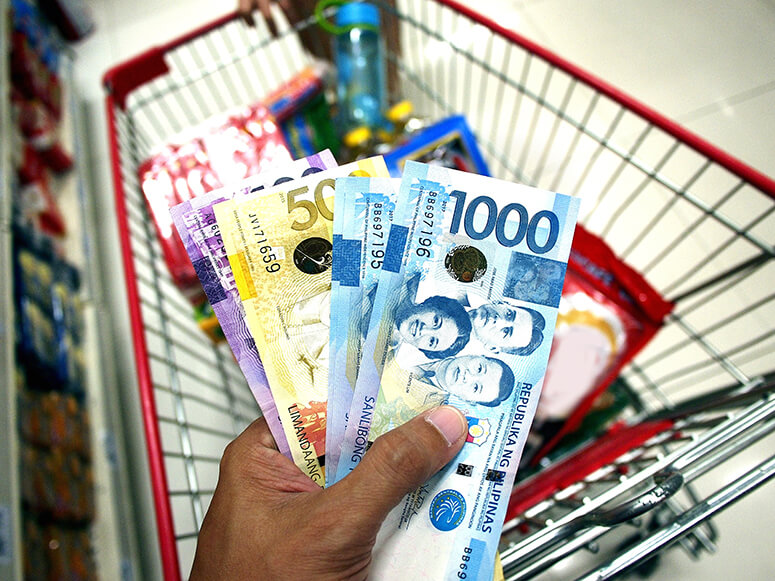
And yet, the conversations have changed. Not dramatically, not in ways that would alarm—but enough. The annual holiday abroad, once a given, is now a discussion. Do we push through? Scale down? Stay closer to home this year? It’s not that they can’t afford it. It’s that everything around it—flights, transport, the quiet inflation threading through every expense—has made the decision feel heavier, less automatic.
“Parang ang daming dagdag,” she says wryly, scrolling through options that all seem just slightly more expensive than they should be.
So they plan more carefully. Book earlier. Compare more tabs than they used to. Comfort remains—but it is now curated, negotiated, occasionally deferred.
Or Nicky T., a 28-year-old call center agent, who used to book rides home without thinking twice. These days, he times his exits with colleagues —splitting fares when he can, opting for an Angkas instead of a GrabCar when he can’t, or waiting a little longer if it means sharing the cost. On some days, he walks part of the way—half for savings, half to convince himself it counts as exercise. “Ang mahal ng lumabas. Paano na ang pang-kape ko?” he says with a laugh, but it’s the kind of laugh that knows exactly how thin the margins are.
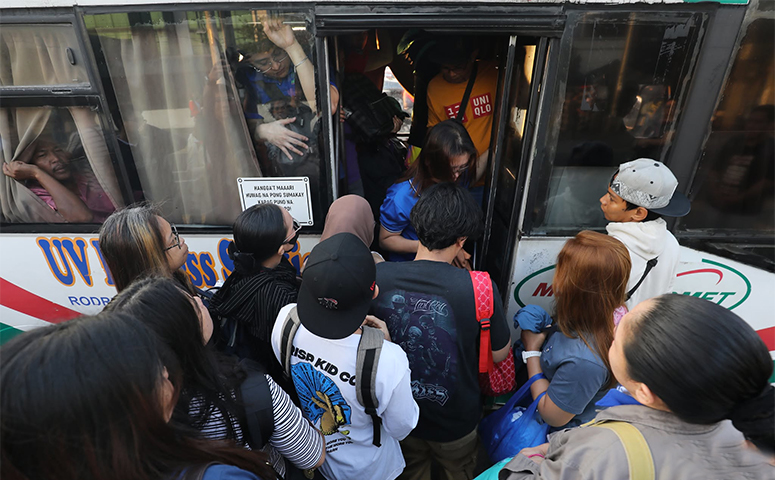
This is what adjustment looks like—not dramatic, not headline-worthy, but constant.
Take commuting more broadly. Once a straightforward point A to point B affair, it has become a strategic exercise worthy of a chessboard. People stitch together routes: a jeepney here, a quick walk there, maybe a carpool if you’re lucky. Even households with multiple cars now plan and carpool. Diskarte has evolved from a buzzword into a survival skill. Office group chats have quietly transformed into logistics hubs, sharing rides as colleagues become co-conspirators against rising fuel costs.
And then, occasionally, reality glitches.
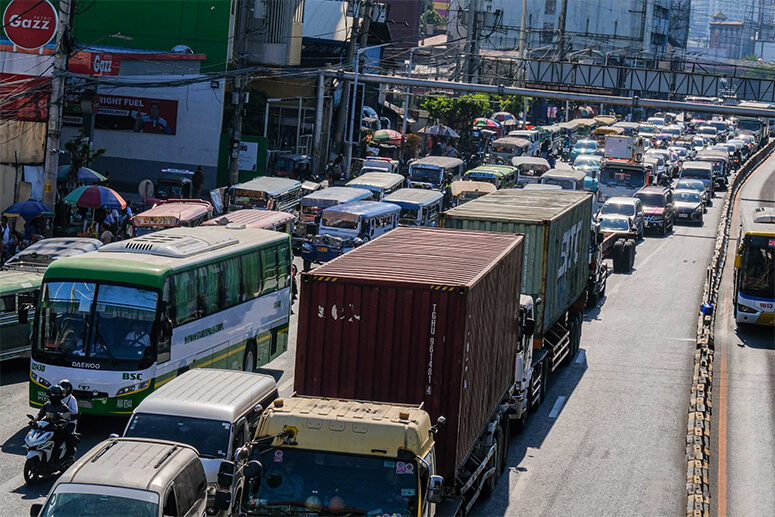
You find yourself on EDSA on a random Friday night—historically, a guaranteed test of patience and faith—and… there is no traffic. No slow crawl, no resigned inching forward, no existential crisis behind the wheel. Just open road. Where did everyone go?
It would be funny if it weren’t so telling. Who knew that the solution to Manila’s most enduring infrastructure problem might arrive not in the form of a master plan, but via a spike in global oil prices? Congestion, it turns out, is partly a function of relative affordability. When fuel becomes painful, mobility becomes selective. Trips are postponed. Routes are consolidated. The unnecessary disappears first—those casual drives, those labas lang saglit—until what remains is only what must be done.
Less movement, less traffic. A brutal kind of efficiency.
Then there’s the other end of the spectrum—the quiet pivot among those who can afford alternatives. In certain circles, the conversation has shifted from “How much is gas?” to “How long is the waitlist?”
Electric vehicles, once dismissed as aspirational or impractical, are suddenly objects of intense interest. Not out of environmental awakening— though that’s a convenient bonus—but out of sheer economic pragmatism. Why keep feeding a machine that drinks increasingly expensive fuel when you can plug one in like a rice cooker?
The catch, of course, is that everyone with the same idea tends to arrive at the same conclusion at roughly the same time.
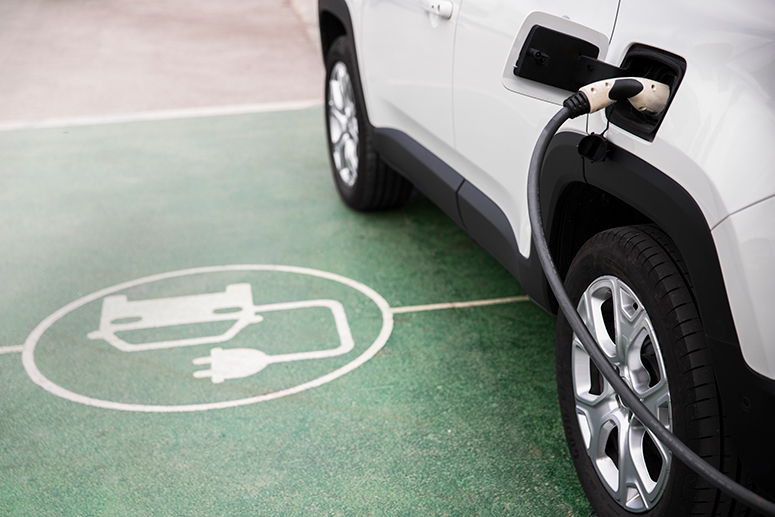
Dealerships now speak in the language of delays. Months-long waitlists. Limited inventory. Reservations that feel more like applications. Owning an EV has become not just a purchase, but a small exercise in patience and privilege. It is, in its own way, a marker of class response to crisis: When prices rise, those with means don’t just adjust—they exit the system causing the problem.
Meanwhile, everyone else recalibrates within it—sometimes one jeepney ride, one skipped errand, one shared trip at a time.
The weekend mall trips are less frequent, more intentional. Impulse dining has given way to sa bahay na lang. Even the humble electric fan is staging a comeback in households trying to negotiate with their electricity bills.
Businesses, too, are performing their own balancing acts. Delivery fees inch upward with a sheepish apology. Small enterprises experiment with smaller portions, creative bundling, or the delicate art of raising prices without appearing to. Meanwhile, employees are renegotiating not just salaries but work arrangements—because working from home, it turns out, is not just about comfort; it’s about cutting down on fuel-dependent expenses that quietly eat into one’s pay.
And in the middle of all this, social media does what it does best: It documents, jokes, and occasionally protests. Memes about gasoline prices circulate with alarming speed—humor as both coping mechanism and commentary. One viral post quips that “full tank” now feels like a financial milestone. Another suggests treating your car like a luxury item you visit occasionally. We laugh because the alternative is to admit how precarious things feel.
But beneath the wit is a sharper question: How long can this go on?
Because while Filipinos are famously resilient, resilience has its limits. Jen R. may still fly business class, but even she now hesitates before clicking “confirm”—weighing a holiday that used to be automatic. Nicky T. can only stretch his commute so far before exhaustion catches up. Adjustment, after a while, starts to look like quiet sacrifice. And this is already the case for the working class—how much more for those at the margins.
Still, if you look closely, there is something else happening alongside the strain. A subtle rethinking. Conversations about public transport are becoming less abstract, more urgent. The idea of walkable spaces, bike lanes, and reliable mass transit is no longer the domain of urban planners alone—it’s entering everyday discourse, powered by daily inconvenience. Energy, once an invisible utility, is now something people are more conscious of: how they use it, how much it costs, and where it comes from.
In other words, necessity is doing what it often does best: forcing clarity.
The global oil crisis, fueled by conflicts we can’t control, has exposed just how interconnected—and fragile—our systems are. But it has also revealed the ingenuity of ordinary Filipinos navigating extraordinary circumstances. Not heroically, not dramatically, but in small, practical decisions made every single day.
Walk instead of ride. Share instead of shoulder alone. Cook instead of order. Plan instead of wing it.
Drive down EDSA on a Friday night and marvel, briefly, at the miracle of movement—before realizing what it cost to get there.
It’s not glamorous. It doesn’t trend. But it keeps things moving.
And maybe that’s the most Filipino response of all: not to deny the weight of the problem, but to carry it anyway—adjusting grip, shifting posture, cracking a joke or two, while quietly hoping that somewhere, somehow, the load will eventually lighten.

WATCH: Can you still trust someone who betrayed you? (Generations Ep. 22)
September 23, 2026
WATCH: Is Gen Z too soft? (Generations Ep. 23)
September 30, 2026
WATCH: Do you still believe in marriage? (Generations Ep. 17)
August 19, 2026