

Filipinas taking the lead
BrandedUp in partnership with

This year’s National Women’s Month theme, “Lead like the Babaylans, Filipinas!,” calls for championing women’s leadership rooted in Filipino identity and culture. Babaylans were pre-colonial women healers, community leaders, and spiritual intermediaries who helped maintain social balance alongside the Datu, or chieftain.
With the theme inspiring a look back at the past and toward the future, it is apt to recognize the women from indigenous communities who continue to sustain their tribes’ customs and traditions, as well as those who take on the challenge of balancing home life with local enterprise or even digital upskilling to support their families.
Through Project Tahi ‘Ta!, KaBAMBOOhayan, and Elevate AIDA—programs supported by AboitizPower, Aboitiz Renewables, and the Aboitiz Foundation—women are empowered with opportunities, resources, and meaningful participation that seek to honor the past and prepare for the future.
Preserving heritage and livelihood through Project Tahi ‘ta!
The responsibility of preserving culture drives the hearts and hands of indigenous artisans from the Higaonon tribe in rural Impasug-ong, Bukidnon. For them, building a better future means passing on the work of traditional craftsmanship to a new generation willing to take up the mantle.
“Tribal attire is important because people respect it. Our parents took care of it then. Whatever our parents did before, that's what we take care of now,” said Cherlie Tundanay, 63, one of the few who remain skilled in sewing traditional tribal attire.
“It's important to me to teach whatever I know about sewing. This is not only for my grandchildren, but for young people who want to learn to sew.”
CONTINUE READING BELOW

For over a hundred years, the culture of weaving colorful clothes and making bead necklaces has been cultivated, with the designs and the items themselves becoming powerful symbols of tribal identity, spirituality, and respect for ancestry.
“Red means bravery, white symbolizes peace, [and] yellow signifies a golden heart and kindness,” the master seamstress detailed.
Seeking to empower traditional craftsmanship and establish sustainable income among IP women in Impasug-ong, Bukidnon, Project Tahi ‘Ta! was created—a culture-based sewing livelihood training program for the community by Aboitiz Renewables, together with the Aboitiz Foundation and the Technical Education and Skills Development Authority (TESDA).
“I thank AboitizPower for giving us a livelihood. We were provided with sewing machines, cloth, and the opportunity to train,” Cherlie said.
“We are proud of our work. Not everyone knows how to sew tribal attire—the clothes of Baes and Datus!”
Higaonon tribe rises again with KaBAMBOOhayan
The ingenuity of the Higaonon tribe also manifests in their use of bamboo in Barangay Santiago, Manolo Fortich, Bukidnon. After the town was hit by heavy rainfall and a landslide in 2021, burying the roads that brought crops like corn and abaca to the market, livelihoods were disrupted.
While Aboitiz Renewables planted bamboo in the area as a precaution against potential landslides in the future, the tribe also saw an opportunity to make use of the tall, thick, and woody grass to sell as raw materials or even create crafts such as guitars, chess sets, and chairs.
To scale these efforts, with the support of Aboitiz Renewables and the Aboitiz Foundation, members of the Higaonon tribe were trained by TESDA in bamboo propagation, processing, and treatment while waiting for more bamboo plants to grow. Eventually, they were given a machine of their own for bamboo processing.
“Our training was free, provided by Aboitiz and TESDA,” said Noemie Buclasan, a mother of three who took the opportunity to learn after damage to her modest plot of land. “Bamboo really helps the environment and our people because it can be a livelihood.”
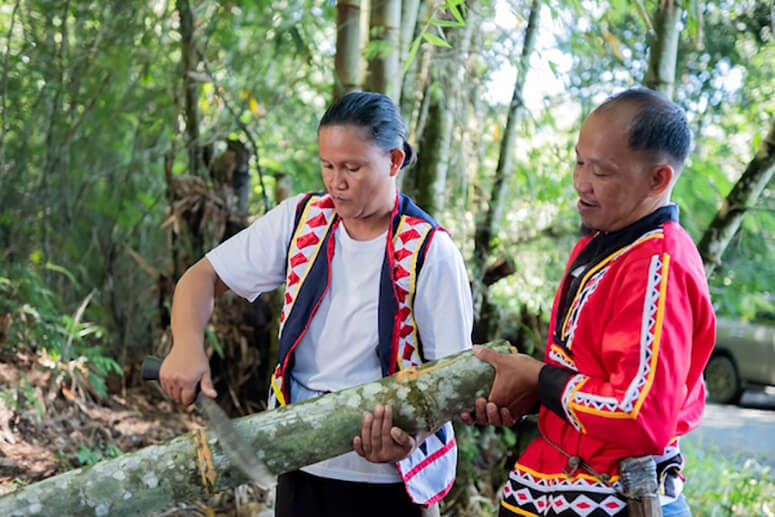
“In our association, we have a rotation schedule. So our work is steady, [unlike] before when I’d ask where I could find labor and on whose farm. Now we know our schedule for the week, and we know we’ll have income,” she explained.
“We’re more at ease now. When the kids ask for slippers, I can say, ‘Okay, I have my pay now—let’s buy them.’”
Elevate AIDA helps upskill stay-at-home moms in Bukidnon
“Before I joined Elevate AIDA, I was a full-time housewife, always at home, cooking, cleaning, and taking care of my child. Sometimes, I would wish for a job I could do from home, so I could still look after my child and help contribute to our income,” shared Kimberly Gumaling, a mother raising her daughter.
Elevate AIDA—which stands for artificial intelligence (A.I.) and data annotation—is a program developed by social impact startup Connected Women, with the support of Aboitiz Renewables and the Aboitiz Foundation, that teaches women remote work skills and basic professional and computer abilities. After training, it also enables participants to apply and work for both local and international companies.
“I was worried I might leave my child behind. But I still joined because I wanted to learn new skills, and there was a chance I could work from home,” Kimberly explained.
“I was really happy after graduation because I got hired by Connected Women. I currently have two projects and I’m using what I learned, like Google Docs, Google Drive, and Google Sheets. Now I’m a busy working mom.”
Elevate AIDA instills the value of pursuing continuous learning and upskilling to further boost participants’ competitiveness in the digital workplace.
Rhiza Mae Macalos, another beneficiary, recounted how despite her initial worries about adapting to something new, she took it as a chance to learn about new technologies and help her family and community.
“Initially, I was hesitant about A.I. [But] in my training and now in my work, A.I. has made our tasks easier and faster. We now have more time for our kids and even for community work,” she said. “Now I see that A.I., when used responsibly and properly, actually helps make our work smoother and easier.”
“Now that I am working, I see that [Elevate AIDA] really has compassion and a real desire to empower women to realize their role not just at home, but in the community as well,” she added.
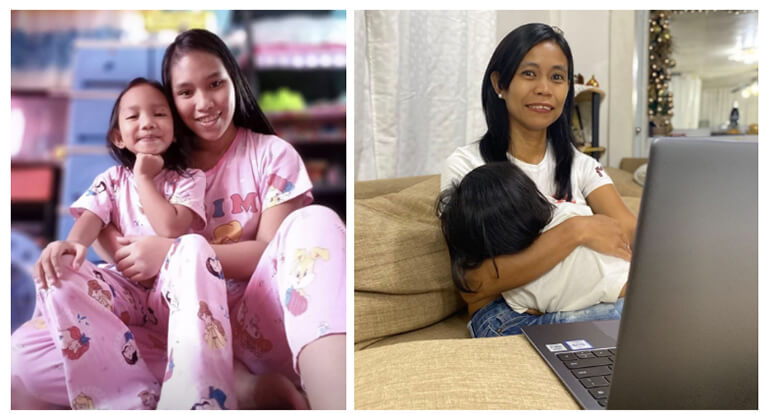
With Project Tahi ‘Ta!, KaBAMBOOhayan, and Elevate AIDA, women at the community level are given the chance and the capabilities to champion and support what they value most. Whether in cultural revival, local enterprise, or digital empowerment, these Filipinas are doing great things for themselves, their families, and their communities.
* * *
Editor’s Note: This article was provided by Aboitiz Power Corporation.

WATCH: Do you still believe in marriage? (Generations Ep. 17)
August 19, 2026
WATCH: Why is it so hard to make friends? (Generations Ep. 26)
October 21, 2026