

My brave heart turns 1
One year ago, I confronted my mortality with an equal dose of fear and faith when I underwent a quadruple bypass.
Fear was the order of the day when my cardiologist, Dr. Leni Iboleon-Dy, told me in September last year that the result of my angiogram necessitated open-heart surgery. The major artery on the left side of my heart had 100% occlusion; the remaining major arteries were between 95% and 98% blocked. I was told I was a walking time bomb; I could die anytime.
I had two weeks to prepare for this high-risk operation on Sept. 27, 2025. Two weeks to be in deep thought with family and well-meaning friends. Two weeks to sort things out on my own. Two weeks to talk to God.
For fear not to come in equal measure with faith, I decided that the looming high-risk operation was a matter of mindset, a mind game I needed to win.
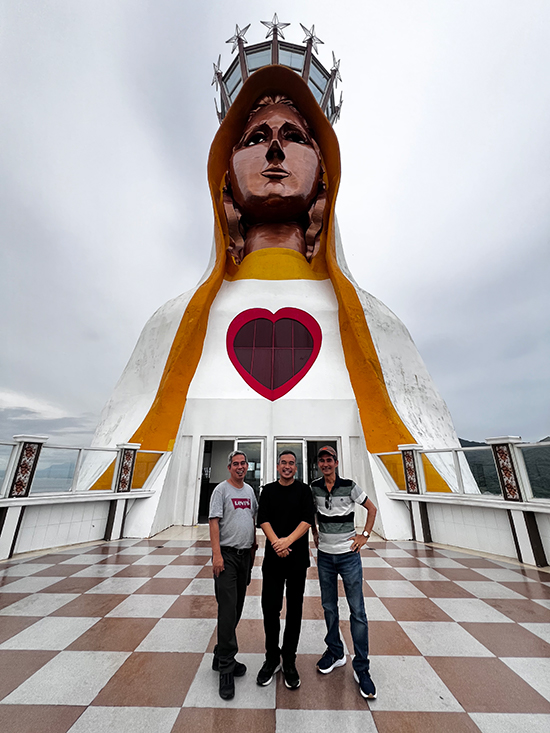
To fortify and calm my mind, I increased my faith. I heard Mass at Padre Pio Shrine in Sto. Tomas, Batangas, and Monte Maria Shrine in Batangas City. My feet brought me to St. Peregrine Laziosi Shrine in Muntinlupa.
CONTINUE READING BELOW

In Cabuyao where I reside, I was a regular visitor at St. Clare Monastery and St. Polycarp Church. I passed by St. Rafael Quasi-parish in Gulod on the eve of my operation.
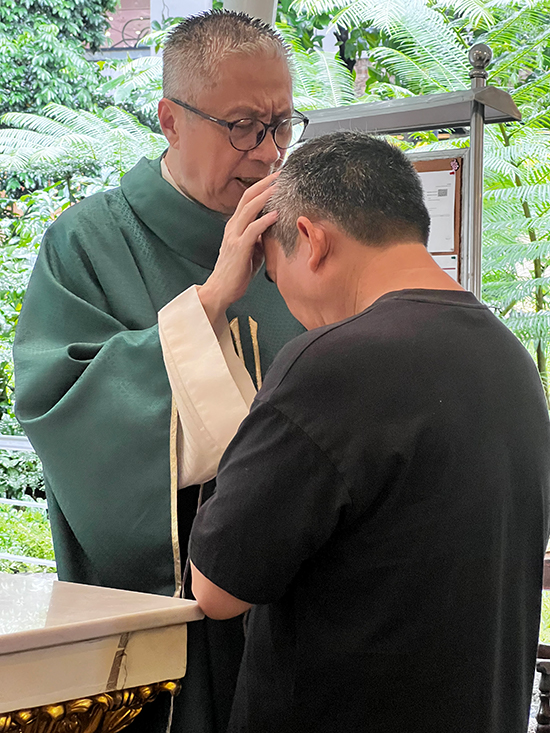
On the morning of Sept. 25, I personally sought the practical wisdom of Fr. Dave Concepcion, who plainly told me: “Do not be afraid.” After his Mass at the Sto. De Nino de Paz (Greenbelt Chapel) where he is the chaplain, Fr. Dave prayed over me. “Remember to pray the prayers of Padre Pio: ‘Pray, hope, and don’t worry.’ and ‘Stay with me Jesus’,” he added.
In the evening of Sept. 25, I was on the phone with my good friends Ricky and Sheila Paras. Ricky also underwent a quadruple bypass in November 2019 and the couple held my hand virtually for more than three hours, giving me tips to slay my pre-operation woes.
Ricky’s rule No. 1: “Don’t Google how a coronary angioplasty bypass graft (CABG) is done. Don’t.” I did not. To this day, I don’t intend to watch a CABG video.
When I was wheeled into the operating room in the early morning of Sept. 27, my caregivers—led by my youngest brother Rod, niece Paula, a nurse, and assistant Liza Alcantara—were joyful. We sang “Happy bypass to you” to the tune of “Happy birthday to you.” There were flowers and balloons to accompany me up to the swing doors of the operating room. Believe me, I had a clear mind and a calm spirit that moment. I knew I would survive.
At the OR, I was met by my anesthesiologist and two nurses. They wore masks, but I could see the hope and happiness in their eyes. Before they could wheel me straight to the operating table, I requested if I could use the toilet first. Inside the toilet, I lifted my gown, traced my unscathed sternum area with my fingers. It was the last time I would see my chest area without a long scar.
I went back to my bed, smiled at the doctor and nurses, and prayed.
“Pray, hope, and don’t worry.”
“Stay with me, Jesus.”
“Memorare.”
“‘Nay, ‘Tay, bahala na kayo. Please pray for me.”
The next thing I knew, I was already in the recovery room, where I woke up in less than 20 minutes after my 3.5 hours operation. I did not see the operating table at all.
My surgeon, Dr. Mon Diaz, explained to me that it was supposed to be six hours of surgery but because I “behaved excellently during the operation,” surgery was reduced to three hours and 30 minutes. He said no complications were recorded because of the following: I was neither an alcoholic nor a drug addict (alcohol and narcotics, I was told, are the enemies of anesthesia), and I was a biker before my operation. Yes, I led an active lifestyle before the asymptomatic findings that I needed to undergo the knife.
Dr. Leni, a thorough doctor who believes in miracles, caught the blockages in my heart through a routine checkup in August last year. My ECG during a treadmill stress test showed an abnormality. (Prior to that, I was a prodigal patient who neglected clinic visits for seven years, which included the pandemic years. I only returned to my cardiologist’s care in 2024.)
The blockages in my arteries, Dr. Leni explained, were caused by the following:
1. Men are more predisposed to cardiovascular diseases. That’s the design of nature. It’s in the male genes. That’s how science explains it.
2. My age. I was 53 going on 54 when I had my quadruple bypass. Cardiovascular disease begins to manifest at the age of 40. Men who are 40 up should have their hearts checked.
3. Family history. My mother underwent angioplasty in 2022. She passed away after a year because of multi-organ malfunction.
4. Lifestyle. I was a smoker for more than 35 years. I only stopped in May 2025. I already asked forgiveness from my body for the ailment I caused it.
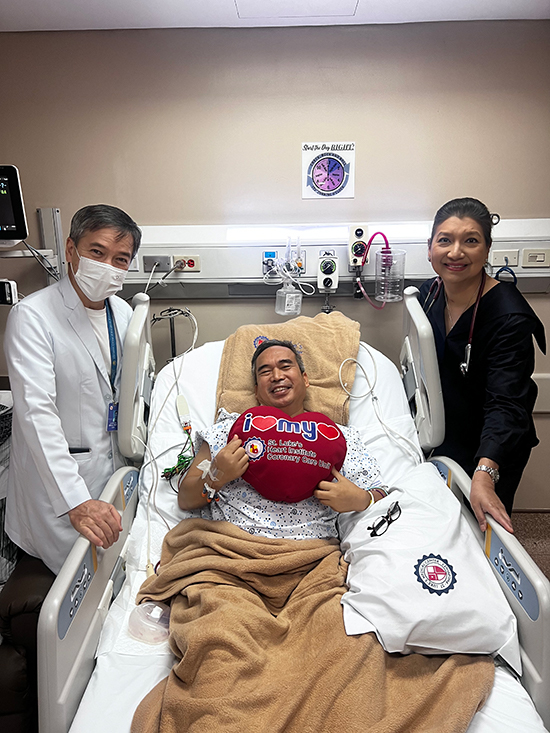
Perhaps because my mindset was calibrated for the positive outcome of my operation, my post-op recovery was one for the books. My recovery started when I woke up 19 minutes and 23 seconds after the operation, to quote the records of Dr. Zara Salazar at the cardiac care unit of St. Luke’s BGC.
Less than 24 hours after my surgery, I could already walk, although gingerly.
Two days after, I was already doing basic cardiac rehab—tiptoeing, exercising my hands. Three days after, I was already on the treadmill and stationary bike, no matter how slow my speed was. On my fourth day post-op, I was already dancing to “Golden” in my room.
On my eighth day in the hospital, I was sent home. The doctors prescribed Norgesic for my pain. It was Oct. 4 when I was discharged from the hospital. From that day to this day, the 30 tablets of painkillers are still in my bag, untouched. God is so good; He heard my prayers for a painless recovery.
Two months after my quadruple bypass, I was given the green light to go back to my saddle. The neighborhood in Gulod clapped on the roadside when they saw me biking again on Nov. 28 last year.
If I didn’t look at the long scars on my sternum area and left leg, I would not know I underwent a life-threatening procedure.
I have a renewed appreciation for everyday life since I underwent a quadruple bypass on Sept. 27, 2025. The profound shift in perspective is an unshakeable stand that keeps me grounded all the more. Now, the inconsequential things are left just like that—unimportant, trivial. It’s very easy now to shrug off arguments that border on being petty and frivolous. The things I can’t control, I toss to the wind. I live a light life where gratitude is served generously. My heart, my bypassed heart that is, is as open as the sky.
Happy birthday, brave heart!

WATCH: How to experience Bangkok and Kanchanaburi in one trip
October 21, 2026
WATCH: Can you still trust someone who betrayed you? (Generations Ep. 22)
September 23, 2026