

Can you be a good mother if you didn't have a good mother?

Every week, PhilSTAR L!fe explores issues and topics from the perspectives of different age groups, encouraging healthy but meaningful conversations on why they matter. This is Generations by our Gen Z columnist Angel Martinez.
It isn’t news that motherhood is no longer the milestone it once was for some members of Gen Z. We’ve heard of their refusal to bring a child into these reprehensible conditions, the availability and accessibility of alternative life paths, and even the freedom to break free from instilled norms.
In my circle, I've observed that one reason that rarely, if ever, gets discussed is their perceived inability to raise someone, since they lacked a blueprint for good parenting. This gets particularly difficult to admit around this time of the year.
Some had mothers with questionable personalities and parenting styles, like Marion from Lady Bird, which everyone, I think, should make a habit of rewatching for Mother’s Day. As a woman forced to fulfill the role of both parents, her way of expressing affection towards the titular character was through vigilance: correcting, pushing, worrying, often to the point of suffocation. Her criticism was relentless—not because she didn’t care, but because she didn’t have the language to articulate it.
Meanwhile, all her daughter wanted was someone who accepts her for who she is, who sees her as a person rather than a project. This tension is best encapsulated in the quietly heartbreaking thrift store scene: a wounded Lady Bird says, “I wish that you liked me,” to which her mother replies with an “Of course I love you.” These two, however, are not the same thing.
Others were unfortunately born to women who never desired to be mothers in the first place, and expressed this every chance they got. Trixie’s (not her real name) was volatile and had most likely passed down her bipolar disorder: “She had these episodes where she’d blow up whenever she was agitated or go for days without sleeping. She would often tell me things such as, ‘You are such a burden to me’ or ‘If I had only known that I would have a daughter like you, I would’ve chosen to get rid of you,’” the writer shares with PhilSTAR L!fe.
CONTINUE READING BELOW

Angela (not her real name) also suffered the same fate, as she came to the jarring realization that “if my mom and I weren’t part of the same family, we wouldn’t get along or be friends at all, because our values are no longer fully aligned,” the associate strategist tells L!fe. “I noticed I would pick up the hurtful and toxic things she would say to me and beat myself up about it, because I ended up growing up in an environment where behaving that way was normal.”
It’s primarily this fear of repetition—this nagging paranoia that we are predestined to become the parent who hurt us—that can keep young women from starting their families. “This hesitation is best explained by the false belief that personality is permanent and that we will always feel the consequences of our upbringing, which is a very Freudian way of viewing the self,” licensed psychometrician and content creator Justine Danielle Reyes tells L!fe. “While personality is malleable and we can change, it sure is difficult to facilitate the needed changes to become a good parent.”
It’s a scary limbo to get stuck in: wanting to be the mother we needed, but not being sure we’ll ever be up to the task. As Trixie articulated, “Knowing that I could be on either extreme frightens me more. What if I pass on what I experienced and raise my child like how I was raised?”
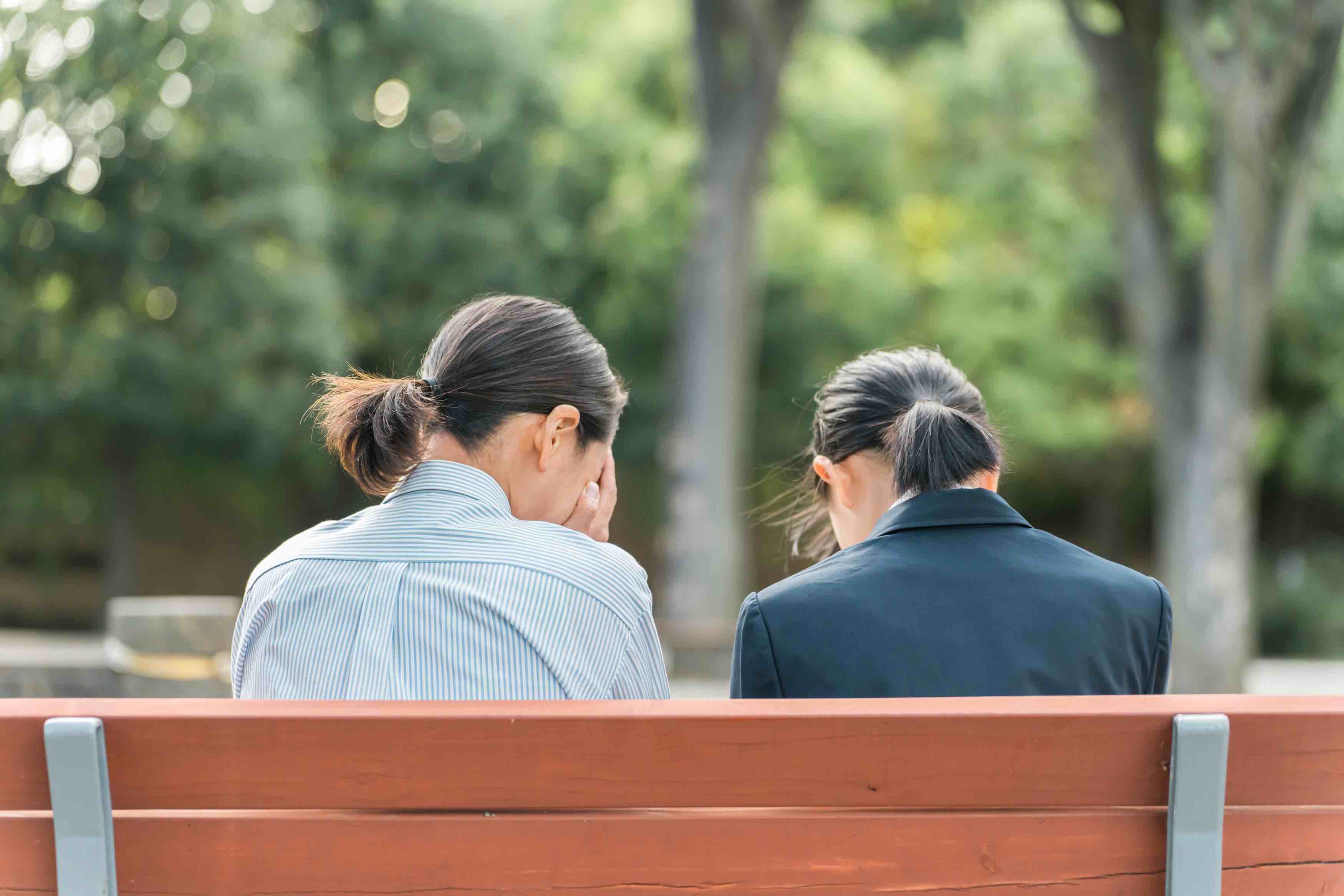
But self-awareness is an ideal place to start. Our parents didn’t grow up with the mental health infrastructure required to either unpack their trauma or reflect on their patterns. Using the resources at our disposal today to break our generational curses is no small feat. Angela swears by going to therapy, for example: “Through my therapist, I’m learning that I need to accept that she won’t change unless she chooses to. What I can control, however, is how I react and how much I let her affect me.”
Reyes also pushes against the idea that parents aren’t the only source of wisdom we could turn to: “This is where community comes in: actively fostering healthy relationships with others so we could have more role models in our lives, who can teach us the needed skills required for parenthood. Whether it is healing one’s inner child or a real one, it takes a village.”
And while there isn’t a one-size-fits-all approach to being a happy family, Reyes finds that “it is crucial to view your kid as their own person and not simply as an extension of the self. I find that many of the pains people carry from how their parents raised them come from being treated that way: as property, not as a real individual.”
I am reminded, once again, of Lady Bird, particularly this scene where our heroine meets with Sister Joan to discuss the contents of her college application essay. Her chosen topic is Sacramento: a city she claims to resent, yet her paper seems to say otherwise.
“You write about Sacramento so affectionately, and with such care,” the nun says.
“Well, I was just describing it,” Lady Bird answers curtly. “Don’t you think maybe they are the same thing—love and attention?” Looking at someone, really seeing them for who they are, and loving the person you trust them to become: Isn’t that what being a good mother is?
Generations by Angel Martinez appears weekly at PhilSTAR L!fe.

WATCH: Is Philippine cinema still thriving? (Generations Ep. 19)
September 2, 2026
WATCH: Do you still believe in marriage? (Generations Ep. 17)
August 19, 2026