

Whose English is 'normal' anyway when the world demands diversity?
Funny how the world celebrates diversity, until diversity speaks with an accent, sings in another language, or refuses to sound familiar.
The recent schoolyard scuffle between the Recording Academy and BTS has sent ripples across the music industry. The Academy seems to believe the Korean supergroup still longs for a Grammy as the ultimate badge of global validation, while also recognizing that BTS remains one of the biggest magnets for television ratings, social media engagement, and advertising revenue.
For the 2027 Grammys, the Best Asian Pop Music Performance category was introduced as a step toward greater inclusion. The award was quickly criticized as a well-intentioned but awkward attempt at representation, one that risked placing Asian artists in a separate lane instead of allowing them to compete equally for marquee honors such as Album of the Year.
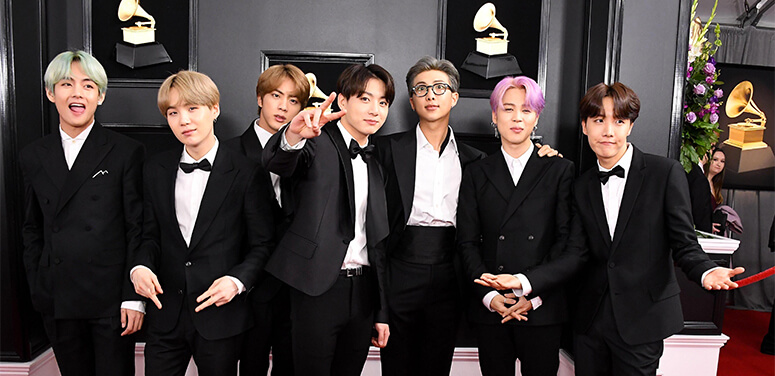
The irony was almost sitcom-worthy. Under the Academy’s eligibility rules, nominated songs had to make meaningful use of an Asian language. That effectively sidelined BTS’s comeback album “Arirang” and its lead single, Swim, both written almost entirely in English. In trying to celebrate Asian music, the Recording Academy created a category that excluded the world’s most prominent pop group since The Beatles for singing in the “wrong” language. You couldn’t script a better plot twist if The Office writers’ room had tried.
Rather than accept that distinction, BTS declined to submit their music for the 69th Annual Grammy Awards. In a coordinated statement posted by all seven members on Instagram, they explained: “We hope that music can be heard and loved for what it is, rather than being divided by region or language.”

Recording Academy CEO Harvey Mason Jr. quickly tried to contain the fallout by saying the category was created “to celebrate the depth, diversity and extraordinary growth” of Asian music and was intended “never to divide, but to expand who is recognized.”
Many fans remained unconvinced, especially after live recordings of BTS’s landmark Dynamite and Butter Grammy performances disappeared from the Academy’s official website days later. Whether coincidence or poor optics, the timing only deepened existing suspicions, with critics decrying the childish payback.
Ironically, the new category presents an opportunity for many Asian artists to nab a Grammy, including fellow K-pop acts such as Stray Kids, who have said they are more focused on staying true to their own musical identity than chasing awards. Riiight.

Our very own BINI and SB19 could become formidable contenders. Their catalogs move comfortably between English, Filipino, and Taglish without treating any language as a barrier. Whether SB19 performs the swagger of Bazinga or the Tagalog-powered energy of Gento, or BINI shifts from the polished English pop of Cherry On Top to the unmistakably local groove of Pantropiko, both groups demonstrate that international success no longer requires leaving one’s native language at the airport. Their sold-out overseas concerts suggest that audiences care far more about authenticity than subtitles.
That is hardly surprising. Today’s music landscape is no longer defined by the old formula of one act for one audience.
Listeners enthusiastically stream Korean songs they cannot understand. Latin music dominates global playlists without translation. Spotify, TikTok, and YouTube have transformed curiosity into an invisible superpower.
Listeners enthusiastically stream Korean songs they cannot understand. Latin music dominates global playlists without translation. Anime theme songs, Afrobeats, reggaeton, and even centuries-old sea shanties have each enjoyed unlikely moments in the cultural spotlight. Spotify, TikTok, and YouTube have transformed curiosity into an invisible superpower. Words no longer define the music or the artist. The melody, the relatability does.
There is profound pride in creating, performing, and expressing oneself through the mother tongue. Mixing it with another language does not weaken that identity. On the contrary, it enriches it. Like herbs and spices in a good meal, multilingualism enhances flavor without replacing the main ingredient. It allows cultures to communicate more effectively while remaining unmistakably themselves.
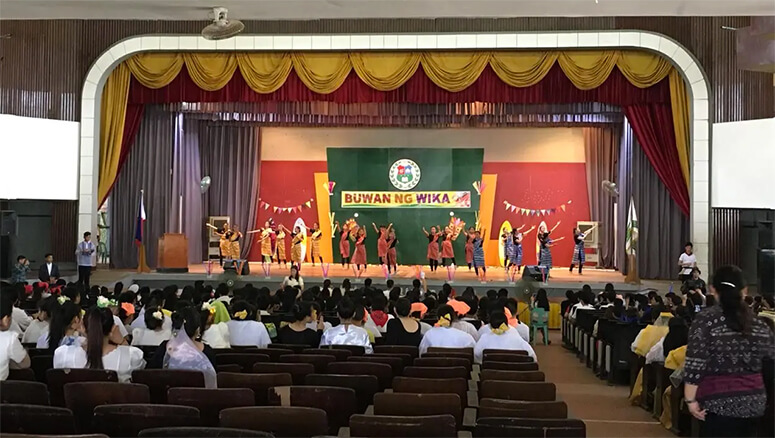
That idea feels especially meaningful every August as we celebrate Buwan ng Wika, a month dedicated to honoring our linguistic heritage while acknowledging the realities of globalization.
Within that context, the distinctive Filipino accent stops being a phonetic curiosity and becomes a badge of honor. Manny Pacquiao and Alex Eala embody that transformation in different ways.
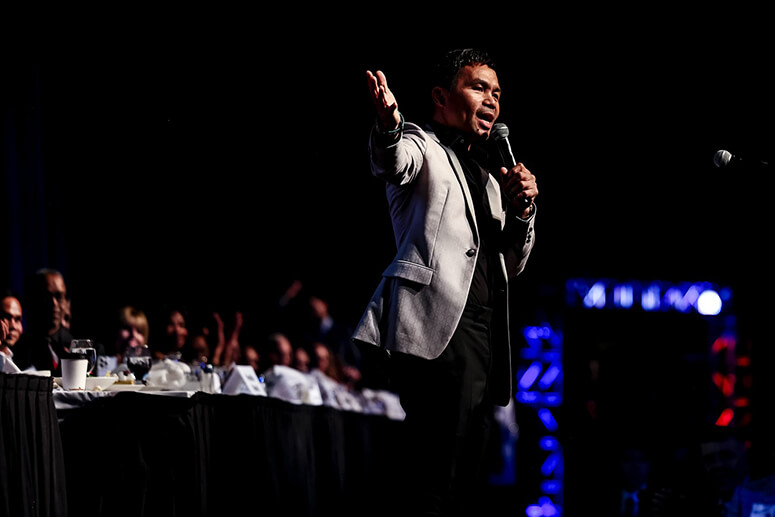
Pacquiao’s provincial tone was once the subject of patronizing jokes from Western commentators. Over time, however, it became inseparable from his identity as an authentic global icon. Evidently, a person need not sound American or British to command the world’s attention.
Eala represents a newer generation. Despite years of training at the Rafa Nadal Academy in Spain and competing on the international tennis circuit, she continues to speak with the unmistakable rhythm of a true Adobo Filipino. Her speech still carries the syllable-timed cadence familiar to many Filipinos, quietly demonstrating that one can reach the highest levels of global sport without ceding one’s linguistic roots.
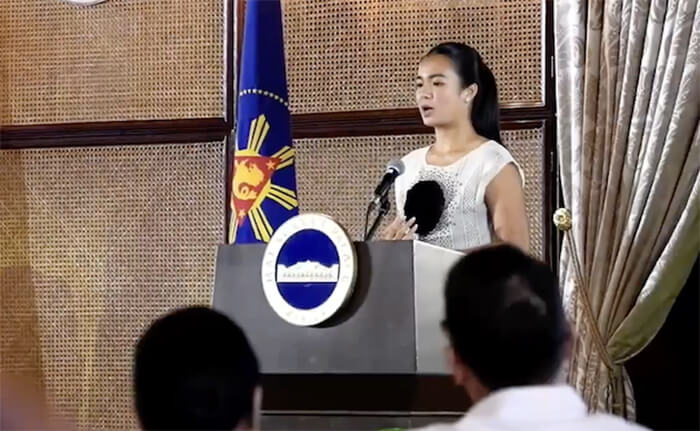
They are just some of the Filipinos who are redefining Buwan ng Wika as an ongoing declaration that the Filipino voice deserves to be heard on its own terms.
There are those who may continue to make fun of the Pinoy accent. That’s their problem. We will keep speaking English the way we do—the same way foreigners speak pidgin Tagalog—when it helps us communicate, just as countless bilingual societies do around the world. For us, English is a tool, not an identity.
And that accent? There’s an old joke about an American telling an Englishman, “I love your English accent.” The Englishman replies, “What accent?”
Perhaps that’s the lesson for the new age. Everyone has an accent. The only difference is whose accent the world has chosen to call “normal.”

WATCH: Is Gen Z too soft? (Generations Ep. 23)
September 30, 2026
WATCH: Discovering Vietnam in three days
June 9, 2026