

Sun, rain, and resilience
BrandedUp in partnership with

On July 17, 2026, Magat Dam’s water level had an elevation of 159.76 meters above sea level, slightly below the critical 160-mark and far from its maximum depth of 193 meters.
Two months later, on September 18, the water level of the multi-purpose dam had climbed by close to 30 meters to 189.24 meters due to the southwest monsoon or habagat.
Weeks of heavy rains delivered relief to key reservoirs like Magat Dam, steadily replenishing watersheds and hydroelectric dams that had dried up during the summer months.
This recent surge of rain highlights a fundamental dynamic in the national energy system: the Philippines’ renewable energy resource base can shift from scarcity to abundance, and from abundance to scarcity somewhere else in the grid.
After all, the same clouds that filled Magat Dam also dimmed the sun, reducing the irradiance reaching solar photovoltaic panels.
Solar and hydro power generation moving in opposite directions
Looking at grid-wide data in 2025, solar gross generation across the Philippines fell to a year low of 1,039.4 gigawatt-hour (GWh) from September to November. This is in contrast to its annual peak of 1,385.1 GWh from March to May.
CONTINUE READING BELOW

Inversely, hydro power increased from 2,747.9 GWh in the dry season of March to May 2025 to a peak of 4,083.9 GWh in September to November the same year. Comparing the dry to the wet season, hydro output rose by more than 48 percent while solar generation dropped by a third.
Summer, in particular, tests grid stability with peak cooling demand and low hydro reservoirs, while peak solar output helps serve the daytime load. The habagat completely reverses this, with hydro output surging while cloud cover suppresses solar.
Grid stability and steady economic growth require a balanced energy portfolio since no single power source can handle seasonal weather swings alone. With hospitals, factories, and households all requiring reliable power, continuous operations 24/7 require a balanced energy mix, where complementary sources constantly adjust in real time to offset disruptions.
To manage seasonal shocks and protect consumers from power shortages or price volatility, the national grid needs reliable, dispatchable energy sources such as geothermal, natural gas, and thermal power to provide the stable foundation needed to meet baseline demand regardless of cloud cover or dam water levels.
While AboitizPower is a major producer of renewable energy—with several hydroelectric, geothermal, and solar power generation facilities—it also has thermal power plants to support the country’s baseload and peak energy demands.
In step with the country’s ambitions for its energy mix, AboitizPower continues to grow its portfolio of generation assets with renewables and selected baseload builds.
The importance of energy storage
There is also an infrastructure lesson embedded in the recovery of Magat’s water level: reservoirs that were struggling in July are, by mid-September, back near their normal high water level partly because storage exists to catch and hold rainwater.
The same principle needs to extend further into the power system through batteries, pumped-storage hydro, and other storage technologies that can bank surplus energy from a strong month of hydro or solar and release it during peak demand hours.
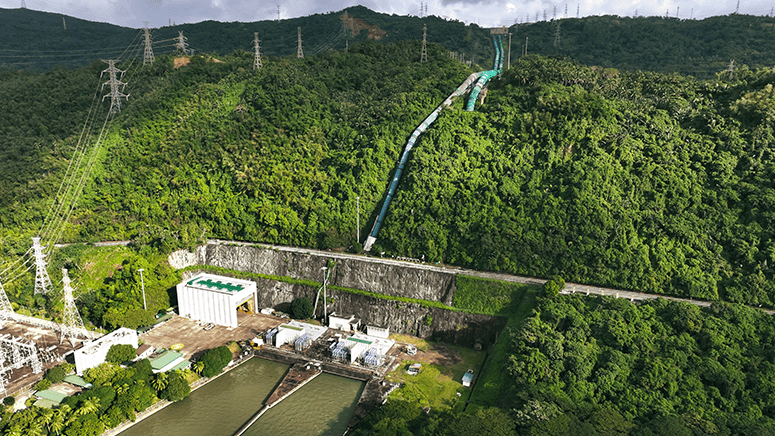
The Luzon grid already has the Kalayaan pumped-storage units of AboitizPower’s 789-megawatt Caliraya-Botocan-Kalayaan Hydroelectric Power Plant Complex in Laguna. These serve as large-scale natural batteries and critical energy buffers, equipped with high round-trip efficiency and low efficiency degradation.
Despite their age, the Kalayaan units are capable of doing both short- and long-duration energy storage, and can still do so in the decades to come with proper maintenance and upgrades.
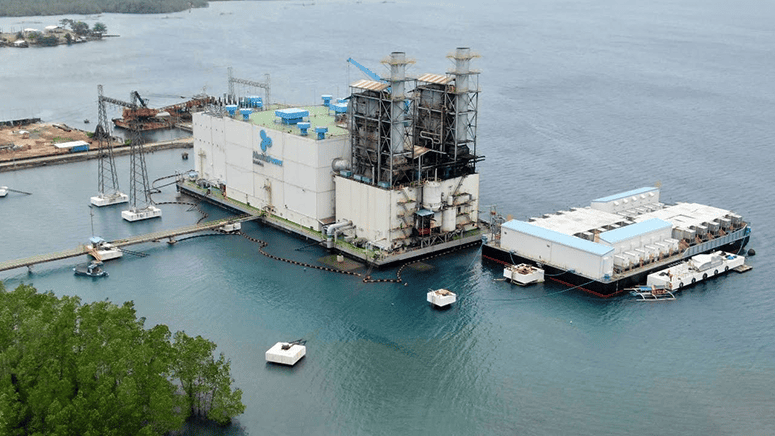
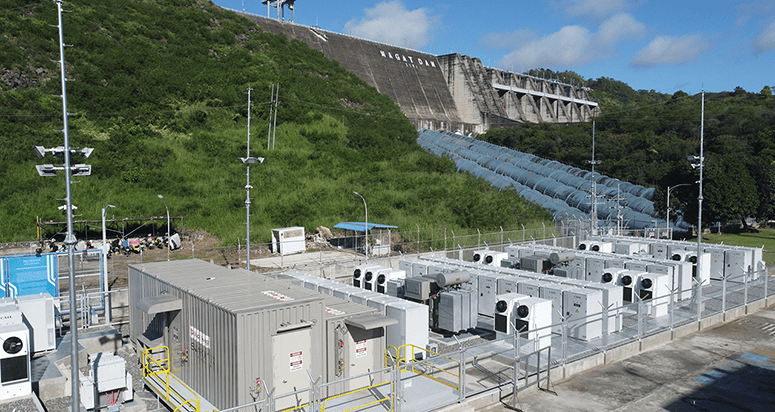
To date, AboitizPower also operates the 49-megawatt Maco BESS in Davao De Oro—Southeast Asia's first hybrid BESS built on a floating platform—and, through the SN Aboitiz Power Group or SNAP, the 40-megawatt Magat BESS in Ramon, Isabela.
A BESS is a type of energy storage that uses a set of batteries to store electrical energy when there is a supply surplus in the grid. It is released when customers need power the most.
Through its subsidiaries, AboitizPower’s pipeline of energy storage projects includes the 20-megawatt Bay BESS in Laguna, set to be the first-ever BESS and geothermal hybrid system in the Philippines; the 60-megawatt Naga standalone BESS in Cebu; the 48-megawatt Nasipit hybrid BESS in Agusan del Norte; and the 30-megawatt EAUC hybrid BESS in the Mactan Economic Zone.
Aboitiz Renewables’ upcoming 239-megawatt peak Luna Solar Power Plant in Barangay Luna, Cadiz City will also include a 65-megawatt BESS, making it the company’s first integrated renewable energy and storage system on Negros Island.
SNAP is also developing BESS projects in Benguet: the 40-megawatt Binga BESS (Phase 1), which is the first BESS facility in the Cordillera Administrative Region; another 40-MW BESS at Binga (Phase 2); and a 40-MW BESS at the Ambuklao Hydroelectric Power Plant.
The shift towards renewable energy should be built on a foundation broad enough to absorb the seasonal swings that geography and climate will always produce.
With reliable, dispatchable power generation and energy storage to regulate increasing frequency variability in the grid, the Philippines can build a resilient, diverse energy mix capable of powering the country through every season.
* * *
Editor’s Note: This article was provided by Aboitiz Power Corporation.

WATCH: Do you still believe in marriage? (Generations Ep. 17)
August 19, 2026
WATCH: Save for retirement or enjoy life now? (Generations Ep. 21)
September 16, 2026