After 10, Manila
By 10, some tables are still deciding on dessert. Coffee is still brewing. A child in school uniform leans on a phone, exhausted from morning classes, late reviews, and a dinner that has yet to end. Conversation drifts from school fees to holidays to someone’s forthcoming birthday in Tokyo, and the child hovers, marginally outside it all.
Outside, the streets are hollow. Fuel prices have emptied the usual chaos faster than curfew ever could. Tricycles hum, motorcycles sputter, a videoke carries from upstairs, a generator drones somewhere down an alley. Trips that once felt casual now demand a second thought.
In early April, the Department of the Interior and Local Government says minors must be off public streets from 10 p.m. to 4 a.m., unless accompanied by guardians or engaged in school, work, emergencies, religion, or official obligations. The rule is clear, but Manila has other ideas, even if those ideas are currently costing its citizens millions.
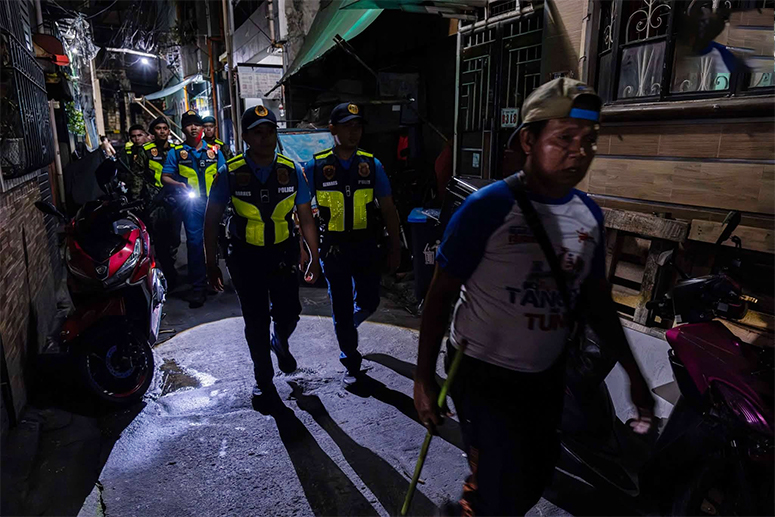
There are over five million minors in Metro Manila alone. Roughly a third of a population nearing 15 million, according to the Philippine Statistics Authority. The scale makes the curfew read less like enforcement and more like suggestion. In just two days, authorities reported the apprehension of over 24,000 violators. The National Capital Region Police Office reported P5.64 million in fines within the first 72 hours of the “Safer Metro Manila” plan. The figures show visible enforcement, but against five million minors, the crackdown begins to look performative.
DILG Secretary Jonvic Remulla calls the initiative a return to order. “We want our streets to be safe for everyone, especially for our youth,” he explains. “But that safety requires discipline and a respect for the clock,” he explains.
The curfew returns under the Safer Metro Manila Plan, but its reach remains uneven.
Still, adults glance and decide discretion is easier. Bars pour past sunrise. Birthday dinners stretch. Manila reads each departure differently, yet in writing, they all fall under the same law. Metrocom once dictated movement with whistles and batuta, turning streets abruptly severe once midnight set in. Those old enough to remember the ’70s recall how gatherings simply acquired a mattress when the clock ran out. If home was too far, a sofa became accommodation, a shirt was borrowed, and conversations acquired a new honesty because what else was there to do until the curfew was lifted? The law emptied the streets and lengthened company indoors.
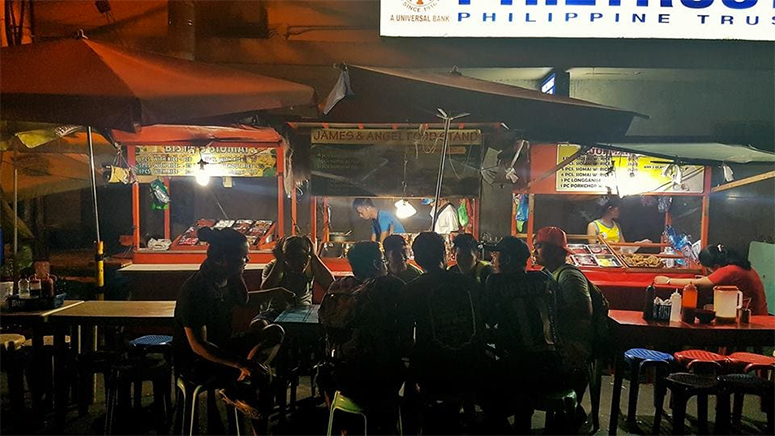
Now the barangay tanod fills the role, lighter on menace but equally effective. The sound of a whistle cutting through a lane is usually enough to send slippers scuttling behind gates and basketballs tucked under arms, with walls scaled when the front door feels a few steps too far. Children learn quickly. They watch a 10 p.m. ordinance dissolve through a side street or a quick jump over a low wall. They learn early that rules bend. They see it on the street, and later in the larger laws that govern the country, even R.A. 7080, the Plunder Law, where definition and enforcement, not to mention justice, rarely move at the same pace. Rules exist, but they are rarely the city’s final word.
The night stretches differently depending on geography. In some villages, curfew is almost decorative. Gates, guards, visitor logs, and polite surveillance have always constrained movement. In condominiums, 10 p.m. is a reminder, rarely a shift. Elsewhere, where Monobloc chairs gather outside gates long after the heat has lifted, streets remain occupied. The city keeps rewriting what the law says.
Children and teenagers understand this implicitly. They negotiate presence and absence, reading adults, calculating what can be ignored. A minor outside a barangay hall under fluorescent lights will likely be stopped. Someone stepping from a hotel lobby, adults at hand, may pass unnoticed. Same age. Same law. Different reading.
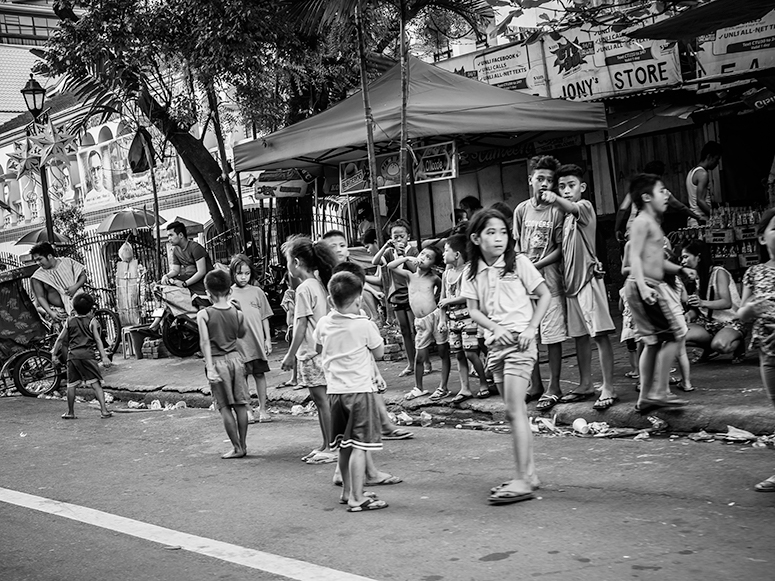
Ten o’clock in Manila feels peculiar. The hour is legal and enforceable yet it lands on a city where the night is a fragmented transaction. The P5.64 million in fines didn’t come from hotel lobbies or gated villages. It came from the streets where the interruption is physically possible. Most of the 24,000 apprehensions were concentrated in high-density districts like Quezon City, Caloocan, and the fringes of Manila, where the law is visible and intrusive. In the eyes of the NCRPO, a minor is a minor, but the record confirms that the law is mostly stopping those who have nowhere else to go. Youth organizations have already raised this alarm, arguing in petitions to the Supreme Court that such ordinances are unconstitutional and result in arbitrary arrests. They contend that the state is penalizing those whose only space after dark is the street. For them, the curfew is not a safety measure but a restriction on those who have no private space.
In fact, in the middle of this intense counting, the most vulnerable remain in plain sight. These are the children begging for alms and the infants held in their mothers’ arms as they drift from car to car, the ones the curfew seems to navigate around rather than protect.
In a city of five million minors, 24,000 apprehensions are a headline, not a transformation. The fines have been paid and the night has been logged, but the streets remain what they have always been. Manila does not close. It simply waits for the whistle to pass and then goes back to whatever it was doing before the law interrupted it. Even during the enforced paralysis of 2020, the state was unable to clear the streets of these babies, out there in the heat of the day or the cold of the night without masks or protection. If a global pandemic could not bring them indoors, a curfew must do more than count them. It must finally offer a version of safety that isn’t just a transaction. The question is no longer how many are counted, but who is protected.