

Am I a better feminist if I only watch women-led stories?
On the precipice of the infamous year of the pandemic, I made it my mission to watch movies.
The motivation came to me after seeing a community on X (formerly Twitter) that takes pride in films they watch, has its own ballots for award shows, and dedicates accounts to an actor’s awards season run.
It was easy for me to fall into step with the culture of Film Twitter: knowing which director was snubbed, logging in regularly to my Letterboxd account, and feeling well-versed and cultured in movies.

I was 19 then, and as I became more active in the community, I also discovered a lot of things about myself, one of which is that I am queer. From that epiphany, the stories I sought out looked different but also the same.
I wanted to watch women’s stories more than any other genre.
As both a woman and a queer film enthusiast, I found it empowering to step into these worlds where women are the center. This time, I still felt well-versed and cultured, but to the right causes and the right stories. And in a community where people share what they’re watching, it was a good feeling to let my online friends know that I was watching an indie foreign sapphic film. I wanted to give my mutuals the impression that I was a consumer who upheld her morals, even in the art she would engage in. When I shared my newest Letterboxd entry, I wanted them to expect a woman-centered story. I realize now that it was almost a “not-like-other-girls” moment, bordering on performative.
CONTINUE READING BELOW

What was once a goal to live in different worlds became an agenda to limit what I consume, making my horizons smaller.
Still, watching only women-centered films made me feel like I was doing the feminist movement a favor. I got to both uplift women-centered stories and open my perspective to include the many experiences of women: their struggles, victories, every layer of their existence.
My goal started with the intention of expanding my horizons and exposing myself to the different experiences that women go through. Women have been pushed toward the margins for ages, leaving us with few or no spaces to exist freely. It naturally became my obligation to put these stories at the center of my consumption.
imagine me & you (2005) × carol (2015) pic.twitter.com/HI0b3fRNWz
— sapphic films (@sapphilms) July 13, 2023
Alexil Cheska Fajardo, research assistant and a part of the film community on X as @sapphilms, shared the same inclination. Her account, with almost 100,000 followers, is dedicated to promoting films with sapphic and lesbian main characters.
“I believe that, despite the many films that already focus on women, there are still countless stories about them that need attention and highlighting,” she explained.
But the more I sought out media that only met my set conditions, the more my disdain for stories that did not grew.
What was once a goal to live in different worlds became an agenda to limit what I consume, making my horizons smaller.
When I put on a film that’s not women-centered, I, by default, would not bother to feel any connection with the main character. Why bother being invested in a story when the face of it does not even look like me?
But with this mindset, I end up forgetting that I can engage with any story, whoever it focuses on. I can interpret films, relate to them, and connect their themes to my own experiences of womanhood, to see if it empowers or negates my identity.
Novelist Heather Parry, in her Substack piece “Please stop making ‘female versions’ of things,” writes that just because a piece of media is not coming from a perspective of a woman doesn’t necessarily mean it is “not for women.”
“I, a woman, have the capacity to read and watch all manner of things and glean meaning from them, even if it stars or is directed by or was written by a man,” she wrote.
In my interview with writer and former TomasinoWeb blogs editor Mikaela Gabrielle De Castro, she said that identifying with a character who is not necessarily a woman makes the experience more poetic: “A film can still follow a male protagonist and still articulate emotions that women know intimately.”
Daniela Myne Kuizon, a communication arts student widely known as “manic pixie dani girl” (@denielemein) on X, adds that representation does not solely rely on who the focus of a story is, but also on how experiences and relationships are portrayed.
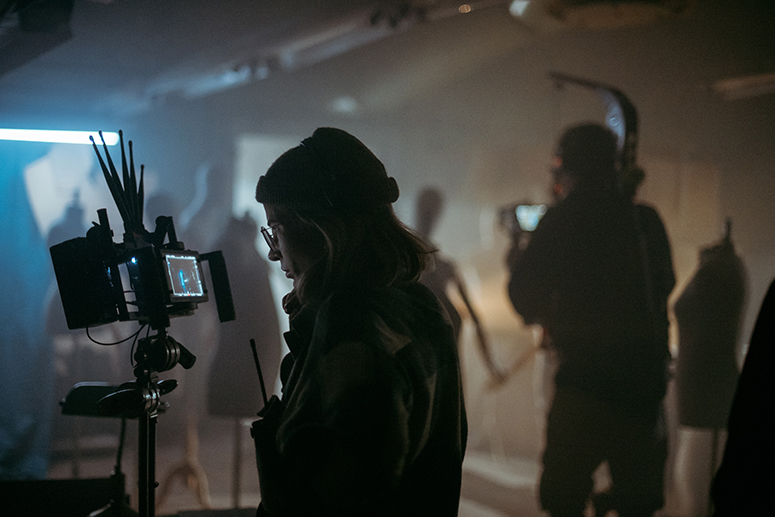
“Even in films led by (dominantly) male or mixed-gender casts, moments of vulnerability, care, conflict or growth can still resonate with my own experiences as a woman,” she added.
Discussions like these are needed when navigating the stories we make.
However, in some of my attempts to engage in discourse, my women-only objective loomed over me to the point of insincerity. Say if a woman-centered film was just not hitting the mark for me, I would think, “Well, at least a woman made it,” as though that made the film better than it actually was, eventually blocking any authentic commentary.
“A film can be women-centered or directed by a woman, but still not be ‘essentially feminist,’” Kuizon explained.
Fajardo cited the 2013 film Blue is the Warmest Color as an example of such films. “While it centers women, it undermines feminist ideals by objectifying them, particularly queer women,” she emphasized.
I still think choosing to only watch women-led stories is a feminist move. Besides having a wider understanding of the female experience, you also support the women behind the cameras. This sends a signal that women’s stories are worth enjoying and drawing conversations from, pushing them to the mainstream and leading to more funding and support.
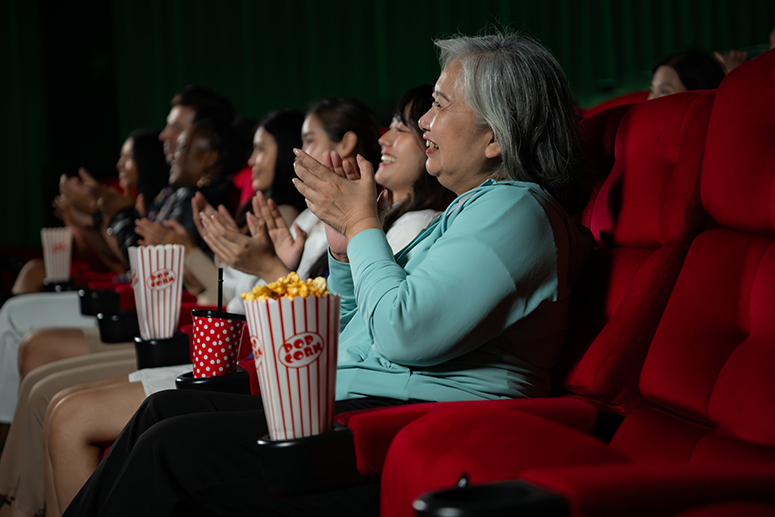
But if it reaches a point where I refuse to get out of this bubble I created, I don’t just forget narratives made by other marginalized groups. I also constrain myself from freely engaging and critiquing any piece of art, as if I am only capable of absorbing the themes and theses of a story if there is a woman involved.
As a woman, engaging with women-centered stories can be feminist, but so is engaging in any other narratives that do not necessarily follow a woman’s arc. And if I truly want to contribute to advancing feminism this way, it is worth remembering that I have the autonomy to enjoy and analyze any art form, all while upholding a nuanced discourse of who gets to tell a story, who resonates with it, and why a story is being told, through a feminist lens.

WATCH: Can you still trust someone who betrayed you? (Generations Ep. 22)
September 23, 2026
WATCH: Pixar Summer Fest adventure at Hong Kong Disneyland
August 10, 2026
WATCH: Do you still believe in marriage? (Generations Ep. 17)
August 19, 2026