

Life, in its most carnal form
When I was a kid, I believed the only way to completely lose yourself was through death—that final, irreversible end when the body falls still and the soul drifts somewhere we cannot follow. They say death arrives without warning, stealing breath, time, and presence all at once. Even the faith of the bereaved begins to waver. And what happens after the body is buried six feet under remains a secret the living aren’t meant to know.
The first time I witnessed death, I was nine.
It was noon. I was on my way home from school when my uncle casually said, “Uy, patay na si tatay mo ah.” I thought it was one of those strange adult jokes. But when I got home, the laughter caught in my throat—everyone was crying. It was true.
You see, my death did not arrive with a heartbeat stopping, a coffin, or mourners surrounding me with hollow cries. It came when I forgot what it meant to be alive.
They brought me to my Tatay Arsing’s room and told me to say goodbye. My mother was sobbing. My aunts were wailing. And there I was: still, dry-eyed, and confused. I knew I should cry, but I couldn’t. I was only nine, too young to understand what forever meant.
Something cracked open inside me that day. I began to fear death, not just for myself, but for everyone I loved. I didn’t want to lose them.

The second death came years later: my father’s father, my beloved Tatay Ricky. He was a quiet yet warm presence throughout my childhood. When I think of him, I think of Jollibee. He gave me the Popo and Hetty plushies that Jollibee once sold; small tokens of joy that I still keep.
CONTINUE READING BELOW

I was 17 when he died. He had grown so thin, so fragile, as though time itself was slowly erasing him. What hurt most was that he wanted us there during his final moments, but we were in Pangasinan, and he was in Bulacan. The distance between those places felt unbearable when the news came.
In his last days, he barely remembered me. I sat beside him once, hoping he would recognize me, but he asked where his “little granddaughter” was. He didn’t realize she was sitting right there, no longer the child he remembered. It hurt, but it was also proof of how tightly he held onto who I used to be.

After my 18th birthday, I decided to move from Pangasinan to Manila to continue my studies and find a job to support myself. My cousins helped me secure a position at their BPO company, knowing that my parents could not afford to support me in college, as we were already struggling to meet our daily needs.
When I received my first paycheck, I dreamed of saving it and finally keeping something for myself. But life did not give me that mercy. Problems came all at once, heavier than I ever imagined. My siblings kept getting sick, and I kept sending money even on days when there was nothing left for me. Little by little, my bank account emptied, and my debts quietly grew.
Then all of a sudden, the third death came: my own.
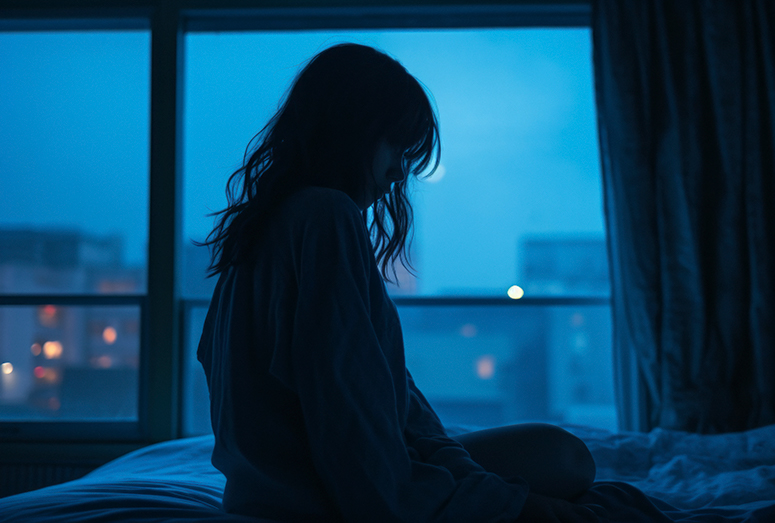
You’re probably wondering how I could write this if I were already dead. But I am—at least, in the ways that once made me feel alive. It happened not all at once, but slowly, quietly. I died when I thought everything was finally working out.
I told myself the pain was worth it. “This is love,” I thought. This is how love quietly bleeds when responsibility demands too much of it.
Life, I learned, can be cannibalistic. I let it devour me. Each sleepless night was another bite. Each skipped meal, another swallow. I fed myself to the idea of being enough for them, for me, for the life I thought I wanted. I called it perseverance, but really, it was hunger turned inward.
I thought the exhaustion meant growth, that the burn in my chest was proof I was alive. But there’s a kind of tiredness that turns you hollow. You stop feeling like a person and start feeling like a vessel: emptied out, scraped clean, yet still expected to give.
Maybe this is what it truly means to lose yourself; not in one sudden moment, but through a slow consumption. Piece by piece, until you realize you’ve been chewing on your own spirit just to keep moving. You see, my death did not arrive with a heartbeat stopping, a coffin, or mourners surrounding me with hollow cries. It came when I forgot what it meant to be alive.
And for a while, I truly believed that was how I would remain: half here, half gone, existing only because my body refused to give up when my heart already had. I carried that quiet emptiness with me everywhere, learning how to live with it even when it no longer felt like living at all.

And yet, even in that darkness, I wasn’t completely alone. My friends remained a constant source of support, and their encouragement helped me through the past year. My siblings also became my motivation, especially on days when getting out of bed or eating felt impossible.
I kept going, until one day—on my day-off from work—I found myself walking through the streets of BGC, treating myself to something small. That was when it hit me: this was the life my 12-year-old self once dreamed of. To escape the town that had pushed me to my limits, and to prove to everyone who doubted and belittled me that they were wrong all along.
That’s when I realized that even hunger learns mercy. And I know that one day, I’ll taste life fully again, and this time, I won’t let it eat me first.

WATCH: Do you still believe in marriage? (Generations Ep. 17)
August 19, 2026