

Are we dressing ourselves—or is the algorithm?
For a generation constantly encouraged to “find your personal style,” it’s worth asking one question: when everything online is designed to help us discover who we are, why do so many of us end up looking so similar?
For those of you fellow Gen Z who spend even a few minutes on social media each day, you’ve probably noticed it too. One month it’s butter yellow. Next, it’s burgundy. Suddenly everyone is wearing polka dots, stripes, or the same pair of Seafoam Teal Priscilla Pants from Brandy Melville that seem to appear on every “For You” page.
I remember waking up one morning, instinctively reaching for my phone to begin my usual morning scroll. Within minutes, my feed had convinced me that teal—a color I thought I had left behind with my middle school bedroom walls—was suddenly the only thing I wanted to wear.
It wasn’t just my feed either.
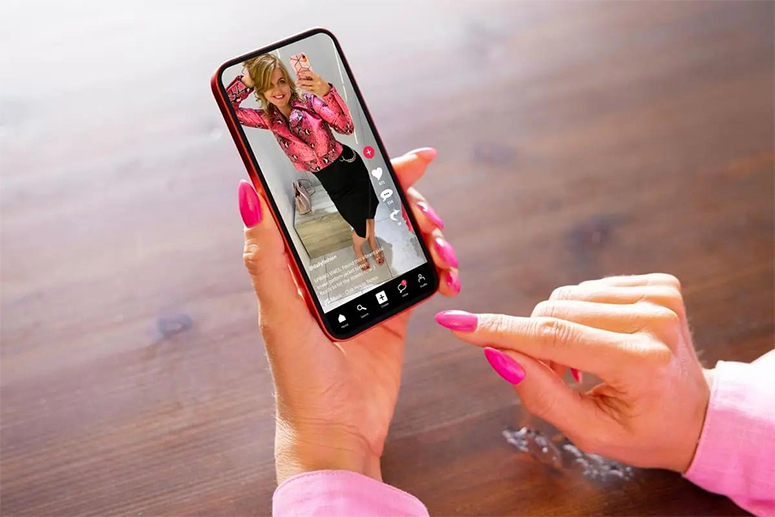
Friends who had spent years dressing almost exclusively in neutrals were suddenly wearing colorful pieces too. Fashion editors were writing about saturated color. Designers were sending bold and bright tones down the runway. Somehow, we all seemed to arrive at the same place at once.
As I stared at my own wardrobe—a sea of black, white, gray and navy—I found myself strangely dissatisfied. For years I had gravitated toward muted basics, convinced these would be the only colors I’d wear for the rest of my life. Yet overnight, they suddenly felt as dull as their shades.
CONTINUE READING BELOW

For the first time in a long time, I wanted color.
But then I caught myself wondering: Did I actually like teal again? Or had I simply seen it enough times on social media to mistake familiarity for personal taste?
Fashion has always had trends. Bell-bottoms defined the ‘70s. Power dressing came to symbolize the ‘80s. Grunge and minimalism shaped the ‘90s, while the early 2000s embraced Y2K. Trends certainly came and went, but they often unfolded over seasons or years rather than weeks.
Today’s fashion landscape feels different. Instead of one defining look lasting for years, social media has ushered in the age of the microtrend: highly specific styles, colors and individual pieces that can explode in popularity overnight before disappearing just as quickly.
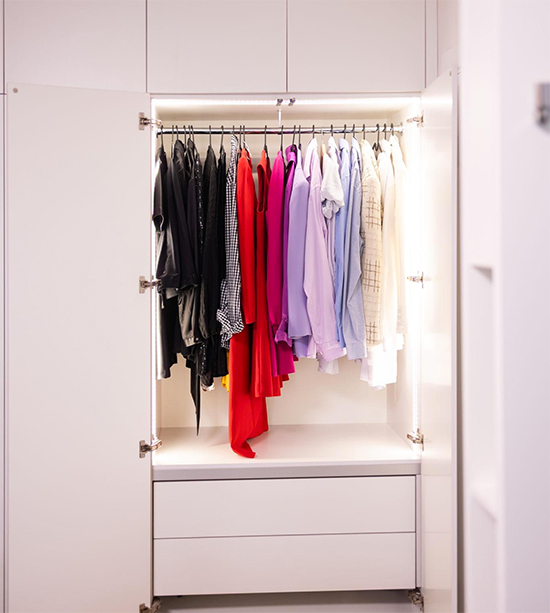
Unlike traditional trends, microtrends spread through TikTok “For You” pages, Instagram Reels, and Pinterest mood boards, where millions of users are exposed to similar outfits, styling videos and shopping recommendations where a single viral post can transform a once-overlooked item into a must-have almost instantly. As quickly as one trend peaks, another replaces it, leaving wardrobes feeling outdated long before they’re worn out.
But the bigger question isn’t why trends move so quickly. It’s what those trends are doing to the way we develop our own sense of style.
Psychologists describe something called the “mere exposure effect”: our tendency to develop a preference for things simply because we encounter them repeatedly. The more we see something, the more familiar and desirable it becomes. This effect becomes difficult to ignore, especially in an online world where the same outfits appear on millions of screens every day.
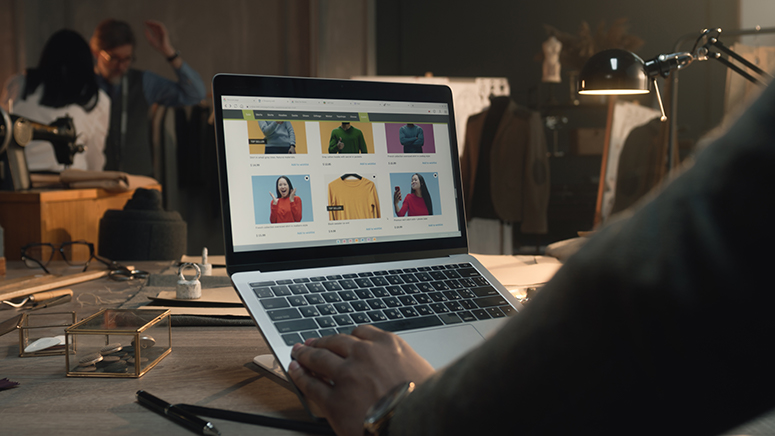
Maybe I didn’t suddenly rediscover my love for teal. Maybe my brain had simply been shown the color teal enough times.
Somewhere along the way, describing our style becomes less about explaining what we genuinely like and more about assigning ourselves a label. Instead of saying we like funky patterns or oversized tailoring, we describe our styles as trendy aesthetics, such as “clean girl,” or “old money,” or even, say, “I’m more Hailey Bieber than Selena Gomez.”
The more we search for a style that feels uniquely ours, the more we find ourselves drawing inspiration from the same content creators, the same photos on Pinterest, and the same shopping links as everyone else. Nowadays, personal style is shifting from something we develop over time into something we select from a menu of ready-made aesthetics thanks to social media.
Of course, there is nothing inherently wrong with enjoying trends. Fashion has always evolved alongside culture, borrowing ideas, reinventing silhouettes and reflecting the spirit of its time. Experimenting with style can be creative, joyful, and deeply personal.
The problem isn’t trends themselves.
The problem is when the pace of consumption begins to outgrow our sense of self—when our wardrobes change faster than our identities do.
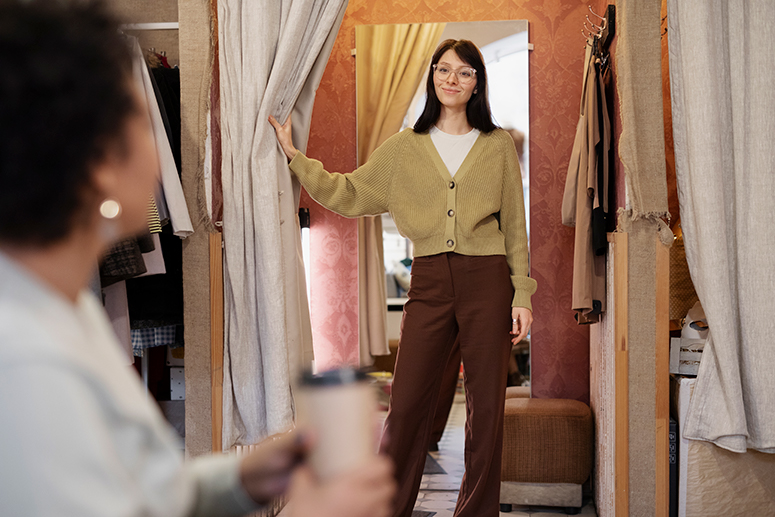
So, one day, I decided not to reach for my phone before getting dressed. Instead of asking myself questions like “How can I keep up with the latest trend?” I asked two simpler ones: 1) “What pieces feel most like me?” and 2) “How can I create something using what I already own?”
These questions allowed nothing in my wardrobe to change; only the way I looked at it had.
I rediscovered clothes I had forgotten about. I experimented with combinations I had never tried. I even found colors I already owned but had overlooked simply because they weren’t trending anymore.
The algorithm will always have another aesthetic waiting tomorrow. Another color. Another “must-have” item.
Perhaps personal style was never meant to be found on a “For You” page. It’s something we build slowly—through years of wearing, repeating, regretting, and rediscovering what genuinely feels like us. Fashion is meant to be experimented, not copied, and in a world constantly telling us who we should become, there is something undeniably chic about dressing like ourselves.

WATCH: Can we talk about death and grief? (Generations Ep. 25)
October 14, 2026