EXPLAINER: What is diverticulitis?
President Ferdinand Marcos Jr. revealed on Jan. 22 that he had diverticulitis after Malacañang disclosed that he was hospitalized over experiencing discomfort.
"It's a common complaint among, apparently, people who are heavily stressed and people who are—I have to admit—getting old," he said in a video.
In an update on Jan. 28, Palace press officer Usec. Claire Castro shared that Marcos' health is improving. "Pinapa-relax muna ang ating pangulo, pero umattend po siya ng activity ngayon, naka-pagkaroon siya ng private meetings, so umiigi po ang kalusugan ng pangulo."
Marcos and Castro both emphasized that the president's condition is not life-threatening.
But what exactly is diverticulitis?
Dr. John Peter Lim, who specializes in gastroenterology at St. Luke's Medical Center - Quezon City and Cardinal Santos Medical Center, explained to PhilSTAR L!fe that diverticulitis stems from diverticulosis.
CONTINUE READING BELOW

"Ang diverticulosis, ito ay weakening doon sa part ng bituka," he said. "May mga bulsa-bulsa or pockets. 'Yung pockets, 'yun 'yung part na nag-weaken, 'yung muscular layer. Kaya nag-outpouch 'yung bituka mo, that's the diverticulosis."
Lim added that when there's inflammation, it becomes diverticulitis.
Symptoms and causes
Diverticulosis, he said, presents as painless bleeding. There may be blood in the stool, but there's no stomach pain. Meanwhile, if a patient experiences stomach pain, bleeding, and fever, there's a high chance it's diverticulitis.
Other symptoms include nausea, tenderness in the abdomen, and sudden diarrhea or constipation, according to the Mayo Clinic.
There's no way to tell naturally if a person has diverticulosis, according to the gastroenterologist. So it's determined through a CT scan or endoscopy.
"Pero dapat [for endoscopy], the patient is not in diverticulitis or an inflammatory state. Kasi kapag ginawa ['yun], there is a risk for perforation."
Lim told L!fe that there's no specific outright cause for diverticulitis, but there are a few factors like a person's diet, environment, and genetics.
"Pero in terms of diet, ang sinasabi nila talaga is dapat rich ka in fiber to prevent constipation," he said.
Treating diverticulitis
There are two categories of diverticulitis: complicated or uncomplicated. An uncomplicated case is when a patient experiences simple abdominal pain. One treatment for this is a bowel rest: "Meaning hindi ka muna kakain or 'yung pagkain mo mga liquid lang muna to rest 'yung part na colon na 'yun," Lim said. Doctors also give anti-inflammatory medication.
"Conservatively, mag-re-resolve siya on its own," he said, adding that recovery would entail a decrease in abdominal pain and the cessation of blood in stool.
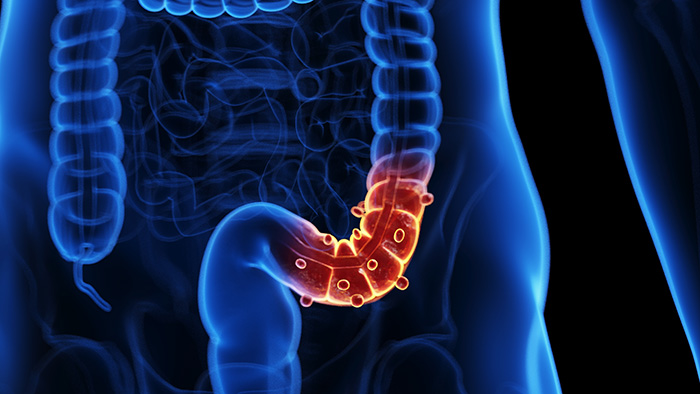
Meanwhile, a complicated case includes abscess and fistula formation. A fistula formation occurs when the colon abnormally connects to other parts of the body, like the bladder.
To treat such a case, doctors use antibiotics and admit the patient to undergo surgery.
Lim shared that in his practice, he commonly sees diverticulosis in the elderly than in younger people.
Is diverticulitis life-threatening?
Prognosis is better when diverticulitis is detected in its early stages. "If we can give early antibiotics, better 'yung treatment, so you can prevent it."
"Once you have the symptoms, it's better to consult agad your doctor so that a diagnostic test can be done at an early stage," the doctor said.
"But if you presented sa hospital na meron ka ng fever, meron nang rupture of the perforation, siyempre mas poor ang prognosis."
According to the Cleveland Clinic, even complicated diverticulitis resolves completely with treatment, and it doesn't affect life expectancy. However, if there's a bowel perforation or ruptured abscess, complications could occur.
To prevent being at risk of diverticulitis, one must increase their fluid and fiber intake, Lim added.
***
Editor's Note: This article is not meant to replace professional medical advice. Always consult your doctor for any questions you may have.