

The art of noticing
Have we become uncomfortable with the ordinary?
These days, people seem to always reach for the next thing that will make life more complete: the dream car, the next vacation, the version of oneself that exists just beyond the next milestone. We tell ourselves, “Once I have this, I’ll be happy,” and in doing so, we turn happiness into something we are perpetually approaching but never quite inhabiting.
Most of life, however, does not arrive with a grand entrance.

It gathers in smaller places. In the first sip of coffee when you are still half-asleep, in the relief of taking your shoes off at the end of the day, in a friend remembering something you said months ago, in the familiar route home that you could navigate without thinking. These moments rarely announce themselves. They do not have a loudness that makes us stop and think, This is it, this is the good part.
That's precisely why they are so easy to miss.
Some things are easy to recognize as special because they already are loud. A giant bouquet tells you this is romance. Champagne tells you this is a celebration. A boarding pass tells you this is an adventure. A promotion tells you this is a success.
CONTINUE READING BELOW

There is a visual language for importance. And the more fluent we become in it, the harder it may become to recognize the things that speak in quieter ways.
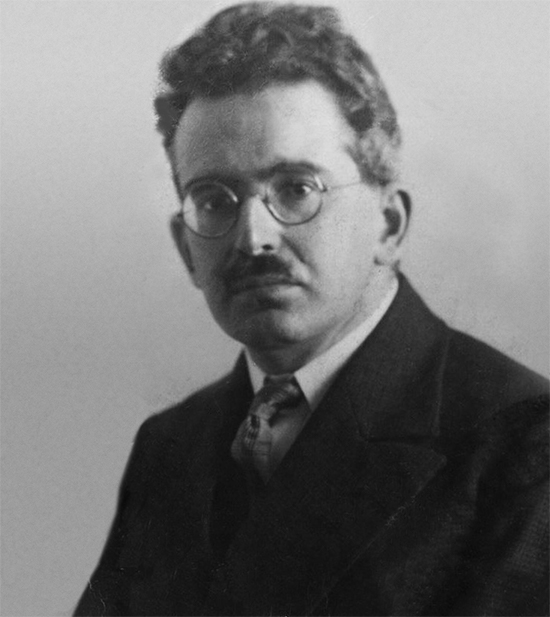
I started thinking about this while reading Walter Benjamin’s The Work of Art in the Age of Mechanical Reproduction for my Art History class, particularly his distinction between what he called cult value and exhibition value.
Benjamin was interested in how technological change alters not only art, but how we perceive it.
Very simply, Benjamin’s idea of cult value describes a kind of significance that does not depend on being widely seen. Historically, certain objects mattered because of their place within ritual, tradition, history or belief. Their value could exist even when access to them was limited. In some cases, their restricted visibility was part of what gave them significance.
Exhibition value describes a different relationship to art. With technologies such as photography and film, works could increasingly be reproduced, circulated and displayed to larger audiences, shifting the balance further toward their capacity to be seen.
Benjamin was writing about art, but I wonder what happens when we begin to look at our own lives through the logic of exhibition? What kind of perception is being formed by a culture in which extraordinary things are endlessly reproduced for us?

We now live in a world where so much of what is extraordinary is constantly placed in front of us. Before you have even gotten out of bed, you can watch somebody get engaged in Lake Como, someone else moving into a high-rise apartment overlooking the city, another person completing a marathon, and so on.
The remarkable has become ordinary content.
And when we are constantly surrounded by the extraordinary, I wonder whether our sense of what deserves to feel extraordinary shifts.
There is nothing wrong with loving the giant bouquet or wanting to go on a trip and post it all over your story. The problem is not spectacle itself. It is what happens when spectacle becomes the only language we use to recognize significance; we may then begin to overlook the quieter things in our lives that make the big, loud moments possible.
We have become so accustomed to waiting for life to impress us that we have forgotten how much of it asks only to be noticed.
Many of the things that eventually matter most to us have terrible exhibition value. They do not photograph particularly well, and they may not look important to anyone else.
A friend remembering exactly what you order does not immediately read as an act of love. Neither does someone waiting until you have reached your front door before driving away, or sending the same text me when you get home after every night out.
To an outsider, very little has happened. But that is the point.

One gesture may be forgettable. Repeated often enough, it becomes a ritual. One Sunday lunch is simply lunch; years of returning to the same table, with the same people, slowly turns something ordinary into part of the architecture of a life. Its significance comes not from the moment itself, but from everything that has gathered around it.
This is where Benjamin’s idea of cult value becomes especially interesting to me. Cult value suggests that something can possess enormous significance without needing to communicate that significance to everybody. Its value can come from what surrounds it: history, context, belonging, memory.
On learning to see what was there all along
The smaller moments are not placeholders between the important moments. They are the substance of them. A life is not made only from the days we will remember forever. It is made, mostly, from the ordinary days that accumulate around them.
Benjamin’s cult value reminds us that significance does not always depend on being seen. Some things that matter most will never look particularly remarkable from the outside; their value is built quietly, through the time we give them and the meaning we allow them to gather.
Maybe the art of noticing is simply learning not to wait for life to become loud before deciding that it matters.

WATCH: LGBTQIA+ people with unlikely professions
June 28, 2026
WATCH: Is Gen Z too soft? (Generations Ep. 23)
September 30, 2026
WATCH: Do you still believe in marriage? (Generations Ep. 17)
August 19, 2026