

The younger side of Cebu
Cebu has always had two faces. There’s the one immortalized in history books—Magellan’s Cross, Fort San Pedro, and the vibrant traditions of Sinulog. And then there’s the Cebu that reveals itself after dark: a city fueled by creativity, entrepreneurial grit, and an energy that feels distinctly its own.
That second Cebu is precisely why Radisson Red chose the city for its Philippine debut.
A hotel brand built around art, music, fashion, and social connection, Radisson Red Cebu is designed for a generation that values experiences over convention. Its arrival in Cebu, rather than Manila, feels less like a business decision and more like a recognition of where the country’s creative pulse is beating strongest.
Spend an evening in Lahug or IT Park, and you’ll understand. Indie cafés double as creative hubs. Local designers are building brands with global appeal. DJs, artists, and entrepreneurs are shaping a cultural scene that rivals those of larger Asian cities.
Young Cebuanos are no longer looking to Manila for validation. They are creating their own identity, setting their own pace, and attracting attention far beyond the Visayas. In many ways, Radisson Red Cebu’s arrival is both a response to that momentum and a reflection of it—a hotel that feels perfectly at home in a city rewriting the rules on its own terms.
The new Cebu creatives
To understand this new Cebu, step beyond the tourist trail.
CONTINUE READING BELOW

Just minutes from Radisson Red Cebu is Atua Midtown, a former hotel reimagined as a creative hub in the heart of the city. Here, young Cebuanos flip through vinyl at Filla Killa, get tattooed at Studio Amping, and browse zines at The Provisioner. Think Cubao X in Manila, but unmistakably Cebuano—a place built around creativity, collaboration, and community.
The building itself tells a story. Once a traditional hotel that fell quiet during the pandemic, it has since been transformed into a home for artists, designers, musicians, and entrepreneurs. Former guest rooms now house independent businesses, each reflecting a different facet of Cebu’s cultural scene.
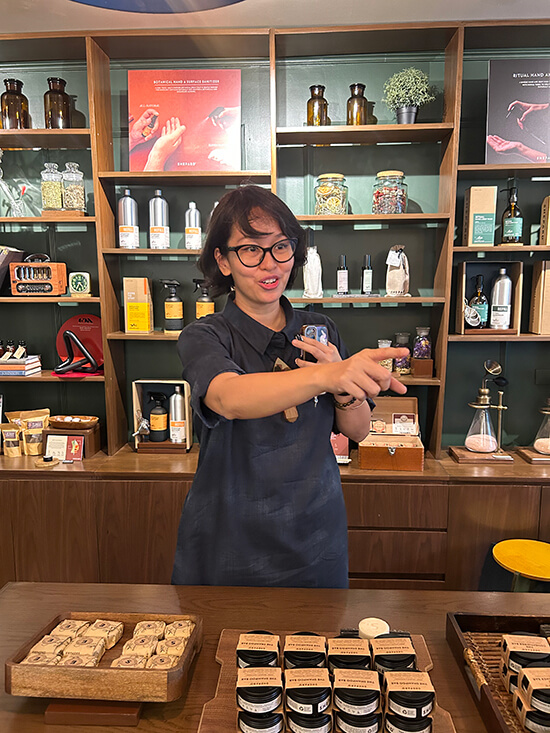
“We say Cebu is a creative city. We better walk the talk,” says community manager Kae Batiquin.
At the heart of Atua Midtown is a creative grant program that gives first-time entrepreneurs access to affordable retail spaces. The initiative has helped a new generation of homegrown brands establish a physical presence, turning creative passions into sustainable businesses.
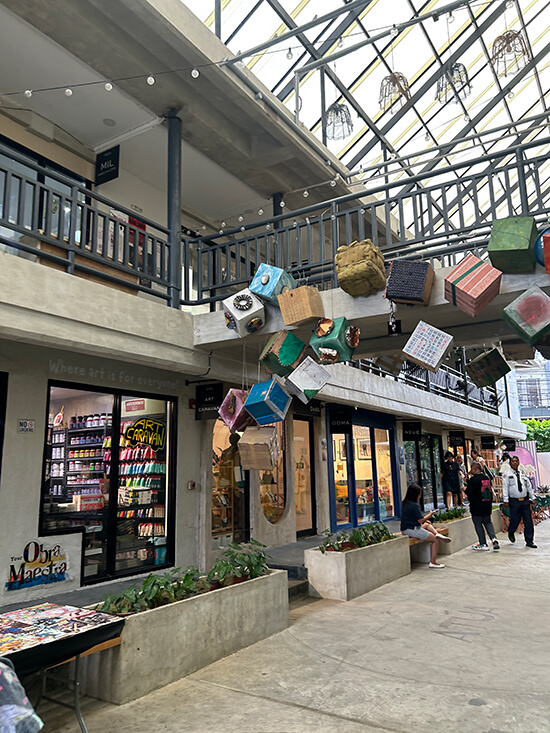
More than a collection of shops, Atua serves as a meeting point for Cebu’s creative community and a showcase of the city’s growing cultural confidence. It is the kind of place locals bring visitors to when they want to show what Cebu is becoming.
If Atua Midtown showcases Cebu’s entrepreneurial spirit, Lost Books reveals another side of the city’s cultural awakening.
Opened in late 2024 by Donald Villamero, a Cebuano writer, publisher, and literary advocate, the independent bookstore was born from a simple observation: Cebu had not seen a new independent bookstore dedicated to local literary culture in more than a decade.
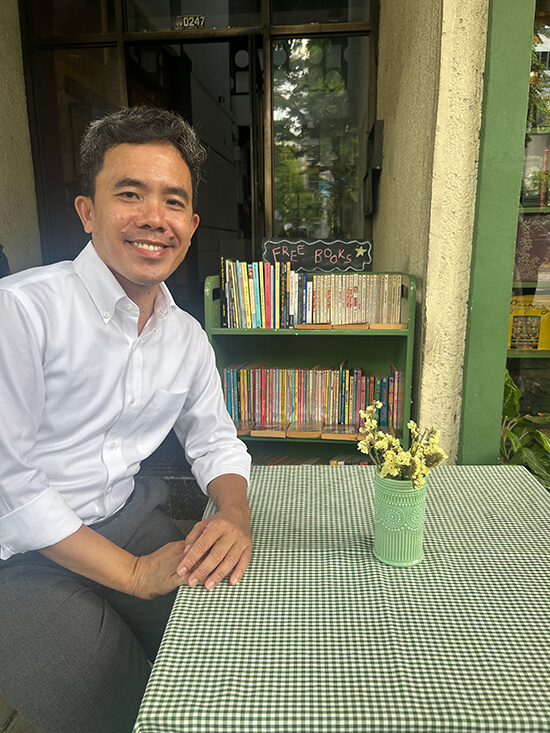
“We wanted to create a space where people could discover local books,” says Villamero. “They’re often difficult to find unless you’re part of a writing group or know the authors personally.”
Rather than choosing a large commercial space, Villamero transformed a former ATM kiosk along Osmeña Boulevard into a cozy literary refuge. Filled with books from his and his partners’ personal collections, works by self-published authors, and titles from local publishers, the tiny bookstore has become a gathering place for readers, writers, and curious passersby.
Its walls are adorned with a mural by a local artist celebrating Cebu’s flora, fauna, and identity, a fitting backdrop for a space dedicated to telling local stories. More than a bookstore, Lost Books serves as a reminder that culture thrives when communities create room for it.
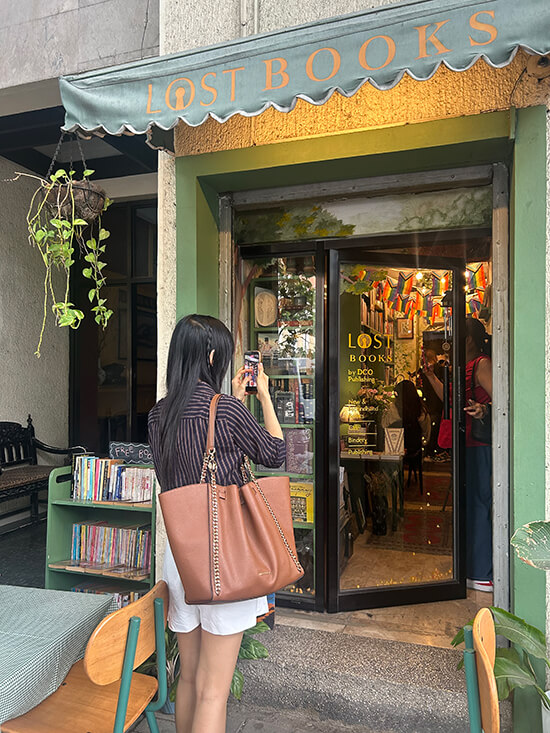
Like Atua Midtown, it represents a generation of Cebuanos taking ownership of their city’s future—one book, one business, and one idea at a time.
Why Radisson Red chose Cebu
These are the kinds of spaces that explain why Radisson Red chose Cebu for its Philippine debut.
The brand, known for blending hospitality with art, music, fashion, and design, arrives at a moment when the city’s creative identity is becoming impossible to ignore. Rather than imposing itself on the destination, Radisson Red feels as though it has found its natural habitat.
That alignment is reflected in how the hotel sees itself. Asked to describe Radisson Red Cebu in three words, general manager Prakash Ganesan answers without hesitation: “Bold. Creative. Social.”
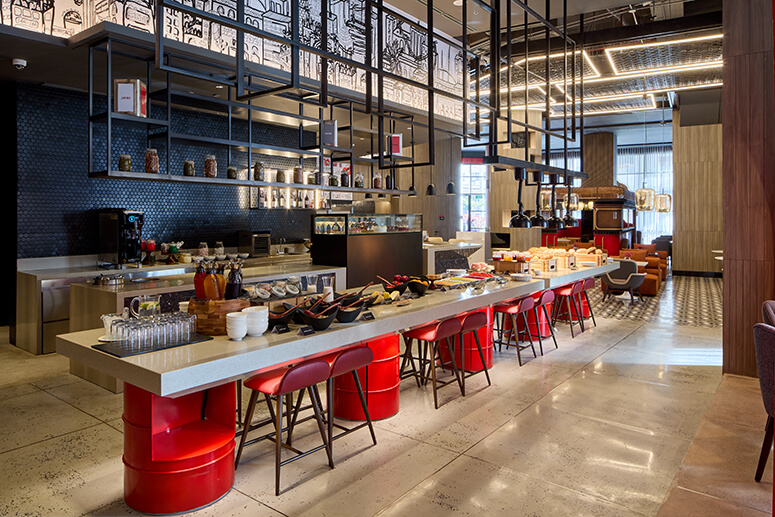
The description could just as easily apply to the Cebu emerging beyond the city’s historic landmarks and resort enclaves.
“At Radisson Red Cebu, we break away from standard hotel experiences with vibrant design, creative energy, and spaces that bring people together,” says Ganesan. “It’s a brand designed for guests who value experiences, self-expression, and connection.”
Bold by design
If Radisson Red’s ethos is bold, creative, and social, the hotel wastes little time putting those values on display.
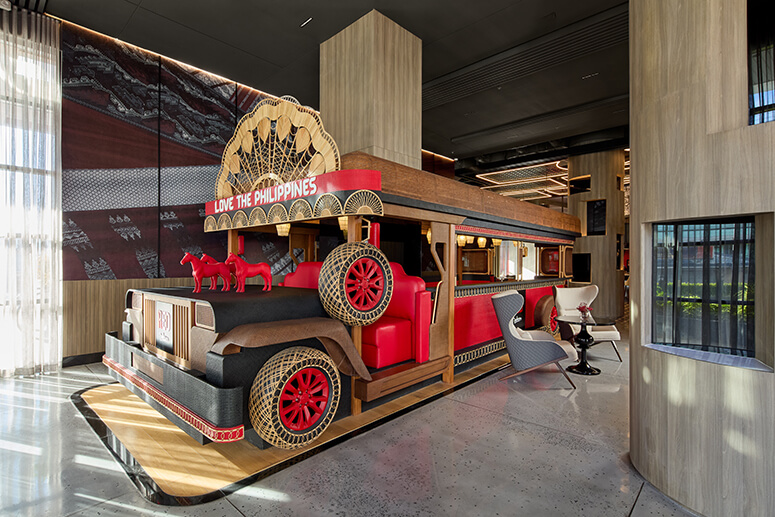
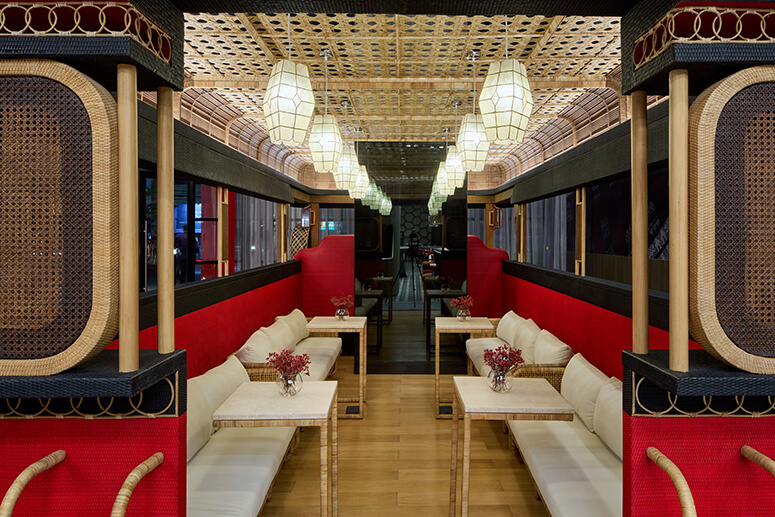
At the heart of the lobby is a jeepney reimagined by Cebuano designer Vito Selma. Equal parts artwork and dining space, it serves as an extension of Oui, the hotel’s all-day dining restaurant. Guests can actually sit inside and dine, turning one of the country’s most recognizable cultural symbols into a playful, immersive experience.
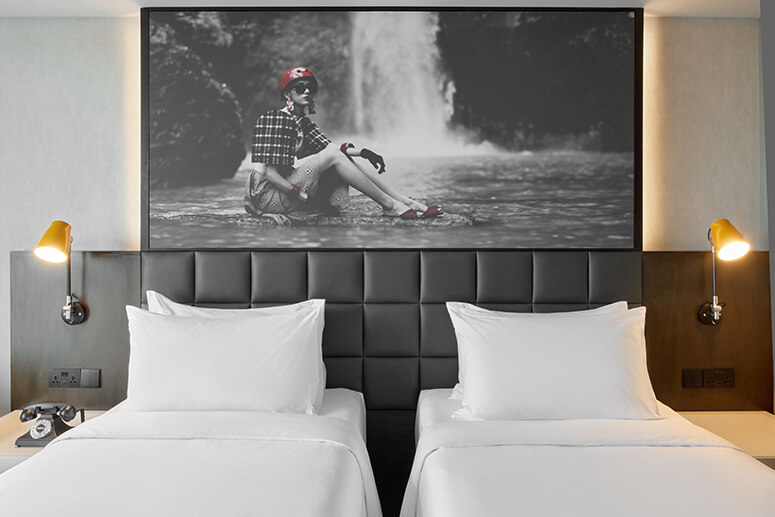
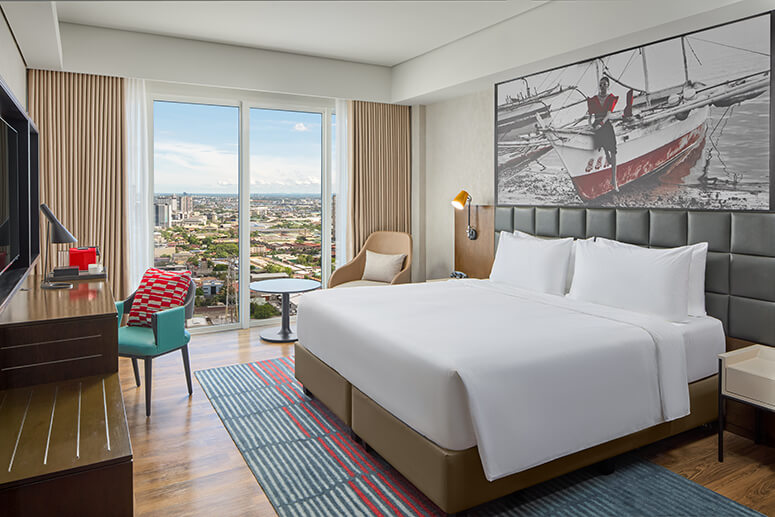
The local connection continues throughout the property. Hallways and common spaces are punctuated by striking black-and-white murals accented with the brand’s signature red, while photographs capturing everyday life in Cebu add a distinctly local flavor. Rather than relying on generic hotel artwork, Radisson Red uses its walls to tell stories about the city beyond its doors.
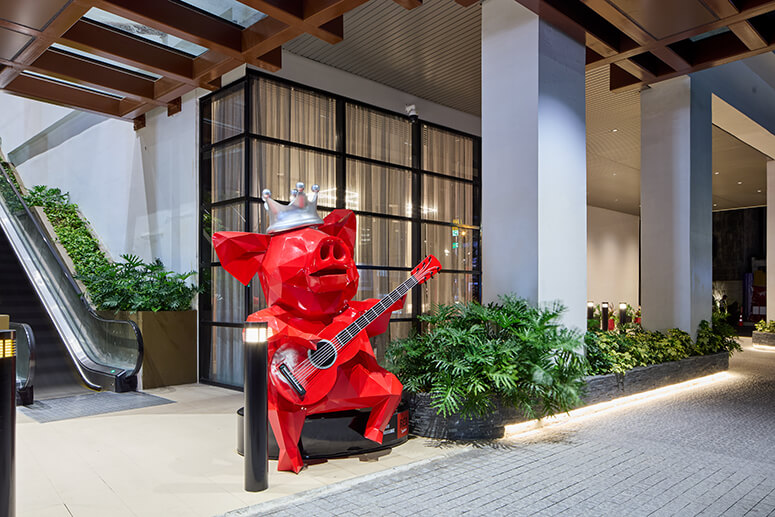
The effect is contemporary yet rooted in place. Guests are constantly reminded that they are in Cebu—not through obvious tourist imagery, but through visual snapshots of the people, streets, and energy that define the city today.
The same energy extends to the hotel’s 144 rooms and suites, where bold design is balanced by thoughtful functionality. Art-inspired touches give each space personality, while modern conveniences—including high-speed Wi-Fi and TV mirror casting—reflect the habits of a generation that travels with multiple screens in tow.
Built for experiences
For Radisson Red, the room is only part of the story.
“Younger travelers want more than just a room. They want a story to tell and an experience to remember,” says Ganesan.
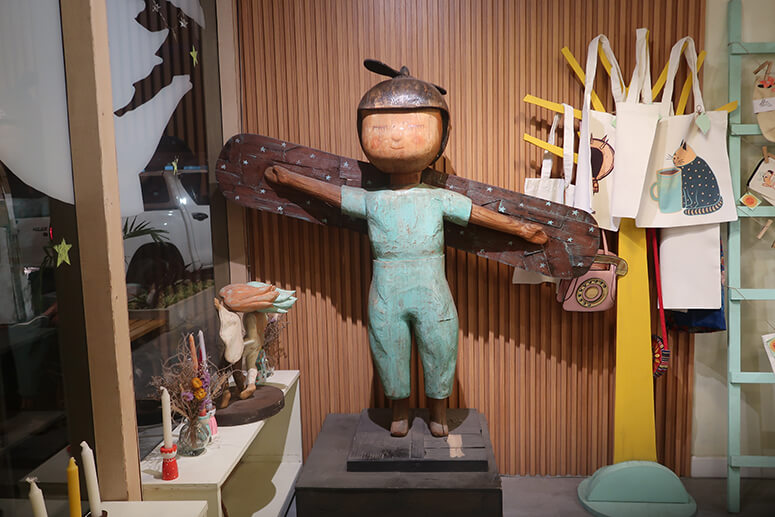
That philosophy is reflected in the hotel’s social spaces, which are designed to encourage guests to linger, connect, and interact. Whether gathering over a meal at Oui, working remotely, or simply exploring the property’s creative corners, guests are invited to engage with the hotel rather than retreat from it.
The approach resonates with a generation that increasingly values authenticity over formality and experiences over traditional notions of luxury. As Ganesan observes, Gen Z travelers are looking for hotels with personality, spaces that feel social and shareable, and experiences that create lasting memories.
In many ways, the shift mirrors what is happening across Cebu itself. From creative hubs like Atua Midtown to community-driven spaces like The Lost Books, the city is increasingly defined by connection, creativity, and collaboration. Radisson Red Cebu taps into that same energy, offering travelers a way to experience a more contemporary side of Cebu.
And in choosing Cebu for its Philippine debut, the brand may have identified what many travelers are only beginning to discover: that the city’s most compelling attraction is no longer just where it has been, but where it is headed.
* * *
Radisson Red Cebu Mandaue, developed by Cebu Landmasters, is located at Astra Center, A.S. Fortuna, Cebu City. For reservations, call +63 32 527-1888.

WATCH: Is OPM still as good as it used to be? (Generations Ep. 20)
September 9, 2026
WATCH: Is Philippine cinema still thriving? (Generations Ep. 19)
September 2, 2026