

Single shock could push middle class Filipino households into poverty—study
We often view the middle class as a safe haven, yet many are just one emergency away from poverty, staying afloat through a cycle of hyper-vigilant spending.
Jose Alfonzo Añes, a 26-year-old freelancer from Isabela, said that although he is technically in the middle class, he often feels like he’s “always in survival mode.”
Añes takes on commission-based jobs with evening tutoring to make ends meet. His freelance portfolio is a mix of writing—handling everything from scripts to transcriptions—alongside occasional administrative support and creative consultancy.
Living and earning entirely on his own, he carries the full weight of his day-to-day expenses, with a weekly budget of P2,500 to P3,000. Most of the time, he keeps a tight budget, and currently, there’s virtually no leisure spending because all funds are going towards basic necessities.
"The math is simple but scary: I spend around P2,500 a week just to survive, but my income from commissions is unpredictable. Some weeks I'm 'okay,' other weeks I'm just breaking even," he lamented.
He described his financial situation as "stable but tight"—able to cover daily needs but often at the expense of personal comfort. He usually drives to work and takes public transportation when traveling to his hometown about twice a month.
CONTINUE READING BELOW

"I need to be strategic, kasi kailangan e," he said, noting how the rising fuel prices have affected his budget. "At the same time, I manage my expenses din for the purpose of easing my financial anxiety. What if bukas mawalan ako?”
In its policy note, the Philippine Institute for Development Studies noted that in 2023, about 30% of households were at risk of falling into poverty, meaning a single shock—economic, health-related, or environmental—could push them into financial distress.
"Many Filipinos who have exited poverty remain highly exposed to shocks and face a substantial risk of falling back into deprivation. Health emergencies, job losses, price spikes, and natural disasters frequently push households across the poverty line, revealing that welfare status in the Philippines is often fragile and reversible rather than stable," it noted.
It added that poverty in the Philippines "is transient rather than chronic, with many households clustering just above or below the poverty line and frequently crossing it over time.”
What vulnerability looks like

To illustrate this, Deanne Cabalfin, one of the authors of the policy note, described a typical family of five living in Metro Manila.
"The family earns above the poverty threshold. They put food on the table and they manage their monthly bills, but they may have a little or no savings buffer," she told PhilSTAR L!fe.
While the middle class is often perceived as secure due to stable jobs or OFW remittances, sociology professor Niño Leviste pointed out that a large segment is actually "informal and unstable."
"Many appear stable economically, but are actually highly exposed to shocks," Leviste explained. He noted that many middle-class workers are contractual and lack the insurance or savings to survive a sudden job loss or a medical emergency.
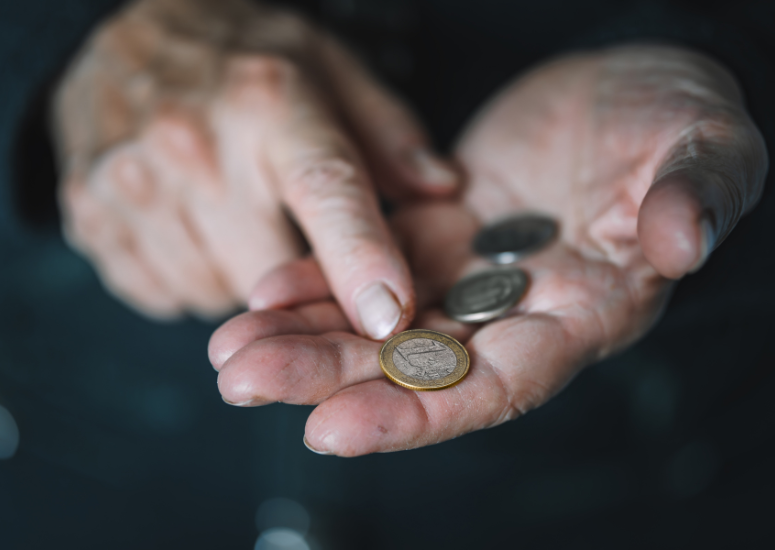
"The idea of getting out of poverty doesn't automatically make you secure. Many are still one crisis away from falling back," Leviste stressed. He cited the COVID-19 pandemic as a prime example, where middle-class families suddenly saw parents lose jobs and children drop out of school because they lacked an economic buffer.
For people like Añes, the rising fuel prices amid the Middle East crisis are the “most visible entry point” for financial strain.
According to Cabalfin, the ripple effects move quickly through the entire household budget because “transportation costs feed directly into the prices of food, goods, and services.”
“In practice, savings are usually the first casualty. And once savings are depleted, the household has lost its primary buffer against the next shock,” she noted.
Building a safety net

Cabalfin noted that while emergency funds typically cover three to six months of expenses, middle-income households may need larger buffers depending on their insurance or income stability. She highlighted that because PhilHealth often leaves gaps in medical coverage, many households deplete their savings on health costs. For these families, health coverage is not a luxury but a concrete way to reduce vulnerability.
To strengthen financial security, Cabalfin and PIDS senior research fellow Dr. Jose Ramon Albert recommended maximizing social insurance contributions like SSS, PhilHealth, and Pag-IBIG. They also advise building an emergency fund, investing in supplemental health insurance, and starting retirement savings early to benefit from compounding. While they support having multiple income streams, they caution that diversification should be strategic—focusing on specialized skills and a strong primary income rather than spreading effort across low-value activities.
Finally, Cabalfin warned against spending beyond one's means.
"Building genuine security means resisting the pressure to spend as if you have already arrived and instead investing in buffer savings, insurance, and most importantly, skills that you can keep in case crises, pandemics, or wars occur," she stressed.
What needs to be done
While individuals are responsible for building resilience, the government also plays a key role in creating policies that support economic stability, Cabalfin noted. In its policy note, PIDS recommends several measures to address financial vulnerability.
They suggested strengthening shock-responsive social protection systems that can expand quickly during crises. They also emphasized expanding social insurance coverage, particularly for informal workers, through subsidies and simplified enrollment processes.
To promote stable livelihoods, the note highlighted the importance of investing in skills development, job programs, and support for small businesses. Finally, PIDS advises monitoring vulnerability alongside poverty to better track income instability and risk exposure.
For Añes, addressing these challenges should require policy changes, including adjustments to tax brackets.
"Tumataas yung cost of living, pero hindi tumataas yung sahod. Talagang kailangan kumayod para lang makapantay dun sa cost of living," he said.
He also called on the government to be more responsive to public concerns, particularly in improving healthcare services.
Leviste likewise encouraged greater public awareness of financial planning while urging policymakers to reassess existing benefits and protections. He also emphasized the importance of creating sufficient, well-paying employment opportunities.
"I think the government plays a major role in ensuring that the economic, social, and political conditions in the Philippines are conducive enough for people who are more prone to vulnerabilities to feel secure and to actually know that they have something to depend on," he said.
He noted that many government programs focus primarily on immediate relief rather than addressing the conditions that lead to instability.
"These programs shouldn't just address poverty in the short term, but should also be sensitive to the conditions that cause impoverishment in the first place," he stressed.

WATCH: Pixar Summer Fest adventure at Hong Kong Disneyland
August 10, 2026
WATCH: Can we talk about death and grief? (Generations Ep. 25)
October 14, 2026