What can you do if someone films you without your consent?
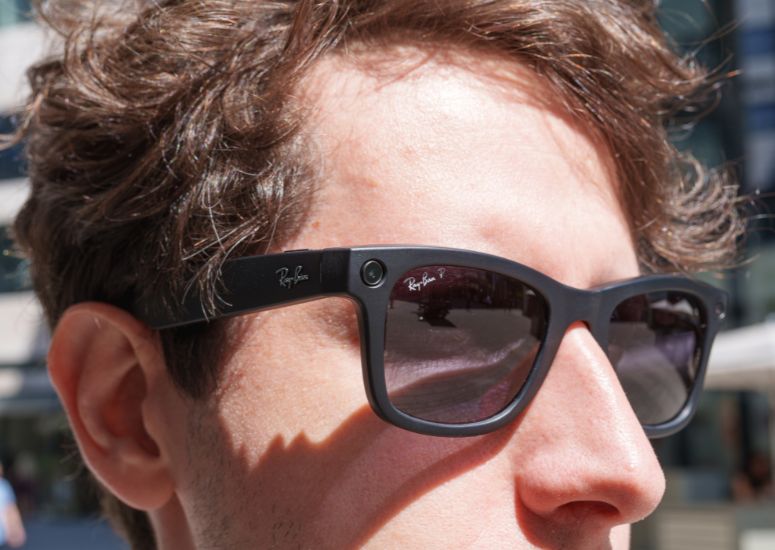
Capturing moments from daily life has never been easier thanks to smartphones and smart glasses, which are becoming increasingly popular. Users can take photos and videos of anything, such as their meal at a nice restaurant, long queues at the MRT, and even other people without their knowledge or consent.
Recently, a tip has gone viral online claiming that if you suspect someone is filming you in public using smart glasses without your consent, you should start singing a Disney song. According to the theory circulating on social media, doing so could potentially prevent the footage from being uploaded because platforms may detect copyrighted music and flag or restrict content containing copyrighted material. Such detection can apply to elements including lyrics, melody, and musical composition.
But if you're not able to sing Disney songs in public and someone happens to be filming, what can you do if you don't want to be seen on camera?
What does the law say about being filmed without consent?
Atty. Hyacinth Merioles of H Merioles Law in Legazpi City told PhilSTAR L!fe that there are several laws the public can rely on if they're being filmed without consent.
For one, there is the Anti-Photo and Video Voyeurism Act, or Republic Act No. 9995, which criminalizes secretly filming or taking photos of someone's intimate body in places where they need privacy, including fitting rooms, restrooms, bedrooms, or private residences.
There are also anti-wiretapping laws that prohibit secretly recording the audio of private conversations without the consent of all parties involved. In addition, the Data Privacy Act protects the unauthorized collection, use, storage, or disclosure of personal information.
CONTINUE READING BELOW

Under data privacy regulations, particularly the Data Privacy Act of 2012 (RA 10173), a person’s recognizable image or voice may constitute personal data. Systematically capturing, storing, or publishing someone’s image or voice without proper consent or another lawful basis may result in administrative or civil liabilities.
Harassment and safe space laws also protect against inappropriate or unwanted photography and recording. Under the Safe Spaces Act (RA 11313), taking photos or videos in public or online may be penalized when the conduct amounts to gender-based sexual harassment, unwanted sexual advances, upskirting, or stalker-like behavior.
The Civil Code, particularly Article 26, also protects an individual’s right to privacy. A person may seek legal remedies and monetary damages when someone unlawfully intrudes into their private life, interferes with their personal affairs, or causes public humiliation, embarrassment, or dishonor through unauthorized photography or similar acts.
Merioles also noted that there are exceptions that balance privacy with public interest and free expression. For example, people who appear incidentally in photos or videos taken in public places generally do not require individual consent. Similarly, journalism and filming matters of genuine public concern, public figures, or events in plain view may be protected by freedom of speech and the press.
CCTV may also be used in public or common areas for security, provided it does not monitor places where privacy is reasonably expected, such as restrooms or changing rooms. Recording illegal acts or public misconduct may also be justified for reporting or legal purposes, although privacy and wiretapping laws must still be observed.
What can you do to protect yourself
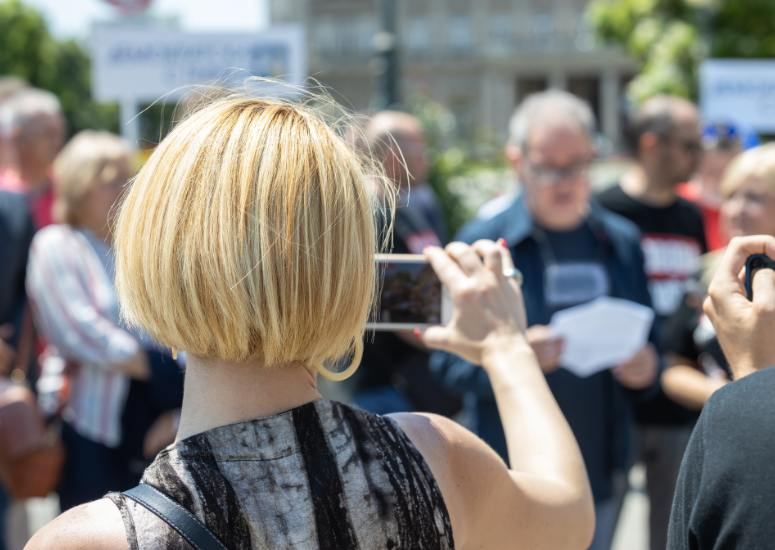
Tech expert Sam Jacoba, the founding president of the non-profit organization National Association of Data Protection Officers, told L!fe that if you suspect someone is secretly filming you, approach them calmly and ask to confirm if you're being recorded, as well as the reason why and where is it gonna be used.
Merioles and Jacoba said that you can ask them to stop or delete the recording, but avoid physically taking their phone or forcing them to unlock it. If you are in a private establishment, report the incident to security or management, who may remove the person or restrict their access.
If the recording involves voyeurism, harassment, trespassing, or other unlawful conduct, Merioles suggests asking for help from law enforcement for proper investigation and legal action.
If the image or video has already been posted online, both experts said you must immediately preserve evidence by taking screenshots or screen recordings that show the content, uploader’s profile, timestamps, and URL.
You can also report the content through the platform’s privacy or harassment reporting tools. For serious violations, Merioles added that you may file complaints with the National Privacy Commission or law enforcement cybercrime units and consider civil action to seek removal of the content and possible damages.
In today's age where there's always a trend involving AI, Jacoba underscored that there's always a possibility that any content we share publicly can be copied, scraped, or analyzed by the system.
"Globally, regulators are increasingly scrutinizing the use of personal data for AI training. The European Data Protection Board, for example, has specifically addressed web scraping for generative AI and emphasized principles such as lawful processing, transparency, purpose limitation, and data minimization. Privacy doesn't end when you press ‘Post,'" he said.
He advises that to protect yourself, share less of your personal information, especially sensitive personal information and high-resolution images.
Jacoba added you should still "review the privacy and AI data-use settings of the platforms you use; and exercise your rights to object, delete or restrict processing when applicable."
“In the age of smart devices and artificial intelligence, privacy is not simply about keeping information secret; it's about maintaining control over our digital identity," he stressed.