Received an NCAP scam text? Here’s what to do and how to report it
Received a text message claiming that you have an unpaid No Contact Apprehension Policy violation? Don’t click the link or rush to pay.
The Metropolitan Manila Development Authority has warned the public about scam text messages and fake websites that use NCAP to trick motorists into making payments.
According to the agency, some scam messages claim that a traffic fine is about to expire and threaten recipients with a 25% late payment penalty if they do not pay immediately. However, they clarified that fines are fixed and do not carry interest or late payment penalties.
How to spot a fake NCAP text
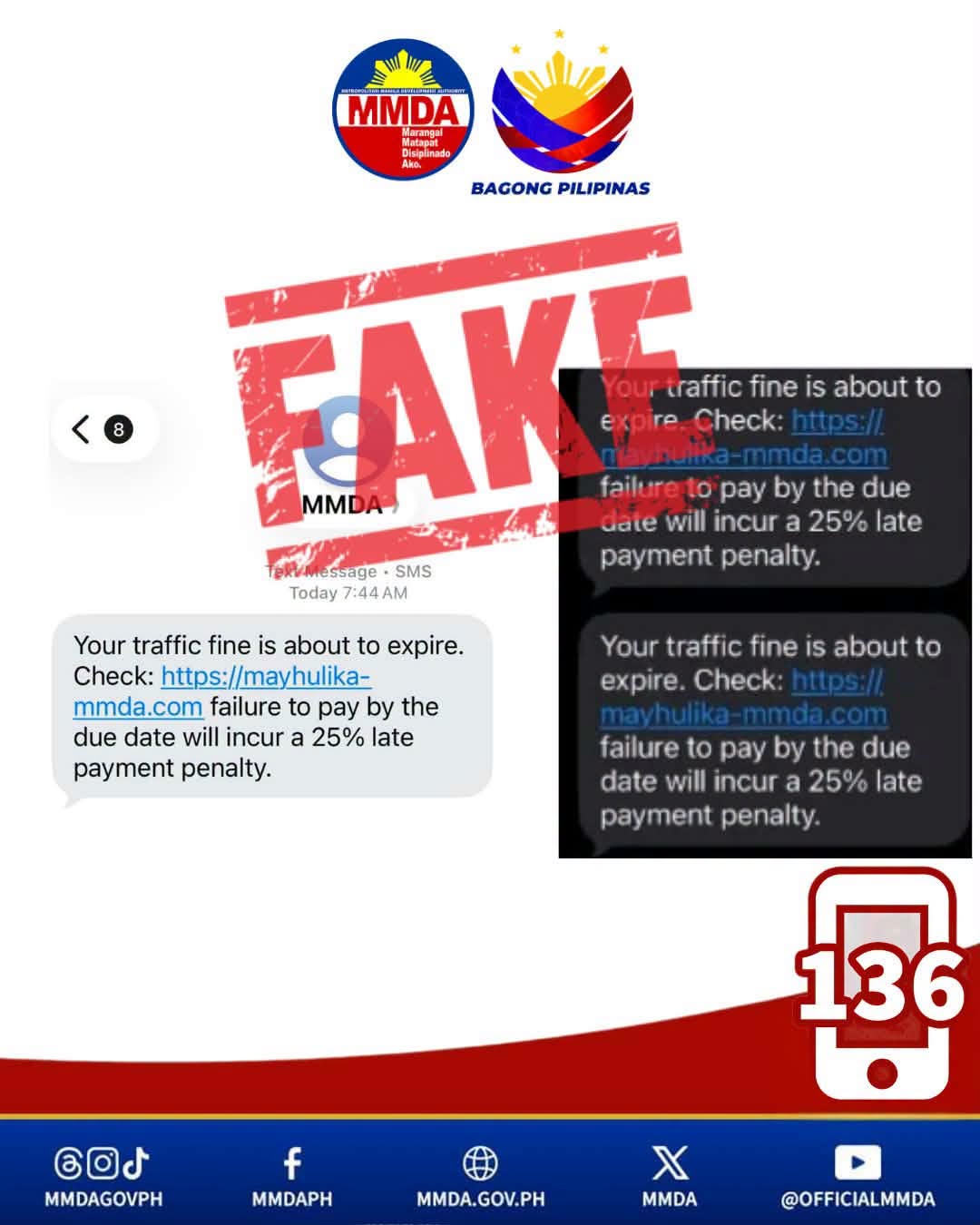
The MMDA said motorists should watch out for several red flags when receiving an NCAP notification. Legitimate NCAP text notifications from the agency are sent only by MMDA_NCAP. These messages do not contain payment links, provide an option to reply to the sender, or include SMS contact information. They also do not mention the name of the registered vehicle owner.
Any message that asks you to click a link or button to settle an alleged NCAP fine should therefore be treated with caution.
What should you do if you receive one?
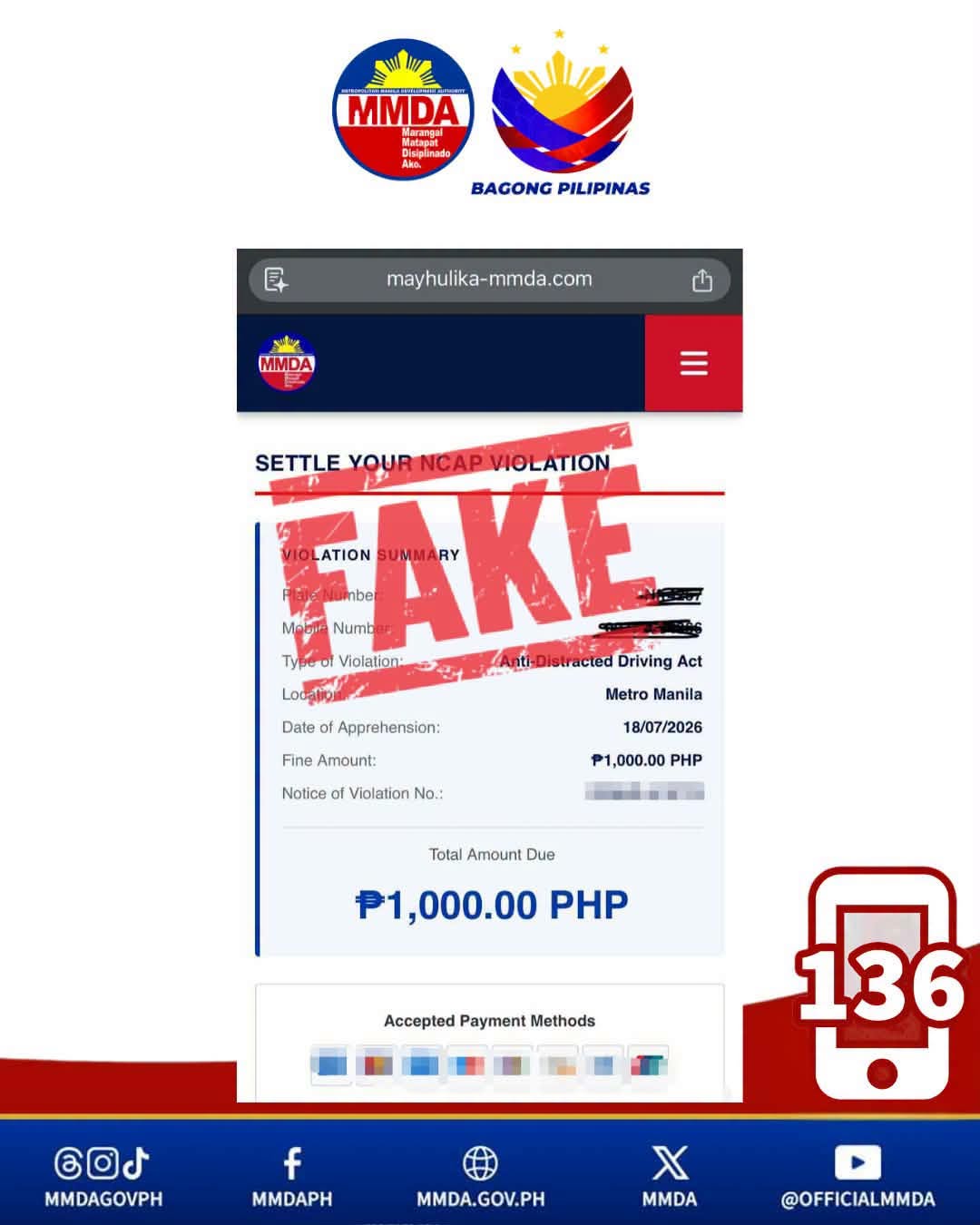
If you do receive a text message like that, do not click any links or buttons. The MMDA also reminded the public not to rely on information from unverified sources.

Instead, motorists can check whether their vehicle has an NCAP violation through the agency's official May Huli Ka website. Motorists should use the official website rather than links provided in text messages, emails or other suspicious platforms.
The MMDA also warned the public about fake websites that imitate its official NCAP website.
How can you report an NCAP scam?
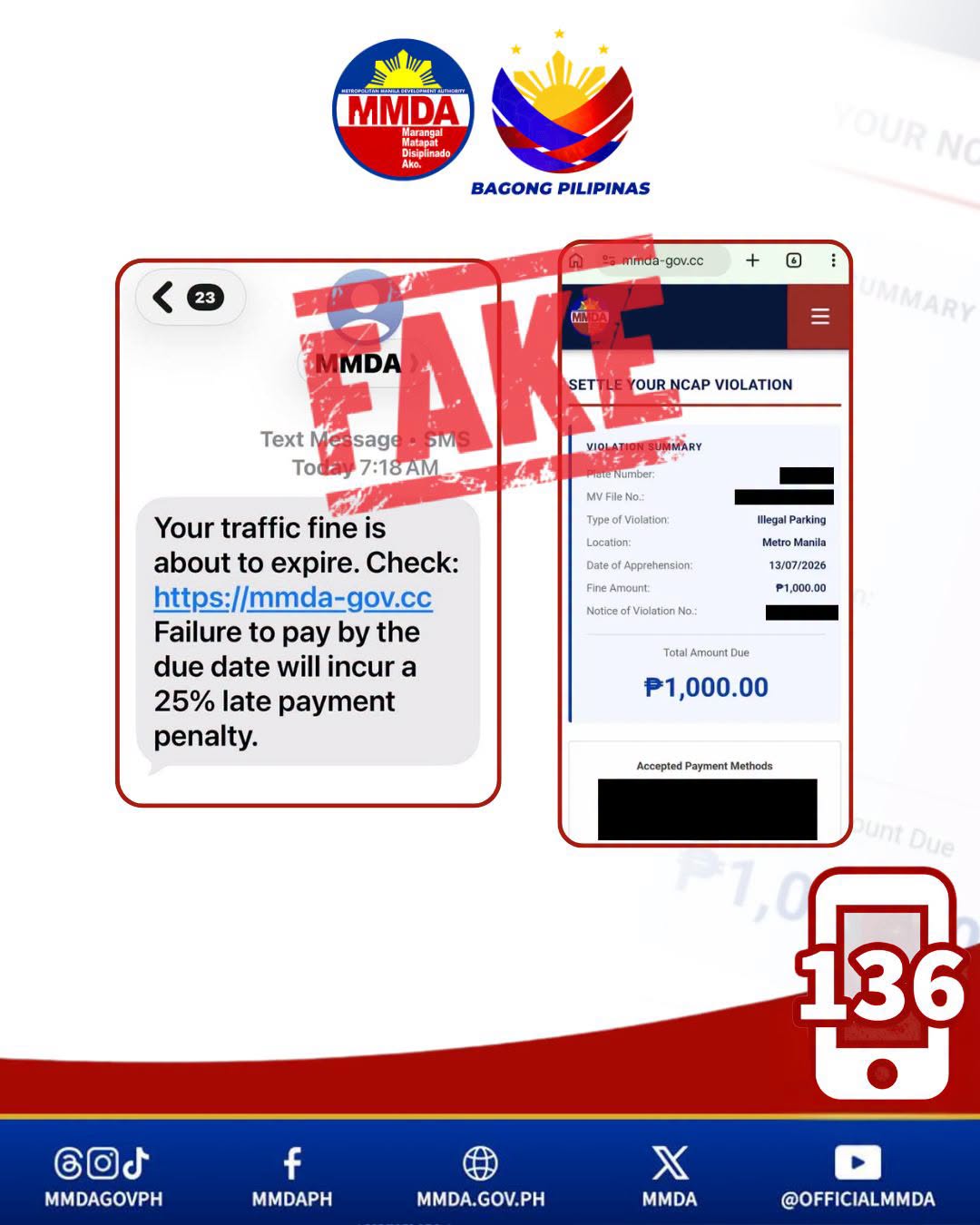
If you receive a suspicious NCAP text message or email, the MMDA said you can report it through MMDA Hotline 136 or by sending a message to the agency's official social media.
The agency urged the public to report suspicious messages and verify the source of information before taking any action. Above all, do not provide personal or payment information through links sent in suspicious messages.
The MMDA reminded motorists to use only its official platforms when checking for NCAP violations and to avoid clicking suspicious links or buttons.