

An 'ecocidal act': What you need to know about DENR's recent tree-cutting activities
Last week, photos of Quirino Ave. in Manila went viral on social media. What used to be a tree-lined stretch had foot-tall stumps instead; at least 225 of them, some decades old. The tree-cutting activity, approved by the Department of Environment and Natural Resources, turned out to be part of the Southern Access Link Expressway project.
Public condemnation came swiftly and harshly, with individuals and organizations calling for an immediate stop to the cutting.
Another DENR tree-cutting project further fed the online anger: the large-scale Berong Nickel Project in Palawan, which was authorized by DENR to cut 26,617 trees and transplant 43,743 saplings.
These approved projects requiring the expansive cutting of trees are not isolated cases. DENR-NCR's guidelines have indicated parameters by which companies can operate tree-cutting.
According to the government's environmental agency, not all tree-cutting activities are forbidden. Under DENR Memorandum Order No. 2012-02, or the "Uniform Replacement Ratio for Cut or Relocated Trees," every approved tree-cutting operation must involve the planting or donation of 100 seedlings to replace one naturally grown tree that was cut.
DENR-NCR added that in 2025, the agency put together a list of forest trees, fruit-bearing trees, and ornamental plants companies could plant to replace cut trees. Companies can be given a tree-cutting permit if one of the following is true for their project:
- The trees to be cut are sickly or pose a danger to the public
- Earth-balling or transplanting the trees is impractical
- Cutting the trees is the only way for infrastructure projects to continue
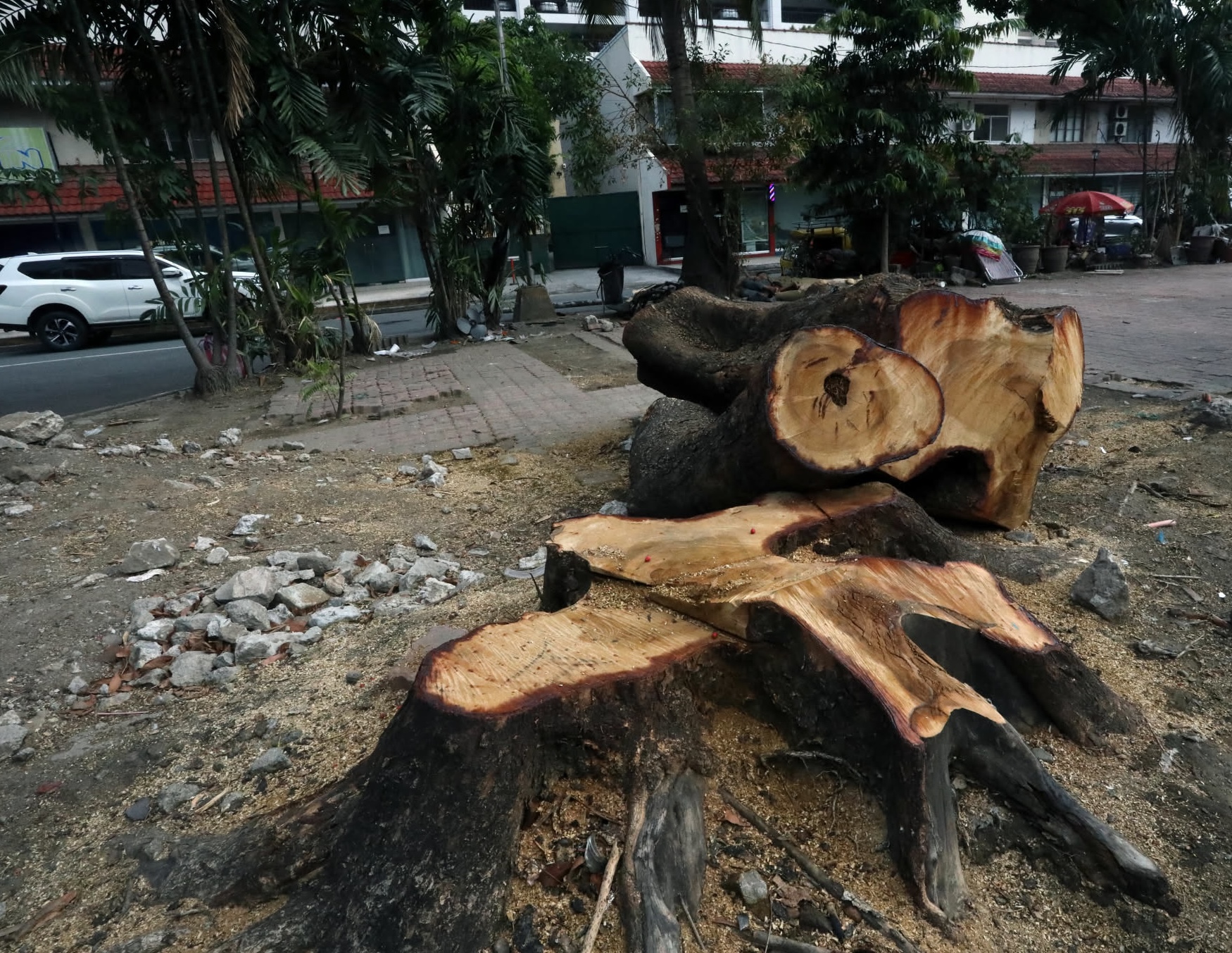
Green light from DENR
CONTINUE READING BELOW

A project of SMC Infrastructure, SALEX is "a proposed 40.62-kilometer mixed elevated viaduct and shoreline expressway" with four planned sections: C3-R10 Extension, Shoreline Expressway, Quirino Extension, and Buendia Extension.
According to the SMC Infrastructure website, the project's goal is to ease future traffic in Metro Manila and Central Luzon, boost economic development in the region, and give motorists direct access to the New Manila International Airport, known as the Bulacan Airport, which is currently under construction.
Over in Aborlan, Palawan, Berong Nickel Corporation, a subsidiary of DMCI Mining, holds a tree-cutting permit from DENR despite the Strategic Environmental Plan for Palawan Act, a law that protects Palawan's forests and natural resources.
Per the Philippine News Agency, Berong, through a mineral production sharing agreement, has exclusive access to mineral resources in the contract area for 25 years, an agreement that is renewable for 25 more.
On Monday, DENR gave a reassurance that it was on top of all the tree-cutting operations happening.
"We assure the public that the DENR is closely supervising every phase of the activity and enforcing all safeguards," the agency said in a statement.
Public backlash
Manila residents, artists, and non-government organizations collectively called out DENR for its tree-cutting activities. The backlash has been intense, especially with numerous cities in Metro Manila frequently reaching dangerous heat index levels in May. On May 26, environmental advocates gathered at Quirino Ave. to protest the SALEX project. Others released strongly worded statements aimed at making DENR see reason.
Calling the mass tree-cutting "an act of ecological violence" in its statement, Caritas Manila wrote it was a "direct assault on the poor who have been enduring the daily penance of extreme heat, poisoned air, and sudden floods."
"We refuse to hide this injustice behind bureaucratic language. What is legal on paper is not automatically moral in the eyes of God," wrote Bishop Gerardo A. Alminaza, bishop of San Carlos and president of Caritas Philippines. He added a call to halt the tree-cutting immediately, review the infrastructure projects "through the lens of ecological justice," and to listen to those who rely on the trees for their survival.
The Philippine Association of Landscape Architects released a "statement of concern" describing the trees along Quirino Ave. and Roxas Blvd. as "critical components of urban green infrastructure." Not only are they directly linked to public health, trees also help with flood mitigation and stormwater management.
"Contemporary infrastructure planning should integrate environmental resilience, biodiversity protection, and sustainable mobility principles alongside engineering and economic considerations," the statement continued.
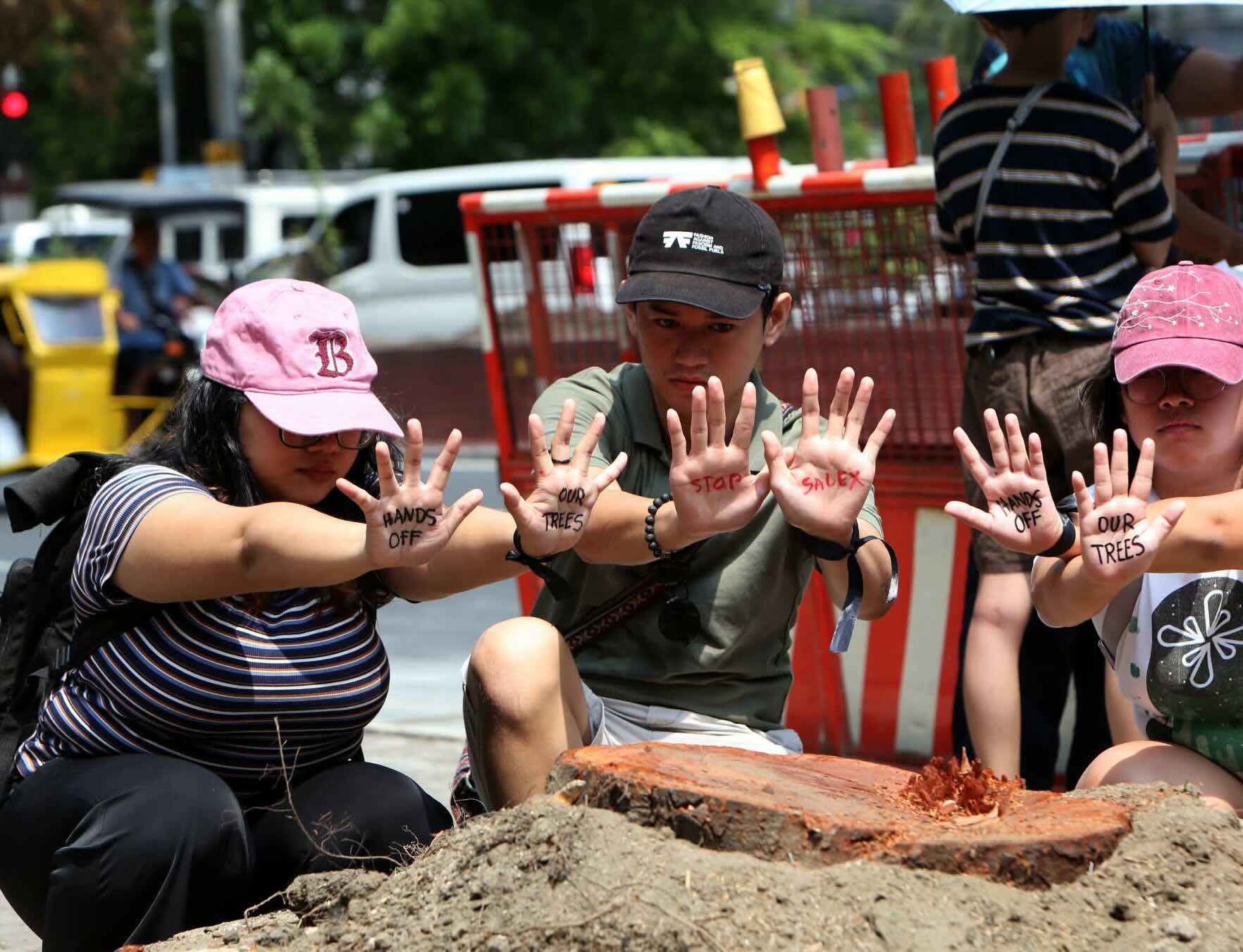
For its part, Philippine Native Plants Conservation Society Inc. asked DENR to halt its tree-cutting operations, modify the project design by working around the protection of affected trees, be transparent with the public and allow discussion, and revise policies to place natural heritage over the requirements of development projects.
Although PNPCSI acknowledged DENR's promise to plant twice the number of cut trees, "the promise of tomorrow cannot guarantee the outcome of today," the group wrote.
Social development network Philippine Misereor Partnership Inc. expressed "deep alarm" over the mass tree-cutting, saying it violated the Rights of Nature, "which recognizes ecosystems as rights-bearing entities with intrinsic value beyond human utility." DENR's cutting the decades-old trees essentially "treats nature as expendable," PMPI said in its statement.
"The scale and impact of the clearing also mirror patterns associated with 'ecocidal' development, where severe and widespread environmental damage is justified in the name of infrastructure expansion," the group added.
As a form of protest, digital creator JP Pining reworked the DENR logo to show tree stumps and broken tree branches. Tagging DENR's official Facebook page in his viral post, Pining wrote, "Inayos ko na po yung logo niyo."
The united calls on behalf of the environment were heard. As of writing, the cutting of trees on Quirino Ave. has been stopped.
On May 27, during a fireside chat with The Philippine STAR's Marichu Villanueva, DENR chief Juan Miguel Cuna said, "For your information, right now, the cutting, they voluntarily stopped it. We're agreeable to this. Itigil muna, Pag-aralan nang husto, baka may mga maidagdag pa sa Earth-balling."

WATCH: How to experience Bangkok and Kanchanaburi in one trip
October 21, 2026