

What exactly is Pax Silica, and why is it sparking environmental concern?
Artificial intelligence is driving a global boom in data centers, increasing demand for the infrastructure needed to power AI technologies.
In case you missed it, the Philippines joined the Pax Silica initiative in April, with the government eyeing a formal signing of the agreement in November.
While the project is expected to put the country on the map for emerging technologies, concerns are growing over what it could mean for the nation, with critics raising questions about its environmental, economic, and national security implications. Here's what you need to know about Pax Silica.
What is Pax Silica and what are its goals?

Pax Silica is a US-led initiative launched in December 2025 to build secure, resilient supply chains for AI technologies, particularly semiconductors and critical minerals.
Its name combines the Latin word pax, meaning peace and stability, with silica, the precursor to silicon.

Formally launched at the Pax Silica Summit in Washington, D.C., partner nations signed the Pax Silica Declaration, committing to deeper cooperation across the tech supply chain—from raw materials to AI infrastructure—to strengthen economic security and shared prosperity.
According to the US government website, Pax Silica's core objectives are to reduce reliance on coercive supply chains, strengthen global technology supply chains through partnerships and joint investments, and protect sensitive technologies while building trusted digital infrastructure.
In the long term, the initiative aims to unite economies with advanced technology industries, unlock the economic potential of the AI era, and establish a lasting economic framework that promotes AI-driven growth and prosperity across partner nations.
The declaration has 23 signatories: Argentina, Australia, Chile, Costa Rica, El Salvador, the European Union, Finland, Germany, Greece, India, Israel, Japan, Kazakhstan, the Netherlands, Norway, Panama, the Philippines, Qatar, the Republic of Korea, Singapore, Sweden, the United Arab Emirates, and the United Kingdom.
As part of the initiative, the Philippine government has proposed a 1,620-hectare Pax Silica Hub in New Clark City, Capas, Tarlac, envisioned as an AI and advanced manufacturing hub.
According to the US Embassy, the hub is set to become an “Economic Security Zone” with both countries sharing governance responsibilities. It said, “The two governments intend to identify appropriate frameworks for the long-term development of the Zone that facilitate sovereign alignment and shared upside as it scales.”
Per a report by the Philippine Information Agency, the Bases Conversion and Development Authority will provide a two-year lease payment grace period as an in-kind contribution to support Philippine-US economic cooperation once the hub is established. It is also developing New Clark City into the country's first smart, disaster-resilient, and green metropolis while positioning it as a competitive AI hub for technology-driven industries.
Finance Secretary Frederick Go said the Philippines' participation in the Pax Silica Declaration reflects its goal of playing a bigger role in the AI and semiconductor industries.
“By joining Pax Silica, the Philippines is ensuring that our mineral resources and strategic location are not simply supporting global industries from the margins, but are actively harnessed to build the industries of the future,” he said.
Perceived benefits
Go said the initiative could be a "generational type of project" for the country as AI and other advanced technologies become increasingly important to the global economy.
“Obviously, to all of us, the technology of the future is AI and anything tech. I think both sides are very excited to get this moving along because I really believe this could be a generational type of project,” he told the media in June.
“If we want to be a player in the AI industry in the future, we need to start somewhere. This is really a great start because now, once you have the ecosystem, one thing leads to another."
He said hosting the AI acceleration hub would give the country a strong starting point to become a player in the AI industry, creating hundreds of thousands of jobs while laying the foundation for an ecosystem that could attract more technology companies, investments, and innovation over time.
Go added that investors in the proposed AI acceleration hub could benefit from incentives under the Corporate Recovery and Tax Incentives for Enterprises to Maximize Opportunities for Reinvigorating the Economy (CREATE MORE) Act, which was enacted to make the Philippines more competitive in attracting high-value investments.
According to the ASEAN Business Advisory Council, the Philippines has carved out a strategic role in the semiconductor supply chain by specializing in assembly, testing, and packaging—capabilities that complement the advanced manufacturing strengths of countries such as Taiwan, Singapore, and Japan.
Threats
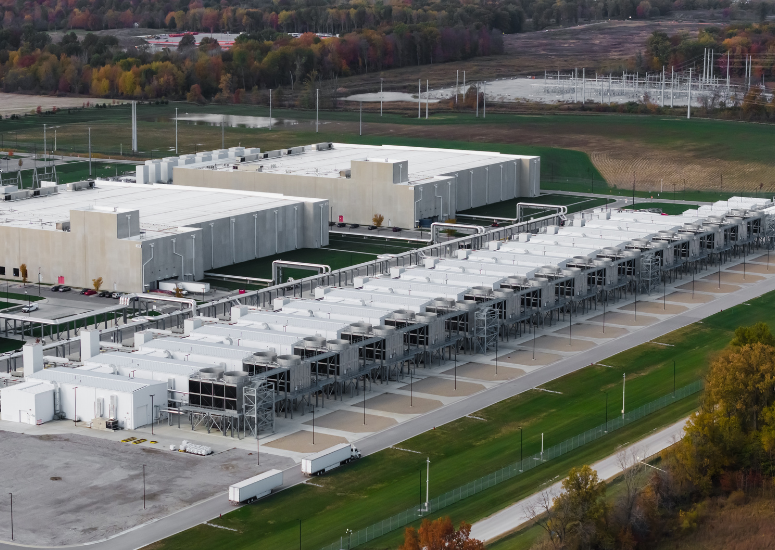
According to the Environmental and Energy Study Institute, large data centers can use as much as five million gallons of water per day, comparable to the daily water needs of a town with 10,000 to 50,000 people.
Malacañang and the National Water Resources Board maintain that existing water resources can support the project without affecting local supply, but environmental groups argue that the high water demand remains a key issue.
This has raised concerns that the Pax Silica initiative could add pressure to the country's already limited water supply.
As of July 21, Angat Dam, which primarily benefits Metro Manila residents and Pampanga and Bulacan farmers, recorded a reservoir water level of 152.20 meters, or 57.80 meters below its Normal High Water Level of 210.00 meters.
With this, NWRB has again reduced the Metropolitan Waterworks and Sewerage System's water allocation, lowering it from 48 cubic meters per second to 46 CMS until July 30, per The Philippine STAR report. The agency has pushed contingency measures, including rainwater harvesting and water recycling, while also urging the public last month to conserve water.
"The project is being planned and developed with the clear commitment that the water needs of surrounding communities will remain the foremost priority and will not be compromised at any stage of implementation or operation," Palace Press Officer Claire Castro said, citing the NWRB.
Another potential environmental threat is the expansion of mining driven by the growing demand for critical minerals under the Pax Silica Initiative. Israel, for instance, has already identified the Philippines as a key partner for its abundant nickel and other mineral resources.
“You have plenty of nickel and other different important minerals. What Israel has to offer is the tech side. We are advanced when it comes to AI and cybersecurity and other technological solutions,” Israel Ambassador to the Philippines Dana Kursh said in an interview with PTV in May.
Another concern is the potential displacement of local and Indigenous communities due to expanded mining activities.
'Massive sellout'
After joining the US-led initiative, the Kilusang Magbubukid ng Pilipinas slammed the Palace, describing the move as a “massive sell-out,” arguing that it would intensify land and resource grabbing, extraction, and militarization in rural areas.
“Tayo ang gagawing tagasuplay ng murang hilaw na materyales at low-value processing tulad ng assembly, testing, at packaging, habang sa kanila ang teknolohiya, kontrol, at tubo,” KMP said in its statement in April.
According to KMP, Pax Silica's demand for nickel and other critical minerals could accelerate large-scale mining in provinces such as Zambales, Palawan, and Nueva Vizcaya, which it said have already experienced decades of deforestation, silted rivers, and polluted watersheds.
“Malinaw na ang karanasan natin sa malakihang pagmimina: mga kalbong bundok, nilason na mga ilog at komunidad na pinagtapunan ng mine tailings,” KMP said.
The group added that many of the affected areas in Luzon are key agricultural lands and biodiversity zones that support rice, coconut, and other food production, warning that converting them into industrial and mining corridors could further threaten food security.
IBON Foundation said Pax Silica is not genuine industrialization because it would leave the country dependent on foreign technology, capital, and markets while serving as a supplier of minerals and labor for export-oriented industries, rather than building a self-reliant industrial economy.
"The economy will become even more dependent on foreign technology, capital, and markets while remaining a supplier of cheap minerals and labor and a host to export-oriented enclaves," it added.
Cathleen De Guzman, national coordinator of the Philippines-based environmental group Kalikasan People's Network for the Environment, said the Aeta community had spent decades fighting for recognition of its ancestral domains, but the government repeatedly refused to issue land titles.
“The absence of a paper document was used to erase the existence of a community that has lived there since before the Spanish arrived,” she said, per South China Morning Post, adding that around 20,000 Indigenous people and 15,000 farmers could be displaced by the New Clark City project.
De Guzman also warned that the Sacobia watershed—the main water source for New Clark City—has faced concerns about drying up since 2020.
Meanwhile, the Makabayan bloc has filed House Resolution No. 1128 seeking an investigation into the Philippines' participation in the Pax Silica Initiative, arguing it deepens US military and economic influence despite being presented as a development program.
"The legal structure of the ESZ compounds the threat to Philippine sovereignty. The Marcos administration has agreed to a 'joint governance' arrangement under which the zone will be administered according to 'American expertise in institutions and legal regimes'—effectively placing a 4,000-acre territory within the Philippines under parallel legal authority that operates outside Philippine law," it said.
"This arrangement violates the 1987 Constitution's explicit prohibition against foreign military bases, troops, or facilities except through a treaty duly concurred in by the Senate. No such treaty has been presented to Congress; no such concurrence has been sought. Instead, the Marcos administration has unilaterally surrendered sovereign control over Philippine territory to a foreign power through an executive arrangement that bypasses Constitutional safeguards and democratic oversight," it added.
Meanwhile, Malacañang's Castro maintained that President Ferdinand Marcos Jr. "ensures that all actions taken are in accordance with the law and will not harm the environment or displace our fellow citizens without providing just compensation or alternatives."

WATCH: Can you still trust someone who betrayed you? (Generations Ep. 22)
September 23, 2026