

‘Trentahin’: Live it, love it
What does it mean to turn 30 these days?
Our generation straddled the analog and digital eras—worlds as far apart as hefty boomboxes and lightweight devices that stream any song on demand. Back then, amateur photography required careful scene selection and timing. It is a skill many of us forgot or took for granted once our phones were fitted with advanced cameras and editing tools, instantly transforming anyone with a cellphone into a citizen journalist.
Back during that nascent digital shift, our immediate concerns were straightforward: building a career, raising a family, and maintaining good health. Apparently, these remain the top priorities for the younger crowd today, young enough, chronologically, to be my children. The difference is that they are worrying about these milestones much earlier. They call themselves the trentahin, a term most Filipinos recognize as meaning “30-ish.”

Believe it or not, the DOST SEI’s The Filipino Patriot Scholars Program took the time to define “trentahin” on its Facebook page. They called it “a playful way to describe people who are in their 20s and 30s, often used as a joke about getting older but still feeling young at heart.” Their post even listed symptoms of the condition, including masakit na tuhod (knee pain) upon standing, ngalay (muscle stiffness) from sitting on the floor too long, and voluntarily going to bed at 9 p.m.
Thirty is neither a finish line nor a crisis; it is simply another number.
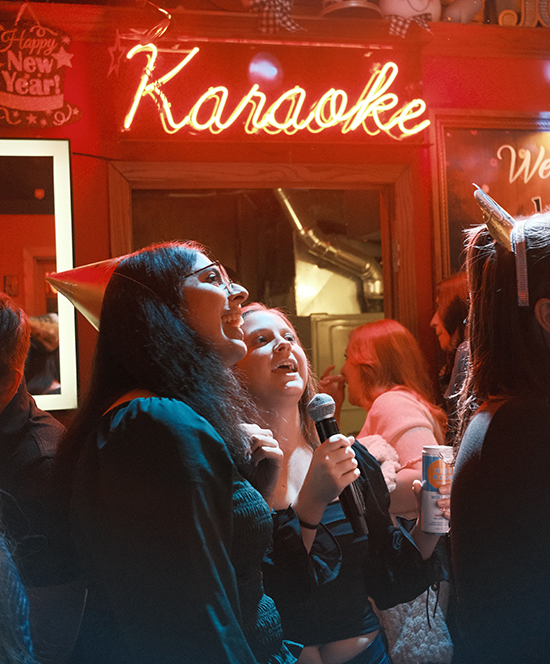
Worsening eyesight, mysterious lower back pain, and prioritizing uninterrupted sleep over clubbing easily deserve a place on that list. If any nightlife is involved, it usually comes with a strict Cinderella curfew and drinks fortified with Berocca. I learned all of this after my daughter attended a trentahin-themed party. Yes, it’s a real thing. Far from being a singles mixer to find a soulmate within an acceptable age bracket, these gatherings look more like elaborate support groups disguised as throwback festivals. At this point in their lives, securing a comfortable chair with proper lumbar support is the ultimate prize.
CONTINUE READING BELOW

Today’s 30-somethings—and please, don’t call them titos or titas—are fiercely unapologetic about their musical roots. They transform from dignified professionals into weeping puddles of sentimentality the moment an Eraserheads classic like Ang Huling El Bimbo or With a Smile plays at their version of an underground rave. They might stream their playlists on premium apps now, but their musical DNA remains permanently hardwired with the angsty anthems of My Chemical Romance, Fall Out Boy, Coldplay, and Paramore.
You can try to strip them of their youth, but the moment Usher’s Yeah! echoes through the speakers, the collective roar easily rivals the frantic cheers that greeted Alex Eala’s historic Mubadala DC Open victory. Yet, much like Eala collapsing to the court in pure exhaustion after match point, these partygoers barely survive the next morning’s staff meeting—powered entirely by a generous helping of maintenance supplements, of course.
As a number of my younger friends have proven, this demographic simply exhausts easily. Is it just me, or did Millennials and older Gen Zers quietly trade their lifelong patience for instant convenience? It makes one wonder if their internal chemistry has been completely hijacked by the modern world.
Clearly, priorities have shifted. Long-term rewards that once required decades of dedication and hard work have given way to quick, dopamine-driven bursts of satisfaction from merely racing to complete the next task. There seems to be an inordinate need to optimize, streamline, automate, or “life-hack” everything in the name of efficiency. Ironically, even rest has been gamified into productivity, monitored by sleep trackers, step counters, and heart-rate sensors. Escapism has turned from casual diversion into a desperate remedy.
Chasing synthetic highs to survive an exhausting lifestyle has trapped a generation in what BTS calls a “chemical-induced fantasy” in Normal—though the Recording Academy will likely overlook that critique too, having recently invented an “Asian Pop” quarantine category to keep the group away from the main awards. As instant gratification masks systemic burnout, life runs on a cocktail of phone-notification “dopamine.” Digital fatigue is then treated with endorphin-fueled, overpriced gym sessions to battle premature back pain while pretending the body is still “bulletproof.” Even raw human attraction has been reduced to a right swipe on a curated profile.
Yet there is beauty in this shift. Aspirations have shrunk from world-conquering ambitions to quieter, more attainable victories: acing a complex presentation, finally replacing an ancient refrigerator, buying the premium air fryer after weeks of comparing reviews, or discovering a hidden book café with actual books.
Perhaps my mild bewilderment comes from belonging to a generation that never expected birthdays to reveal life’s secrets.
In The Sound of Music, Liesl von Trapp sings, “I am sixteen going on seventeen,” convinced the next birthday will usher in wisdom and adulthood. Reality, of course, has a wicked sense of humor. Today, the lyric might be, “I am thirty going on thirty-one; everything hurts... but I’m not done.”
I find the fuss amusing. Thirty is neither a finish line nor a crisis; it is simply another number. Modern life has stretched the timeline: People launch businesses at 50, earn degrees at 60, and finish marathons at 70. Age is measured less by chronology than by curiosity. We are all still learning—I certainly am—still defending the music of our youth while discovering that reinvention has no expiration date.
So let the trentahin sing their updated anthem. I’ll be over here, quietly observing, queuing up my rock playlist after BTS’ Arirang, comfortably settled in the La-Z-Boy recliner I could only dream of owning in my thirties.

WATCH: Do you still believe in marriage? (Generations Ep. 17)
August 19, 2026
WATCH: Is Philippine cinema still thriving? (Generations Ep. 19)
September 2, 2026